Artist Interview 77: Sayward Johnson
Ottawa, Ontario, Canada
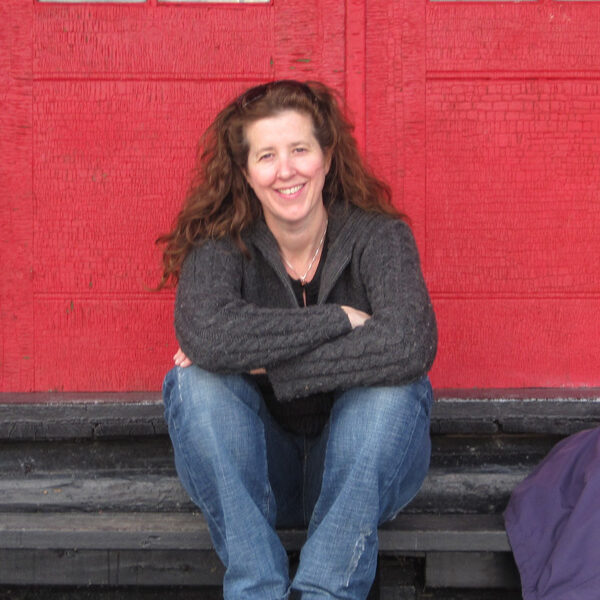
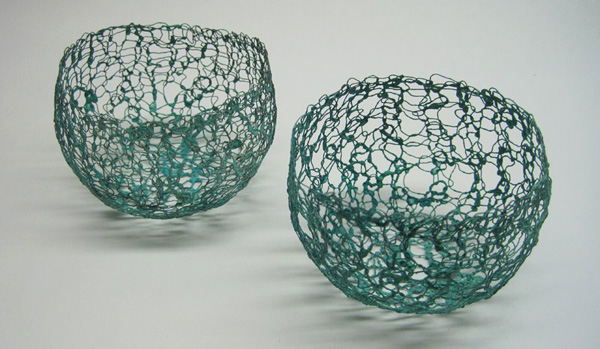
Sayward uses copper wire to create weavings, knitting and small copper forms. Her work addresses the juxtapositions of the new made old, the malleable made work-hardened, and the merging of craft techniques that appear incompatible. Starting off as a knitter, later moving into weaving, she also works in metal-smithing, screen-printing, rust dyeing and paper making, incorporating these into her primary artwork as much as possible.
Tell us about your work?
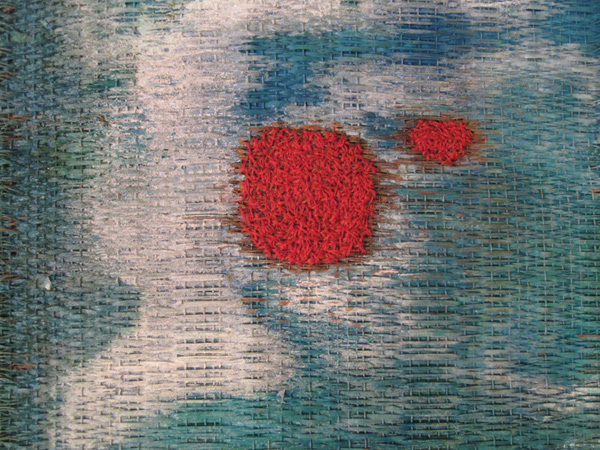
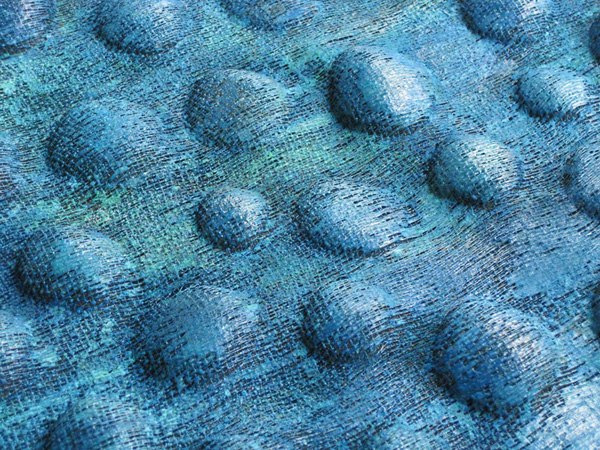
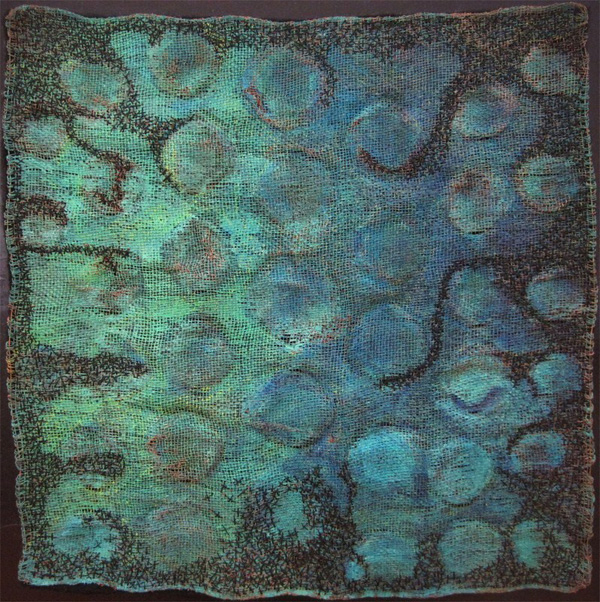
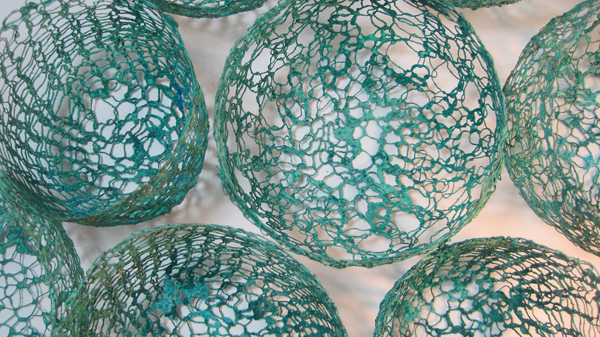
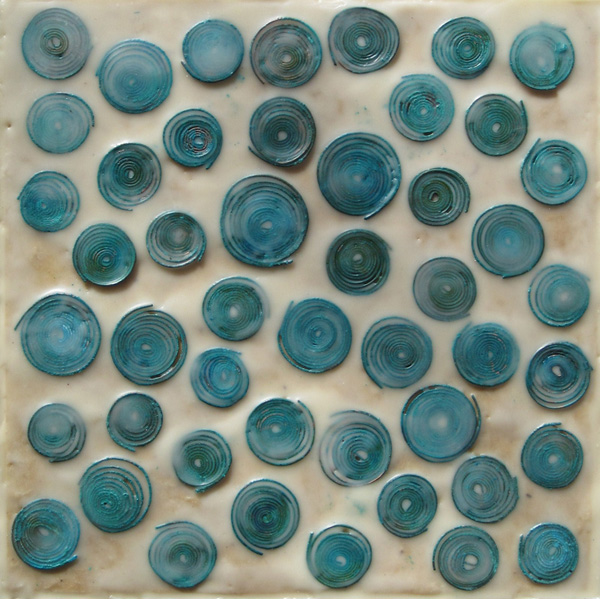
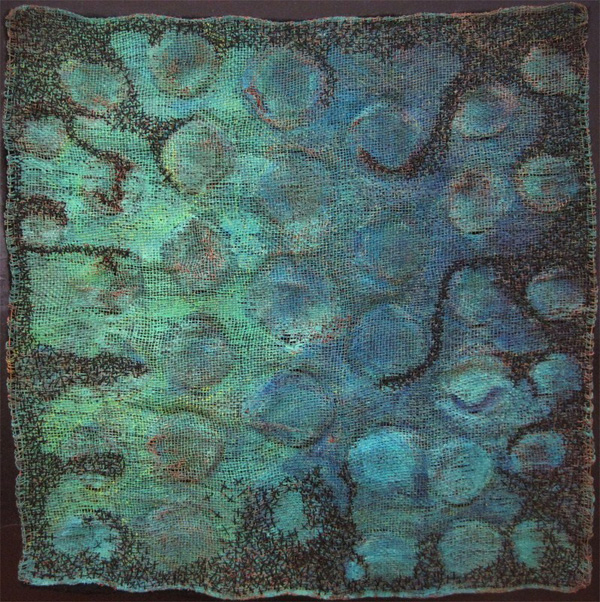
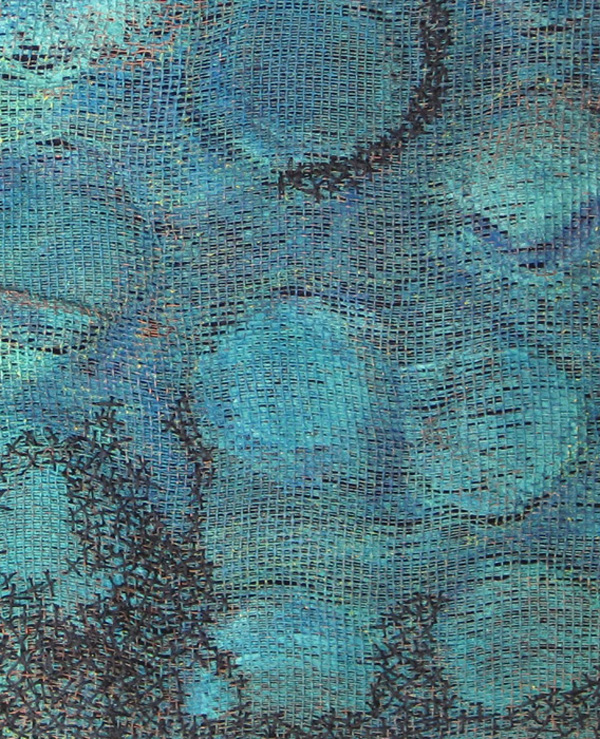
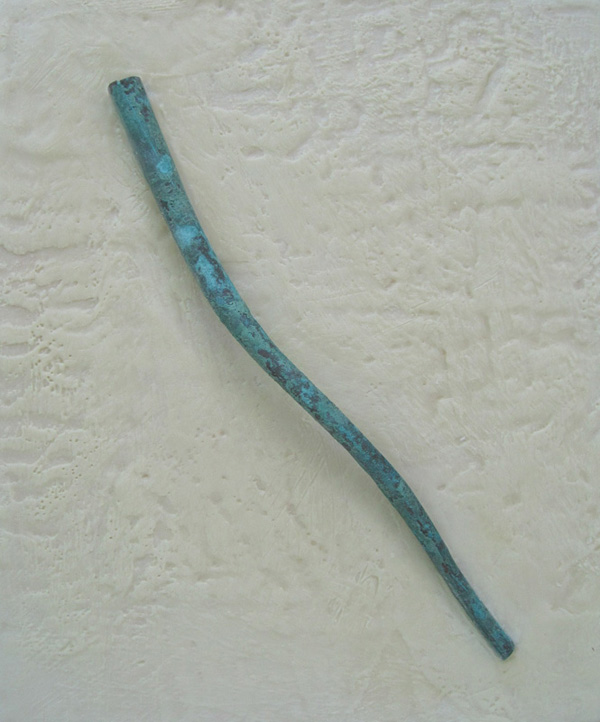
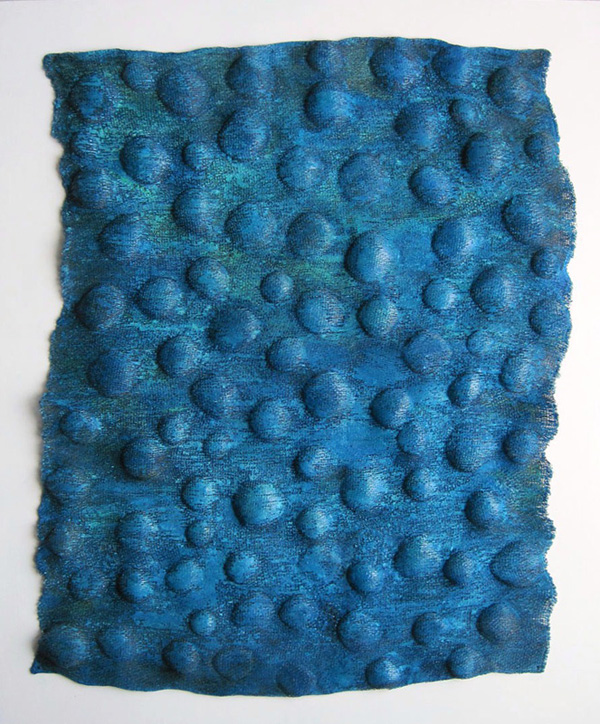
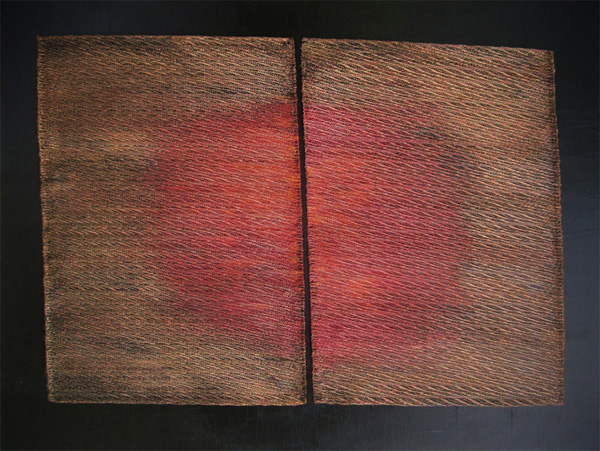
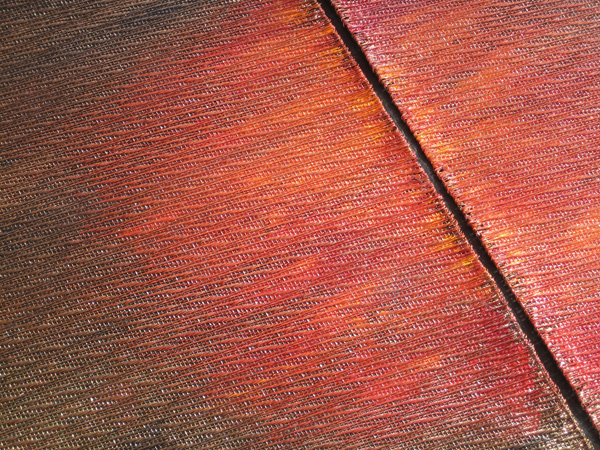
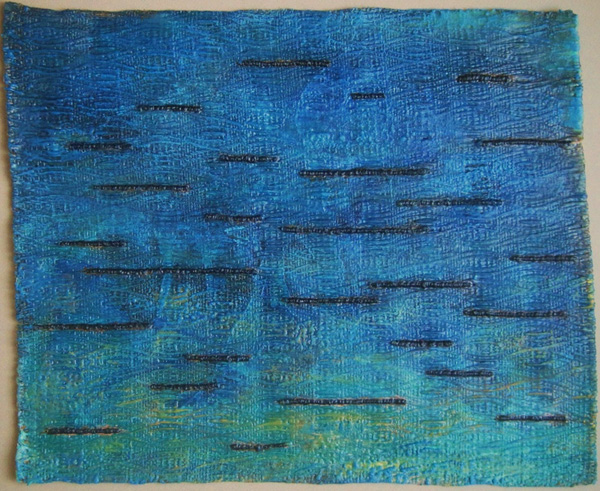
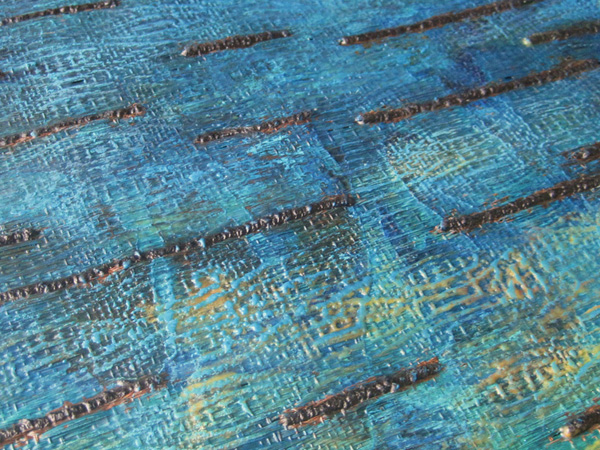
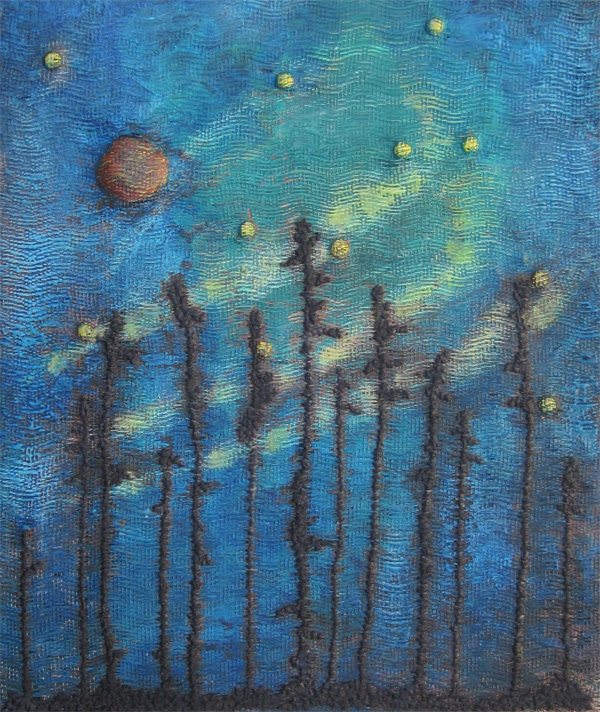
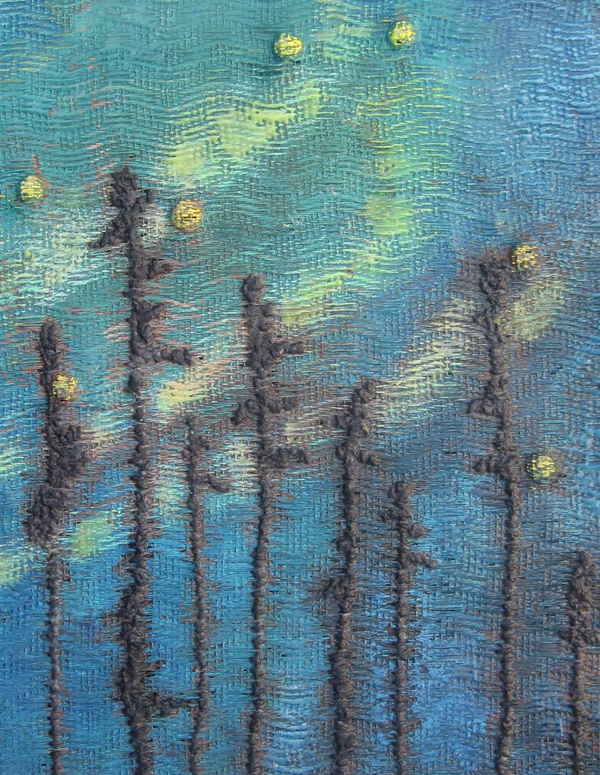
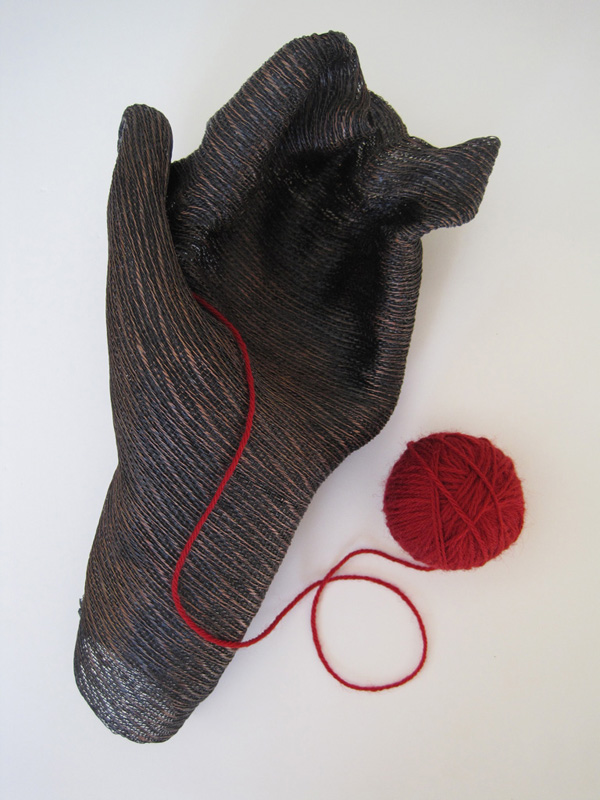
In my current work, I use copper wire to create weavings, knitting and small copper forms. These pieces are hammered, dapped, forged, manipulated, patinated, embroidered, shellacked and sealed in wax. Of these three techniques, handwoven copper is predominant and often serves as my canvas. My work addresses the juxtapositions of the new made old, the malleable made work-hardened, and the merging of craft techniques that appear incompatible. It explores my fascination with fabrics that adhere to the laws of metalsmithing as well as those of textiles and plays with traditional patterns in unexpected contexts. More recently, I have begun investigating the craft of embroidery by stitching into my weavings and playing with the contrast of soft thread against aged metal and the subtle effect of broken patinas.
Previous World of Threads Exhibitions
Sayward Johnson exhibited in the 2012 Festival major exhibition De rerum natura (On the Nature of Things).
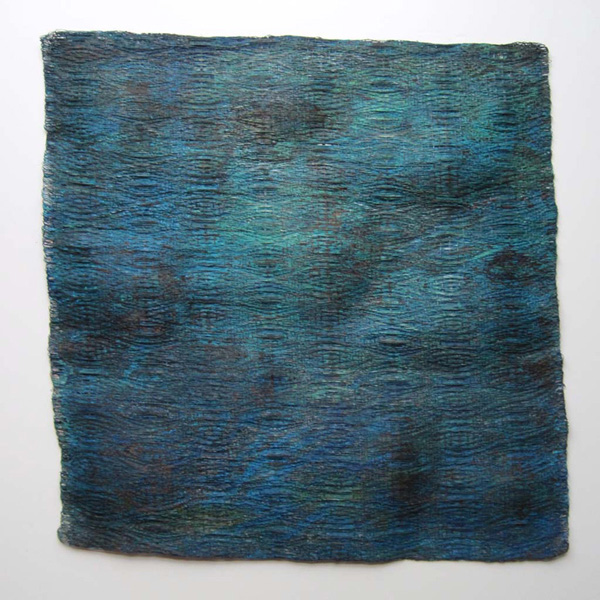
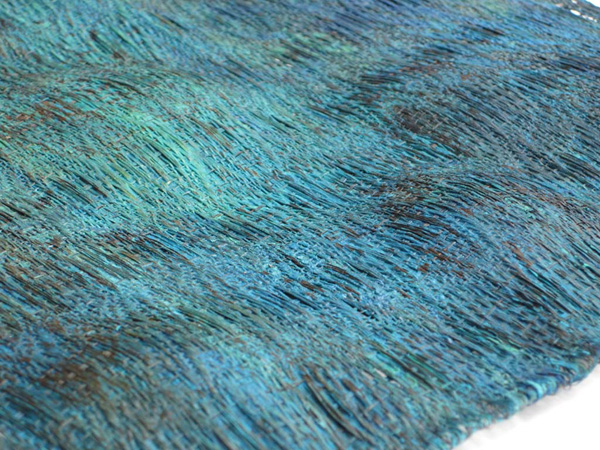
The unexpected is the most exciting part of my work, as the imperfections may become curiosities and points of interest.
Where do you get your inspiration?
I draw my inspiration from natural forms, lichens, old crumbling walls, rust and the boreal forest. I spent over a decade as a treeplanter up north and my memories of black spruce forests and lone white pines left to seed cut-blocks are forever with me. Lately I have been compelled to recreate them in my own way.
Additionally, often my materials inspire me. The heavy verdigris patinas I create take weeks and they are difficult to control. Consequently, with each of my works, there occurs a moment of surprise, where the accretion of salt or patina creates unanticipated patterns and effects. This element of the unexpected is the most exciting part of my work, as the imperfections may become curiosities and points of interest upon which I layer thread, pastels and wax.
I can't omit music and literature. Where would the creative process be without a mood or a narrative?
Why did you choose to go into fibre art?
I started off as a knitter. My grandmother was forever knitting afghan blankets when I was growing up, and she taught me to knit and purl, but it wasn't until I was in my mid-twenties that I decided to buckle down and make more than a scarf. I moved through hats, mittens, sweaters and onto socks. About that time there was an article in the paper about a local textile artist who was weaving custom rugs. It sparked an interest in me and I realized that I had to learn how to weave. A year and a half later, I was in my first weaving class at the Nova Scotia College of Art and Design. The first time I threw my shuttle through the shed, I felt as though I had come home.
Which is your favourite fibre medium?
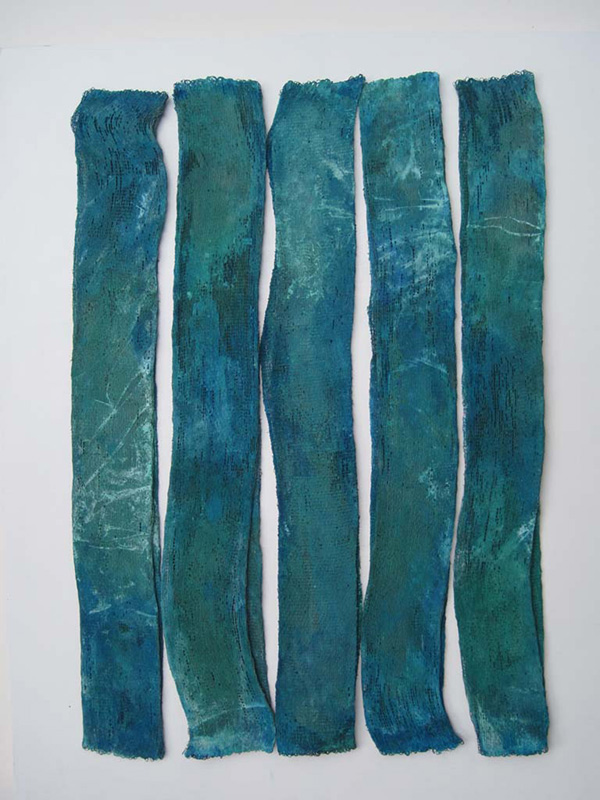
Copper. It can be woven, knitted, embroidered, forged, soldered, patinated and covered in other mediums. It is fragile. It is strong. It can become anything.
What other mediums do you work in, and how does this inform your fibre work?
I also work with metalsmithing, screen-printing, rust dyeing, encaustic and papermaking. I incorporate as much as I can into my primary artwork.
What bridges the works that you have created in differing media?
First and foremost, copper. I'd also like to believe that there is a common sensibility running through my work.
What specific historic artists have influenced your work?
The Group of Seven, especially Arthur Lismer and Tom Thompson. I am drawn to their visions of the boreal forests. I think it's near impossible to tackle the northern landscape here in Canada and not reference them in one's work.
Vincent Van Gogh: His work is playful and colourful and contains so much movement that it naturally appeals to the textile artist in me.
Robert Smithson: Not only am I moved by his land art, I am moved by words he used to write about it. He's an inspiration in reminding me to reflect on what I'm making and find a voice for it.
What specific contemporary artists have influenced your work?
Dawn McNutt, Dartmouth, Nova Scotia, Canada. I first saw her Kindred Spirits during my first year at NSCAD (Nova Scotia College of Art & Design, Halifax, Nova Scotia). They are life-sized figurative sculptures made of copper, steel and seagrass. Her work was the catalyst for my interest in copper.
Marcel Marois, Quebec City, Quebec, Canada. He is a tapestry artist and a master of the gobelin tapestry technique. Many of his notable works, such as Passage interrompu, address environmental issues. Even though his technique is centuries old, the way he works, his subject matter and means for adapting it to representation, are entirely modern.
Magdalena Abakanowicz, Poland. Her work has captivated me since my first year at NSCAD when I discovered her series of organic, burlap sculptures titled The Crowd. I love the strange, heavy textures of her figurative pieces and I love their eeriness. She opened my mind to the notion that one could have a fibres background and move fluidly into other mediums, even on the grand scale, all while maintaining a tactile quality so important to fibres. One need never be limited by materials, size or concept.
What other fibre artists are you interested in?
Cal Lane, Nova Scotia, Canada. I've been fortunate enough to see three of her shows over the last three years. In one of her most recent exhibitions, she used a plasma cutter to cut a map of the world into an unfolded steel oil drum. I appreciate that she takes the stereotypically 'feminine' in the form of lace motifs and applies them to a masculine material. She is simultaneously reinventing an ancient craft and applying it to global issues via her appropriation of the oil drums.
Emily Barletta, Brooklyn, NY, USA. She stitches through white paper with red thread and creates exquisite abstract drawings, often with nothing more than multiples of cross-stitch. The stitches move and shift across the paper in such a way that it's easy to lose oneself in them.
Lisa Anne Auerbach, Los Angeles, California, USA. Lisa machine knits everything from sweaters to yurts and covers it all with subversive text. I first discovered her sweater collection several years ago at Ravelry and I have been a fan ever since. Her work can be brash, bold, sarcastic and funny – descriptions I would not typically apply to my own work and that is undoubtedly what makes it so attractive to me.
I personally see contemporary art as an 'anything goes' arena.
What role do you think fibre art plays in contemporary art?
For a long time, men had the advantage of being the viewers and whenever relevant their ideology of the social order affected the meaning of art itself. Women, on the other hand, had their own spheres of 'less important' works. Not so coincidentally, the mantle hanging over stereotypically women's work (and fibre arts) has been, more often than not, craft. Early fibre artists such as Magdalena Abakanowicz and Lenore Tawney, coming on the heels of Abstract Expressionism, became pioneers of the fibre arts movement. Incredibly, it's only been forty years or so since fibre arts came 'off the wall' and I feel that in the last ten, benefitting from both the internet age and the DIY movement which inspired a resurgence in techniques such as knitting, weaving and quilting, the fibre arts realm has exploded. While the notion that fibre arts are more 'craft' than 'art' is likely still maintained by some in the field of visual arts, I personally see contemporary art as an 'anything goes' arena. Contemporary art is about embracing techniques and materials and reinventing them. It embraces interdisciplinarity and fibre art, with its multitude of techniques, provides endless possibilities. Additionally, while for many years I think process was viewed as a distinction between craft and art, process has increasingly found its way into contemporary art. Process is fundamentally intertwined with fibre arts - be it via weaving, spinning, dyeing, weaving, knitting, or stitching. The sky is the limit.
When did you first discover your creative talents?
I truly believe that everyone is creative, even if they haven't tapped into that side of themselves yet. I began knitting seriously in my twenties and developed my interest in fibre art then. When I began to study at NSCAD, it was as though the entire world opened up for me.
Please explain how you developed your own style.
I am still in the process of developing my own style. I experiment constantly. I open myself up to new techniques and try to take at least one course a year.
When you were starting out, did you have a mentor?
I didn't have a mentor, but did have several studio advisors (Sandra Brownlee, Naoko Furue and Robin Miller) who were accepting of my desire to spend half my studio sessions down in the metal department.
How does your early work differ from what you are doing now?
I still consider myself an emerging artist. When I reflect on all I want to create and how much I still have to learn, I can't help but view my current work as my early work.
What is your philosophy about the Art that you create?
At the moment, my Art is a journey and process of discovery. I am content to be in this moment and enjoy it.
What project has given you the most satisfaction and why?
There is something wonderfully effortless about my small urchins.
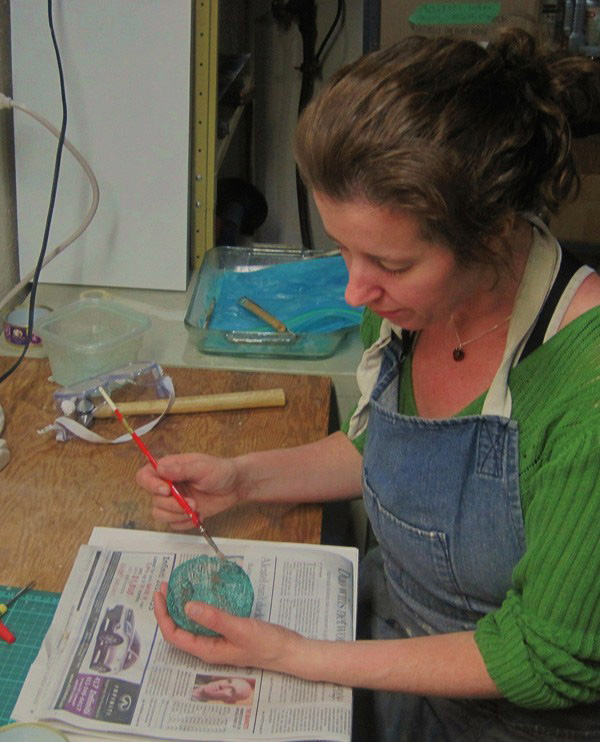
Tell us about your studio and how you work:
My loom is in the finished part of my basement. I have a small studio space for encaustic mediums and paints in the unfinished area. I do most of my detail work and embroidering at my dining room table. I currently work around a toddler's schedule. When she is at pre-school, I weave. While I embroider at the dining room table, she does art projects or plays in the living room across from me. After she goes to bed at night, I knit. I've learned to make the most of the spare moments I have.
Is there something else you would like us to know about you or your work, which we have not touched on?
It makes me happy. Art making may have its ups and its downs, but it is a constant source of joy in my life.
What interests you about the World of Threads festival?
It is an honour to be in the company of so many talented artists. It astonishes me that so many talented and varied artists are united under the banner of fibre arts.