Artist Interview 8: June J. Jacobs
Meacham, Saskatchewan, Canada
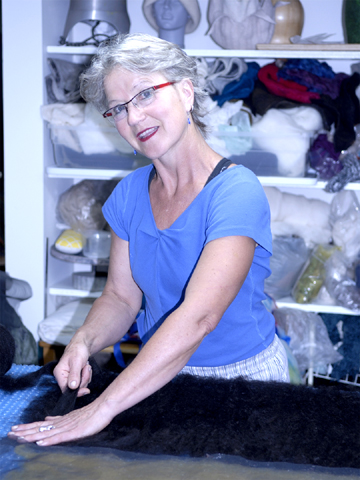
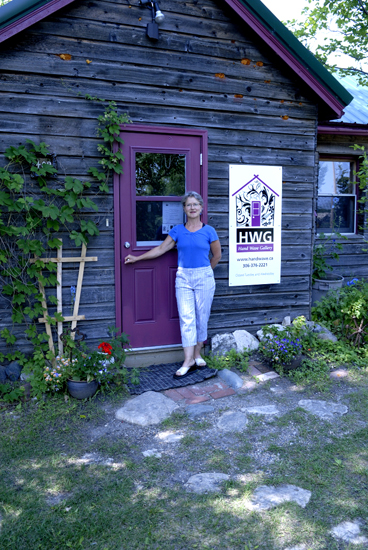
June J. Jacob's fibre work is inspired by nature's miracles. She lives and works in an environment that allows her to witness seasonal extremes and transformations. June has been active in Saskatchewan fine crafts for more than thirty years in a variety of capacities: artist, educator and owner of the The Hand Wave Gallery.
Tell us about your work?
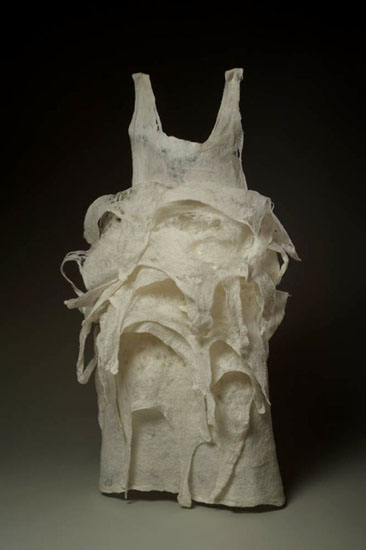
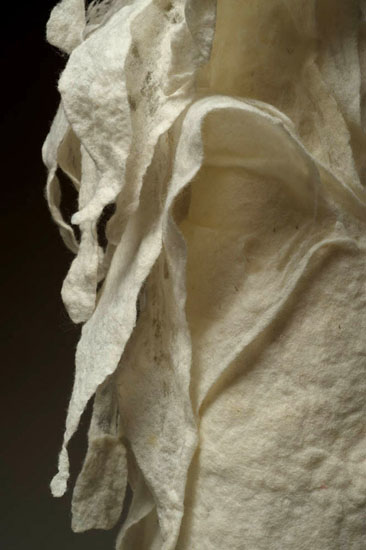
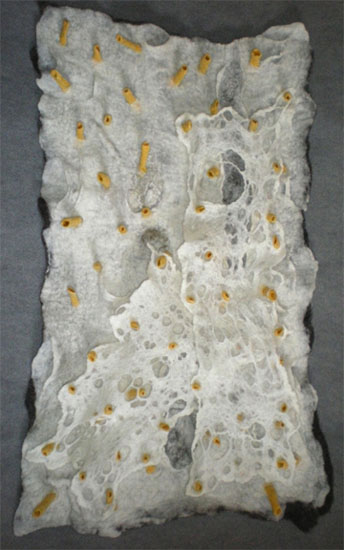
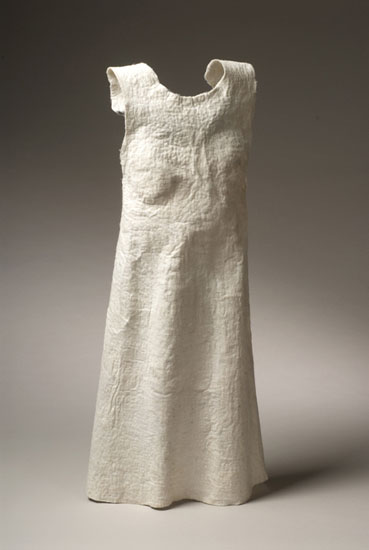
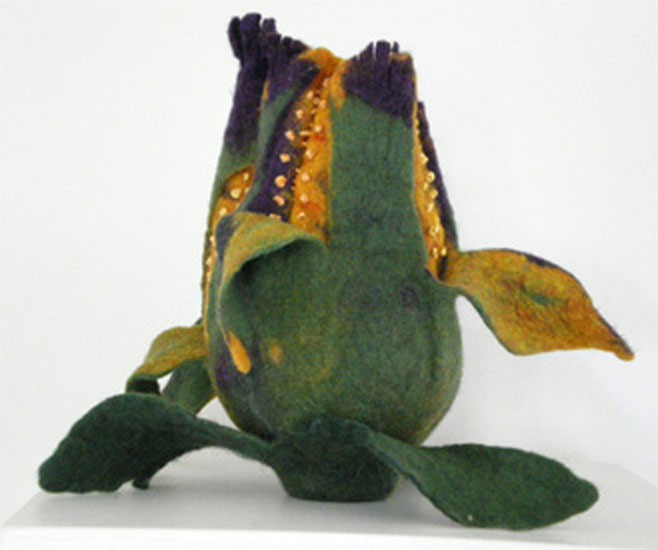
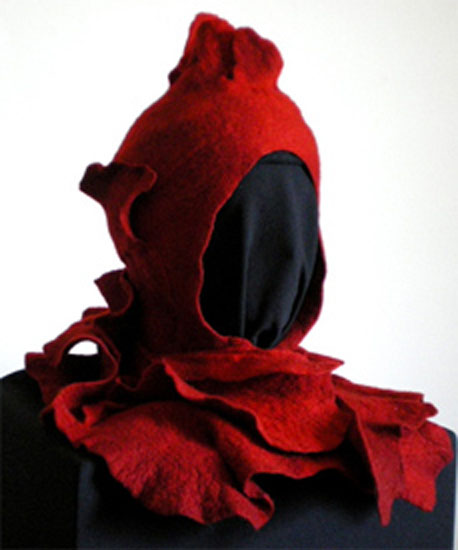
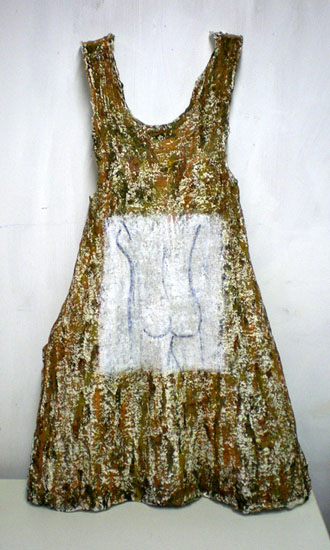
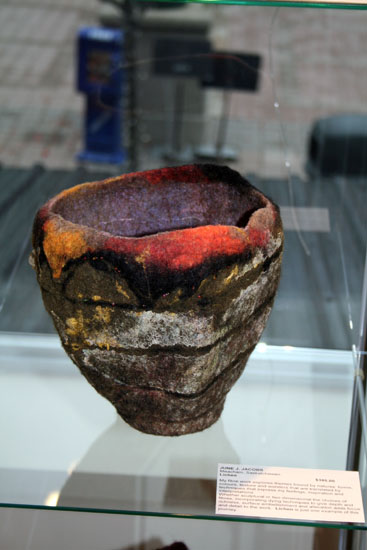
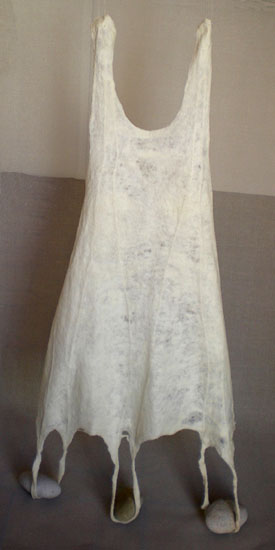
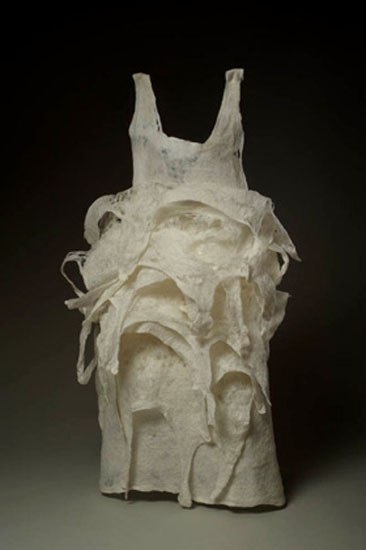
My work covers various genres; wearable garments and functional items…scarves, hats, shawls, jackets and accessories, blankets, and runners. I also like to create sculptural vessels and 3D hangings which allow me to push the textural, colour and composition of works. The concept based sculptural work has forced me to push textiles beyond its traditional notions and concentrate on abstraction and integration of ideas, perceptions and technique in a sculptural context.
Previous World of Threads Exhibitions
June J. Jacobs exhibited in the 2009 Festival Common Thread International Exhibition Part 2. Festival 2012 saw her work in the major exhibition De rerum natura (On The Nature of Things). In Festival 2014, she was in major exhibition The Red and the Black.
Where do you get your inspiration?
The majority of my inspiration comes from my immediate natural environment with all its subtle seasonal changes, textural components and accessibility. But it also comes from the books and magazines I've read, the programs I listen to and shared conversations with fellow artists.
Why did you choose to go into fibre art?
I was introduced to stitchery and sewing by an aunt, my mother's sister, when I was a little girl. The skills I learnt then continued to develop throughout my teenage years and influenced many choices through my life. Now in my fifties, I realize that fibre chose me as a means to express myself.
Which is your favourite fibre medium?
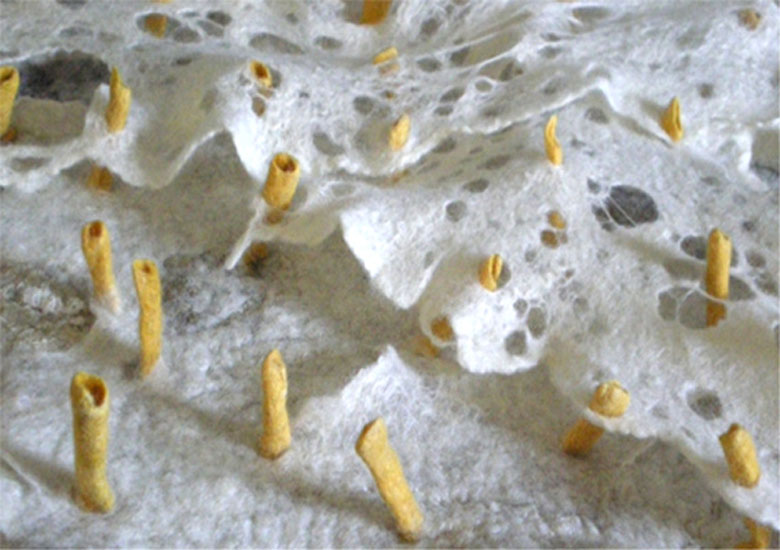
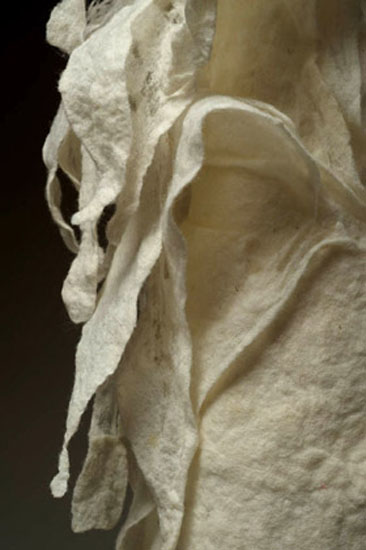
I love all fibre however, in the last five to ten years, felting has become my favourite and my focus. The language of my hands is felting. It is the oldest fibre technique, predating machines. It is the use of animal fibres and the transformation from the raw state to the object or the sculpture or the garment that nourishes my imagination. I also incorporate quilting and embroidery techniques and other surface decoration techniques extensively into my felted works.
If it is art, the element of fibre is inconsequential.
What other mediums do you work in, and how does this inform your fibre work?
Mixed media sculpture, wood and ceramics, paper have all informed my sculptural textile works. The way volume, surface treatment, textural elements are handled in these mediums influences the treatment and choices made for my textiles works. This is especially considered when you work in collaboration with other artists.
What specific historic artists have influenced your work?
William Morris, for his skill of incorporating colour, design, patterns and creating incredible compositions. The Impressionists, in particular Picasso who moves freely between painting, sculpture and ceramics and Matisse's cut paper compositions and Chagall's figurative paintings. All the renaissance painters for their composition and mastery of skill of painting. Abstract painters in general.
What specific contemporary artists have influenced your work?
Andy Goldsworthy and his conceptual relationship to the natural environment and his ability to see the perfect repetition in nature's designs yet achieve a sense of random placement in his own sculptures. Swiss born Dutch Sculptor, Markus Raetz' vision and skill of moving between mediums of painting, ceramics, wood and metal and the magic of his 3D tromploie wonders keeps me questioning how and what I see
What role do you think fibre art plays in contemporary art?
If it is art, the element of fibre is inconsequential. Because there is so much art available, categorizing it as Fibre Art may help the viewer and may make it more accessible to a timid or more reticent public.
What other fibre artists are you interested in?
French artist, Simone Pheulpin, fibre sculptor whose detailed textile sculptures awed me by their depth and detailed yet simplistic imagery. American, Textile artist Joan Livingstone large felted industrial scale sculptures capture sensuous forms that command a space and one is compelled to seek an opportunity to touch them. Deidre Scherer's appliquéd masterpieces paint a poetic picture that begs your imagination to invent intricate stories.
Tell us about your studio and how you work:
I have recently moved my studio back into my house. I have two working spaces, one for preparation and finishing and the other for the wet work. I work every day in some capacity whether it is planning and sketching and compiling ideas or whether I am in full swing on a body of work.
Is there something else about you or your work that you would like us to know?
The acknowledgement that there is very little new in the world of art only new ways of seeing.
