Artist Interview 137: Eszter Bornemisza
Budapest, Hungary.
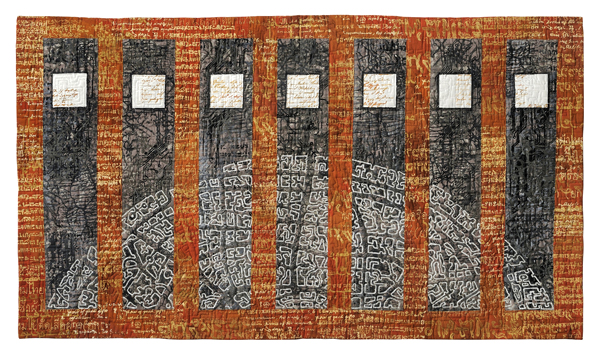
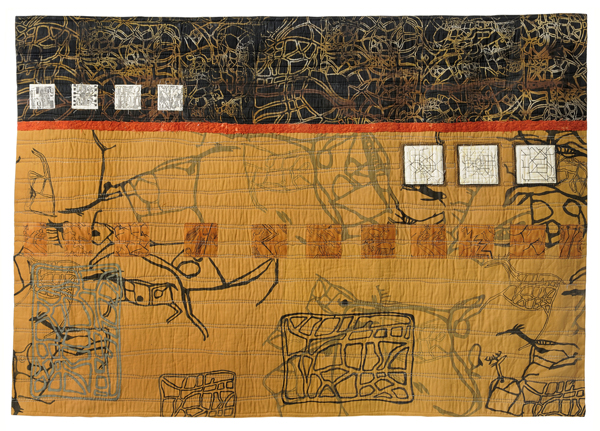
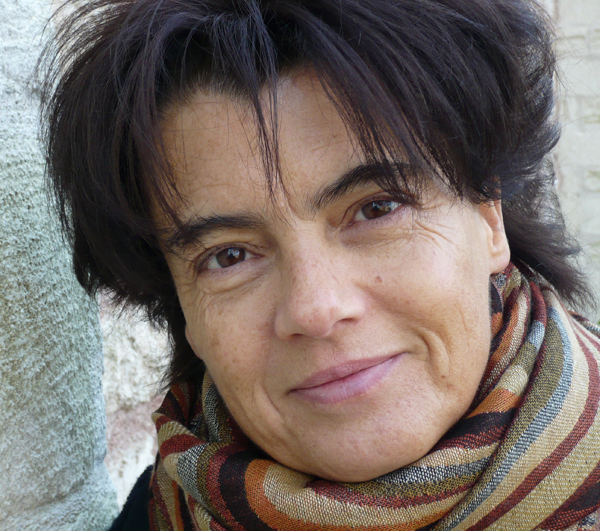
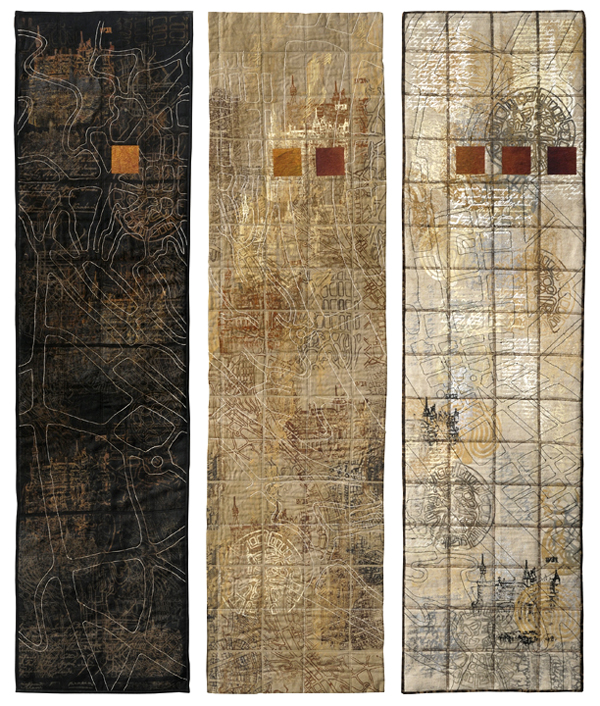
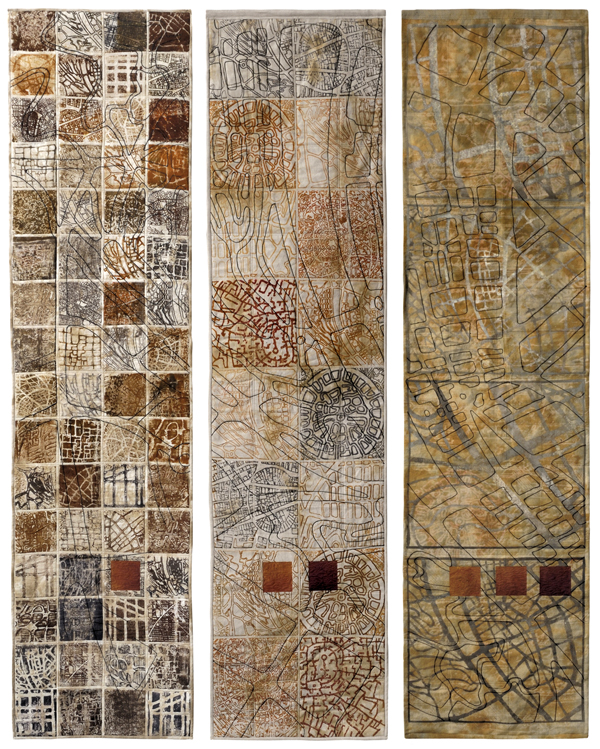
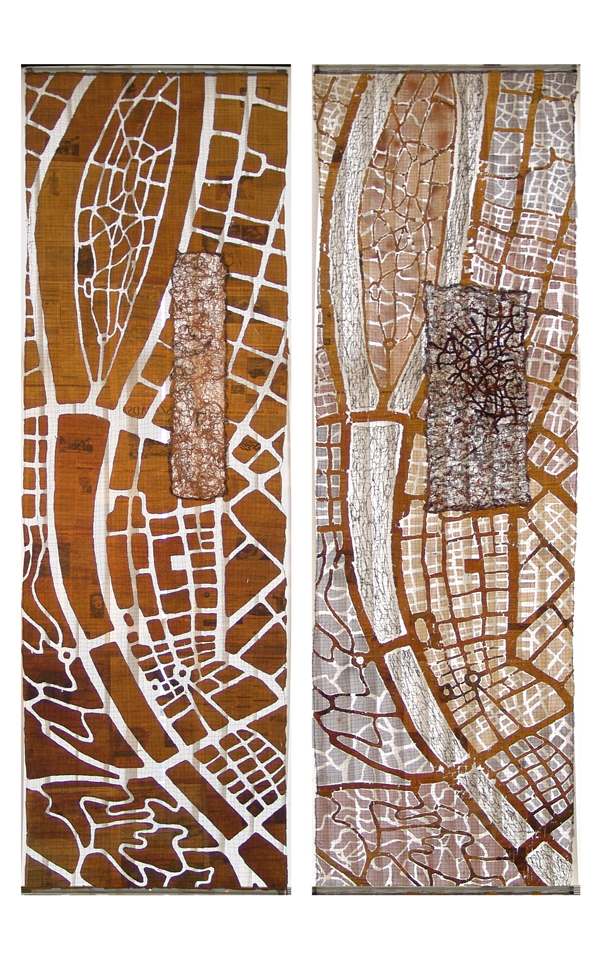
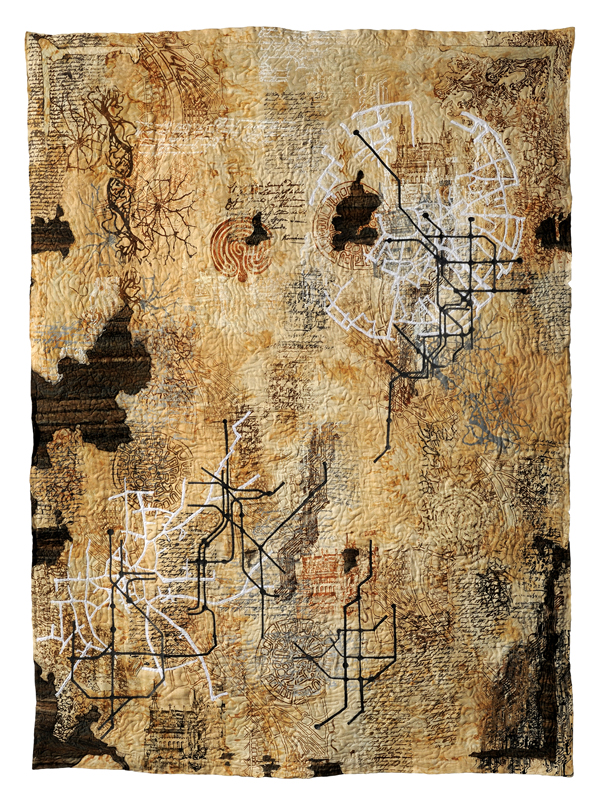
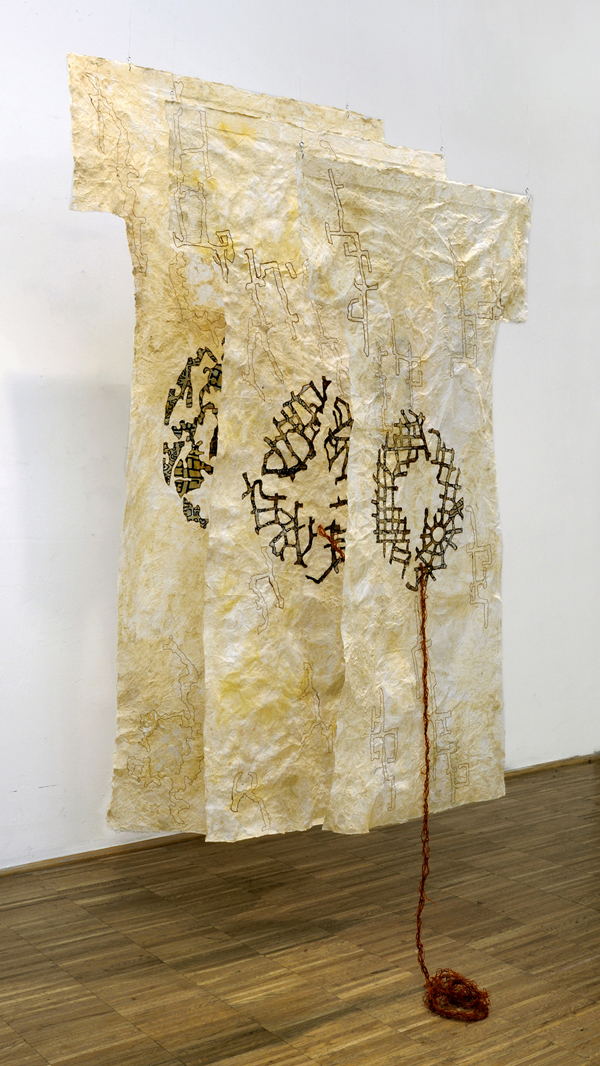
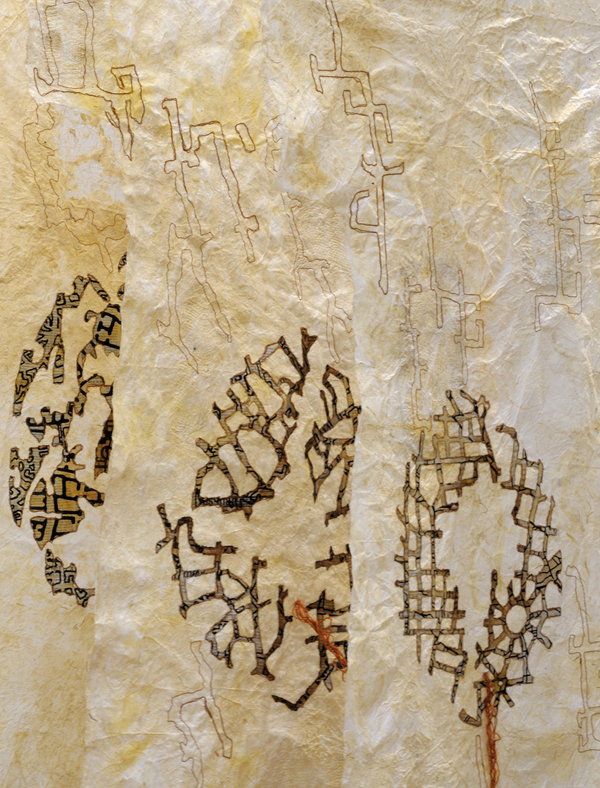
The content of Eszter's quilts comes from her keen interest in the graphic appearance of ancient and new maps. As an urban structure develops, widens or thickens, the cities undergo an endless and continuous evolution. Juxtaposing imprints of specific places or fantasy maps, mazes or circuit boards --- things that form grid-like structures --- the woven texture of the fabrics themselves often reinforces the theme and it too resembles urban structures.
What led you to become an artist?
I have been interested in contemporary arts since my late teenage years, but never thought of becoming an artist myself. I studied mathematics, earned a PhD and worked as a researcher for nearly twenty years.
In the late 90's my attention turned to textile arts after having the chance to visit an art quilt show in France. Having sewing skills, it brought me to the realization that modern pictures could be made in the medium of textiles! That was just perfect for me!
I started experimenting with dyeing old fabrics and piecing simple compositions, playing with shapes and colours. After a while I didn't find it satisfying and wanted to improve my designs. I started studying albums of modern art of all kinds, whatever I could find. I looked through them systematically. I found it important to put into words which elements, aspects or details made a piece intriguing for me. Seeing many contemporary exhibitions in all kinds of media I tried to formalize why an art piece doesn't let me go away. All these considerations helped me to find a direction to follow. I found working with collage gives me more possibilities for trying alternative designs. While practicing it with great excitement, I got more and more bold and free to try to express my own ideas while still keeping my eye on experimenting trends of contemporary art.
In the relative isolation in Hungary, far from the network of art quilters I felt quite lonesome with what I do, until I got accepted to the international group Quilt Art in 2004. I had been exhibiting in some juried shows abroad before, but meeting and exhibiting with them has opened quite new perspectives and interestingly new self esteem for me.
Previous World of Threads Exhibitions
Eszter Bornemisza has exhibited in three Festivals. Festival 2014 saw her work in Solo Shows. In Festival 2016 she was in the major show Cosmic Geometry and the Late in the Season exhibition. For Festival 2018 she was in Installations with a large piece.
Why did you choose to go into fibre art and how did you decide on this medium?
I have been always fascinated by the tactile sensation of various yarns, fabrics and leathers. Growing up in Eastern Block Hungary in the 1960’s where all the textiles were of very poor and raw quality, I found the big attic chest filled with my grandmother's old fine and delicate clothes and dresses a treasury. I loved to feel them, try them, later I started to fabricate new garments from them, slowly picking up some sewing skills. As I had never seen my nuclear physicist mother with a needle in her hands, I had to figure it out all by myself, practicing on an old sewing machine.
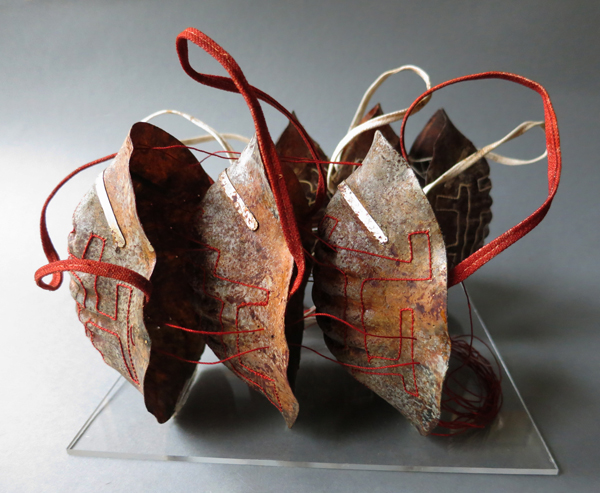
New ideas in content always challenged me to find new technical solutions.
As a fibre artist working in 2D, 3D and Installation first of all, tell us about your 2D work:
I started working with quilts and shortly afterwards took the first steps in making collaged ones. New ideas in content always challenged me to find new technical solutions. Researching on the Internet and in books, examining breakthrough new works in exhibitions helped me to learn about surface design. When there was something I wanted to express without knowing exactly how to do it the proper way, I invented my own techniques. Experimenting and finding results in new techniques and materials liberated me and opened ways for new expressions and new themes.
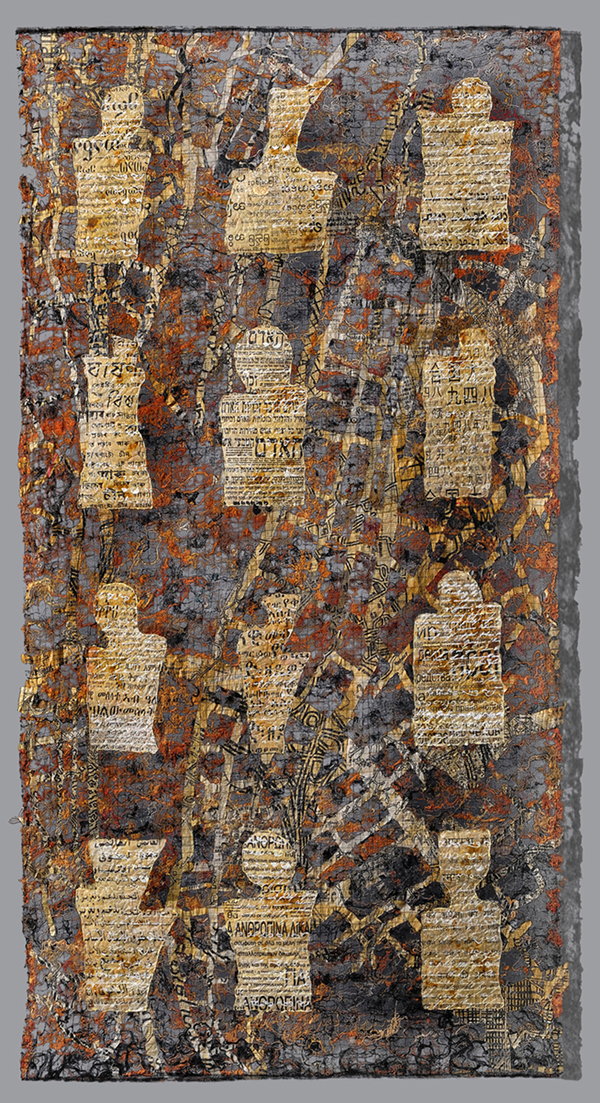
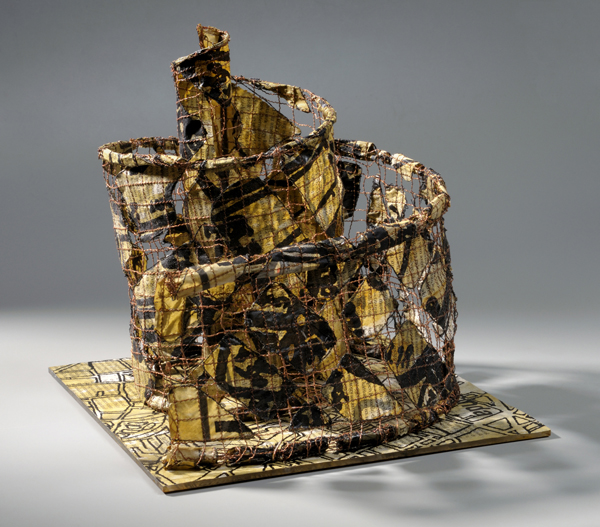
I started to toy with various shapes, sewed together some edges and got some surprising forms.
When & how did you branch into creating 3D work?
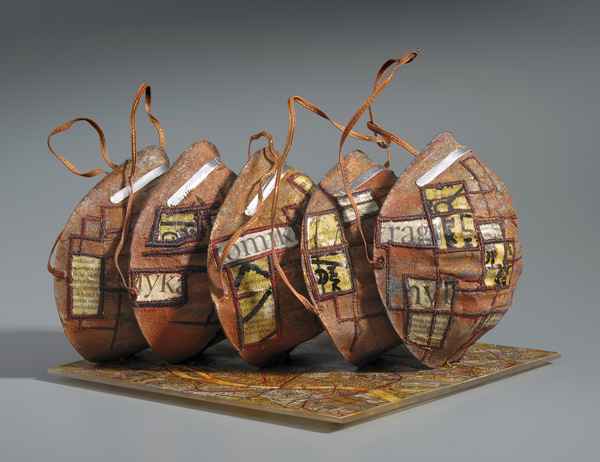
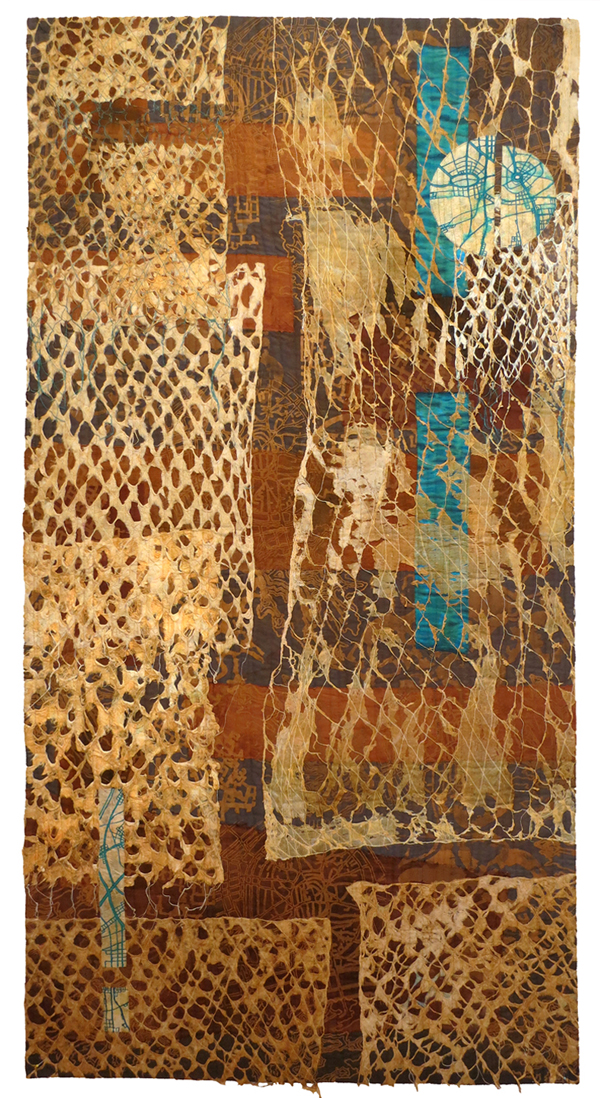
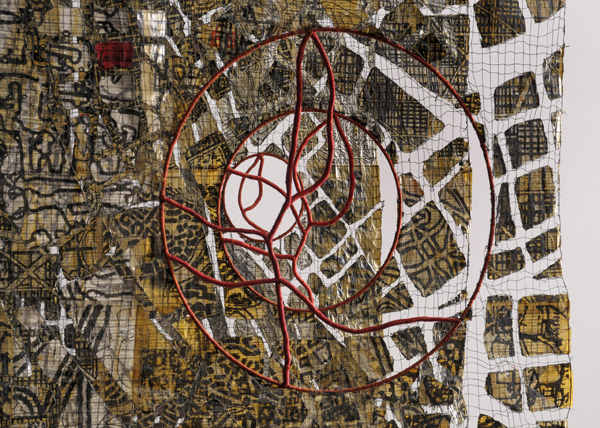
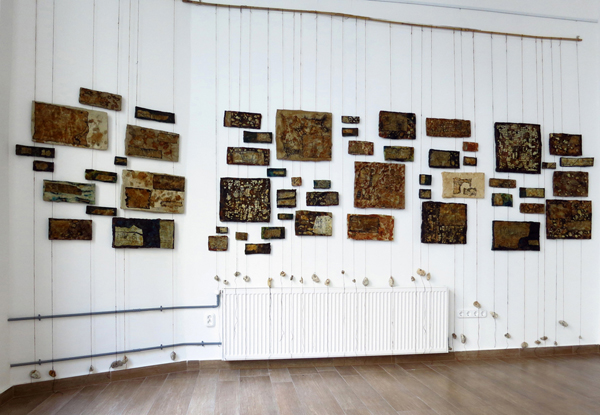
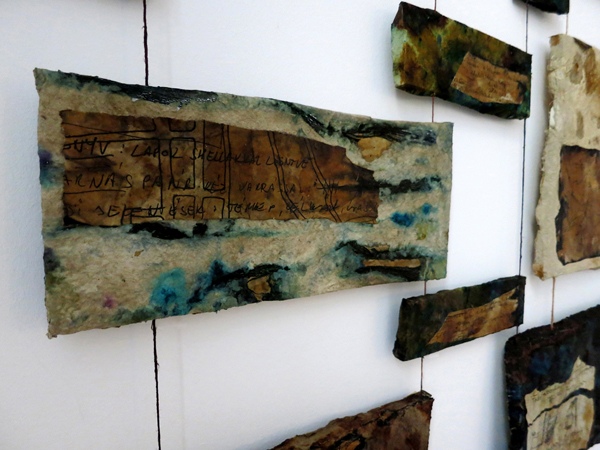
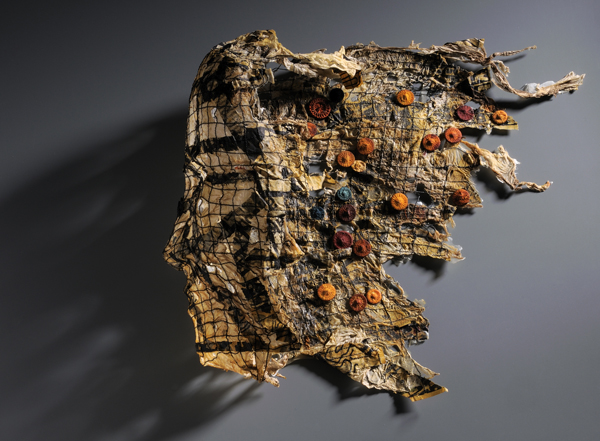
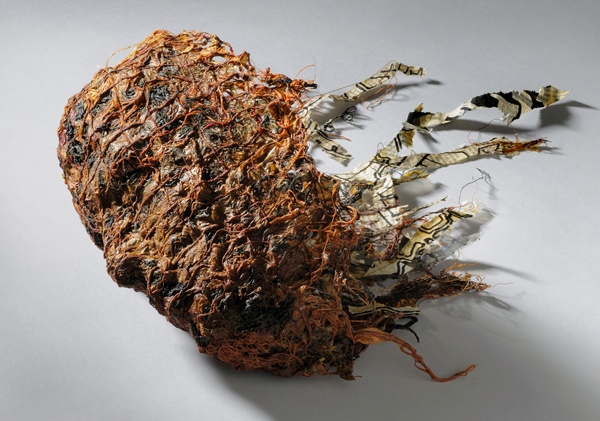
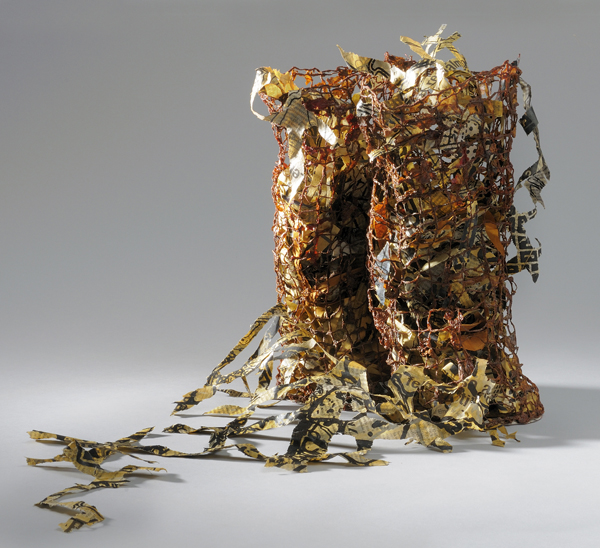
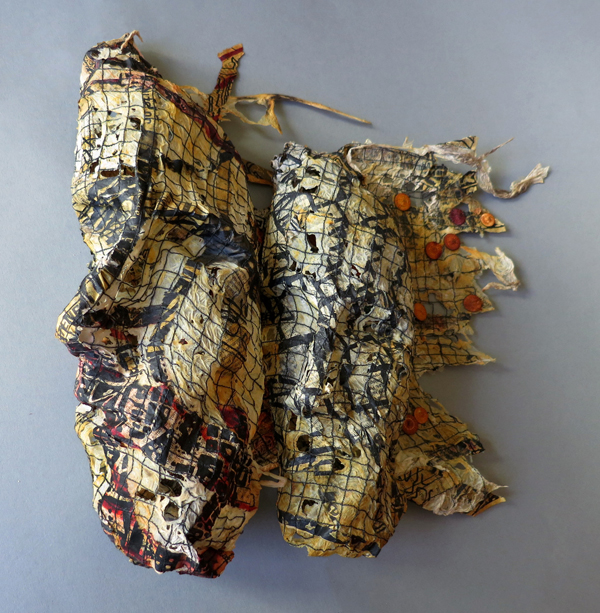
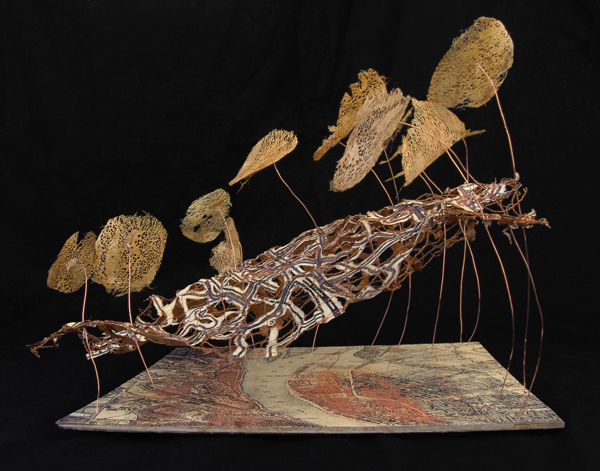
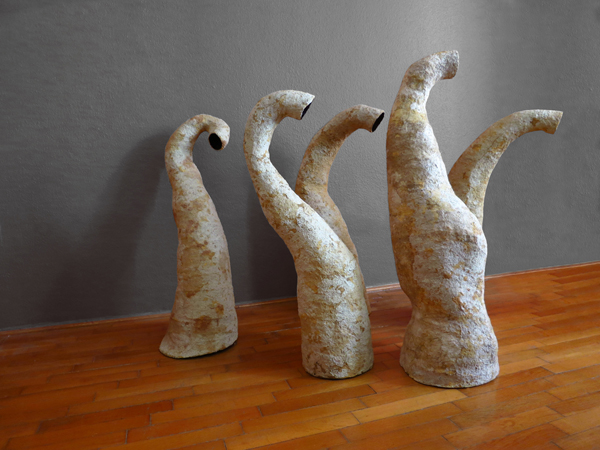
A few years ago I played around with the possibilities of water-soluble film, trying various discarded threads and yarns, when I found some thin copper wire. I tried to apply it with the sewing machine and it worked in the bobbin. I found the resulting grid structure strong and flexible, so I started to toy with various shapes, sewed together some edges and got some surprising forms. I later sewed ripped newspaper maps, tissue paper, thread and buttons into the grids to make the surfaces more interesting. Recently I'm working with hand-cast paper and paper clay that also serves as a rich ground for dimensional work.
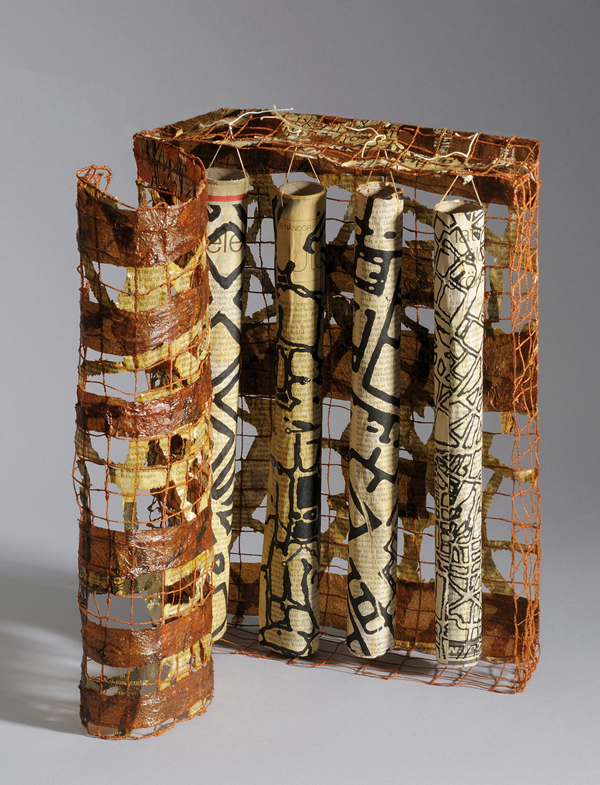
Working in space, with graduation of scales, was a new challenge for me.
And naturally the next question is when and how did you start moving into large-scale installation work?
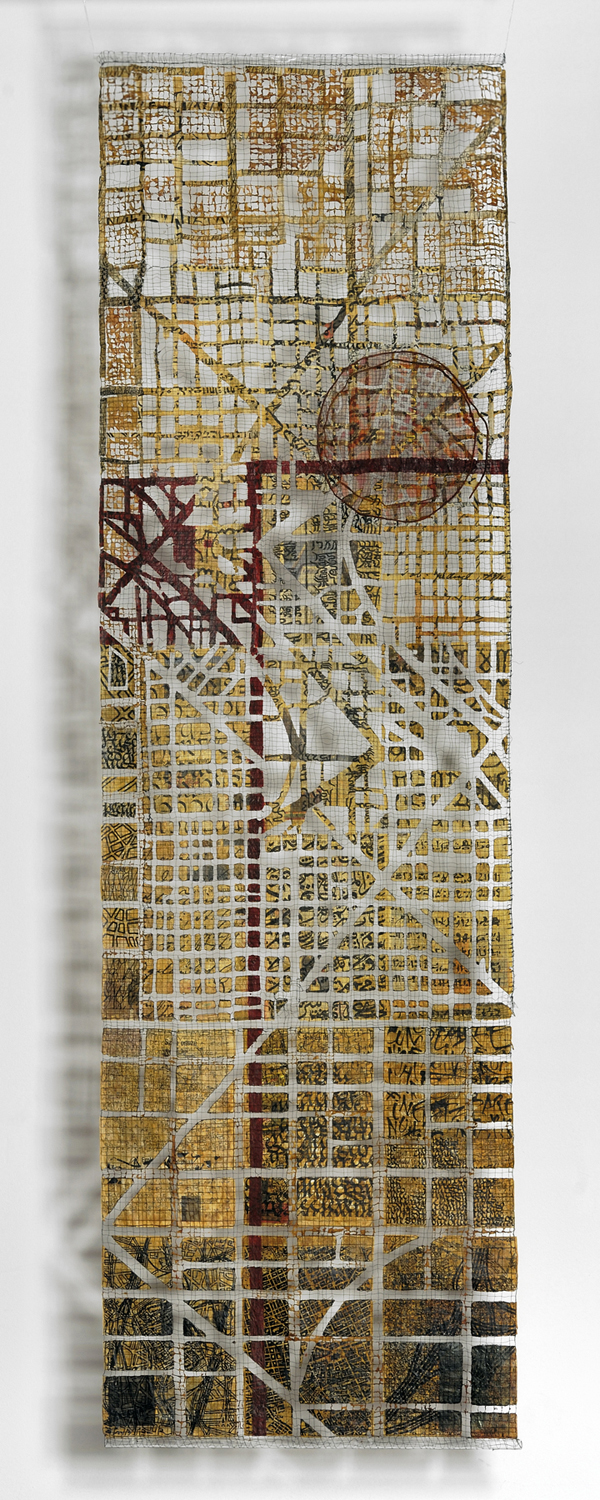
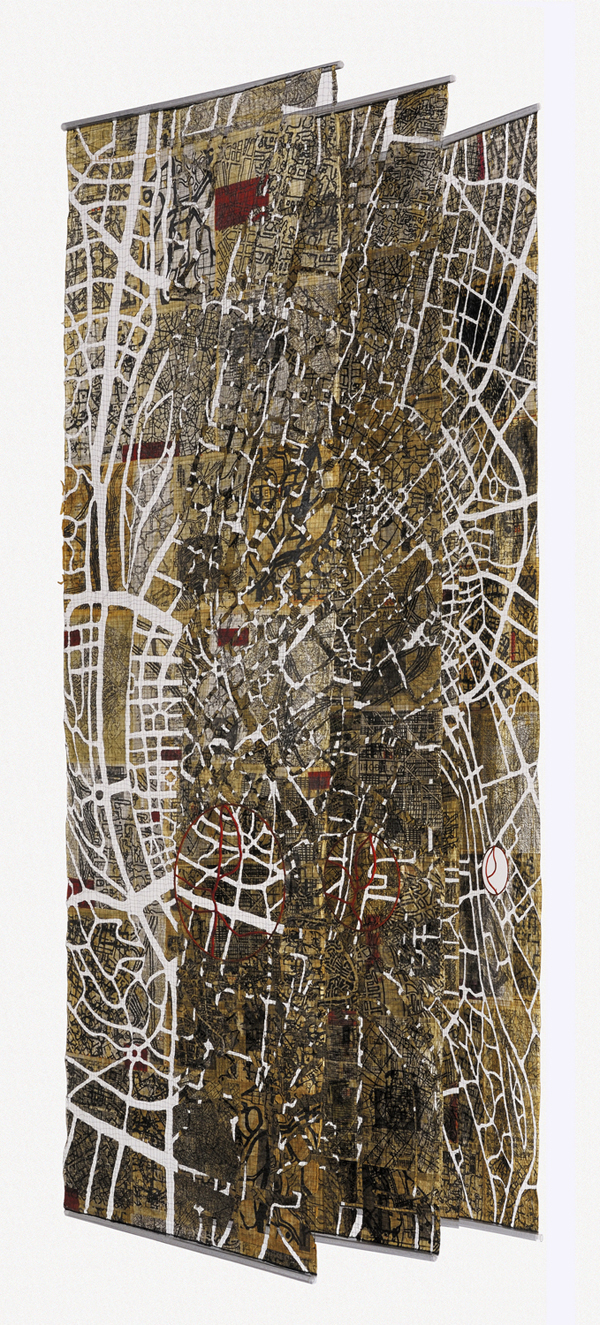
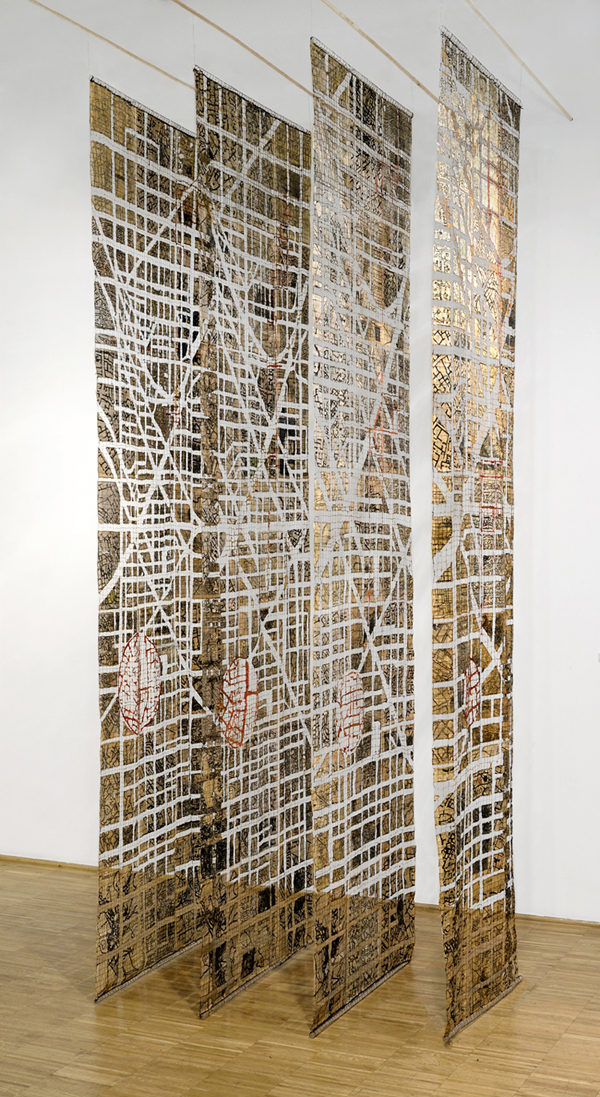
Still working with the water-soluble films and making transparent pieces I found them making wonderful shadows when installed a few inches apart from the wall and it really seemed dramatic when the pieces were big. The idea of transparency led me to the concept of hanging several layers behind each other to let the viewers decide on which layer to focus their eyes. On the other hand these pieces were designed so that the image on them is a blow-up of the next one. These being city grids, various streets or junctions become clear as you walk by. Working in space, with graduation of scales, was a new challenge for me.
When working on site with your installations, what have been the major challenges and how have you overcome them?
They are mainly the size and height of the gallery where I exhibit. In the spring I had a show at Hillyer Art Space, Washington, DC, where the ceiling was just a little bit lower than these pieces. I could roll them up a bit without destroying the design and they looked great stretching from the floor to the ceiling and the room was spacious enough to have a good view of them.
At the Festival of Quilts in the UK, we built in an extra high wall to accommodate them. But if too much manipulation is needed to fit them into a room, I'd rather do without showing them
Do you have a preference between working in 2D, 3D or Installation?
Not really. When I get an opportunity to exhibit in a nice big hall, I try to work out a balance in showing all three kinds of work in a good rhythm. In these cases it is the space that challenges me to create new installation work. Normally and regularly I work on wall hangings or smaller objects.
Your education is in the field of mathematics. In what way has this had an influence on your artwork?
It is difficult to grasp, as if it happens at all, it is unconscious. I don't use it on purpose (if only not in cases when I apply some complicated formulas just for the sake of mystery). One thing is that I like to try to judge systematically all possibilities when I get to a turning point in the process of my work. The other one is maybe more vague, but what I really liked in mathematics is the elegant solution, when a good or even unexpected combination of principles lead to a result without lengthy and difficult calculations. When I am able to eliminate all unnecessary elements from my work, and relationships become clear, I feel the same thing.
You worked as a researcher for many years. In what manner has this background informed what you do now as an artist?
It works the same way as with mathematics. I always liked experimenting, combining various methods, and in research I think I found a good routine to sense the point at which to stop.
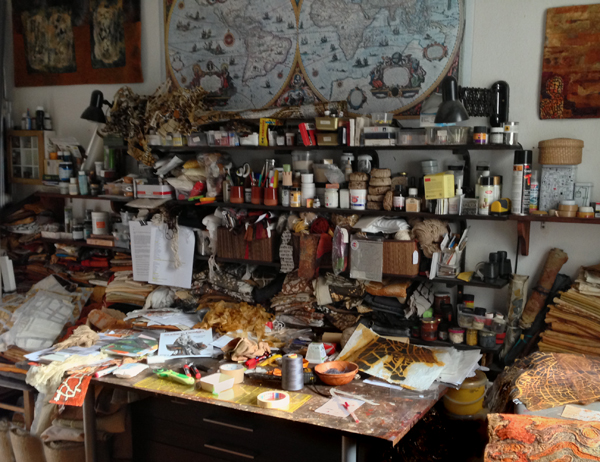
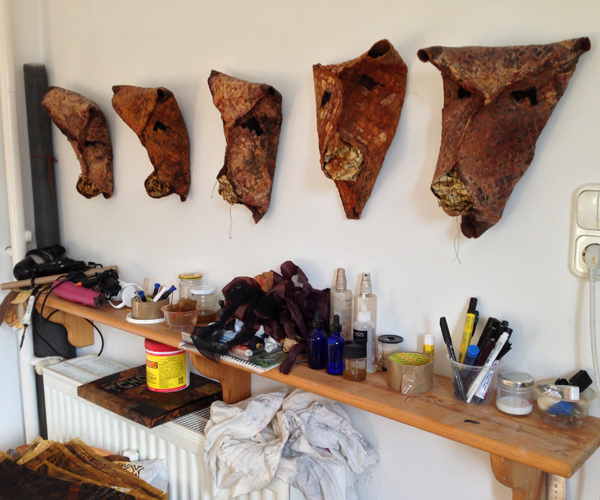
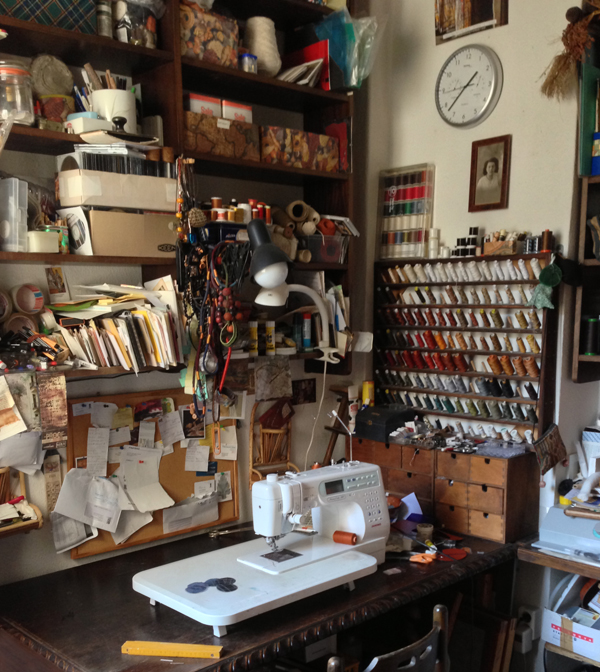
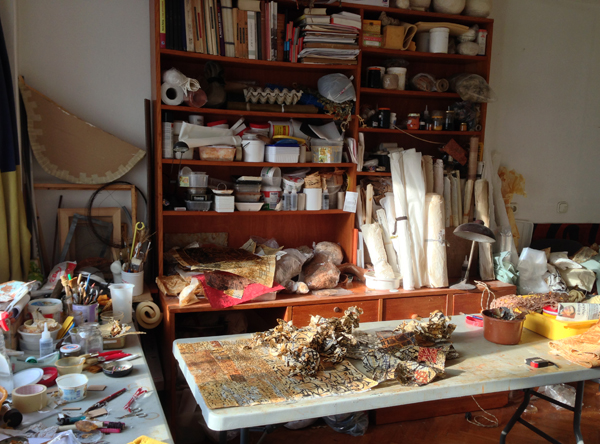
The cities that live within us undergo an endless and continuous evolution.
Many of your pieces portray an urban theme. Talk to us about that:
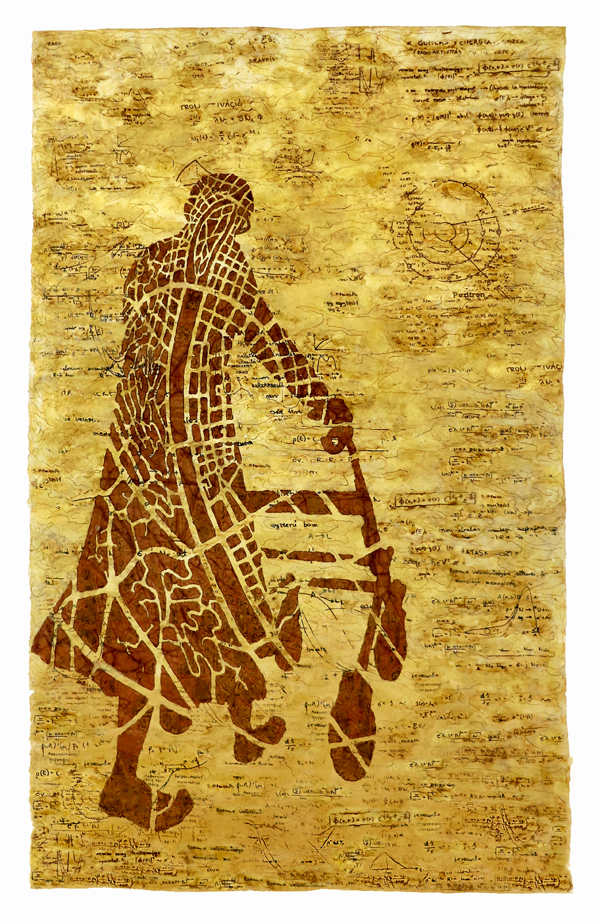
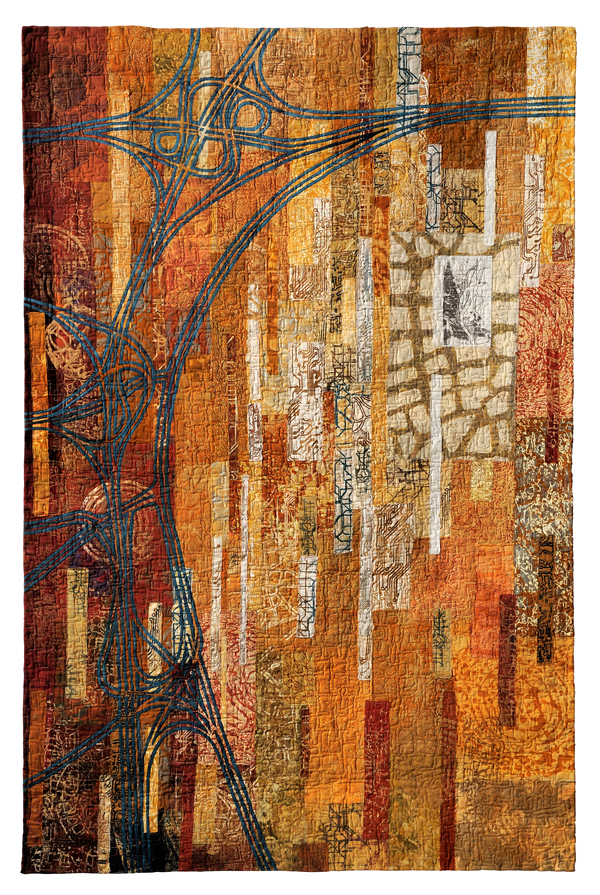
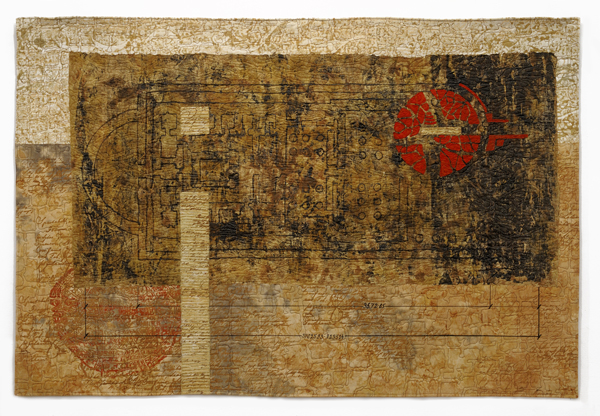
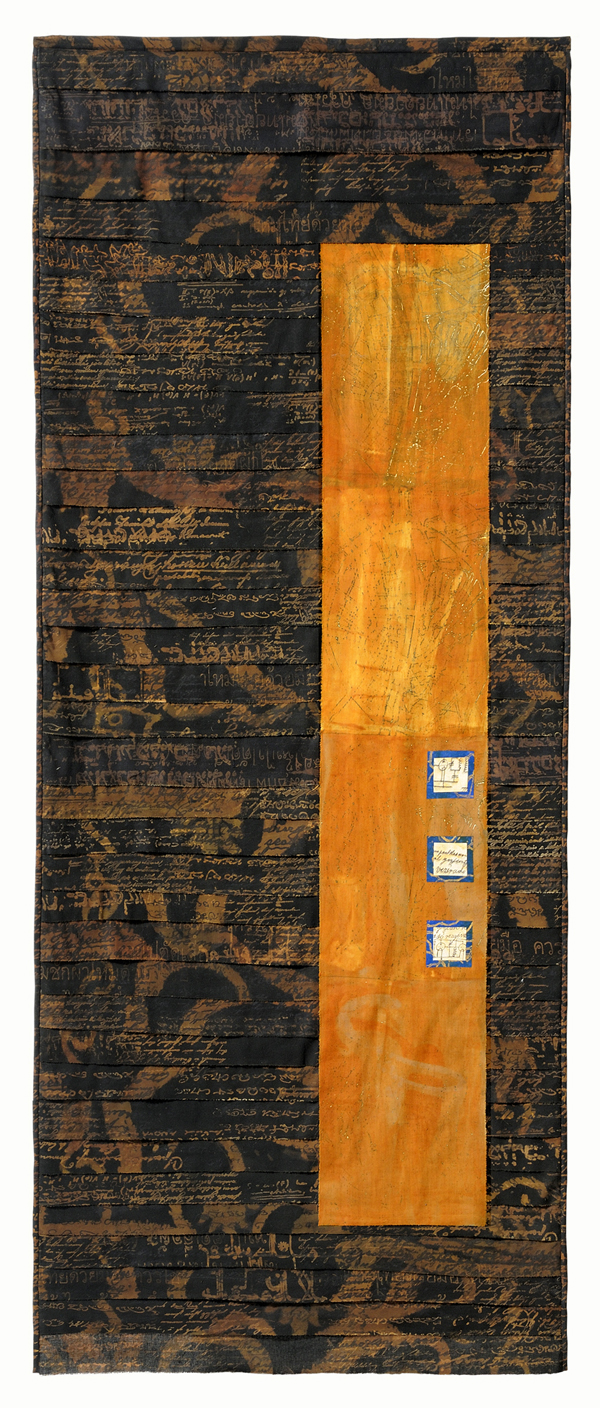
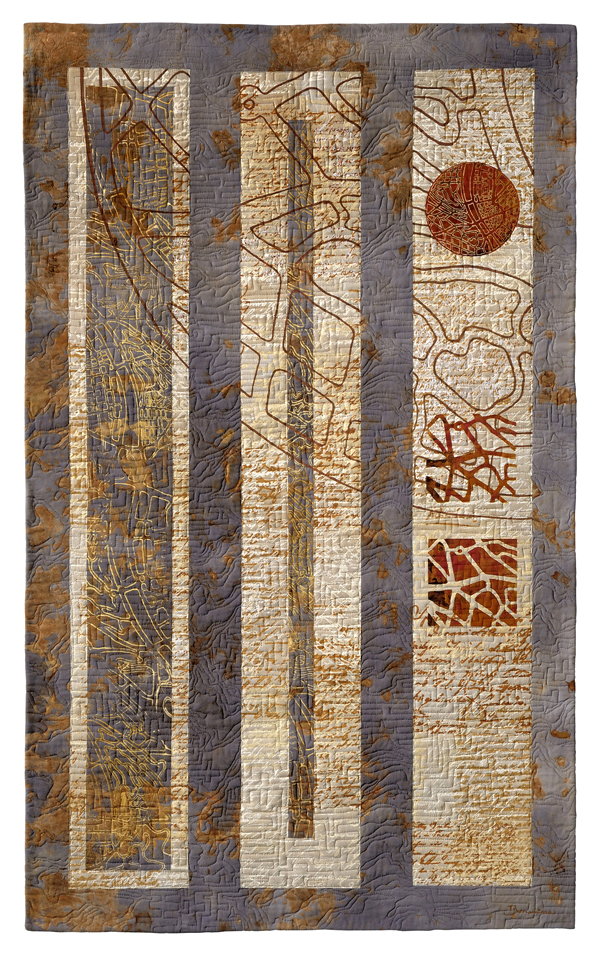
The content of my quilts came from my keen interest in the graphic appearance of ancient and new maps. I used city plans as motives, signs, traces, ruins, the silt of the past. I blended them with fragments of old, incomprehensible scripts. Later I contrasted these with contemporary road and metro layouts, patterns of present urban life. Maps, either real or subjective are imprints of our living in a system, and like labyrinths, they offer a rich ground for associations, deepening our understanding of our life and circumstances. As the urban structure develops, widens, thickens, clots and creates subsystems in history, the cities that live within us undergo an endless and continuous evolution and my attempt is to grasp some moments of this. Juxtaposing imprints of specific places or fantasy maps, tube or road maps, mazes or circuit boards – things that form grid-like structures; even the woven texture of the fabrics themselves– often reinforces the theme as they too can resemble urban structures.
Are you attempting to convey a particular message through your art?
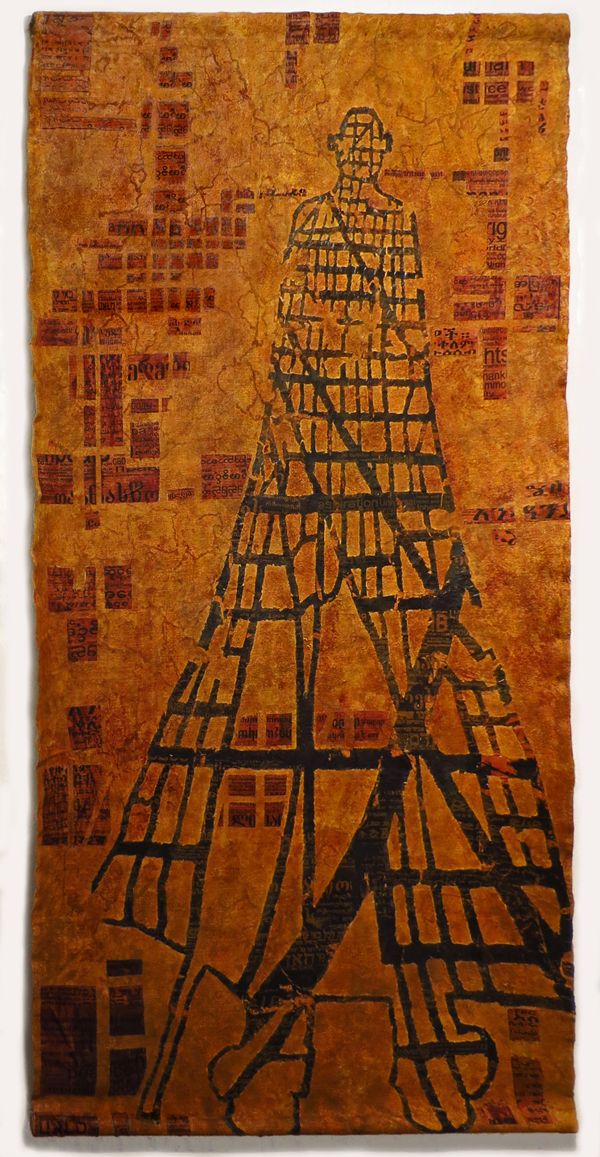
As an urban citizen the theme that keeps me interested is the relation between the individual and the urban system. Recently, getting more and more immersed in the subject, I started embedding silhouettes of human figures with fragmented urban textures in my work. I don't want to convey any special message with that. When I finish a piece, I release it and let the viewer to have associations or resemblances to memories. I would rather draw the attention to some aspects of urban life through associations. Working with layers of the layout of my home city Budapest, I would like to invite the viewer to contemplate the alterations of the city: Whether the rushed changes over the last few decades have been organic or if the changes have helped make the city more livable, are still burning questions.
I used maps of ancient settlements and dwellings that, I feel, preserve the spirit of people who lived there.
You say that your starting points are ideas that reflect our relations to traces and settlements of past cultures: the layers of existence. Tell us more:
At the beginning my starting points were ideas that reflect our relations to traces and settlements of past cultures: the layers of existence. I mean the layers of history and age in the earth and in our mind as well; signs and traces of the past and their meanings for us. I tried to grasp the experience of balancing on the edge of conjecture and comprehension.
I used maps of ancient settlements and dwellings that, I feel, preserve the spirit of people who lived there. I applied fragments of these maps like enigmatic signs or symbols on crumbled murals. By contemplating these things, I tried to focus on the process of understanding the course of time through the assumed meaning of its signs, considering these reminiscences as part of our common ancient knowledge.
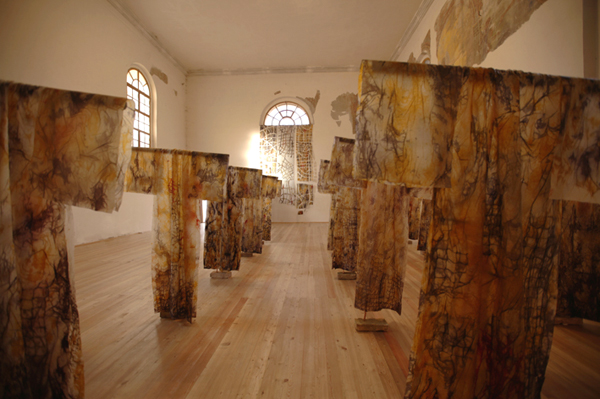
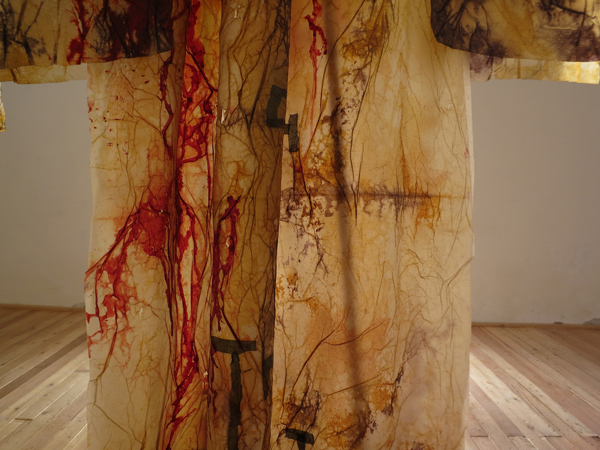
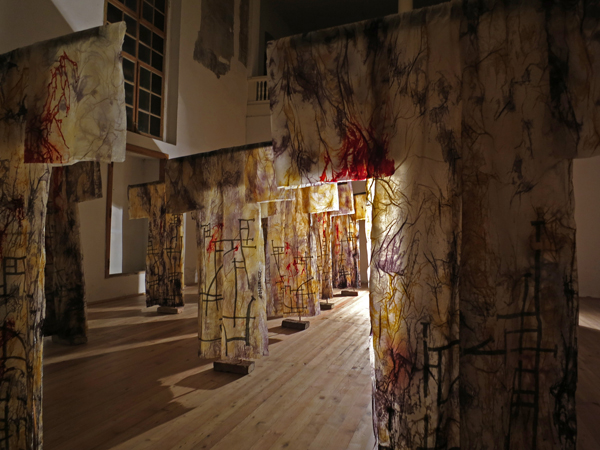
It was the spirit of the space that inspired me to build an array of empty, worn shirts with all the imprints of personal dramas of their late wearers.
You had an exhibit in a synagogue in Eger, Hungary. Tell us about this:
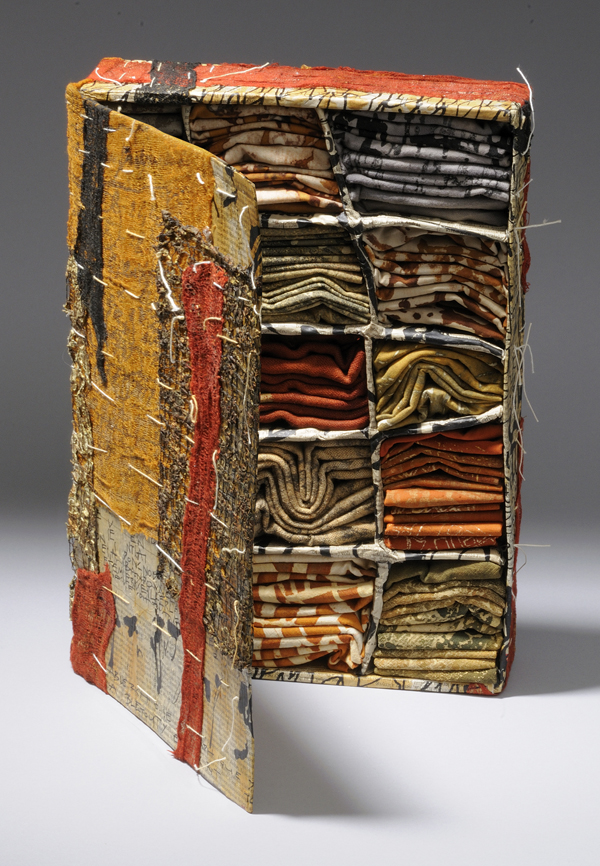
I was looking for venues for the new body of works first shown in the Budapest Gallery in 2010 and applied to galleries in some towns in the country. After I got accepted to the Small Synagogue in Eger (a beautiful historic town) it turned out that the walls are all decorated with frescos, covered with whitewash for conservation, meaning that not a single nail could be put in the walls, nor was there any hanging system. They had some stands for paintings, which I didn't like, but the space was gorgeous and I definitely wanted to take the opportunity to do something there. Having about a year to prepare, I started thinking about an installation that stands by itself. It was the spirit of the space that inspired me to build an array of empty, worn shirts with all the imprints of personal dramas of their late wearers. The beaten troop of fifteen shirts with fragments of settlement maps and thorn nets, blood and dirt tell their stories of the places they have been forever marching and mourning for all the folks they lost in wars, about all their degradation and humiliation.
The exhibition that you had in the Czech Republic (2012), how did this come about?
The previous year I got the chance to exhibit in the Hungarian Institute in Prague and my application material with my catalogue stayed there. Next year someone in charge of organizing an event with concerts and exhibition in Zlata Koruna found it and invited me to exhibit my work. I didn't know the place until I got there and I was amazed by the architecture, by the fragments of arches, the little niches in the walls, the pieces of carved stones just left there. It was just a happy coincidence to find this harmony and correspondence between the space and my pieces.
The building that housed this exhibit looks fascinating. Tell us about the building:
Zlata Koruna (Golden Crown) is a wonderfully preserved Cistercian monastery in southern Bohemia (just a bit north of Vienna). The oldest parts of it (where my exhibition took place) are from the XIII. century, built in gothic style. As the name implies, it was one of the richest sacred places in the area.
Were particular pieces chosen for this exhibit to blend with the architecture of the building?
No, I was just given a floor plan ahead of time, and selected from my pieces by size. It was a great surprise to see the stunning spaces when I got there.
What fibre techniques do you use in your works, which are your favourites and which do you use most often?
I like rich surfaces for my work, so I often use many techniques in one piece. I use my dyed or discharged fabrics to print, mono-print, paint or screen-print on them. Before getting acquainted with these techniques I used a very old soldering iron to cut the lines of urban layouts. These days I prefer to rip them out from newspaper and glue them on my pieces. Recently I started experimenting with paper pulp I make by myself from sedge and rush. I cast it on heavy vintage hemp canvas with the help of some binder and it results in wonderful surfaces. When I then drop some paint on that and let it run around the uneven surface by lifting one or the other side, I get some random, but still controlled patterns. I really enjoy playing with that, experimenting with embedding small discarded things, like computer keyboard buttons onto the pulp. I like more and more incorporating pieces of printed tissue paper, ripped, washed rice paper and all kinds of waste paper in my work. I love especially to use the newspaper for its ephemeral character, the content sometimes not being relevant in the second of appearance, and for its fragile and poor quality serving as counterpoints to 'grandiose' concepts.
Is there a particular art related book/s that you refer to on a regular basis or from which you draw inspiration?
I love to look at albums of artist's work, some of them will not be known outside Hungary. My most beloved artist is Lili Ország, from whose work I learned a lot about relationship between the whole work to the details. Looking at her paintings first you see the whole, than you have to get closer to see a detail then you step back to see its role in the whole when it leads to another detail and so on. She guides you around in her painting with memory fragments, hints of past relics and all the associations coming up with them. Another Hungarian artist I am fond of is László Paizs whose simple and still very strong compositions amaze me. I also often take in my hand the album of Endre Bálint with his peculiar combinations of objects and symbols portrayed in his paintings.
Their work is not mere aesthetics; they all invite you into their world of thoughts and don't release you easily.
Among my international favourites are Anselm Kiefer, Fran Skiles, Lesley Dill, and El Anatsui among many others.
What interests you about the World of Threads festival?
Following some links on the Internet I came across your website and found your artist interviews very interesting. I always like to hear about new approaches and trends in fibre art, and here I could read about artists new to me and about their intriguing works and ideas.
Your work has been accepted into Festival 2014. What was your motivation for submitting to the World of Threads Festival?
After I hit on your website and saw all the photos of earlier exhibitions I immediately decided that I would apply for your next show. They seemed to be very high quality exhibitions, well worth trying to be part of.
Is there something else about you or your work that you would like us to know?
I launched a book about my quilts in 2010 that can be looked into and requested at my website.