Artist Interview 130: Dorothy McGuinness
Everett, Washington, USA
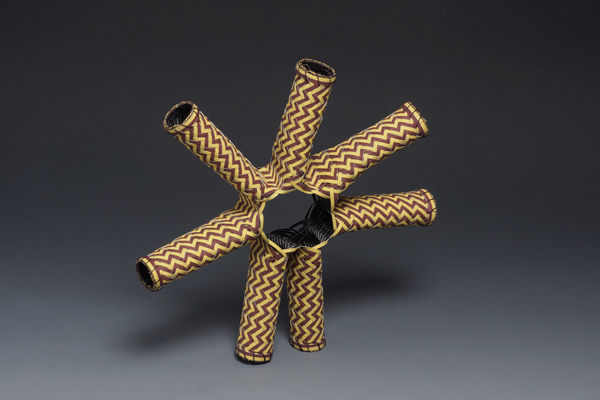
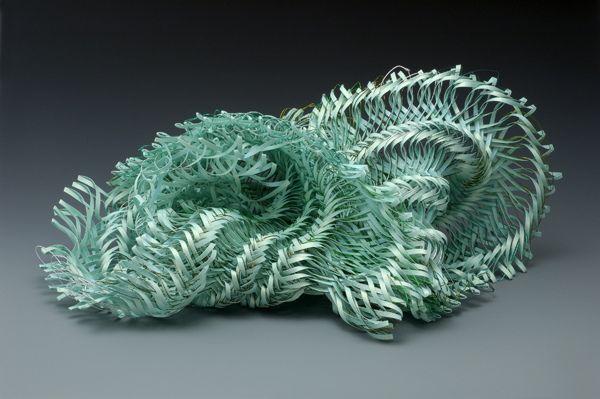
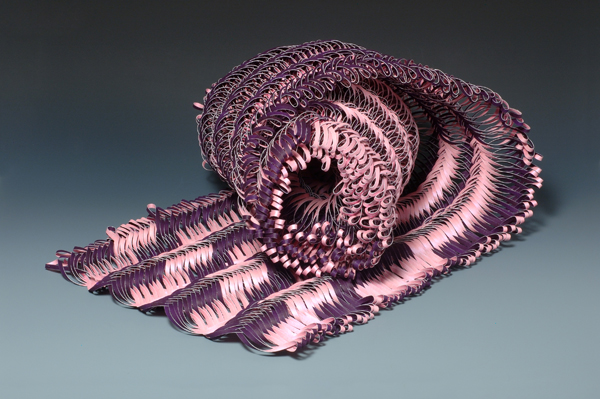
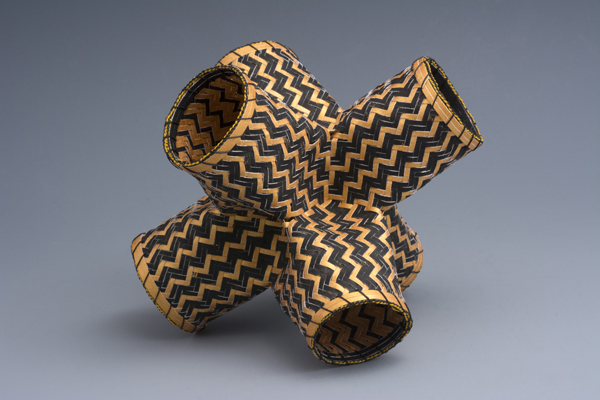
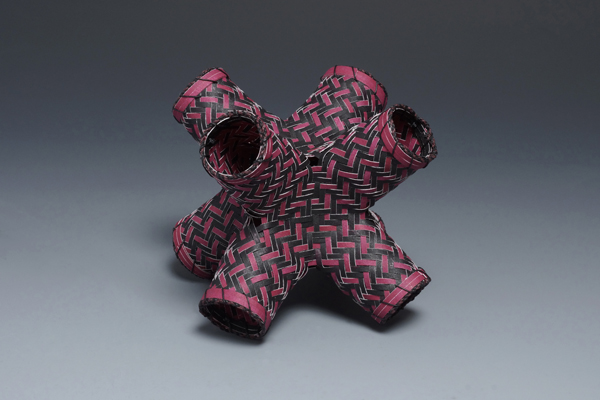
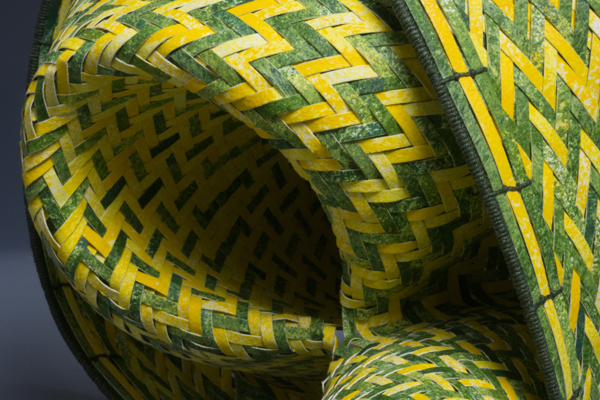
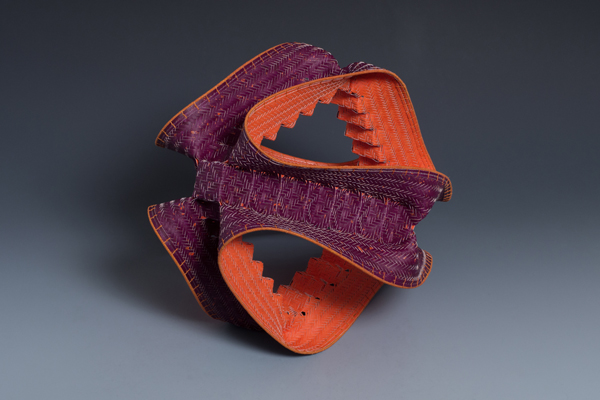
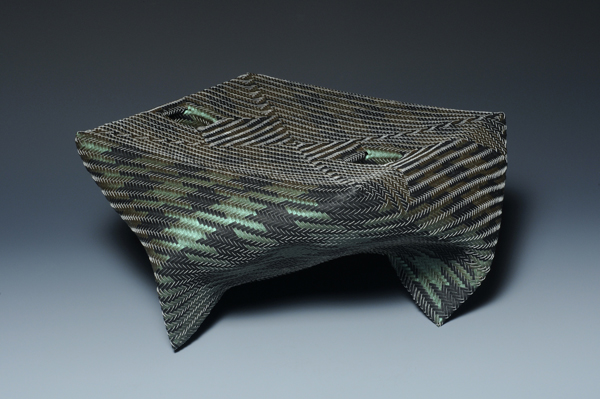
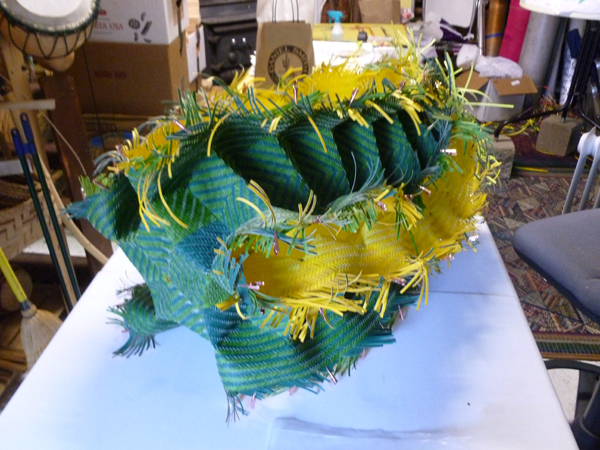
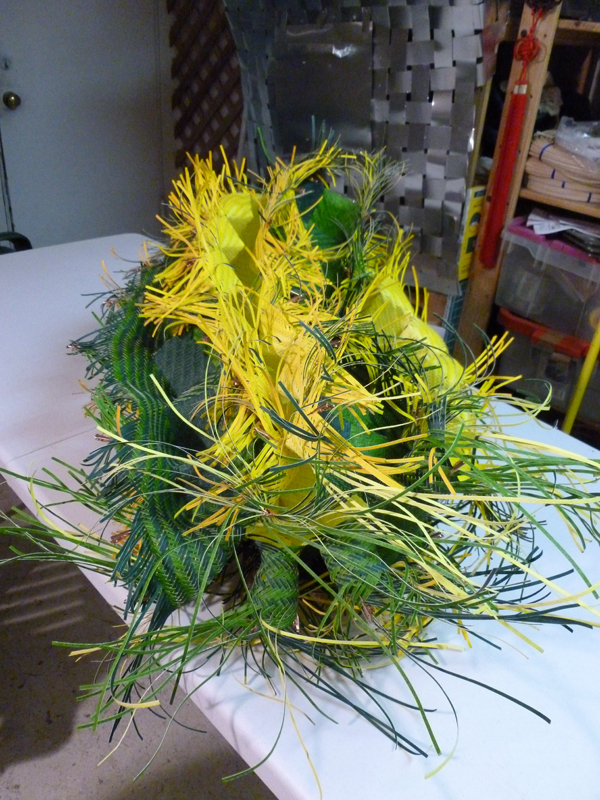
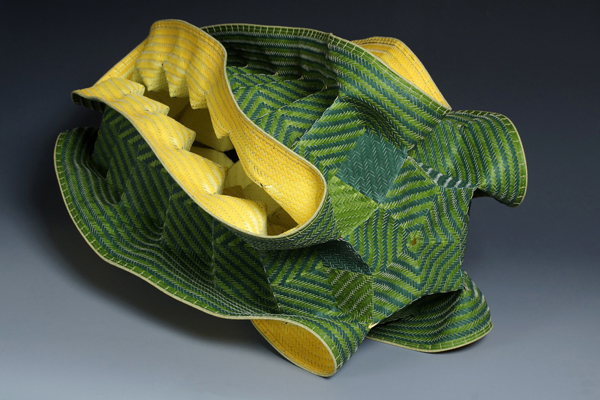
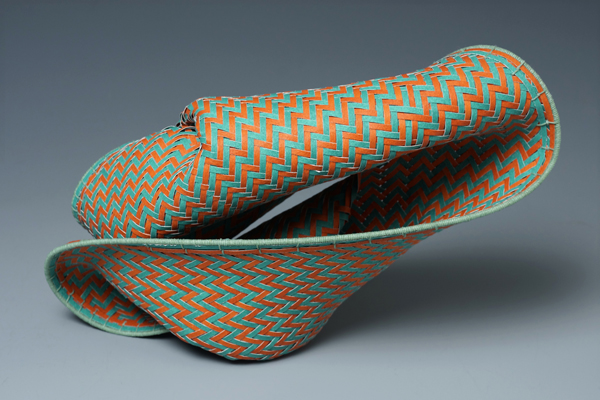
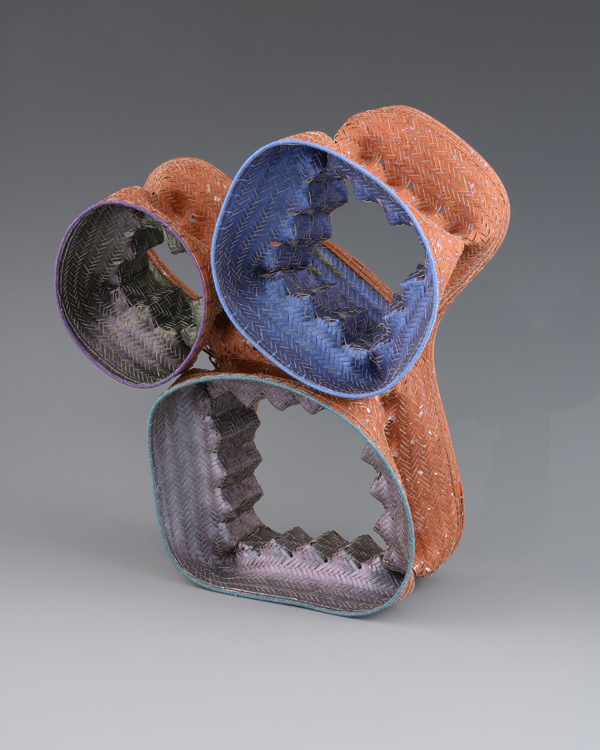
Basketry is Dorothy’s chosen field. She uses twining, coiling and diagonal plaiting in her pieces and works with natural materials. She now works primarily with watercolour paper. Paper allows her to work in diagonal twills, which is her preferred basketry technique. She constantly asks herself: what if . . . Mathematical aspects of shapes and patterns are prominent in her weaving, creating complicated and intricate pieces of art.
Tell us about your work:
I took my first basket making class in 1987 from the University of Washington Experimental College. It was called Creative Basket Making. It looked interesting and I thought it would be a fun new craft to learn. We learned twining, coiling, and diagonal plaiting and working with natural materials. I was hooked. Before I became involved in Basketry I did a lot of different types of handwork: knitting, crochet, cross-stitch, needlepoint and embroidery. But I dropped all that after I took my first basketry class. I still occasionally do a little knitting or crochet, but I concentrate exclusively on basket making now.
Previous World of Threads Exhibitions
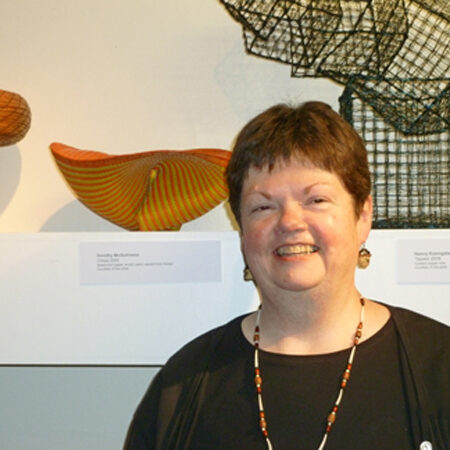
Dorothy McGuinness exhibited in the 2014 Festival exhibition Solo Shows.
After your first attempts, how did you progress?
I was very fortunate to start my exploration of basket making just as Michelle Berg and Leslye Coe were starting up the Basketry School in the Fremont area of Seattle. It became my home away from home. I took almost every class they offered, whether I could afford it or not. I was at the school at least once or twice a week whether I had a class or not. It was just a great experience to have all the exposure to so many teachers, techniques and materials.
In 1994, about the time the Basketry School was winding down after 7 or 8 years, another basketry school opened up north of Seattle in Marysville, called Fishsticks. This is owned and operated by Judy Zugish and Bill Roeder. They brought in many national and international teachers to teach workshops at their studio. So my basket education continued. Although Bill and Judy are focusing more on their plant business now, they still have the occasional interesting teacher in to tempt me to take one more class.
I have traveled to various places to attend conferences including two Basketry Focus conferences in Canada and several National Basketry Organization conferences. I continue to attend workshops and conferences to further explore the very large world of basketry.
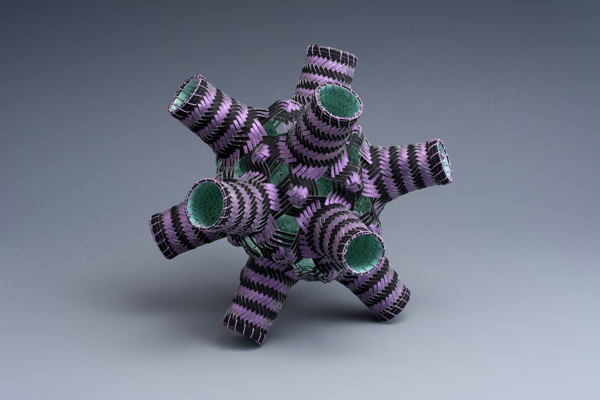
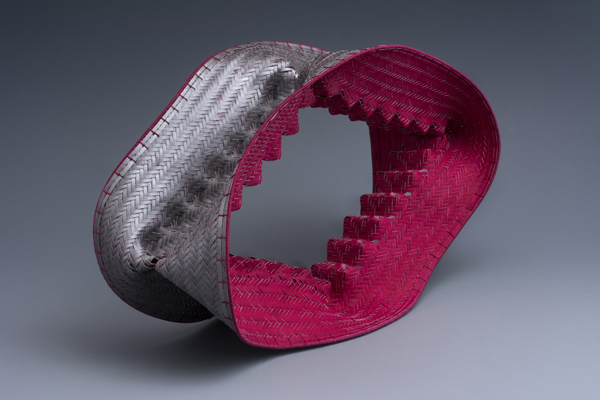
I took more than 30 workshops over 15 years with Jiro Yonezawa.
Then you became interested in Japanese style bamboo flower baskets, how did this come about:
I was first exposed to bamboo baskets at the Basketry School when I took a class with Nhia Yia Heu, a Hmong tribesman, who weaves beautiful functional baskets. I then started my study of Japanese style bamboo flower baskets with Jiro Yonezawa at the Basketry School and continued studying with him at Fishsticks. I took more than 30 workshops over 15 years with Jiro. I learned many styles of Japanese weaving techniques using bamboo: diagonal and undulating twills, hexagonal and hemp weave, rinko and chrysanthemum starts, various embellishments and much more.
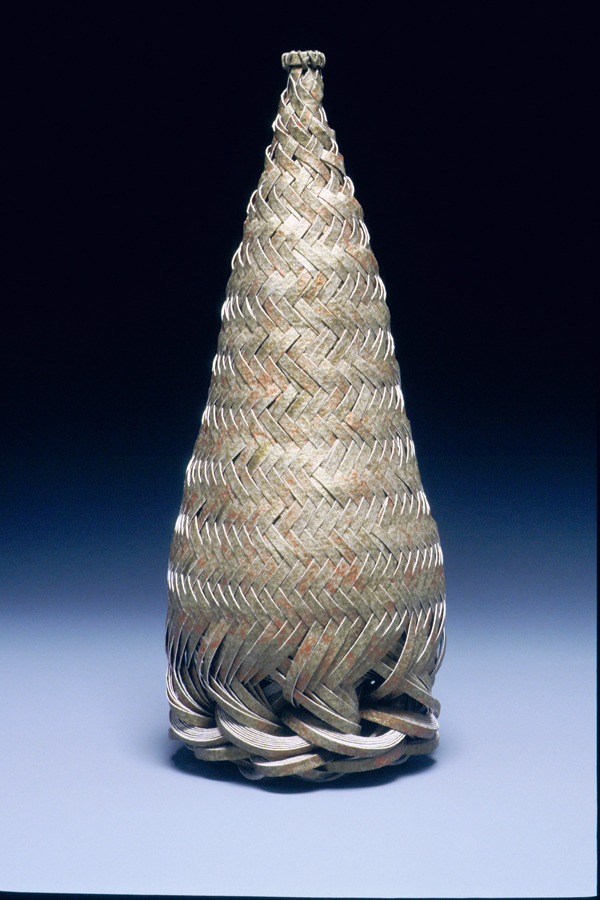
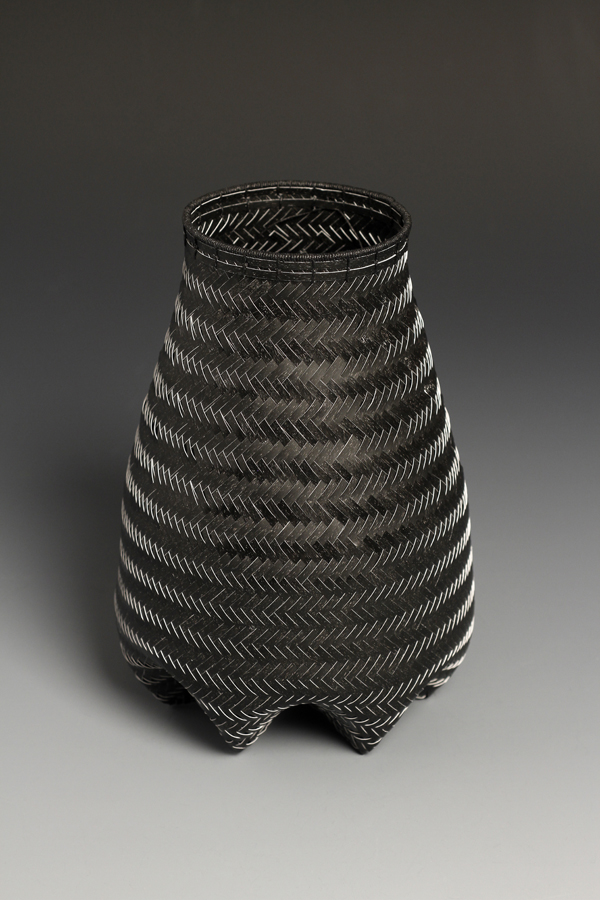
How did you find the transition from the materials you first used for your basketry to working with bamboo?
The reality is in the beginning I was taking classes in all types of materials and techniques. At first I didn't weave much on my own. It was mostly in class with materials provided by the teacher. As I learned more I began to go out and collect natural materials such as cedar & cherry bark, various types of roots, rushes and grasses. I did take a couple of classes in preparing bamboo, but never became proficient. The teacher prepared all the bamboo I used in workshops. Bamboo to me was just one more natural material, but I really liked the Japanese techniques used in weaving bamboo baskets.
In 2000, you had a "Eureka" moment! Tell us what happened:
I had come to the point where I was trying to find my own voice in the art of basket weaving and was struggling with what material(s) I wanted to concentrate on. I really liked bamboo, but I knew I wasn't really interested in taking the time to develop the necessary meticulous skills to properly process bamboo for weaving fine baskets and acquiring quality raw materials was either very difficult or very expensive. I explored cedar bark for use in diagonal twills, but was less than satisfied with the results. In 2000, I took a class from Jackie Abrams at Fishsticks using watercolour paper, painted with acrylics, for weaving baskets, and finally found my medium of choice. I never looked back, dropping all other materials to work exclusively with paper.
Prior to 'discovering' paper, which materials did you most like to work with and why?
Before paper I worked a great deal with various natural materials. I mostly worked in cedar and cherry bark and cedar and spruce roots. They were locally available to harvest, they could be utilized in baskets using various techniques and they were materials I had a lot of experience using.
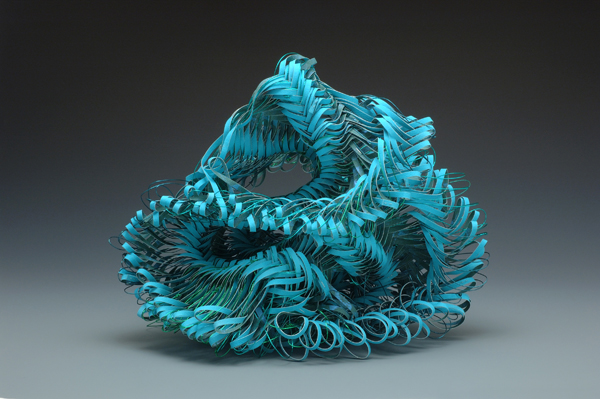
What are the main differences between these and paper?
With natural materials you have to go out and collect them, you need to let them dry and cure anywhere from six months to a year. You then have to soak the materials in water to make them pliable, and some materials need mellowing as well. Then you need to prepare the material to the proper width and thickness. And after you have all the materials prepped then you can finally start weaving a basket.
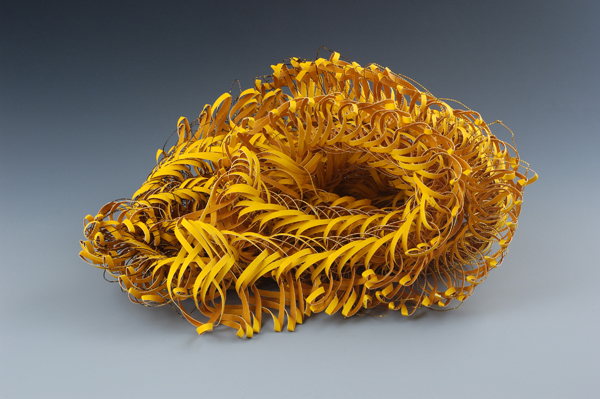
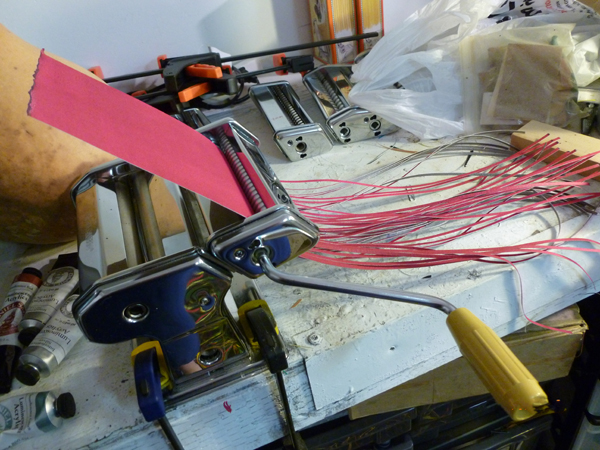
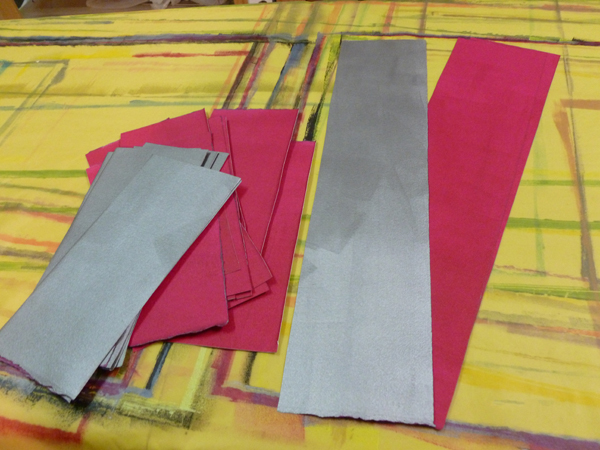
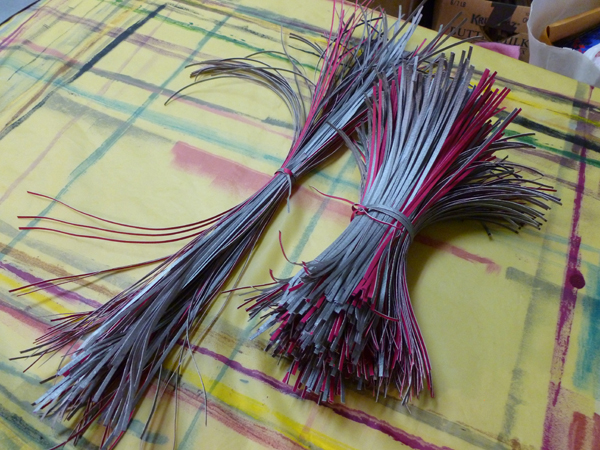
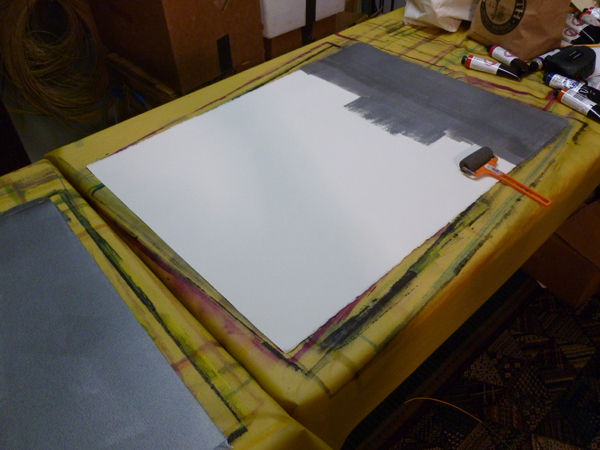
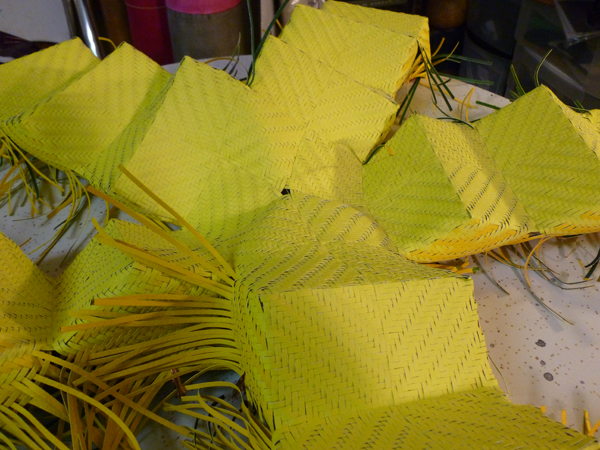
With watercolour paper, I can just go to the store to buy my supplies of paper and paint. There is a minimum of prep, just paint the paper, clean up the rollers and then when dry, cut the paper into strips with a pasta maker and I'm ready to weave.
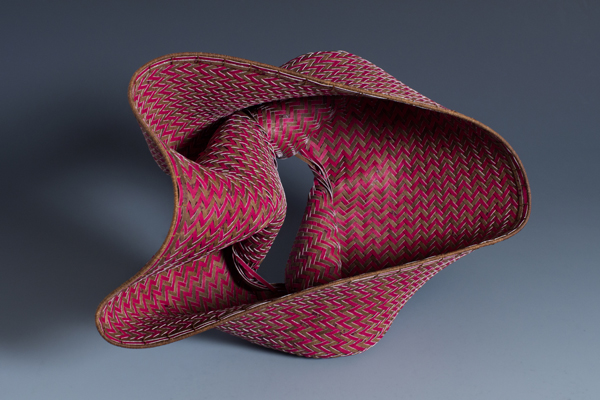
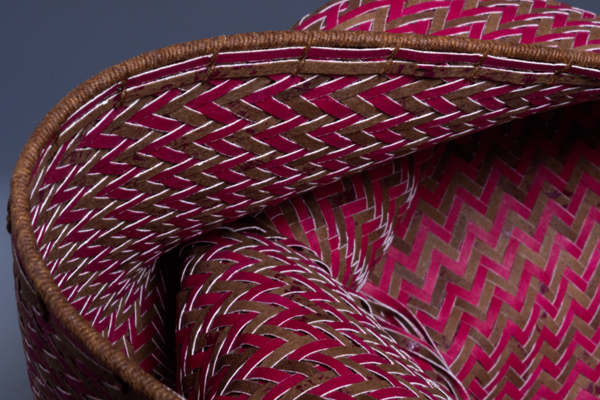
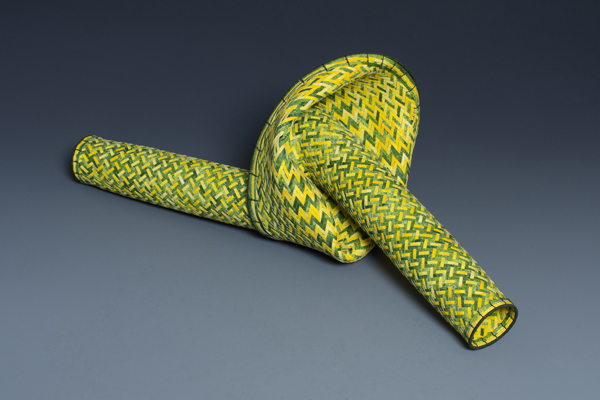
I have always preferred the weaving to the prep.
Why do you now work exclusively with paper?
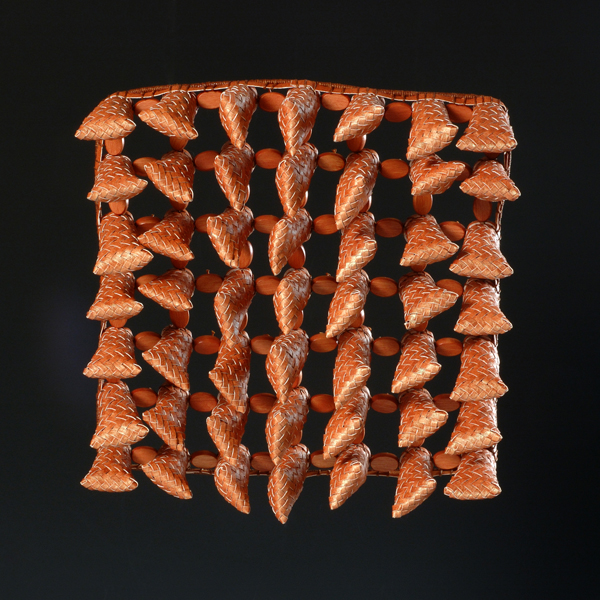
Paper allows me to work in diagonal twills, which is my preferred basketry technique. I can play with colour and pattern. There's no soaking of materials, no containers of water and wet towels lying around. There is a minimum of prep involved. Many basket makers I know enjoy the preparation of the basketry materials, sometimes more than the weaving of the basket. I have always preferred the weaving to the prep.
Who has had the greatest impact on your work?
I've taken more than 200 basket workshops over the years and many of them have influenced my work. Shuna Rendel, (England), gave me a great technique she called complex linking, at the 1997 Basketry Focus Conference in Geneva Park, Ontario. I've explored this technique a little, but still have so many more ideas I'd like to try.
I've taken many classes in natural materials and traditional techniques from local native artists. These include Anna Jefferson (Lummi), Holly Churchill (Haida), and Elaine Emerson (Colville).
I think Judy Zafforoni from Alsea, Oregon, first exposed me to the idea of just playing in basketry. She was very good at letting students experiment with structure and form with her woven cherry bark baskets and folded pouches. She would encourage students to try something different to see what would happen. Sadly she is no longer with us.
I believe that Jiro Yonezawa a Japanese basket maker and teacher (living in the Portland, Oregon area at the time) probably had the greatest influence on my work in terms of technique and esthetics. He is now living in Japan.
Jackie Abrams, Brattleboro, Vermont, of course introduced me to watercolour paper as a medium for weaving baskets.
Do you have a favourite technique?
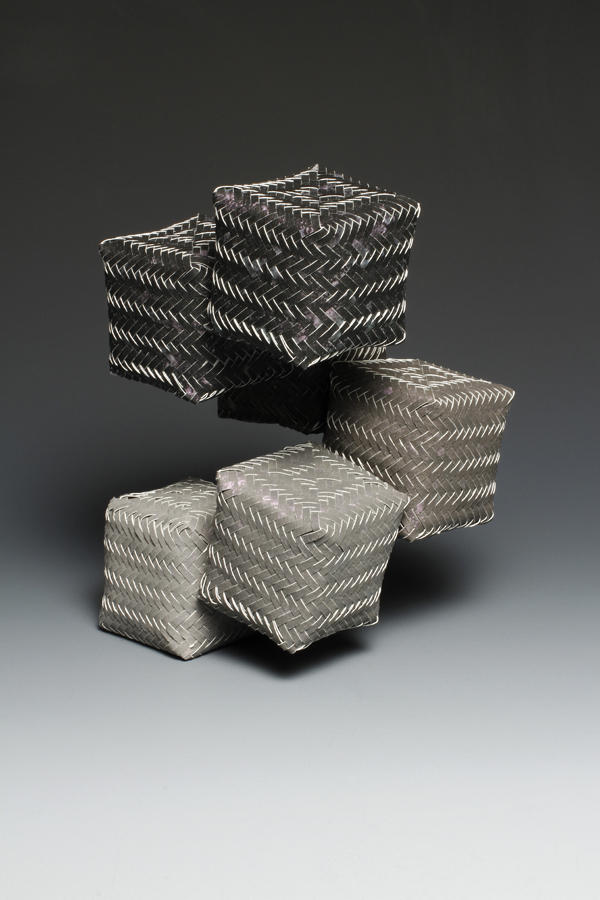
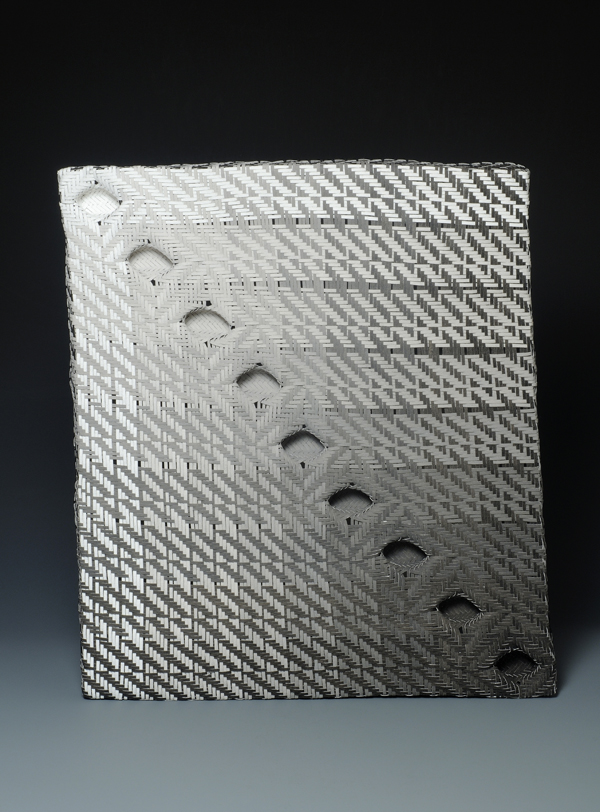
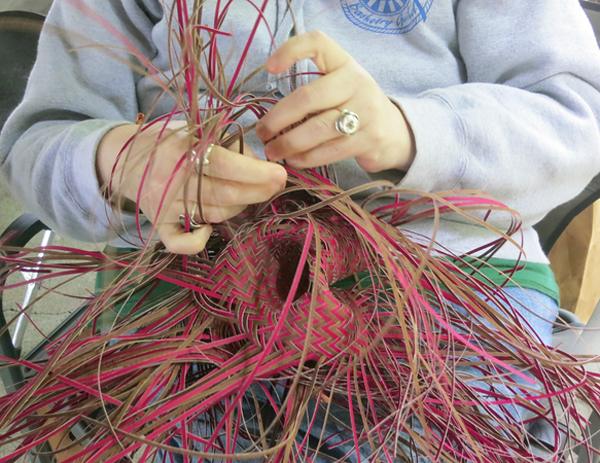
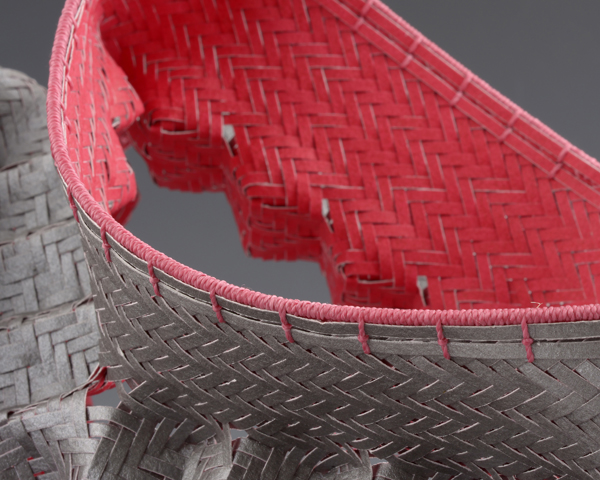
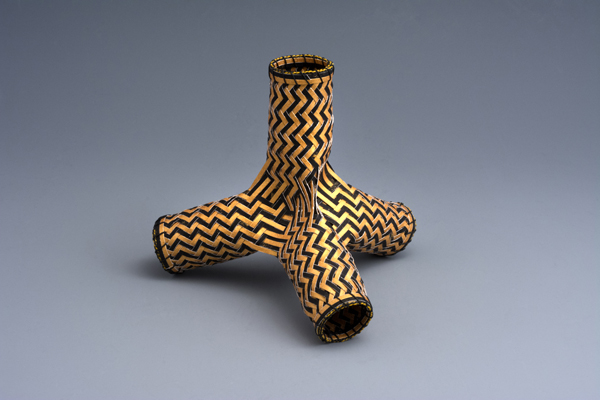
My favourite technique is diagonal twill. It has been a very versatile technique for me. It has allowed me to work more and more sculpturally. I think what I like best about diagonal twill is that once you have the base woven there are no more weavers to add, you just turn the corners and then weave until you run out of spoke.
You create your own designs. From where do you get your inspiration?
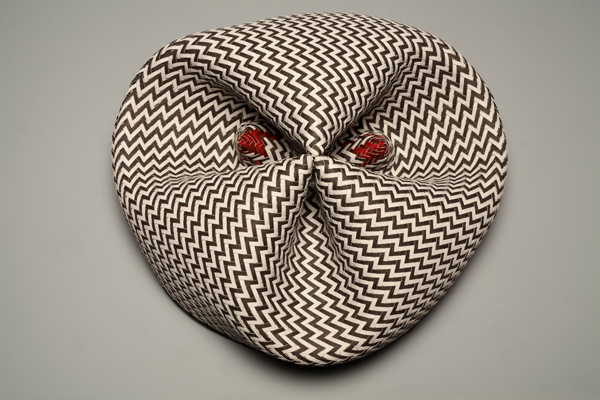
Most of my designs really come from my head. I am always asking myself questions, such as:
• "If I weave these two corners together what will happen?"
• "If I weave these two or three pieces together what is my result?"
• "If I weave this side longer where will I be directed?"
• "If I weave this combination of colour in this order what will occur?"
I access new shapes and possibilities with these experiments and innovations.
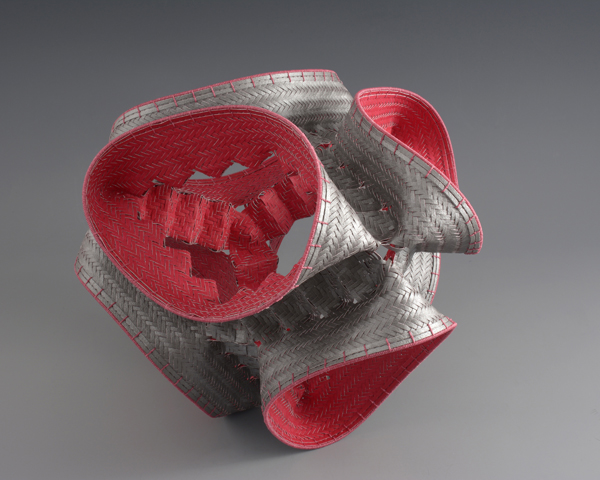
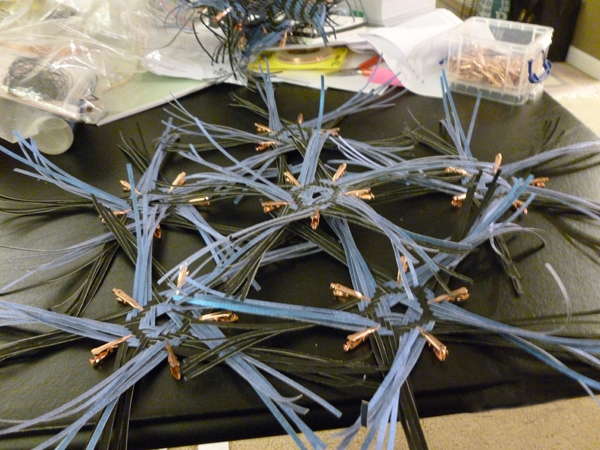
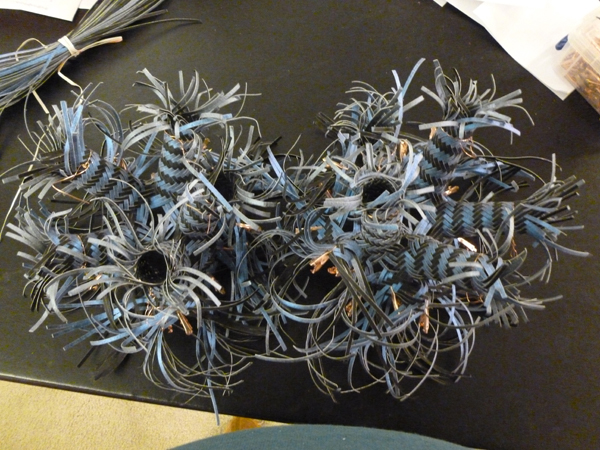
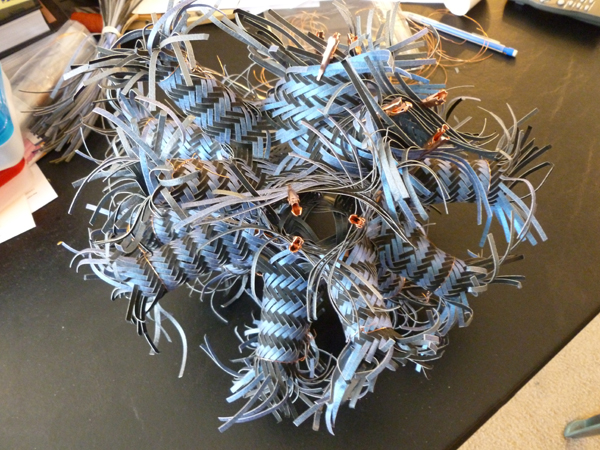
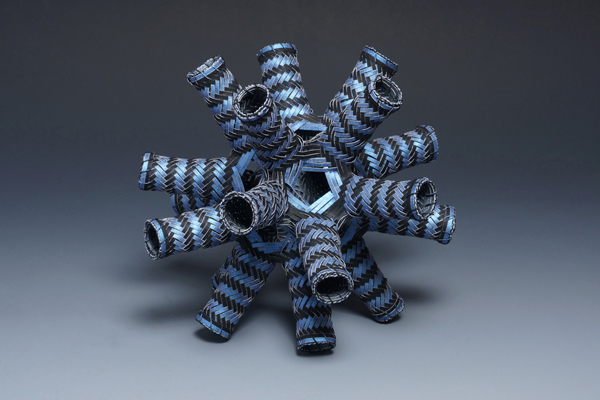
The mathematical aspects of the shapes and patterns and the use of colour also inspire me. Recently, I have been exploring platonic solids (a regular, convex polyhedron with faces that are congruent, regular polygons, with the same number of faces meeting at each vertex). At this point I have successfully completed the first iteration of the five platonic solids (tetrahedron, hexahedron, octahedron, dodecahedron, and the icosahedron.) I have started on the next two iterations and hope to have them finished within the next year.
I also have been working on a series based on Pythagoras' Theorem. Of course I still have the Archimedean and Johnson solids and more to explore. I continue to be challenged and informed by these sculptural explorations – and I am excited to experience how my work will evolve as I take on more.
You approach your work like you would a puzzle. Tell us why & how this approach works for you:
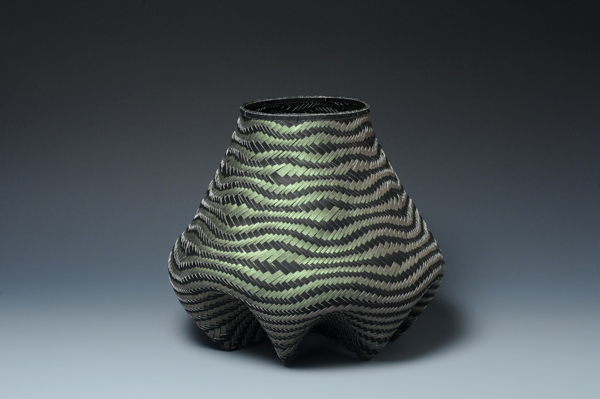
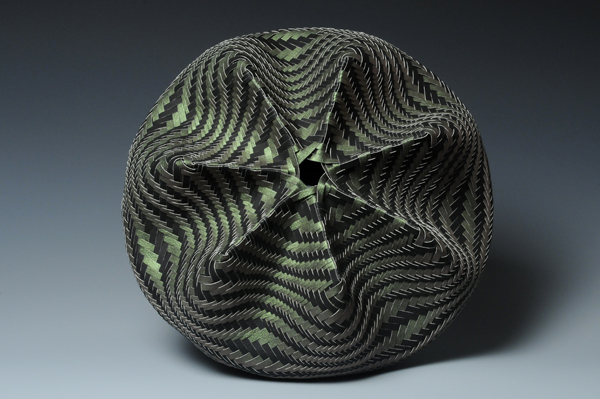
One of my friends told me I approach my work like a puzzle. I hadn't really thought about it that way, but she was right. I design and discover new shapes, possibilities and weaving innovations by puzzling out ideas such as: "How will it work out if I try this, or how can I get this shape or pattern combination? What if I use these colours in this combination in this order? What if…"
I am intrigued by the potential outcome of any new design. The evolution of my body of work is built on taking a risk, and avoiding the "known". The risks provide a challenge often leading to a new direction. This is the excitement that keeps me working in a repetitive medium: it is an on-going meditation on improvisation, a continual experiment through which my work can progress and develop.
Tell us about your studio and how you work:
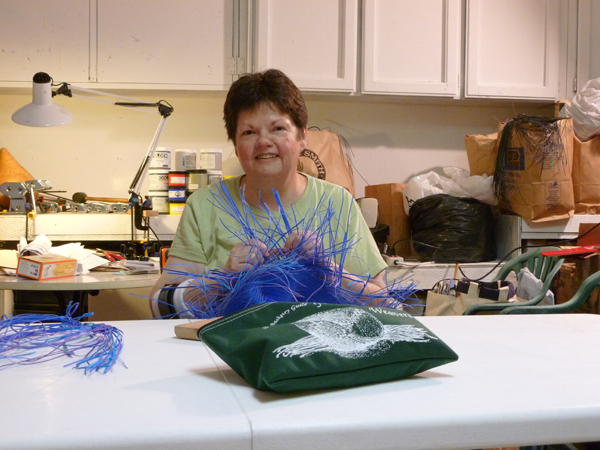
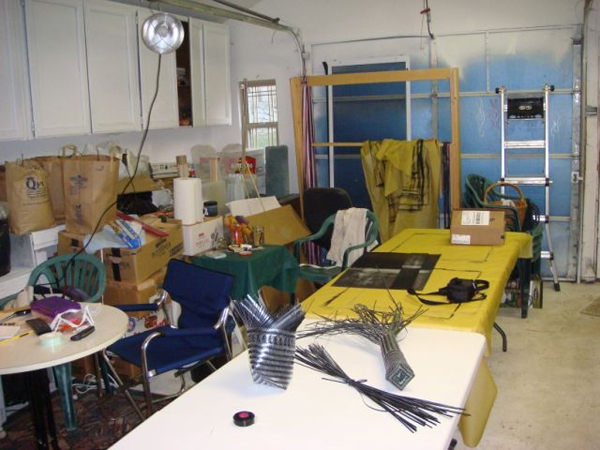
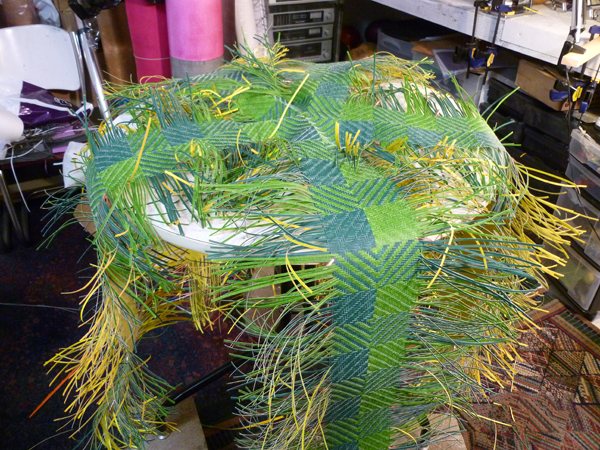
I have a detached garage where I paint the paper and cut it into strips with a pasta maker. Before I had my own studio space I would borrow a friend's space and paint 20 or 30 sheets of paper in a weekend, with no idea what I might weave from them. But now with my own space I usually have an idea in mind when I paint the paper. I mostly use 3mm wide strips, but I have various heads for the pasta maker, so I can cut other widths. I usually use these other sizes if I am going to weave undulating twill, which uses multiples of various widths. I often work with the standard 22 x 30" watercolour sheets and I use 140lb rough. If I wish to weave something larger I can buy watercolour paper in rolls of approximately 4 ft. x 10 yds. I don't like piecing lengths of weavers so prefer to work with long lengths if weaving something of a greater size.
I used to do my weaving out in the garage also, but find over the last several years that I have migrated to my living room for that. I have a card table that I work at, that seems to be permanently set up for the time being.
I am very much interested in the math and geometric constraints of the work. Using hundreds of strips of paper at a time, I explore countless structural forms that are presented to me as a result of this process: multiple woven units, asymmetrical corners, weaving opposite corners together, multiple-stepped corners in tandem that add structure to the work. Thus building unique and intriguing forms that are encoded with energy and elegance.
You say that it was a life changing experience for you when you took your first class in basketry. How has your life changed?
I've made so many lifelong friends through basketry; I'm not sure where I would be without the basketry community. I've traveled and seen other parts of the country and the world because of basketry. I've met so many interesting people and learned so much information about basketry and fibre arts and the people who create them. I can't wait to experience the rest of the journey.
How have you (as a person) changed?
I have become an artist not just a craftsman. It has forced me to become more confident talking about my art to individuals and before groups. I am very much the introvert, but basketry and the friends I've made have kept me engaged in the world.
From your collection of over 300 basket books, are there particular books that you refer to on a regular basis or from which you draw inspiration?
When I truly want inspiration I look though my collection of books on Japanese Bamboo Master Weavers. It is always amazing to me what bamboo artists can do with bamboo. The structure and forms they create are quite extraordinary considering the medium.
Japanese Bamboo Baskets: Masterworks of Form and Texture, by Lloyd Cotsen
Masters of Bamboo, by Melissa M. Rinne
New Bamboo: Contemporary Japanese Masters, by Joe Earle
Contemporary Japanese Bamboo Arts, by Robert T. Coffland
The Bamboo Basket Art of Higashi Takesonosai, by Lloyd Cotsen & Robert T Coffland
Hin: The Quiet Beauty of Japanese Bamboo Art, by Robert T Coffland & Donald Doe
When I need some new ideas on twill patterns I will look at Raranga Whakairo: Maori Plaiting Patterns, by M. Pendergast or any of the books I have by Paulus Gerdes, who writes on the math and geometry of twill patterns from various parts of the world, but mostly from Mozambique.
Sipatsi: Basketry and Geometry in the Tonga Culture of Inhambane (Mozambique, Africa)
Geometry and Basketry of the Bora in the Peruvian Amazon
Otthava: Making Baskets and Doing Geometry in the Makhuwa Culture in the Northeast of Mozambique
Tinlhèlò, Interweaving Art and Mathematics: Colourful Basket Trays from the south of Mozambique
African Basketry: A Gallery of Twill-Plaited Designs and Patterns
What interests you about the World of Threads Festival?
I am always interested in fibre, craft and art shows nationally and internationally. I don't always get an entry sent in, but I do keep track of them. After learning about the previous World of Threads Festival and reading all the artist interviews and seeing images from the show, it struck me that this was a very important venue for showing of various types of fibre art.