Artist Interview 103: Barbara De Pirro
Shelton, Washington, USA
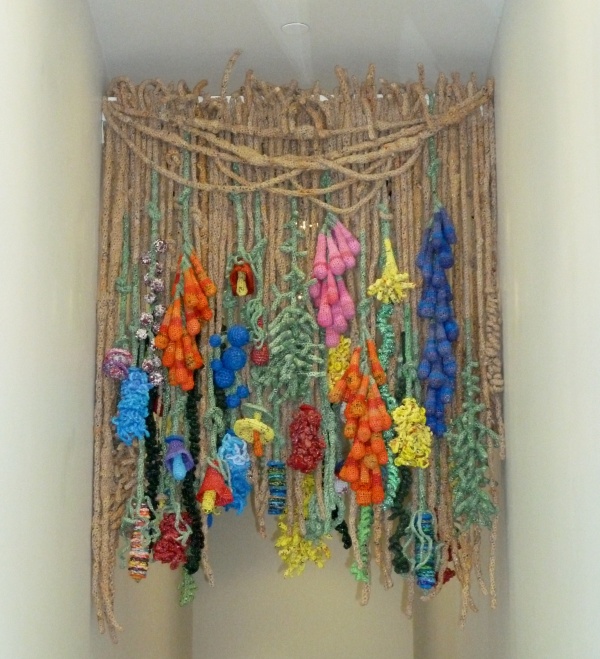
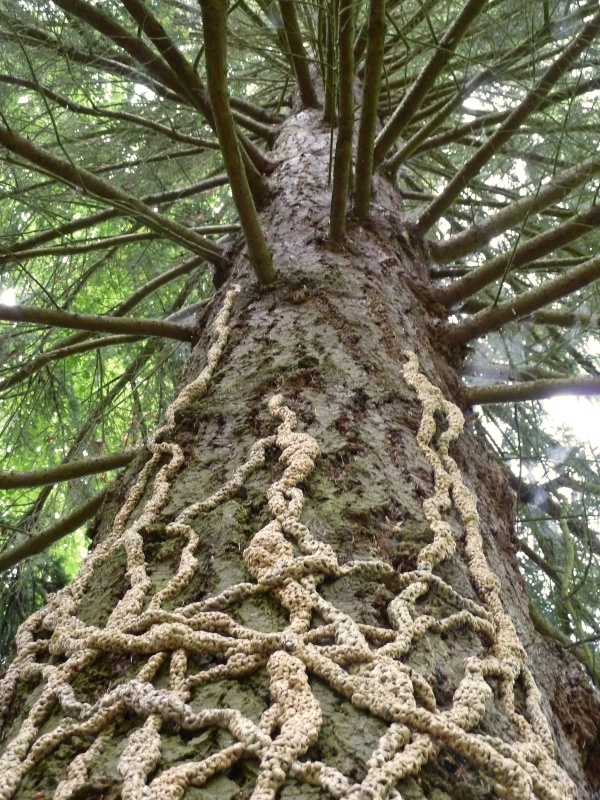
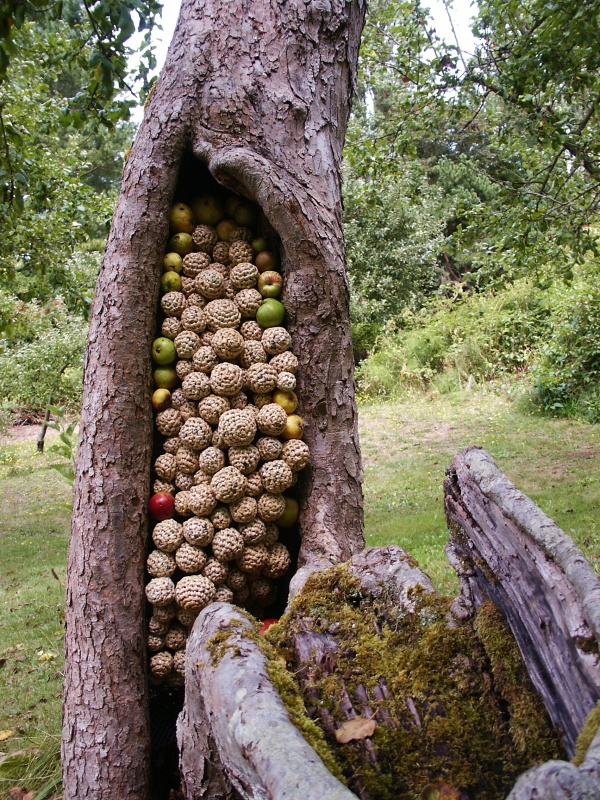
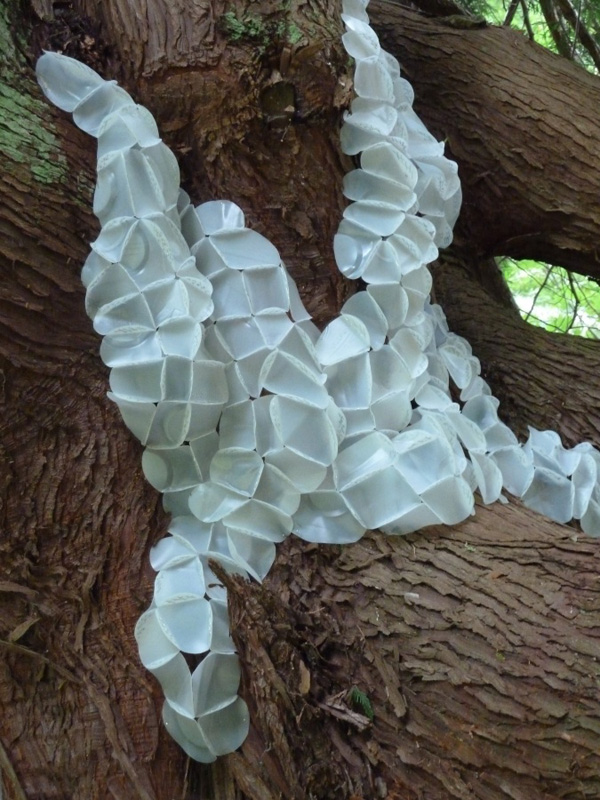
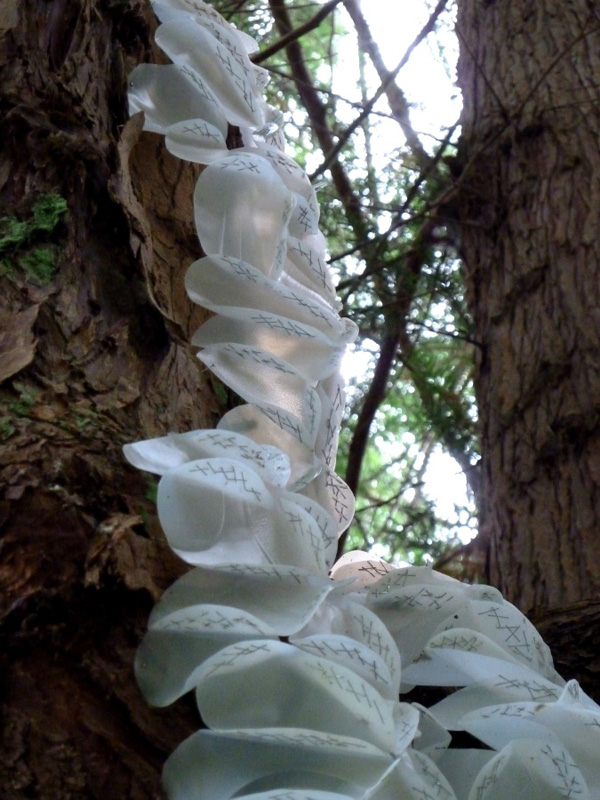
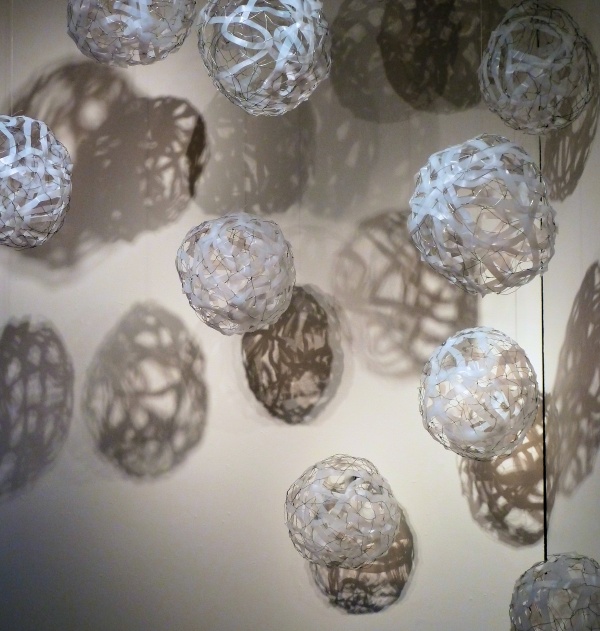
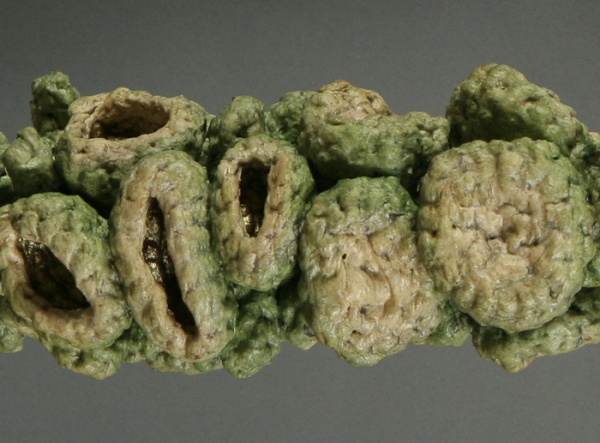
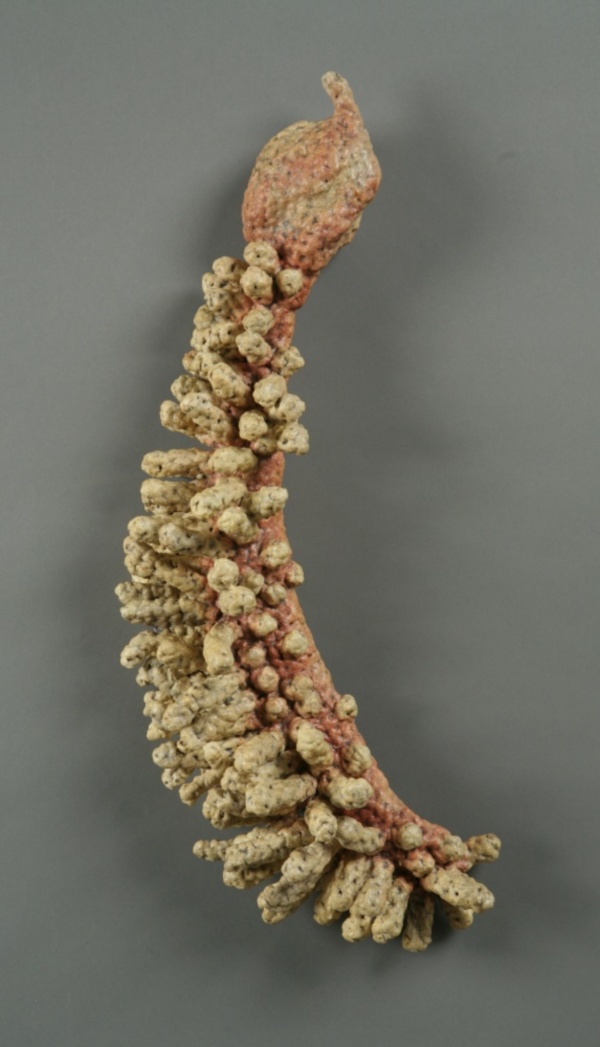
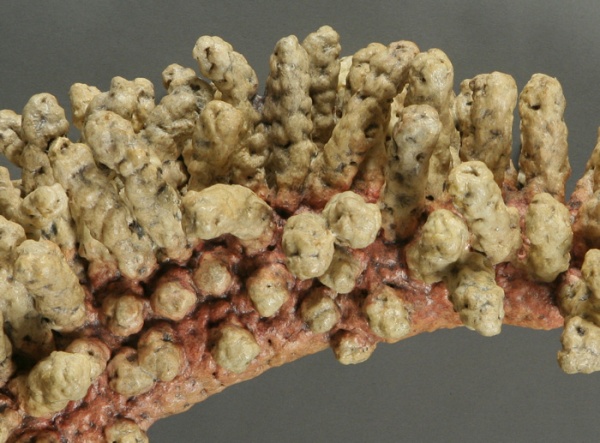
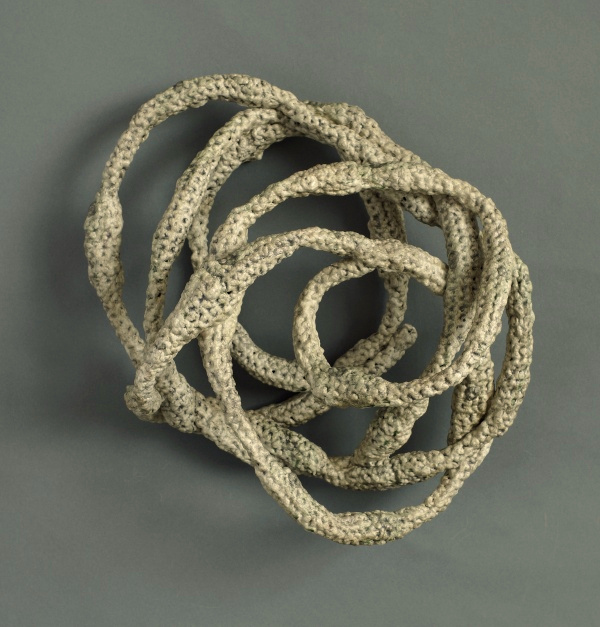
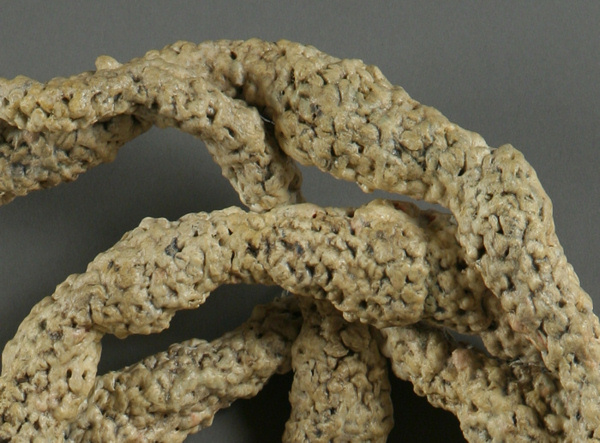
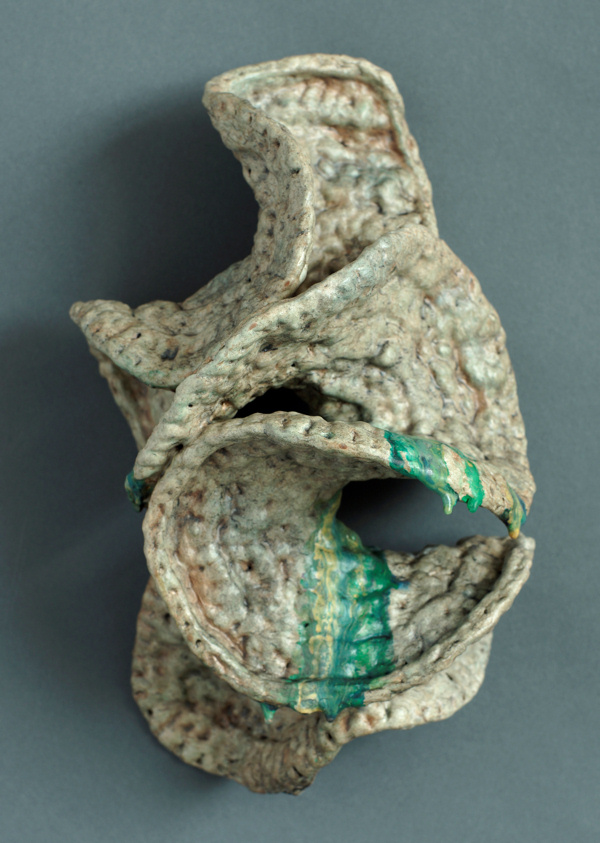
Barbara creates biomorphic sculptures and installations using a range of reclaimed materials. Although she uses non-traditional fibre materials, she uses fibre techniques of crocheting, threading, sewing, stitching and weaving to create structural pieces. Suspending them gives a different perspective and shows how light can play with the materials.
Tell us about your work?
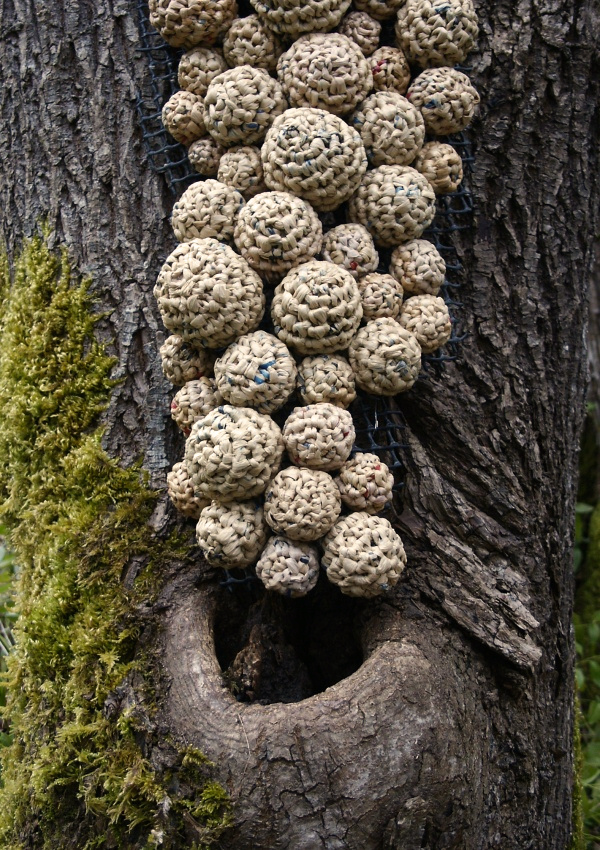
My art is ignited by my obsession with nature, its brilliance of form and function and its resilience; at the same time its fragility and vulnerability. I create with a range of reclaimed materials, re-inventing and transforming them into sculptural forms. It began as an environmental statement, a re-creation of discarded plastics, transforming this over-abundant, synthetic material into organic sculpture and installation, a deliberate and conscious juxtaposition between material and form.
Where do you get your inspiration?
I study nature, everything from seedpods to sea anemones, lichen to sea kelp, tree bark to the texture of grasses. The challenge then comes with my use of reclaimed materials, how to transform this synthetic material into organic forms. I collect volumes of material, especially for my installations, exploring each, stretching their boundaries experimenting with various forms and structures, methods of attachment, even toying with the kinetic aspect of the structures and the compelling interplay of light and shadow.
Which is your favourite fibre medium?
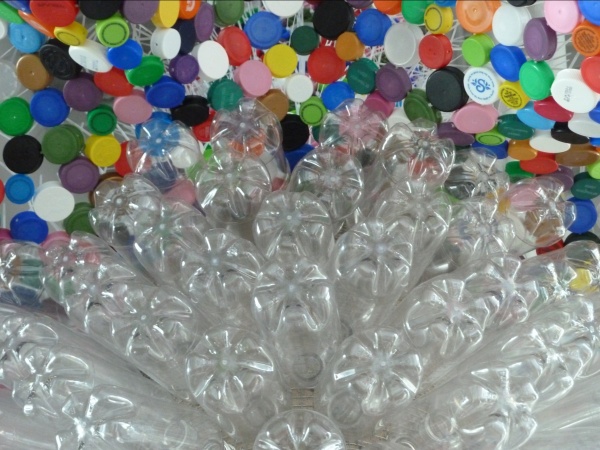
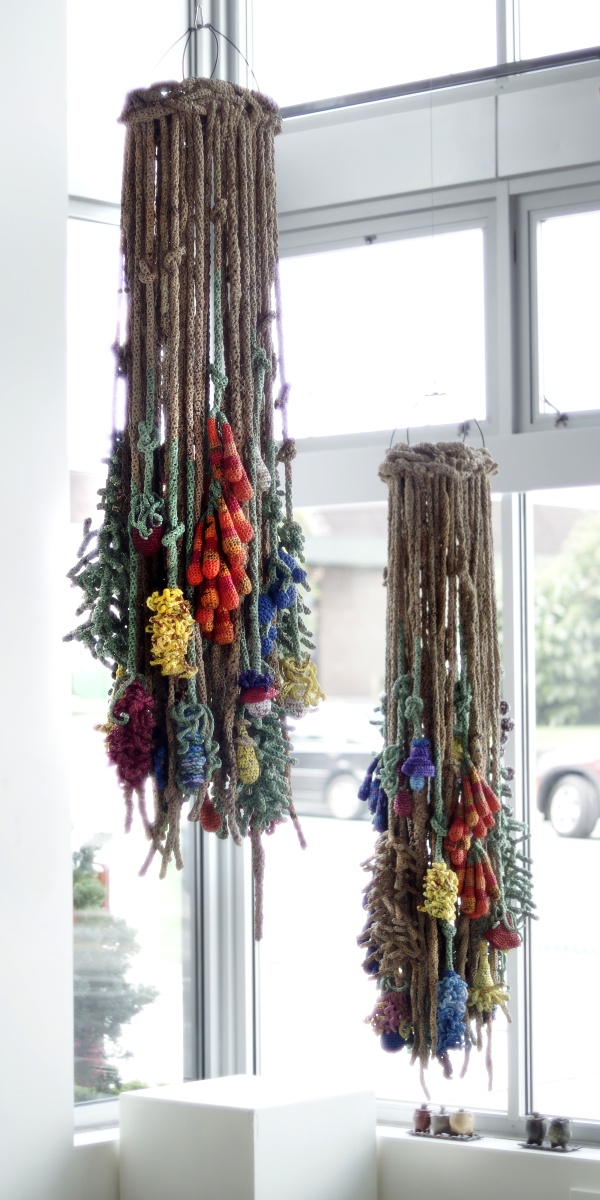
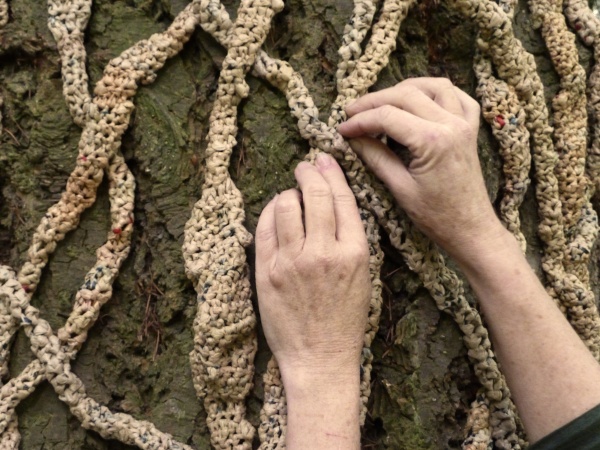
Most of what I use is non-traditional fibre materials, reclaimed plastics, wire, monofilament, staples and acrylic, they become my fibre. I then use fibre techniques in the creation of my structures, crocheting, threading, sewing, stitching, weaving, pinning, but with unconventional media.
What other mediums do you work in, and how does this inform your fibre work?
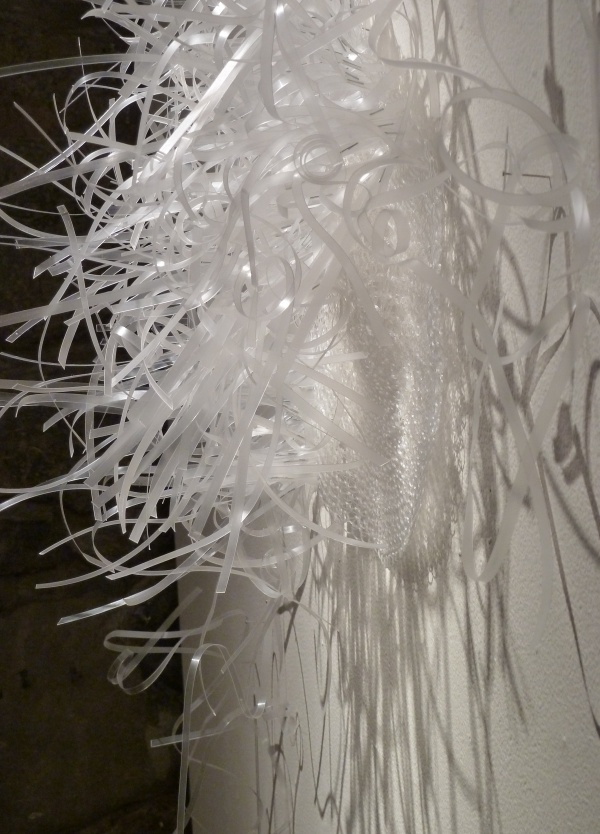
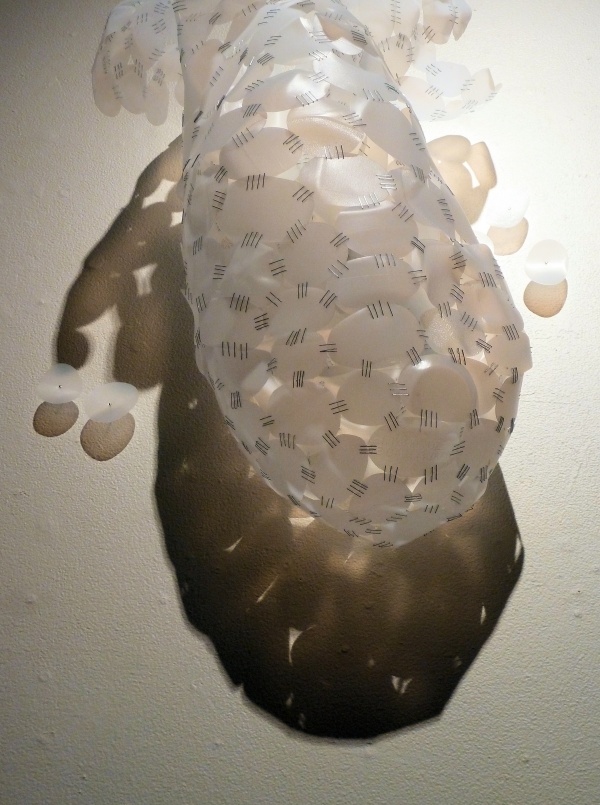
I'm also an acrylic painter and photographer. My photos are a key method of documenting texture, pattern and form, including my own sculptures and installations. I photograph these in detail from different perspectives; including the shadows they cast, I then create drawings that eventually end up in my paintings. Because of the painting side of my work, I've developed techniques and surfaces that then are used on my sculptures.
What specific historic artists have influenced your work?
Antoni Gaudi (1852 –1926), his integration of nature, craft and architecture, his structures continue to amaze me.
Ernst Haeckel (1834 –1919), whose detailed illustrations of nature inspired me to draw.
Karl Blossfeldt (1865 –1932), for his vast collection of photographs revealing the intricate details of plants.
And so on…
What specific contemporary artists do you admire?
So many that I admire …
Andy Goldsworthy (England/Scotland), the ephemeral nature of his work and his commitment to the environment.
Richard Long (England), for his exterior monumental works, as well as the smaller interior translations.
Henrique Oliveira (Brazil), his wood installations are disturbing and awe-inspiring.
Steven Siegel (USA), for his massive installations and environmental comment.
Robert Parke Harrison (USA), his metaphoric and poetic photographs depicting tales about our modern experience.
Bill Fontana (USA) his incorporation of sound into a space inspires me to think beyond the visual.
Ruth Asawa (Japan/USA), for her crocheted wire sculptures and the shadows that they cast
Shasha Higby (USA), for her elaborate costumes and her approach of dance through sculpture.
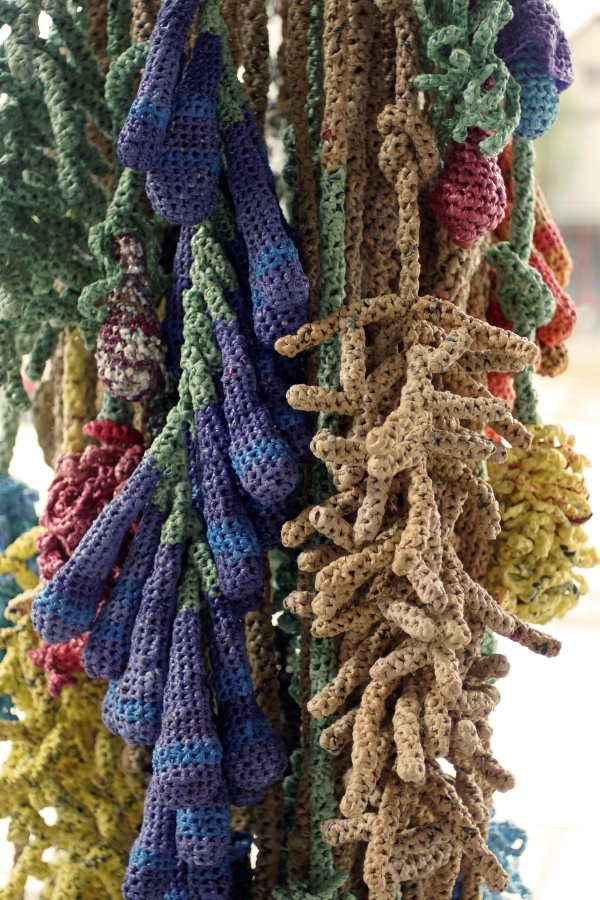
The light not only affected the surface in how it absorbed and reflected, but the shadows that were cast really intrigued me.
Please explain how you developed your own style and how do you describe your art to people?
I've always thought in multiple dimensions, so sculpture and installation came naturally. My crocheted interior sculptures & exterior installation work happened simultaneously. Once I began experimenting with forms more just seemed to pour out of me.
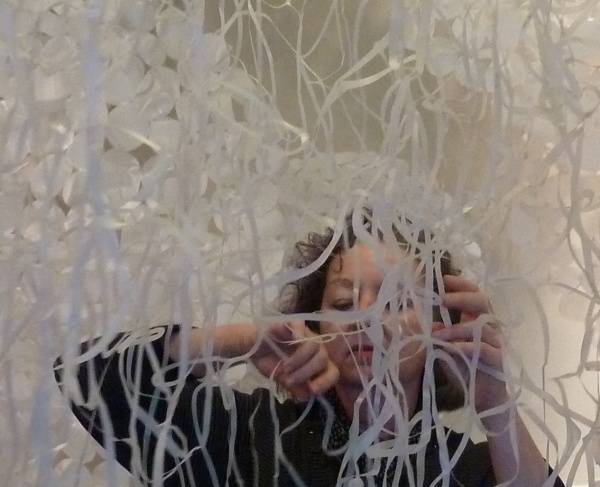
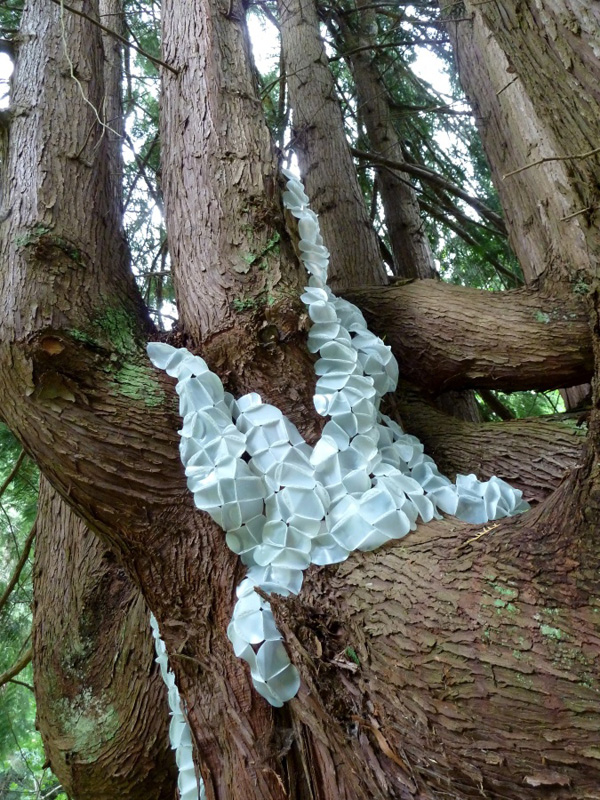
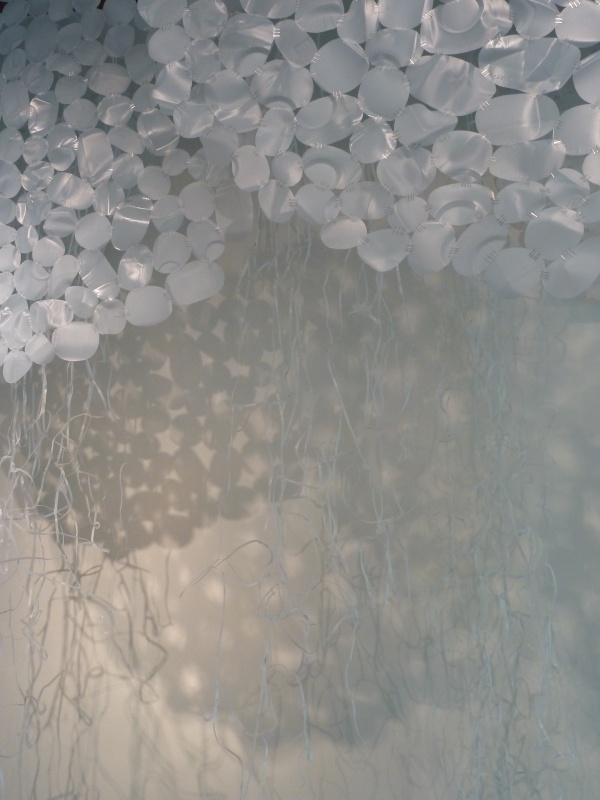
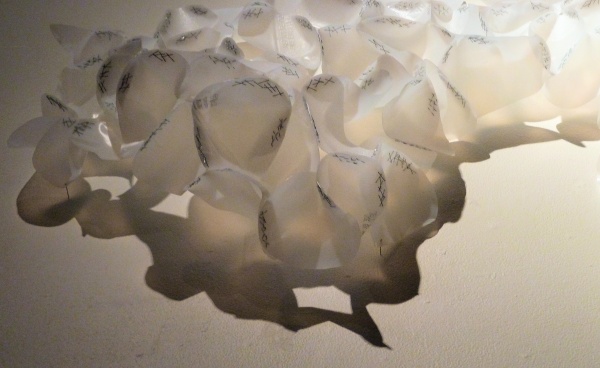
My translucent plastic installations (milk bottles) originated during a residency at the Museum of Glass, I began experimenting with the material creating various structures, suspending them to get a different perspective, I then discovered how light played with the materials. The light not only affected the surface in how it absorbed and reflected, but the shadows that were cast really intrigued me.
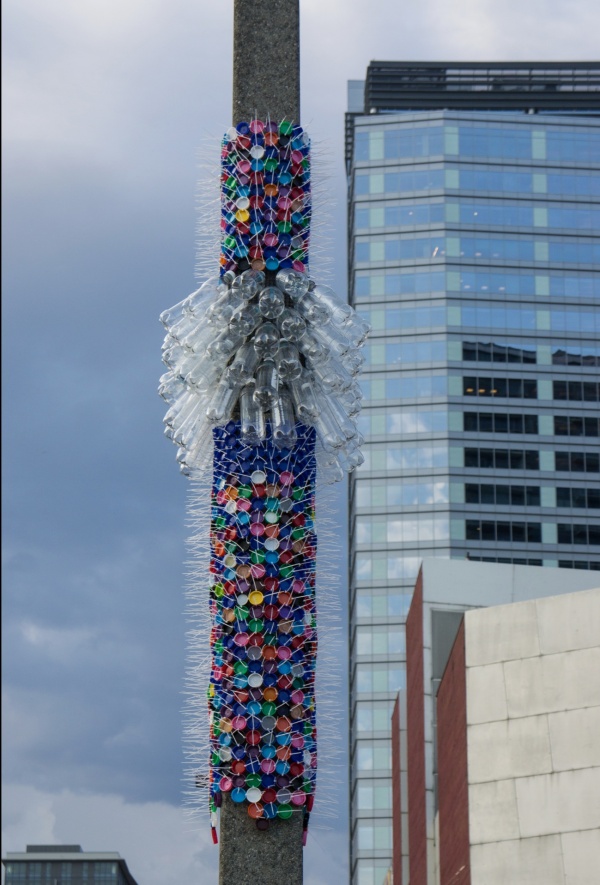
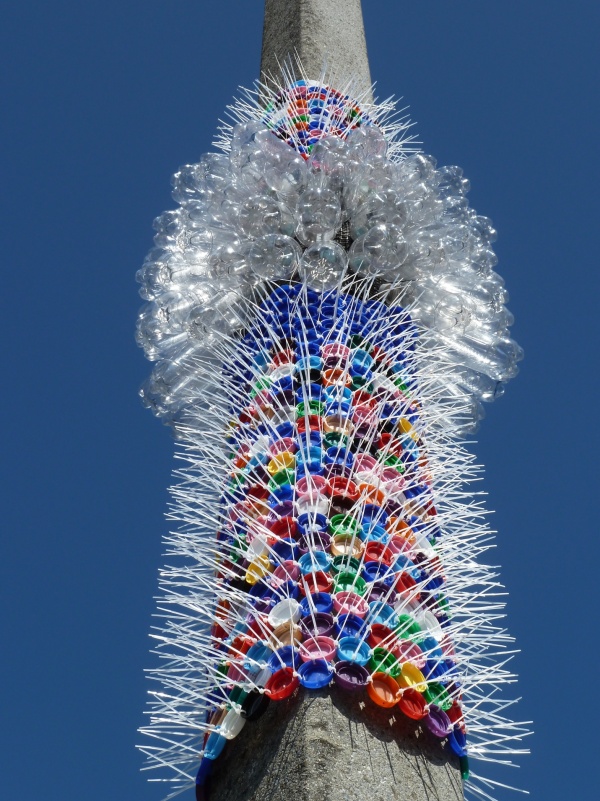
Apart from your sculptural work, you also create exterior and interior installations. Tell us about the major challenges and differences between inside and outside installation pieces.
Both interior and exterior installations require me to respond to the environment, how people move through, structurally how the work is installed, the adjacencies, etc. However, with exterior work you must consider the weather; wind, rain and sun, I must design the piece to withstand all. If an exterior installation is in a high traffic, public space, that poses the human challenge, unlike in a gallery people may possibly handle the work. I try to secure it as best as I can without taking away the overall effect. My interior installations allow me to play with light and shadow; this became a very important part of this years shows Lucid. The shadows were as much a part of the exhibit as the forms themselves. The material itself is a translucent white, somewhat invisible against the similarly coloured walls … but turn the lights on and a different show appears.
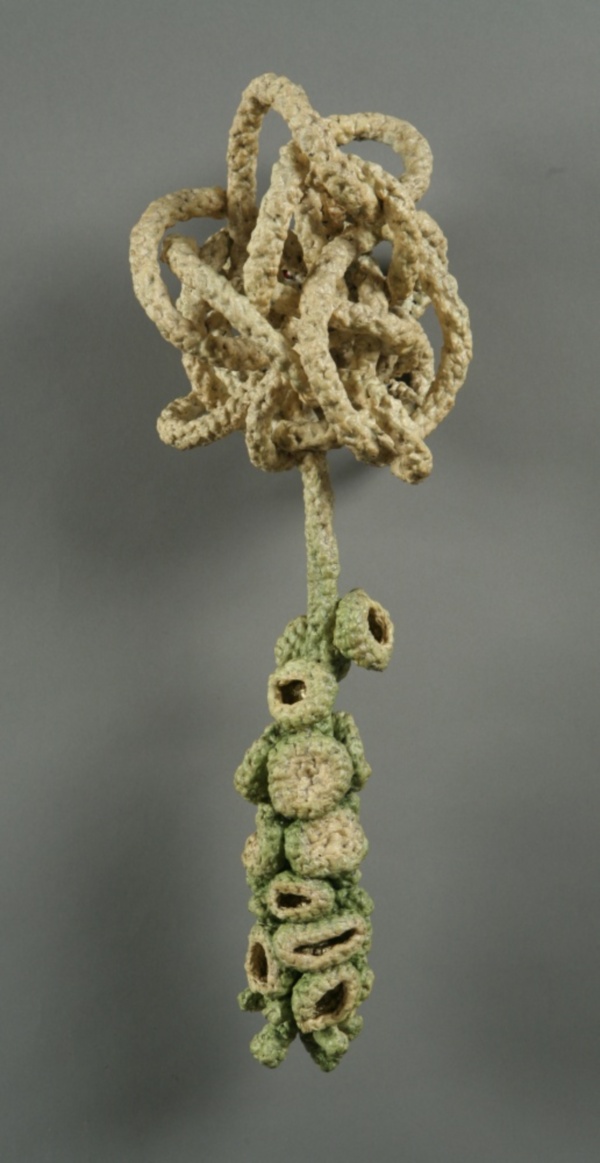
When working on location, how much do you improvise?
I pre-plan as much as possible but with a huge dose of flexibility worked in, each location has its surprises. I create my installations in separate sections; this allows me the ability to install in various ways. It also aids in transport and storage afterwards. As an example, my Flora Plastica installation was installed in two very different spaces within the Tacoma Arts Museum then this year I re-invented it again for the Schack Art Center.
Tell us about your studio and how you work:
My whole home, including the property it sits on, I consider it all 'my entire studio'. My life and art are interconnected; one thing leads to another, I am always working on multiple projects, rotating from one to the other. The lower floor of my home/studio opens up onto a patio and my garden and then steps down onto the beach. Many times I will take work outside to view it in nature or to even photograph it on the forest floor, in a tree or on the beach, new ideas always come from this.
Where do you imagine your work in five years?
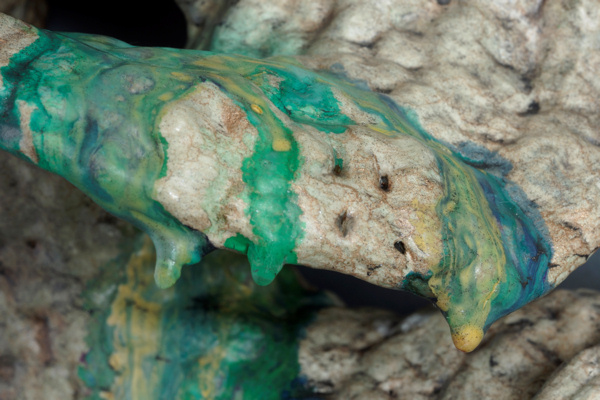
I want to continue exploring light and pattern within my installations, projecting imagery onto and through the surfaces and structures, playing with the distortions and even drawing and painting these into the space, coloured lights or even tinting the surface of the material with dyes, inks or paints. The possibilities are endless!
What interests you about the World of Threads festival?
The variety and caliber of Fibre Art that I've been exposed to through WOT continues to inspire me, thank you!