Artist Interview 96: Barbara Hilts
Tottenham, Ontario, Canada.
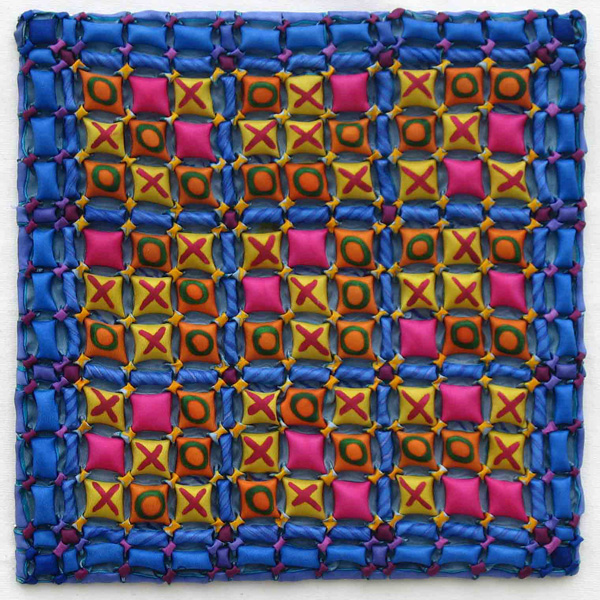
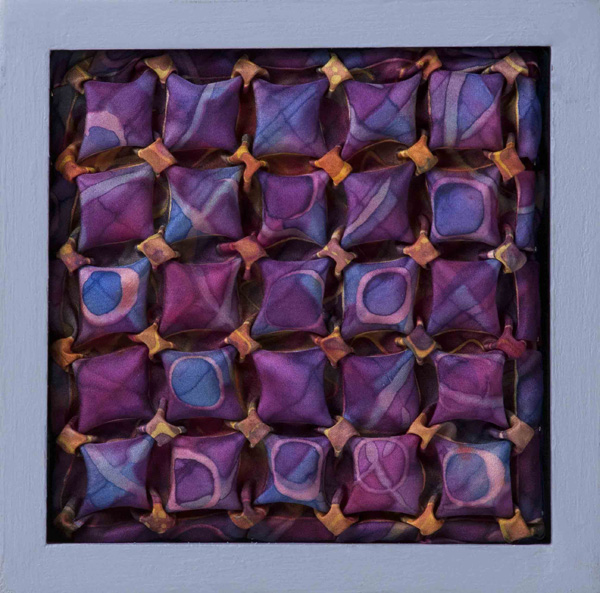
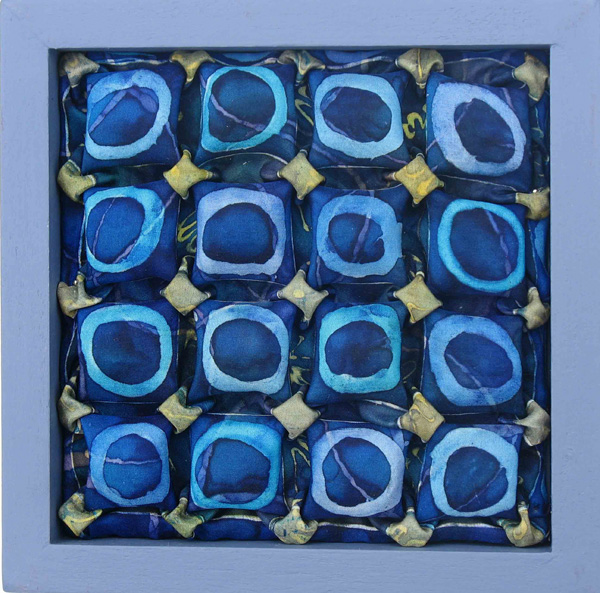
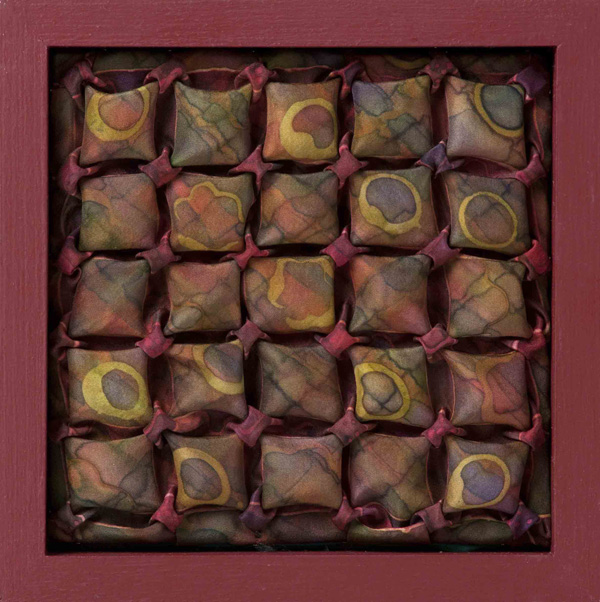
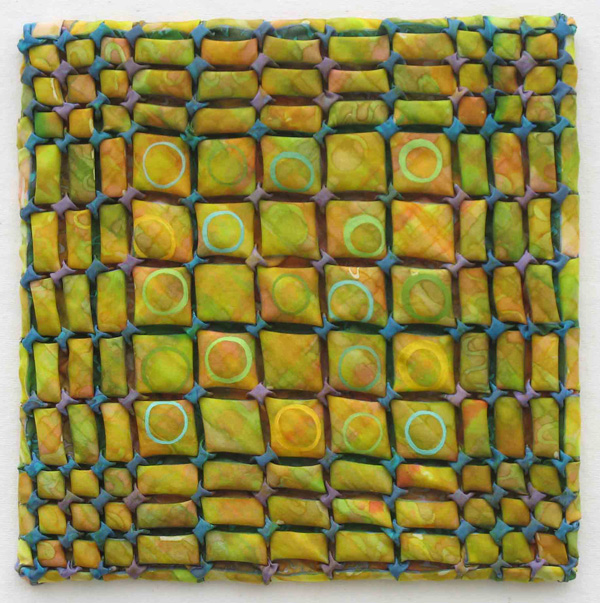
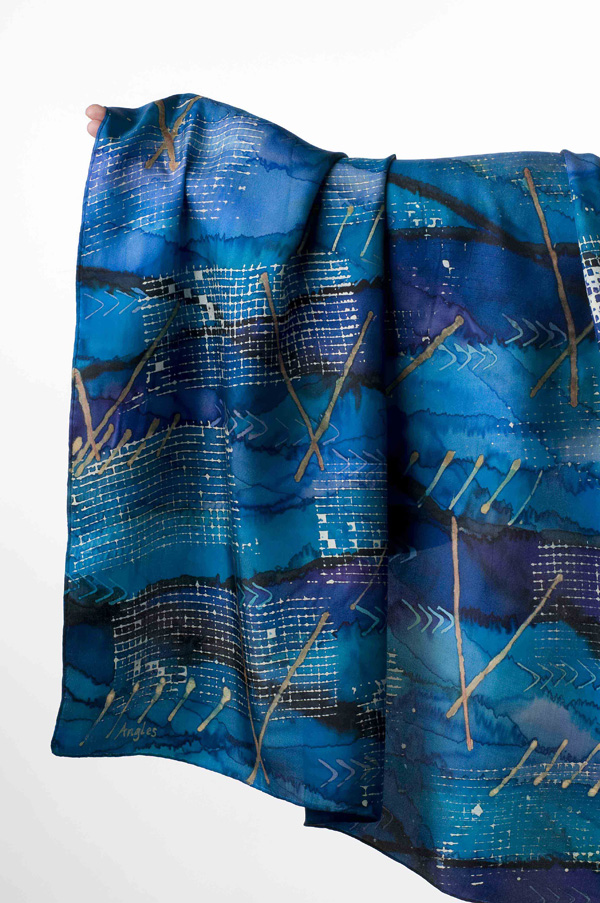
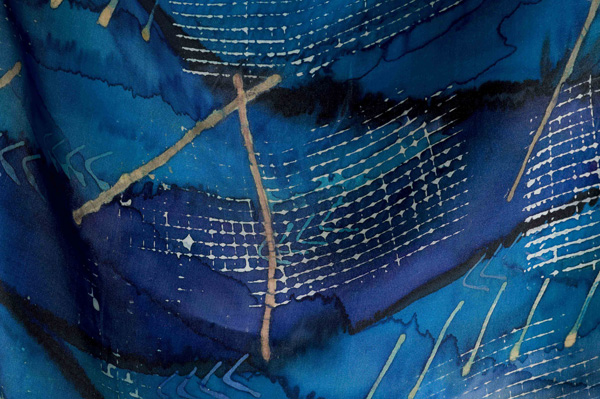
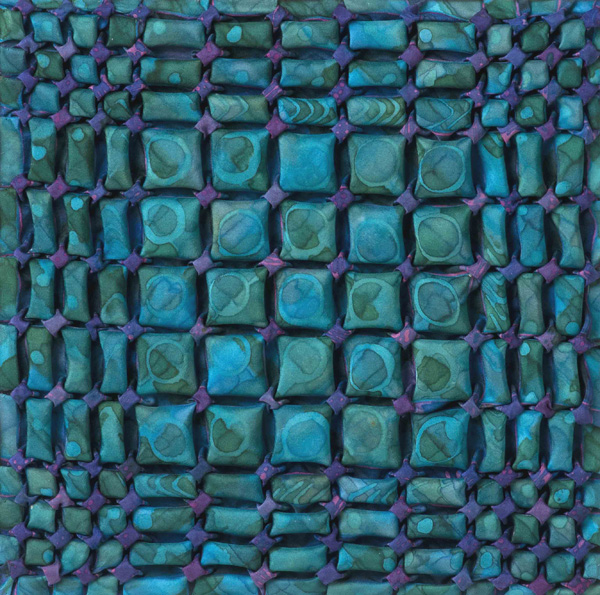
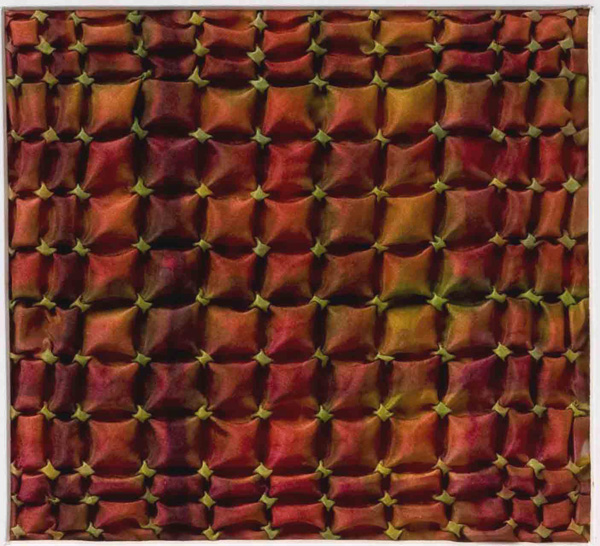
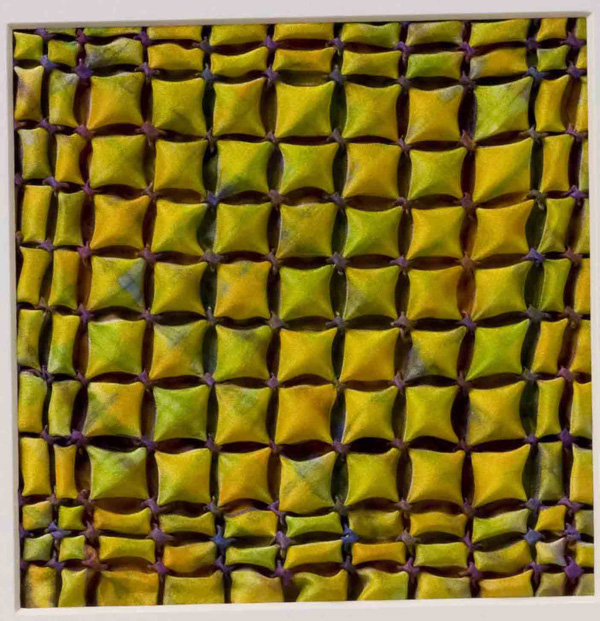
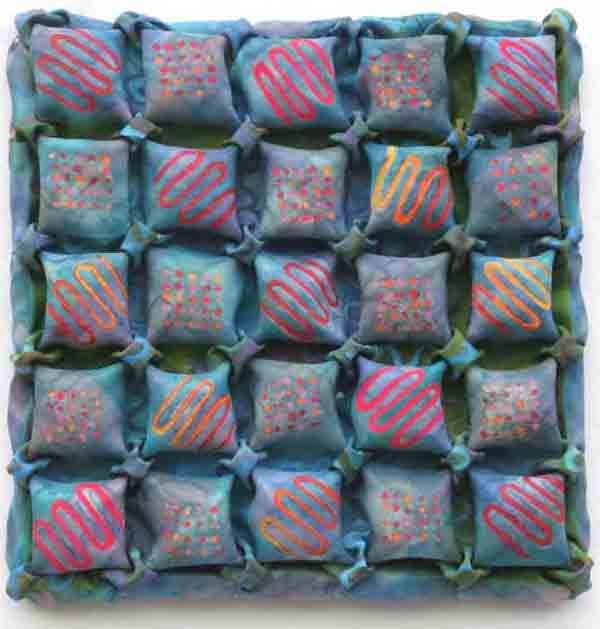
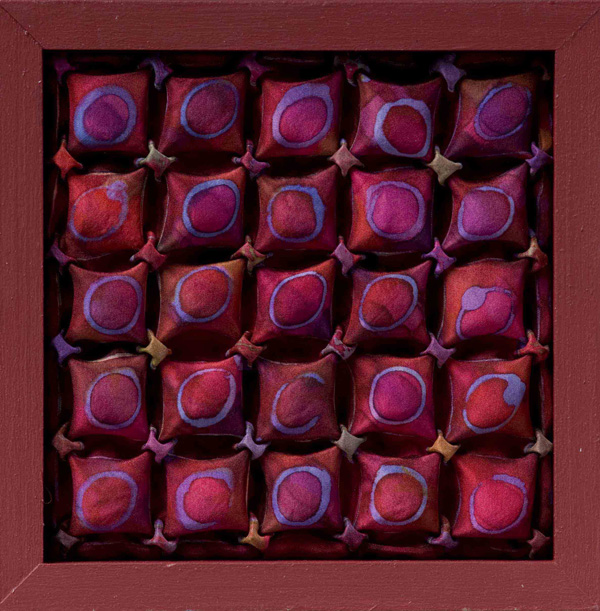
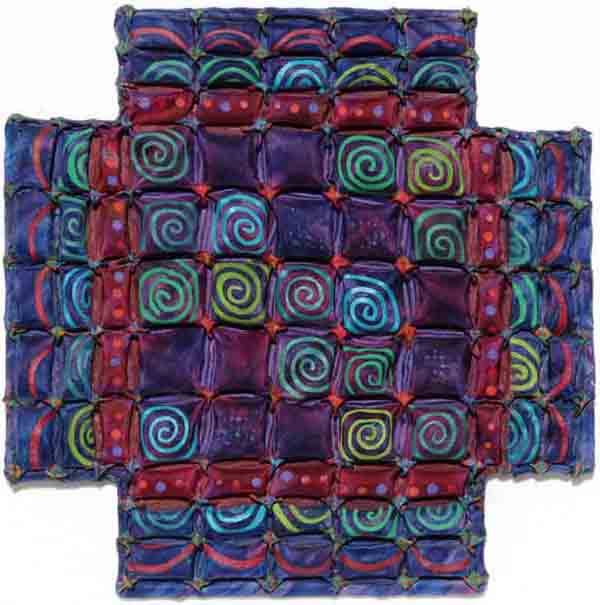
Using the traditional embroidery technique of smocking and the contemporary craft of painted silk, Barbara creates sculptural textile pieces. She has developed her own silk painting techniques and she enjoys exploring and developing surface design techniques on cotton and silk. Inspired by the grid structure of quilting and weaving, she uses the grid structure as a foundation for her designs, manipulating colour, proportion and stitch to alter the surface.
Tell us about your work?
My sculptural textile pieces merge the traditional handcraft of smocking, and the contemporary craft of silk painting. Inspired by the grid structures of quilting and weaving, I use the grid structure as a foundation for my designs manipulating colour, proportion and stitch to alter the surface.
Colour is an important aspect of my work. It is an intuitive form of expression for me. I am intrigued with the effects of the manipulated surface on my colour applications. Various elements of colour contrast are applied to the grid designs, creating a dramatic sculptural effect. I enjoy the fascination of my viewers.
Previous World of Threads Exhibitions
Barbara Hilts exhibited in the 2009 Festival exhibition Common Thread International Part 2.
Fibre has been a constant, a fascination and an obsession throughout my life.
Where do you get your inspiration?
Motivated by the sculptural effects of the shibori technique, and wanting to further develop the fabric's surface, I explored the traditional embroidery technique of smocking.
Having a passionate respect for and interest in historical textiles, I have adapted the intricate grid structures of weaving and quilt designs to the smocked stitch. One of the first textile books I bought was Keep Me Warm One Night: Early Handweaving in Eastern Canada by Harold and Dorothy Burnham.
Why did you choose to go into fibre art?
Like many daughters, my mother was my first influence to the traditional craft of textiles. My mother made almost all of our clothing and household items. She taught me the traditional embroidery stitches of the day. Fascinated with the process of sewing; I made my first doll at six years of age. I was always drawn to different disciplines during my somewhat unpredictable existence as a young adult and learned to spin and weave in my mid twenties. Fibre has been a constant, a fascination and an obsession throughout my life. My business card reads "Variations in Fibre" as I always want to be open to new directions.
What other mediums do you work in, and how does this inform your fibre work?
Though I have never ventured too far from textiles, I am handy with woodworking tools, which has been useful in developing my own personalized work space and a variety of tools and stamps which I use in my surface design techniques.
Which is your favourite fibre medium?
Silk. As well, I love hand stitching and developing layered surface designs on silk.
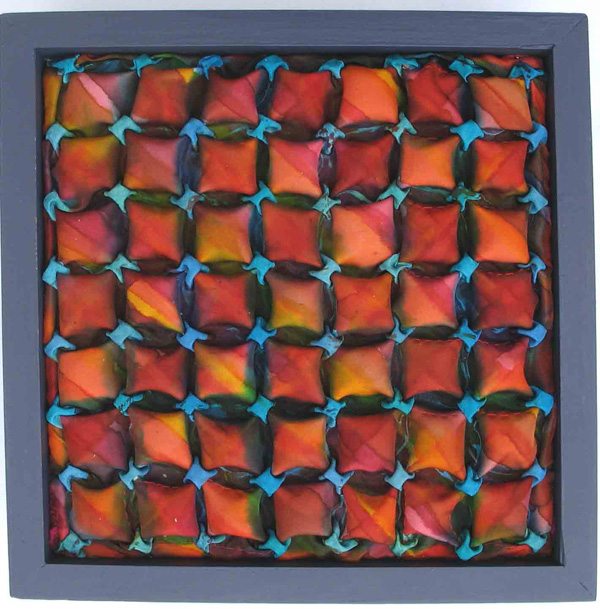
My sculptural textiles were a result of wanting to develop a dimensional quality to my work after years of working on a flat surface.
How did you decide on this medium?
I am a contemplative thinker, slow in my process, and meticulous to the point of frustration. I was fortunate to have been introduced to weaving in my early twenties. However, weaving as an art discipline is a slow process, so I redirected my focus to hand painted silk. It was a popular technique at the time, but allowed me to develop my artistic skills at a faster pace.
My sculptural textiles were a result of wanting to develop a dimensional quality to my work after years of working on a flat surface. The smocking merges my love for hand stitching and surface design.
What specific historic artists have influenced your work?
My work is not so much influenced, by specific historical or contemporary artists, but I am moved by their work as an observer, and appreciate their process of composition, their progression and their struggle to create. Piet Mondrian, the Dutch born artist, was renowned for his use of colour and abstraction. Mondrian's work spanned over four art movements from traditional representational to minimalist abstraction. Mondrian was born in poverty and he struggled to improve his circumstances by producing floral compositions in addition to developing his abstracts.
Mark Rothko, a Russian artist, explored "the compositional potential of colour". He is best known as an Abstract Expressionist, evoking emotion through his simplified use of colour in large suspended shapes on vast canvasses.
Other artists who have had an effect on my direction are painters Marcel Duchamp, Edward Hopper and Edgar Degas, as well as sculptor Alexander Calder.
What specific contemporary artists have influenced your work?
Canadian contemporary artist, Christopher Pratt, because of his use of the golden means.
What other fibre artists are you interested in?
Dianne Koppisch Hricko for her depth of surface and integration of different materials.
Jane Dunnewold for her mastery of her craft. Trisha Hasler for her use of metal as embellishment and control of colour, and of course, Dorothy Caldwell.
What role do you think fibre art plays in contemporary art?
Two years ago I attended the Toronto Art Expo and viewed a textile piece from a New York gallery of an exquisitely dyed textile; mounted and framed. Fibre art has been a recognized form of expression, since the mid 20th century. I believe, in this century, it has been more conventionally accepted and appreciated as an art form and not limited to the traditional perception of function.
Can you talk a bit about the commercial viability of fibre art? Do you find it more difficult to show and sell your work than non-fibre artists?
I believe in the last fifteen years it has been more challenging to compete with less expensive goods made oversees. In our current market, the general public expects a constant flow of a variety of goods at a minimal cost. I do not believe they appreciate the commitment of time needed to create a fibre art artwork. However, the Internet has provided us with a promotional catalyst to reach an endless number of customers who are searching for the original.
How does your early work differ from what you are doing now?
I am more confident in my abilities and am willing to explore different techniques. Earlier work was limited to the use of customary silk painting materials such as Dupont dye, gutta and silk hemmed scarves.
What is your philosophy about the Art that you create?
Colour is an important aspect of my work. Colour brings joy. It brings life to a dreary, dull weather day and a visual hope and escape to our dismal world.
Please explain how you developed your own style.
I understand and allow my creative process to take it's own path.
How does your early work differ from what you are doing now?
I am more confident in my abilities and am willing to explore different techniques. Earlier work was limited to the use of customary silk painting materials such as dye, gutta and pre hemmed silk scarves.
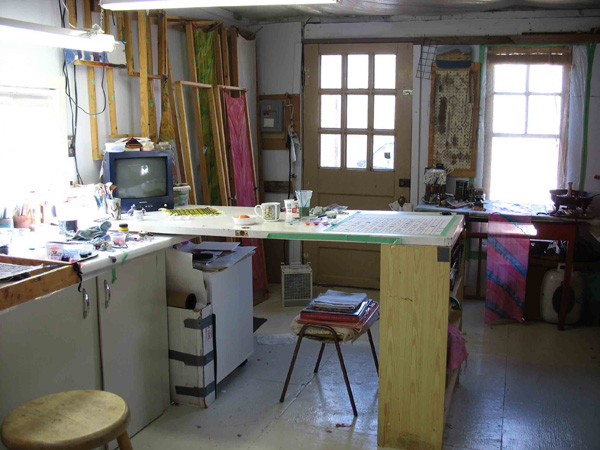
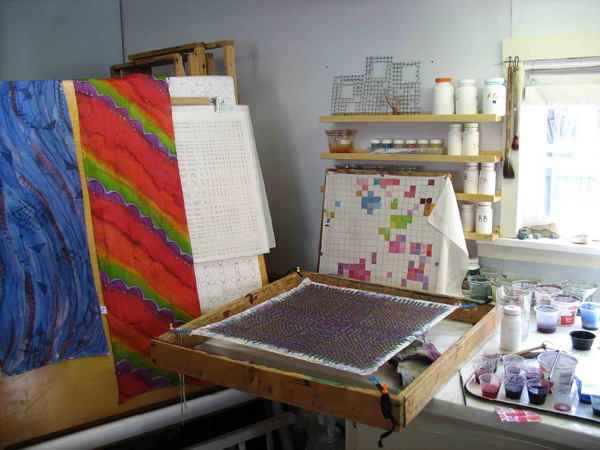
Tell us about your studio and how you work:
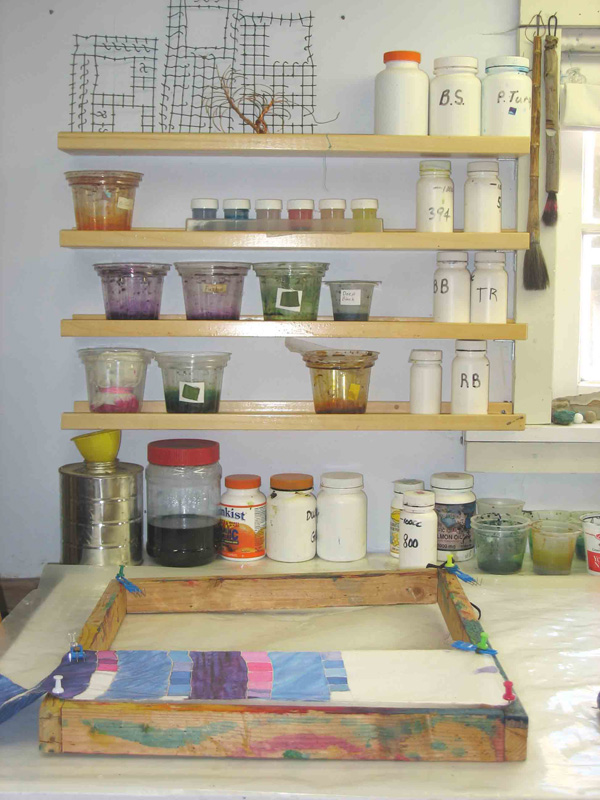
My studio is a renovated free standing structure. It has no plumbing, but it provides me with three large tables and a large space in which to work. Almost everything in my studio has originated from recovered finds.
Have you experienced fluctuations in your productivity through the years?
I have always remained active in my craft, though blocks and distractions always come into the equation.
Is there something else you would like us to know about you or your work that we have not covered?
My development as an artist has always been hinged on the balance of financial challenges and the freedom to develop my work, free of a determined purpose.
What interests you about the World of Threads festival?
The vast number of outstanding textile artists.