Artist Interview 87: Kim Stanford
Winnipeg, Manitoba, Canada
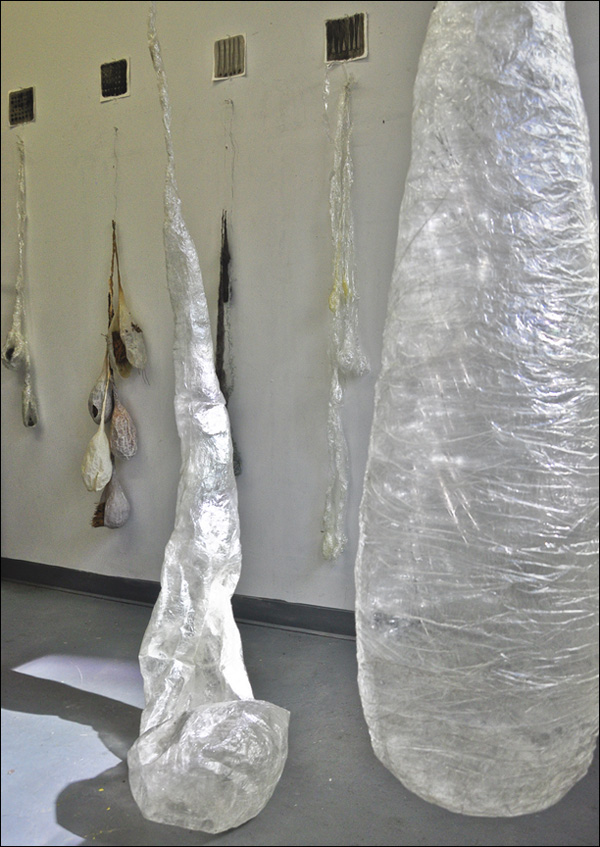
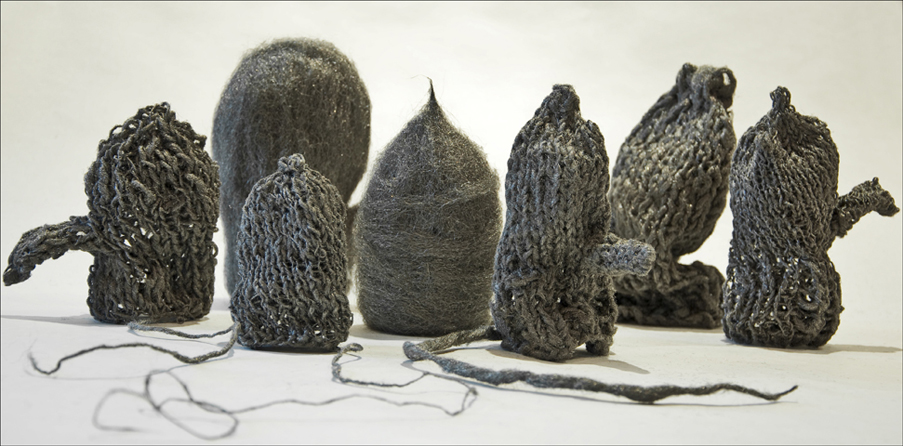
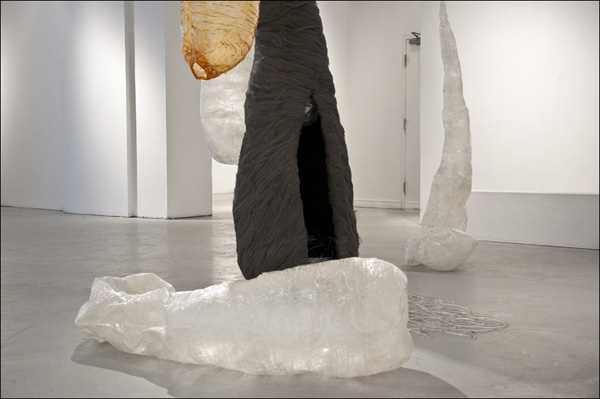
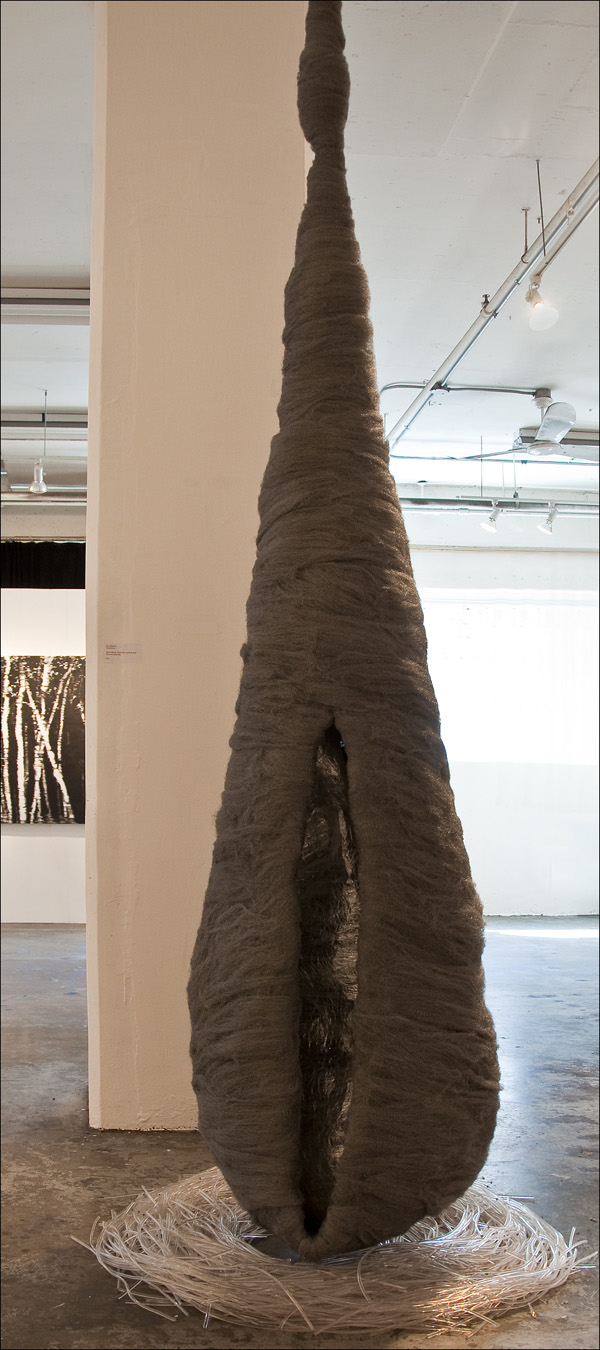
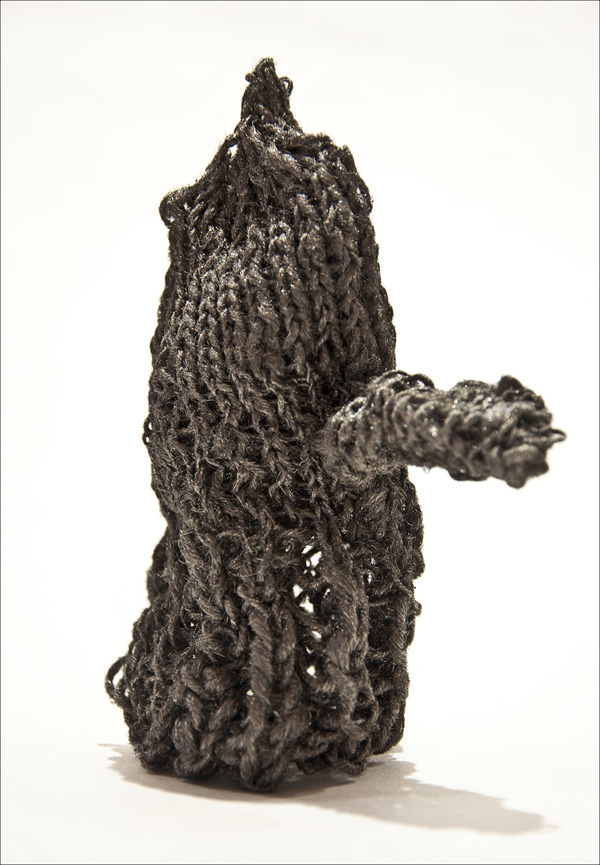
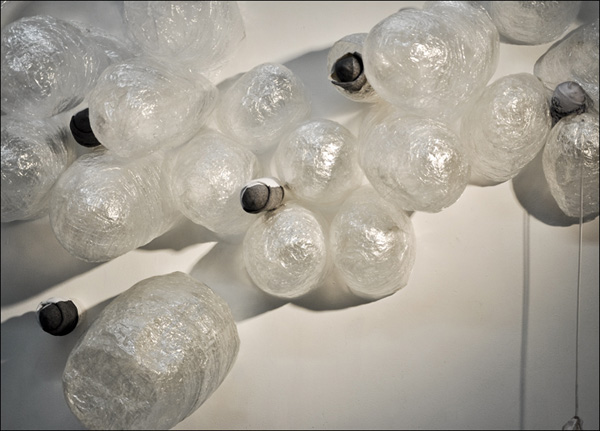
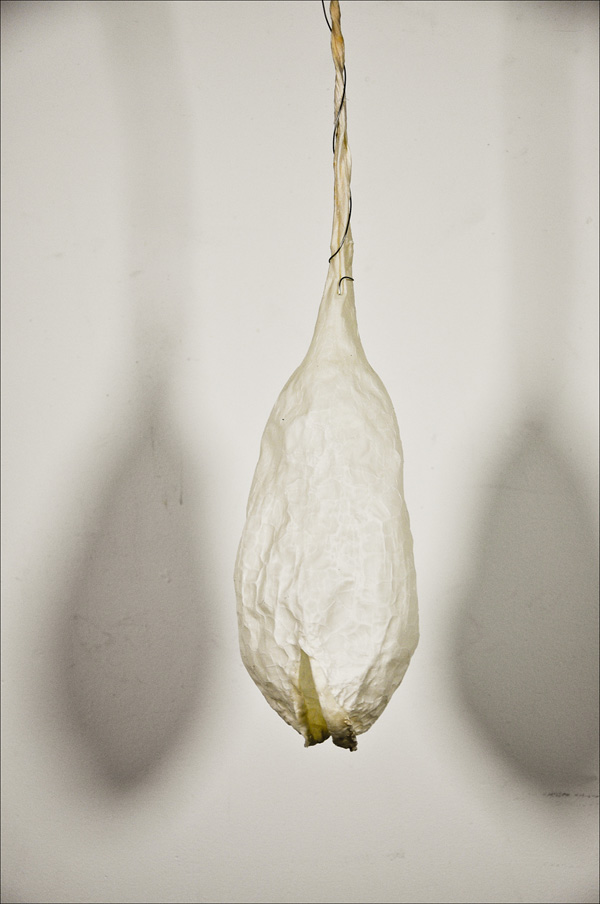
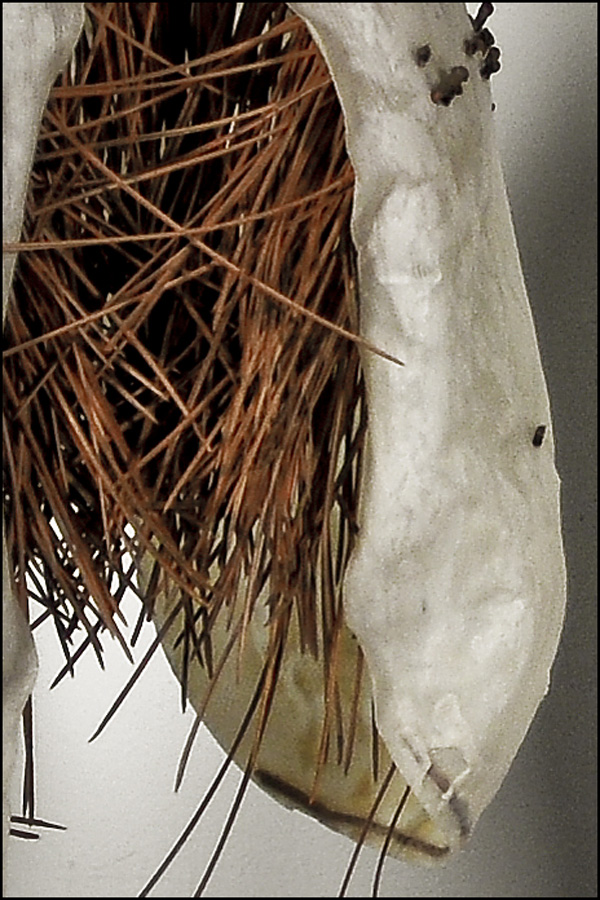
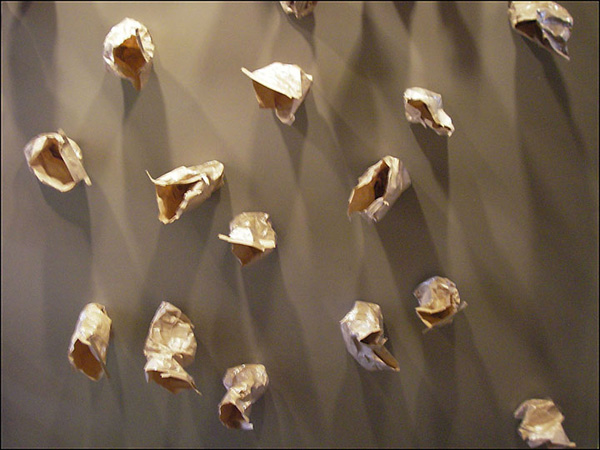
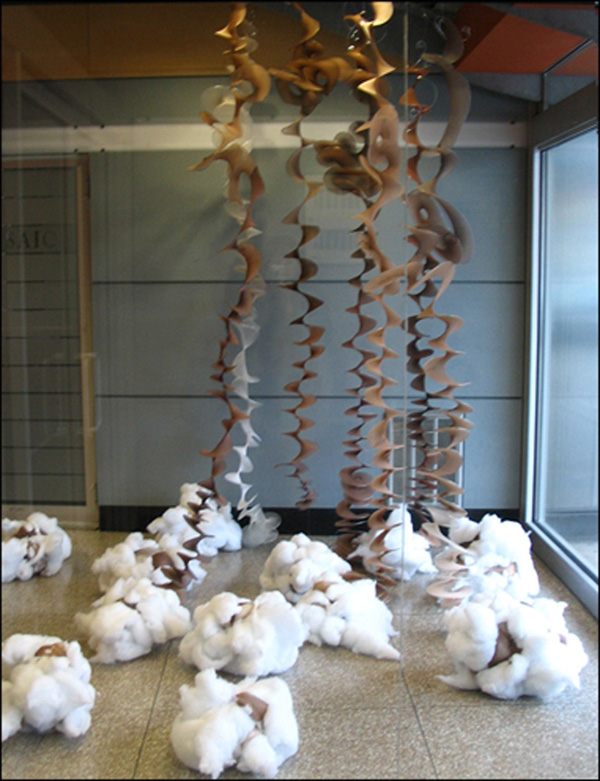
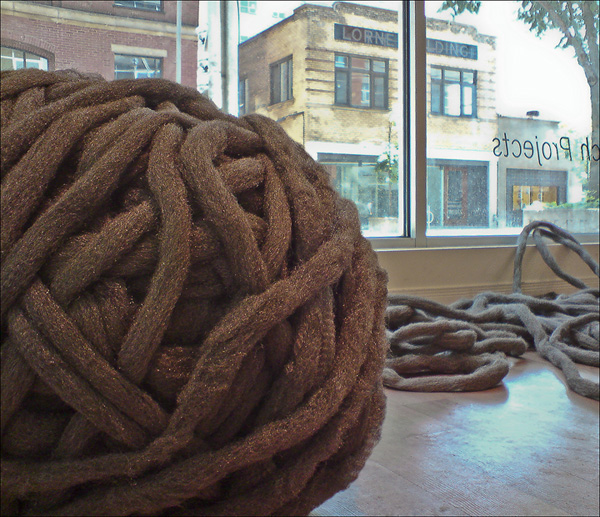
Kim Stanford is a fibre artist working in installations and sculptural ‘assemblage’. She works with common, often domestic objects (such as steel wool, socks, and tape) employing fibre techniques in the construction of the pieces.
Tell us about your work?
My assemblages and installations are absurd, a little off the edge. Viewers often are undecided about their opinion, which is great.
I'm interested in the tiny moments in our lives that are repeated over and over and over, in how their monumental repetition informs, yet also cuts across the grain of how we experience ourselves, as well as how we are woven amongst and against our family, community and society. How ordinary experience mutates into an impalpable complex. My work explores this nexus of shifting identity and mundane life, illuminating and troubling the seeming insignificance of everyday practices and experiences.
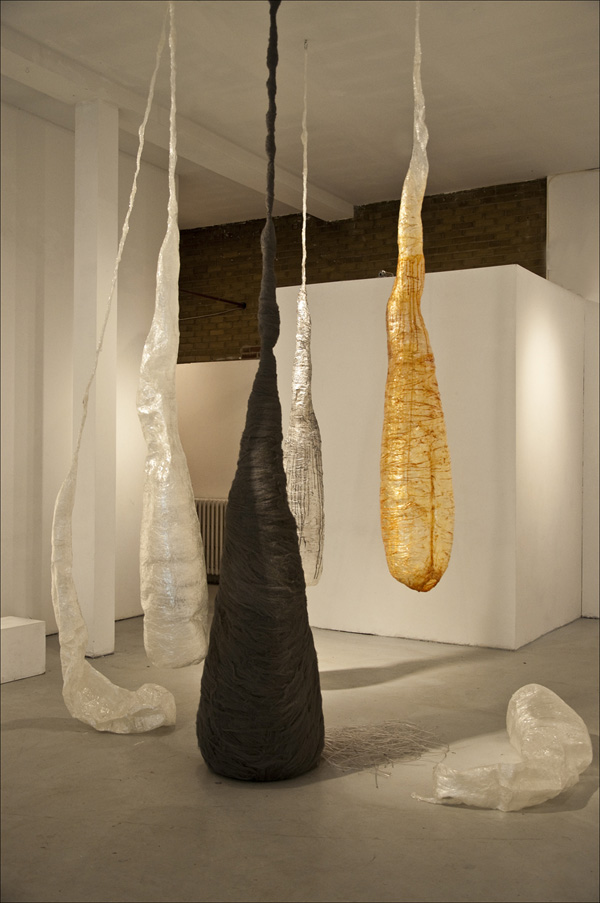
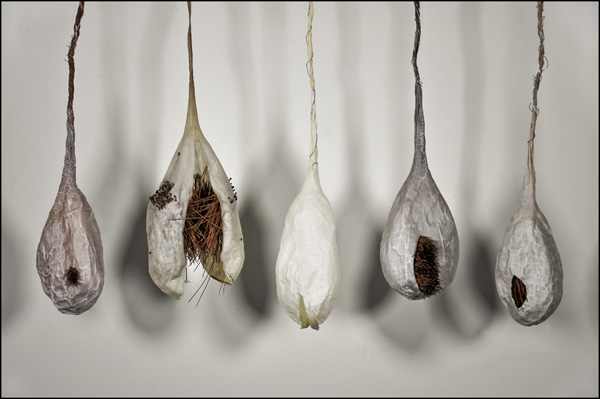
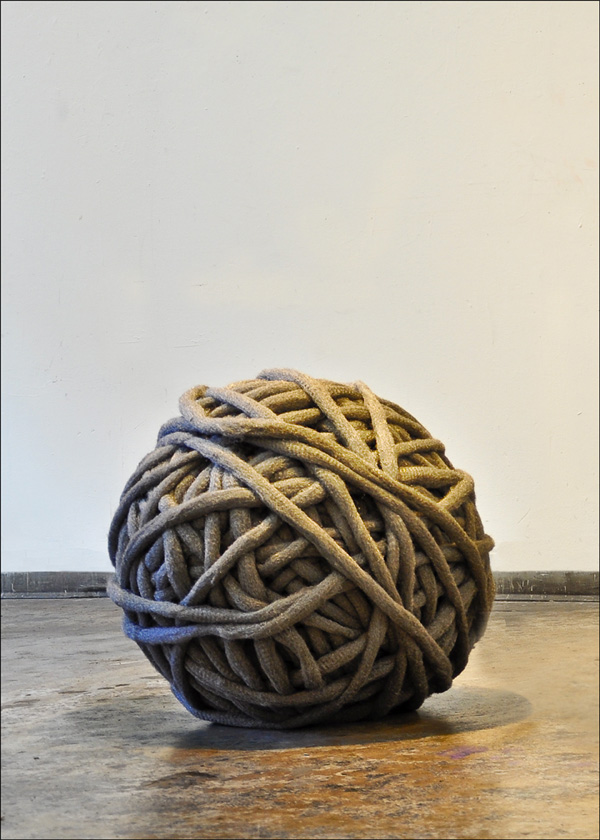
To underscore my interest, I primarily work with common objects and use a tedious, repetitive process. A small, familiar object mutates into a larger stranger piece. How I make a work (medium and technique) aligns with why I make it: to open a conversation about the universal dialectic between the taken-for-granted and a search for meaning.

Where do you get your inspiration?
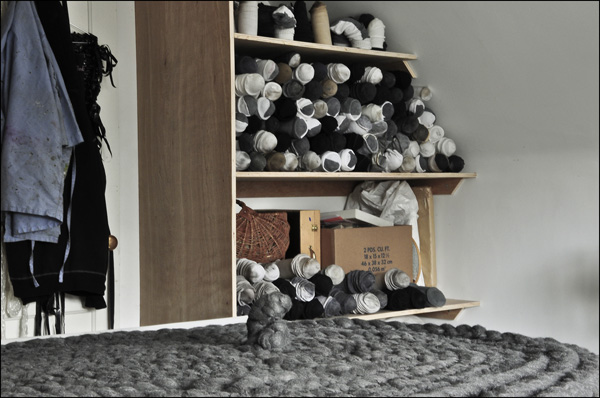
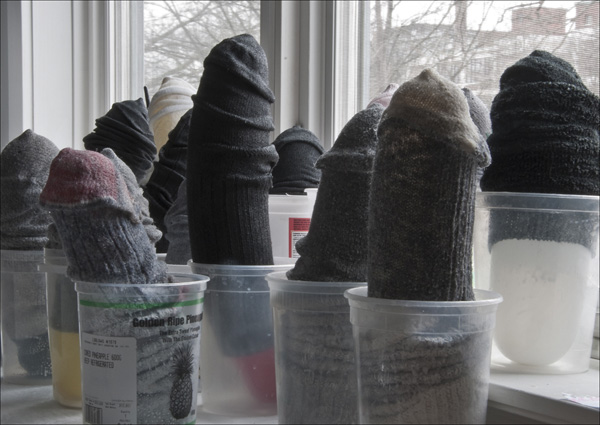
In the last decade, other than my art practice, my personal world has been primarily domestic: wife/mother stuff. The tiny moments I became bored and annoyed with, like picking up other's dirty socks, has been a fantastic source of inspiration for me, as has my experience with chronic pain.
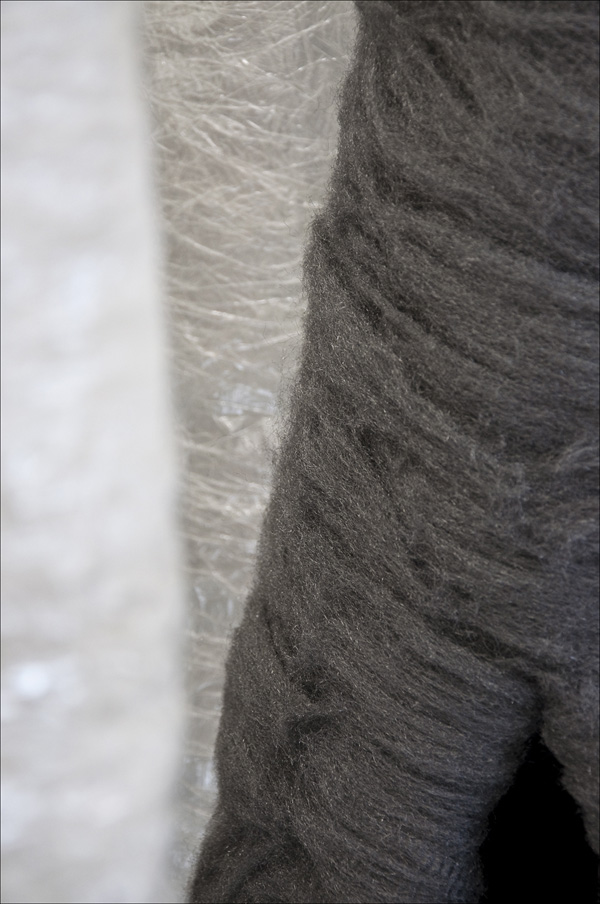
I may also experience a fascination with a particular material (like steel wool), a compulsion to begin to play with it in different ways, until something strange starts to emerge, something gendered perhaps, bizarre, beautiful, yet repulsive. So I work both intuitively and conceptually until something tasty and chewy happens in their meeting.
I also still take classes now and then. The Toronto School of Art has fantastic and varied offerings.
I looked around my studio and look! It's full of cloth and thread and fibres!
Why did you choose to go into fibre art?
There wasn't a single time I decided to be 'a fibre artist'. To be honest, I paused a moment when invited to this interview. But then I looked around my studio and look! It's full of cloth and thread and fibres! I'm honoured to be included in such a diverse and ripe tradition.
Which is your favourite fibre medium?
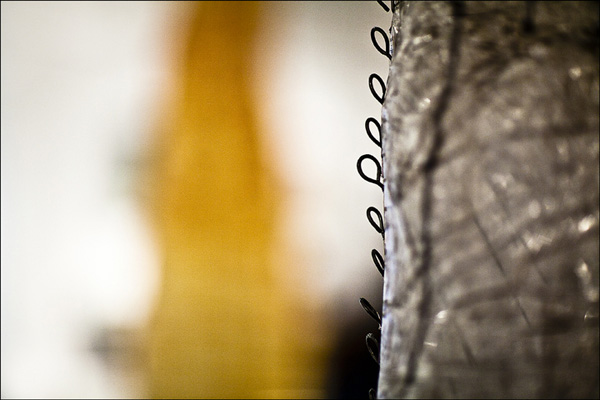
Steel wool. I love it. Hosiery is pretty great too.
What other mediums do you work in, and how does this inform your fibre work?
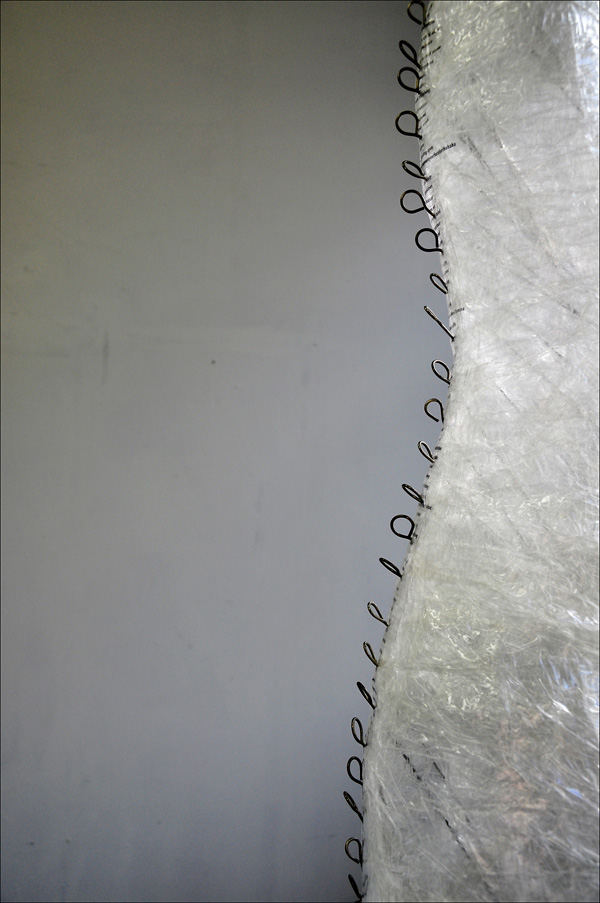
I work primarily with 'found' objects, which sometimes are not fibre based. Yet, even when they're not, I often work with them as if they are, and vice-versa. I'll work with fabric as if it's clay. I'll work with paper or tape as if it's fabric. Whatever facilitates my intentions!
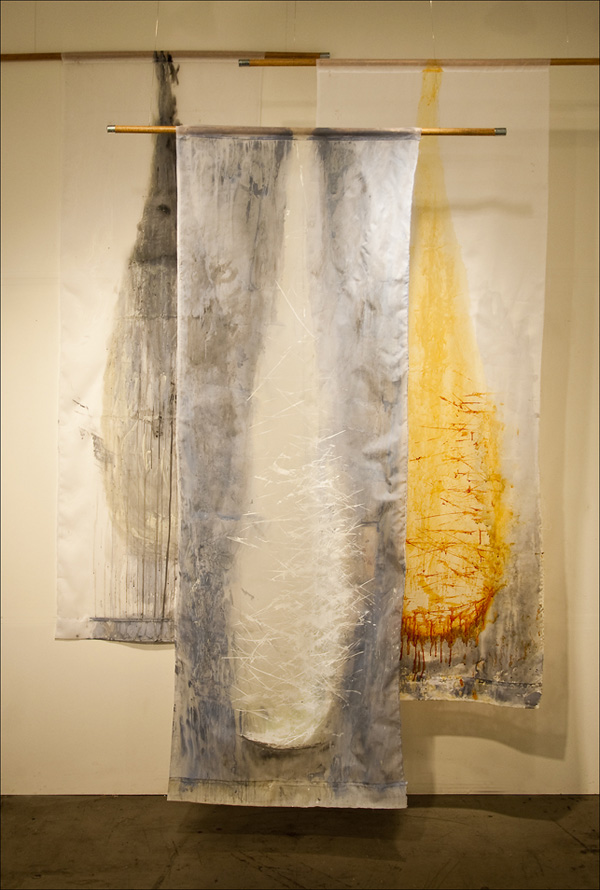
I'm experimenting with incorporating sound and movement into my assemblages in order to underscore my interest in tiny monotonous moments. I also play with abstract expressionist painting to keep my creative mind loose, as my 'real' work is often tedious. Sometimes I even sketch and collage to experiment with ideas.
What bridges the works that you have created in differing media?
My conceptual interest runs through my various works (strategies for creating meaning within, through and despite the tiny monotonous instances of life). My work tends to attract and repulse viewers; it is beautiful and also alien, comforting and also disquieting, and flirts with an eerie insanity.
What specific historic artists have influenced your work?
As I work with found objects, I of course pay homage to the pivotal French artist Marcel Duchamp. As Art History writes it, he completely redefined the possibilities of art through his use of the 'ready-made'.
However, German/American artist Eva Hesse has been my biggest influence. She is best known as a post-minimalist anti-form sculptor. I'm inspired by her use of untraditional materials at hand, non-mechanical production of multiple organic forms and the impermanence and absurdity of her works. Absurdity was very important to her. She managed a significant influence on Art History, even though she died at 34, in 1970.
What specific contemporary artists have influenced your work?
I'm inspired by American installation artist Tara Donovan's ability to push the properties of a single mundane object in order to create massive installations that mimic nature.
I'm also inspired by an exploration of grotesque beauty of bodily parts and processes I see in some of the work of both Kiki Smith (American) and Louise Bourgeois (French/American); the continual process of and in much of Ann Hamilton's work (American); and the sheer size and beauty of Ernesto Neto's huge drooping organic forms (Brazilian).
What other fibre artists are you interested in?
I love French sculptor and installation artist Annette Messager, her messy use of mundane, often children's materials; her irreverent satire of women's place in society; and the beautiful morbidity of her work. In her earlier career, Polish sculptor Magdalena Abakanowicz also used found textiles, such as sisal and burlap, to weave multiple, huge, beautiful, bodily forms. Polish/American textile-performance artist Olek (Agata Oleksiak) is prolific and cheeky with her crocheted installations. Canadian Aboriginal sculptor Brian Jungen often uses textiles to evoke cultural traditions while also being critical of consumerism.
When did you first discover your creative talents?
In high school, I'd create pieces from whatever objects I could find, seeking refuge in the garage. However, it wasn't until I'd exhausted all other possibilities for being in the world (a decade ago) that I abandoned a previous career to pursue visual arts.
When you were starting out, did you have a mentor
I've been incredibly fortunate to have had several local artists as mentors who have taught me different ways of seeing, strategies for teasing out sources of inspiration, the importance of play, how to set up a studio practice, and aspects of the business side of art work.
Please explain how you developed your own style.
As somewhat of a post-modernist, I find it interesting that a survey of one's work tends to be presented as more linear and coherent than it probably actually evolved. However, I think trial and error, a great deal of play, following my nose, and an amount of commitment to my conceptual interest has made my work recognizable.
What project/piece has given you the most satisfaction and why?
It's always the one I'm currently working on. I think this is in part because I'm able to satiate my obsession work, with a particular material in a particular way. That is very satisfying! I hope it's also because my work keeps getting better.
I also learnt about ethical considerations in the research and representation of human subjects and experiences.
Where did you train and how has your training influenced your art?
I studied critical social theory in my Masters Degree at the University of Toronto. That theory, which came before my fundamental art training, meant I always approached my artwork with a critical mind. I also learnt about ethical considerations in the research and representation of human subjects and experiences. I see so many artists that still fail to consider this.
I took a foundation year at OCADU, but completed my diploma at the former Toronto School of Art. It was a small, underfunded school, but I thrived on the flexibility of the program, the attention I received from faculty, and the community created. It was an alternative school, so I had to learn how to be self-motivated, self-critical, and resourceful, which has certainly fortified my practice.
What is your philosophy about the Art that you create?
I spoke about my interest in the magnitude of repeated tiny bothers in shaping a person. I don't theorize this force as occurring in one direction, conclusively, but rather as a messy nexus. People engage in these moments with various strategies for constructing and also contesting meaning in their lives, which mutates according to which self is implicated. Authenticity is likewise fragmented and fleeting. Thus the repetition in my work underscores not only monotonous, but also multiple experience, multiple being.
On a different note, I have a contemporary (broader) understanding of what constitutes art and art making. I believe my use of everyday materials is democratic.
What role do you think fibre art plays in contemporary art?
It's everywhere. There's now a freedom in visual arts to use 'unconventional' materials and processes, including what has traditionally been considered craft. Printmakers stitch their work. Painters embed fabric. Sculptors weave hard materials. Textile artists cut, paint, shred, collage, install, perform . . .
Tell us about your studio and how you work:
I'm quite disciplined in working everyday. I'll have two or more projects on the go, one generally more tedious than the other. Thus, I will always have something to work on, even if I'm uninspired. I also devote an hour a day to the business side of art, and keep a journal for my inspirations.
Where do you imagine your work in five years?
As an emerging artist, I'm working towards a solo show in a notable artist-run gallery, as well as shows across Canada. I hope to accomplish larger works, which requires a bigger studio and technical support, I'd like to be part of a small, groundbreaking artists' collective. Once my kids are a bit older, I hope to complete an MFA.
What interests you about the World of Threads Festival?
What a fantastic initiative to bring a diversity of artists and techniques to an international festival. Bravo!