Artist Interview 85: Anna Hergert
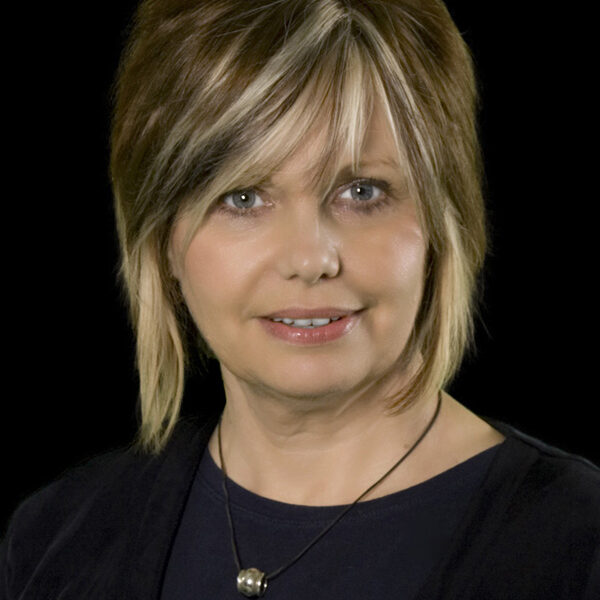
Moose Jaw, Saskatchewan, Canada.
Anna is drawn to fabric by what she calls its potential for an infinite expansion of expression and form. Her work is primarily visual and formal, that of line, shape, colour, texture, negative and positive space and how these elements communicate with each other. She works with abstract imagery and concepts often evolving into 3D exhibition pieces.
Tell us about your work?
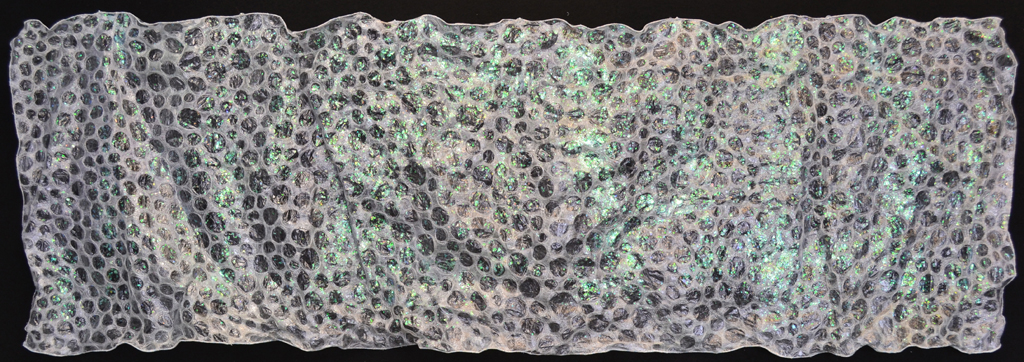
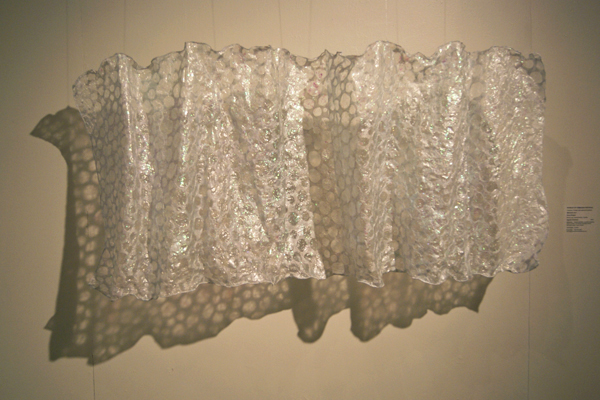
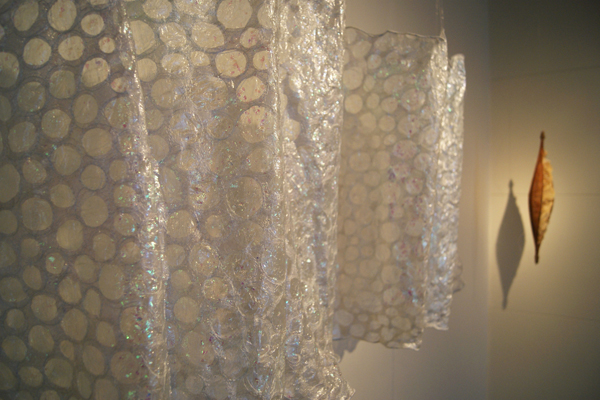
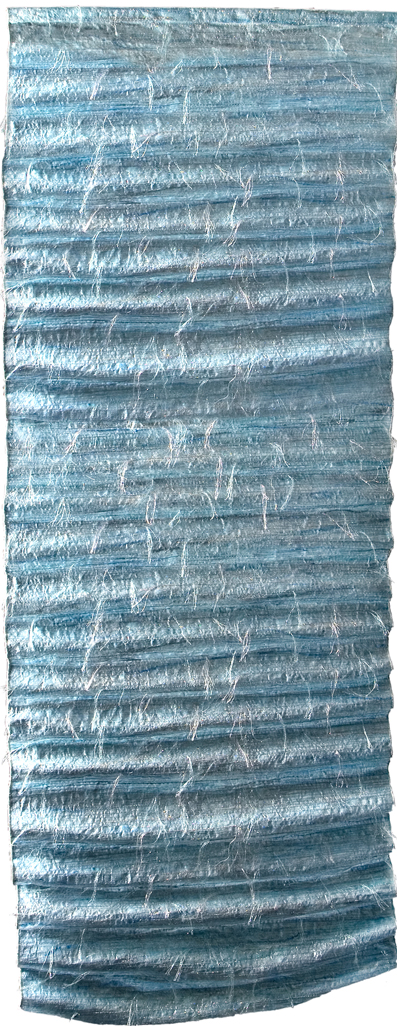
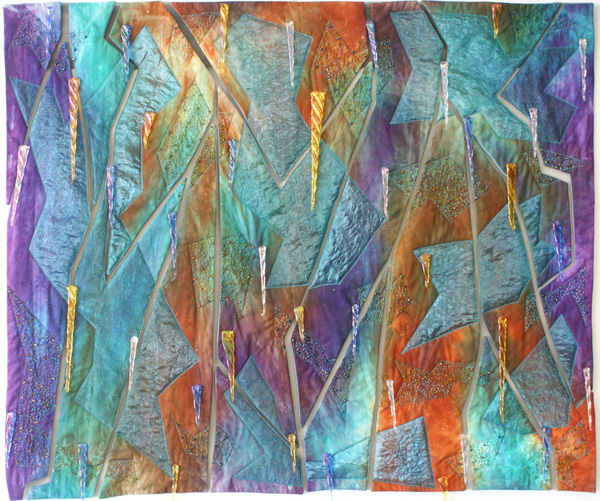
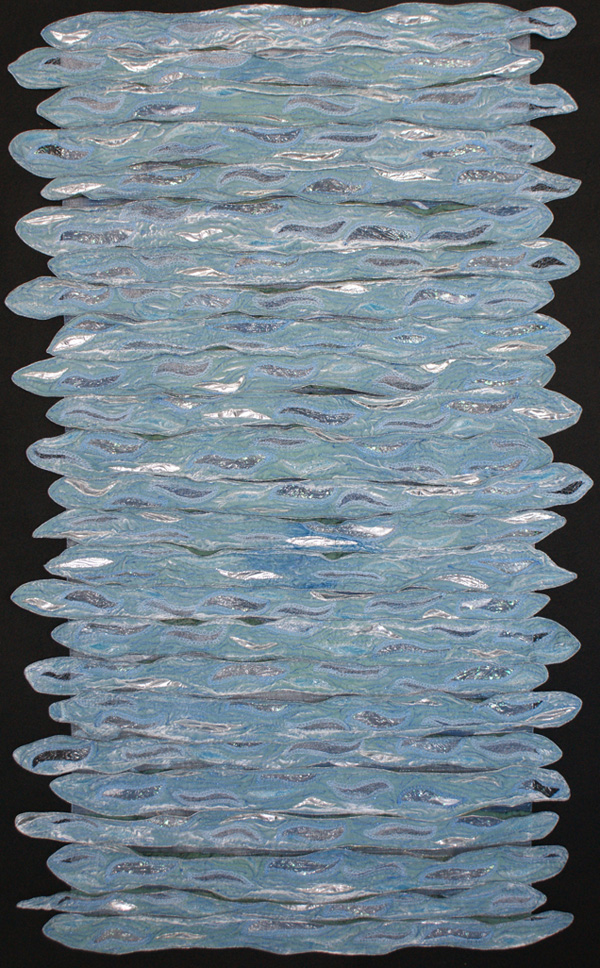
My work is primarily about the visual and formal - line, shape, colour, texture, negative and positive space, and how these design elements communicate with each other and the onlooker. I translate these elements into fabric and pliable non-textile materials, such as plastic food film, because I recognize their possibilities.
Fabric and certain man-made materials are sensual and can be manipulated. They can be made to have weight, mass, and texture. They create atmosphere by reflecting and changing their appearance in light. For me, the result is material with the potential for infinite expansion of expression and form.
Previous World of Threads Exhibitions
Anna Hergert exhibited in the 2012 Festival major exhibition Memento mori.
Where do you get your inspiration?
My work is primarily informed by my surroundings and the emotions evoked by immersing myself into this environment. Until five years ago I lived in a large urban space with man-made structures greatly influencing the outcome of each work of art. A dramatic shift in my work occurred when I moved to rural Saskatchewan in August 2007. The opportunity to experience nature and its continuous changes has broadened my focus and allowed me to embrace materials other than traditional fabrics to achieve outcomes reflecting personal impressions.
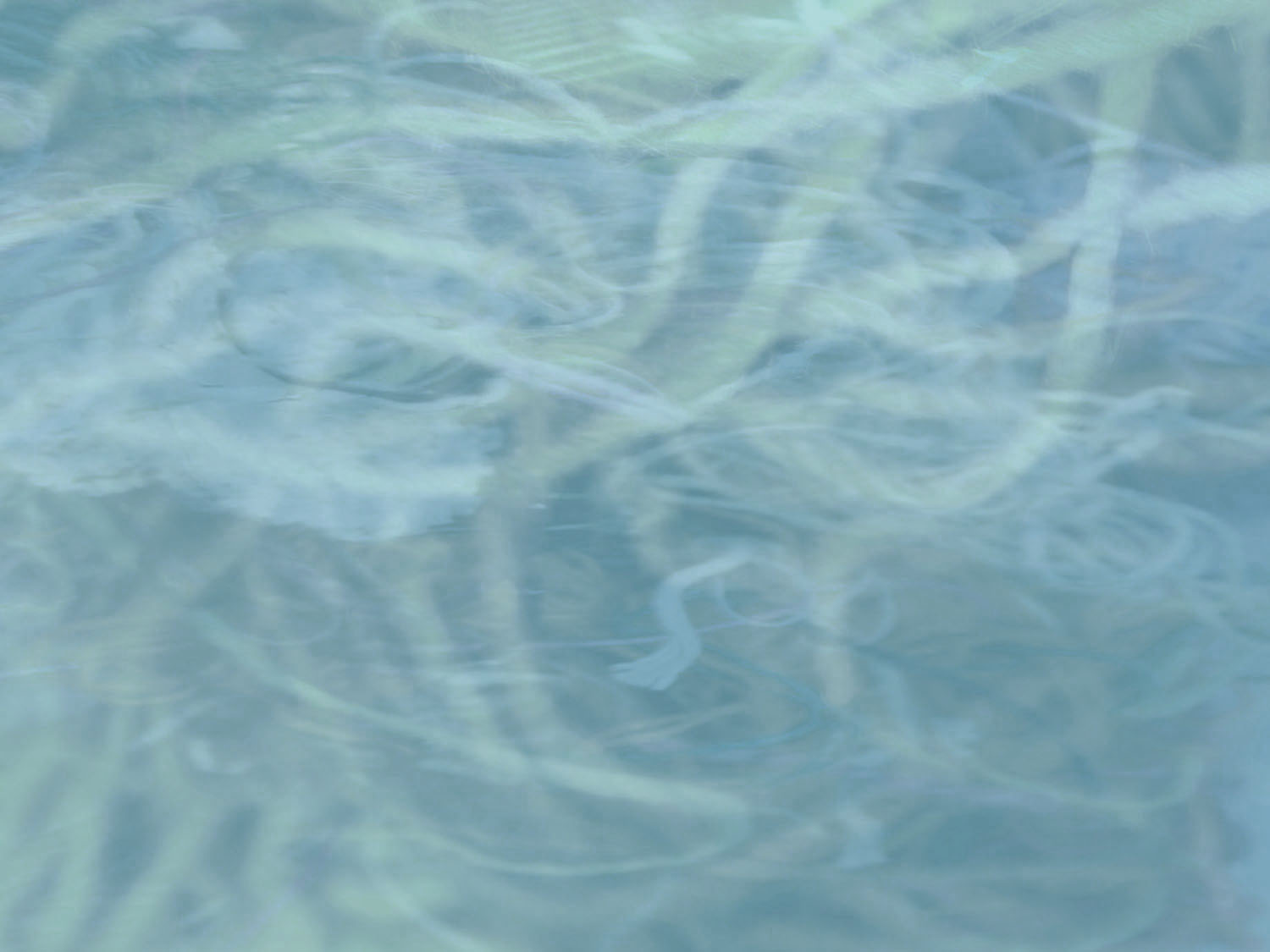
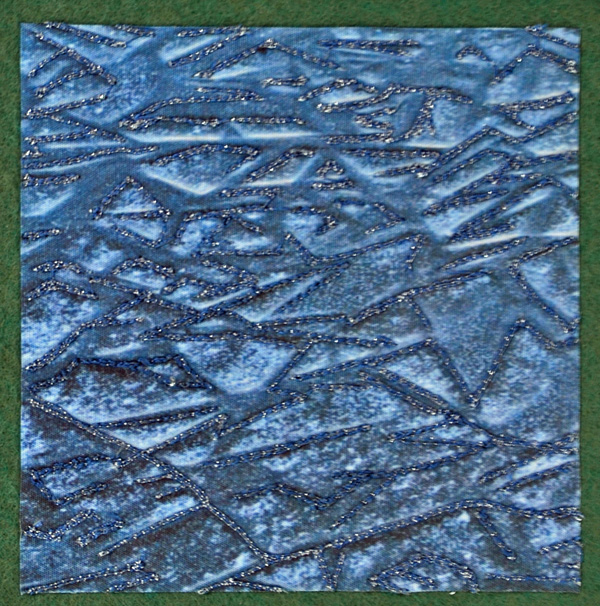
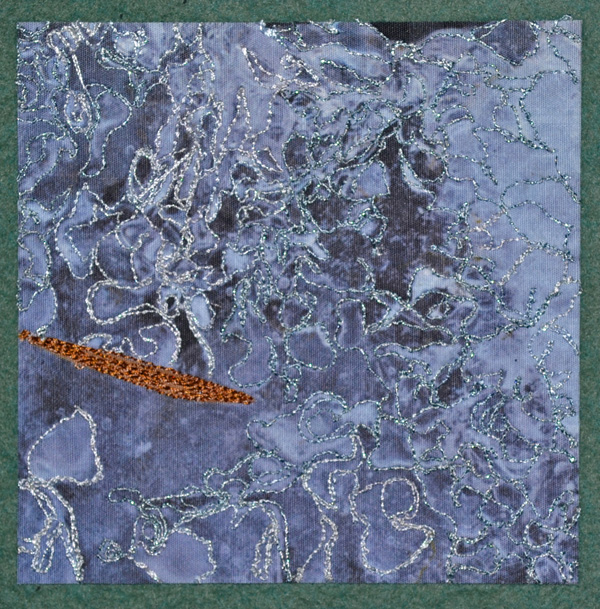
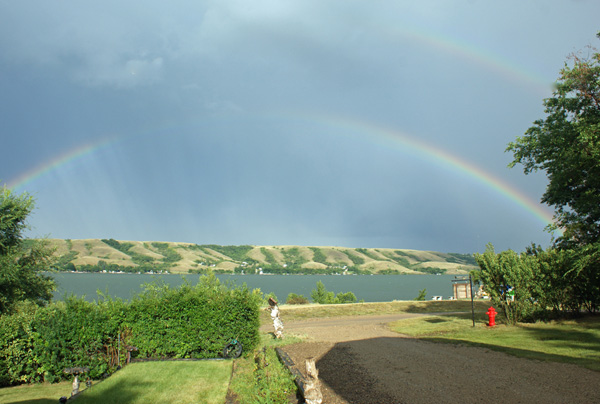
Living at the lakeshore I am able to observe my strongest source of inspiration, water, on a daily basis. From the reflection of the surrounding hills on a mirror-like calm surface, to a sparkling sunrise creating dynamic patterns on the open water, to fractured mosaic patterns of a vibrant sunset on newly formed ice – the most western lake of the Qu’Appelle Valley, Buffalo Pound Lake constitutes my primary source of inspiration.
Why did you choose to go into fibre art?
Born and educated in Germany, I was exposed to fibre art at an early age. My maternal grandmother introduced me to embroidery at age four, gently guiding me to embrace textile embellishments with needle and thread, introducing small challenges with each progressive project to hone my skills. Handwork was a regular part of the weekly school curriculum and through this constant exposure, my passion for art and textiles deepened and developed into a lifelong pursuit.
What other mediums do you work in, and how does this inform your fibre work?
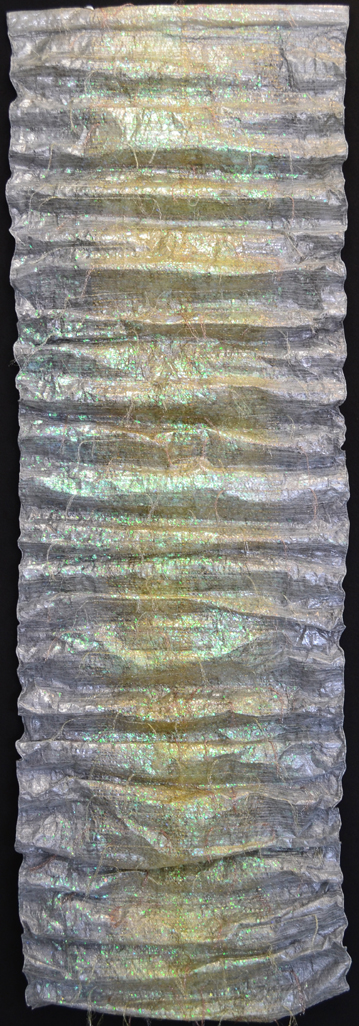
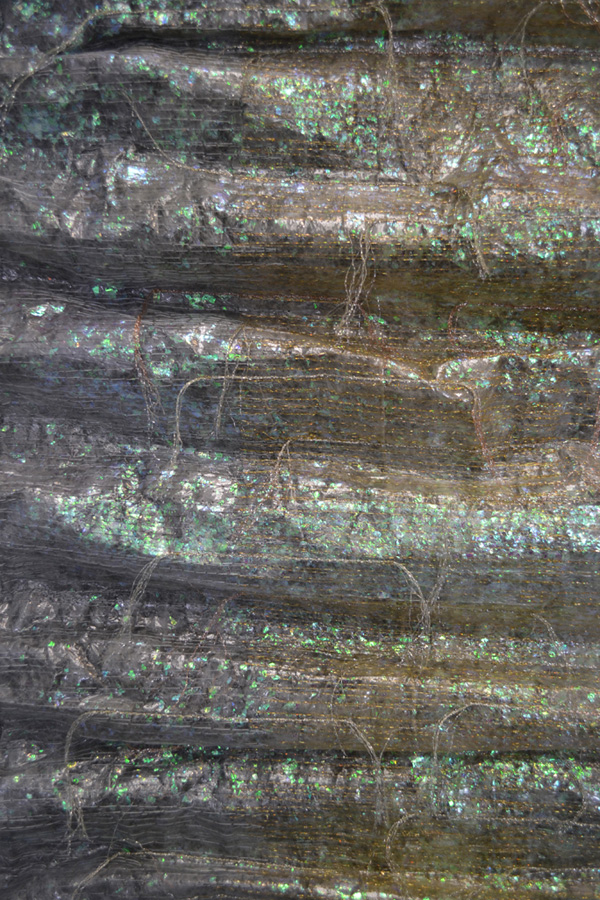
My interest in photography has grown stronger over the past three years. I am currently exploring ideas and possibilities regarding successful amalgamation of these two disciplines.
What bridges the works that you have created in differing media?
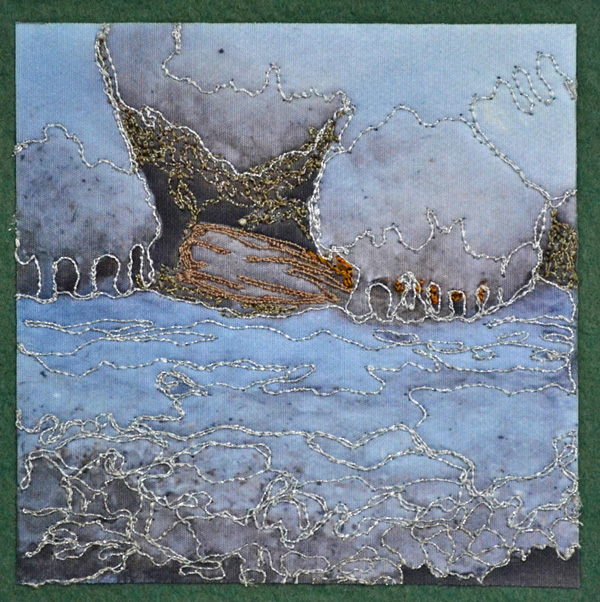
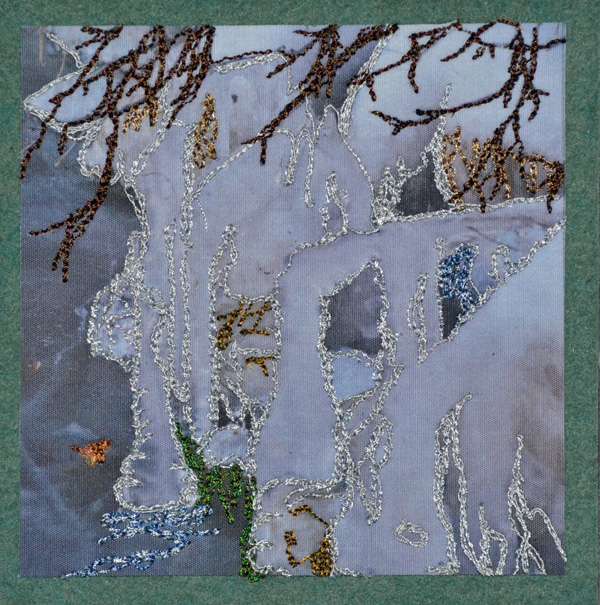
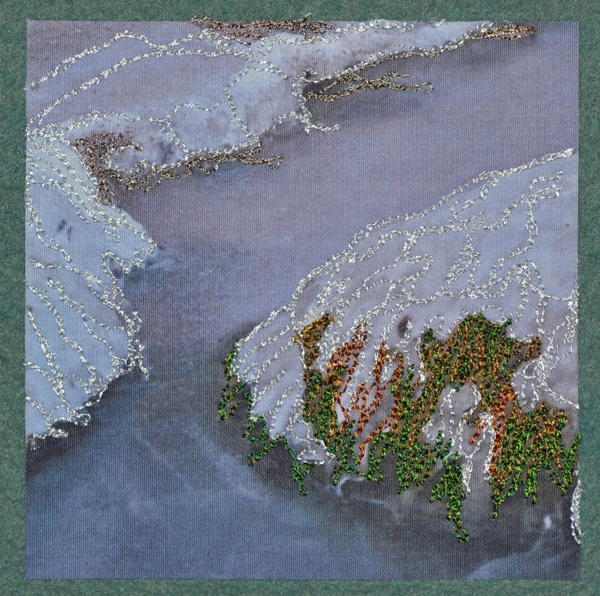
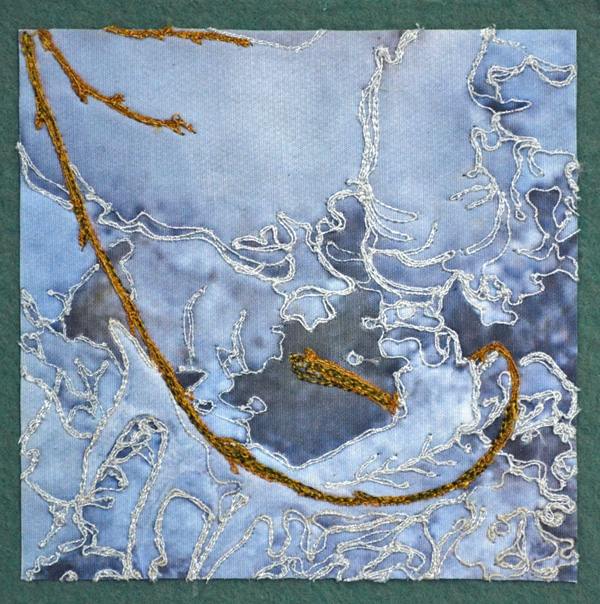
The way I am marrying the two media is by way of abstracting nature’s imagery through macro photography, printing selected non-manipulated images on fabric and showcasing specific characteristics by implementing non-digitized machine embroidery techniques.
Which is your favourite fibre medium?
I don’t differentiate between the various fibre sources available to me. As a rule I begin with white cotton, silk, ramie, linen or man-made fabrics. I am also drawn to plastics, anywhere from food film found in the kitchen cupboard to protective tablecloth plastics of varying weights. Paint, dye and various inclusions are chosen depending on what my vision dictates.
What specific historic artists have influenced your work?
I have studied a variety of artists during my formal art training and as an independent artist working in isolation.
Gustav Klimt, (1862 - 1918) Austrian Secessionist Painter, influenced my early work. His golden period informed my colour palette from 2000 through 2005. Detailed background patterning, elongated figures and male/female symbolism were of particular interest to me.
Friedensreich Hundertwasser, (1928 - 2000) Viennese born 20th century painter with a strong commitment to the environment and innovative architecture, has captivated my attention when it comes to observing line and colour. His uninhibited approach to repurposing and recycling painting surfaces has inspired me to incorporate non-standard materials in my fibre work.
Leonardo da Vinci, (1452 - 1519) Renaissance painter, has been an inspiration for his open mind. His strong observation skills and ability to capture details, such as hair studies, faces, nature, mechanical inventions and even the benefits of proper nutrition and exercise to keep the mind flexible and receptive to new ideas, have helped me to embrace all facets of creating.
What specific contemporary artists have influenced your work?
Aside from my City and Guilds tutors Linda Kemshall and Gail Harker, I have not been influenced in my art. When I graduated with my second diploma in 2005, I was well on my way to exploring my own ideas. Self-directed intensive research and exploration of one’s own ideas and concepts is the premise of the training.
Julia Cameron’s Artist’s Way has paved the path to staying focused and ensures continued personal growth.
What role do you think fibre art plays in contemporary art?
Fibre Art has not yet been fully discovered by art collectors and museums. Often referred to as quilting and embroidery, hence rendering it a “craft”, it often lessens it’s worth/importance in curators’ and museum officials’ perception. It truly limits the way they could embrace this important form of visual art. At the same time, I embrace the challenge to educate and shift the perception of the general public and those closely connected to the art world.
Can you talk a bit about the commercial viability of fibre art and do you find it more difficult to show and sell your work than non-fibre artists?
My experiences in exhibiting and selling fibre art fluctuate from year to year. My focus is my studio practice and with that comes my commitment to sharing on an ongoing basis. Galleries in general have been welcoming of my proposals and I have not found much resistance from curators interested in exhibiting my work. Over the past three years, gallery owners have taken the initiative to invite me to showcase new work on a regular basis.
What is your philosophy about the Art that you create?
Fibre Art is a medium that has yet to be fully discovered explored and ultimately understood in Canada. I embrace this challenge of being part of an evolution. Traditional biases are slowly fading with the increased exposure to specific publications focusing on textiles and fibre art. Visual artists are beginning to embrace fibre art techniques and researchers are opening doors by drawing parallels between cultures with rich textile histories. We are witnessing a gentle shift toward showcasing fibre artists and painters side by side with strong support from the public echoed by positive art critiques in the print media.
I knew immediately that fibre would be the medium I would use to express myself with artistically.
When did you first discover your creative talents and how did you develop your own style.
Fibre art has been a vital part of my personal expression since early childhood. When I enrolled in the City & Guilds programme in 1997 to gain a deeper understanding of art and design, I knew immediately that fibre would be the medium I would use to express myself with artistically. My early work ranges from explorations into all types of imagery and media, including representative, abstract and conceptual. Currently I work with abstract imagery and concepts often evolving into three dimensional exhibition pieces.
How does your early work differ from what you are doing now?
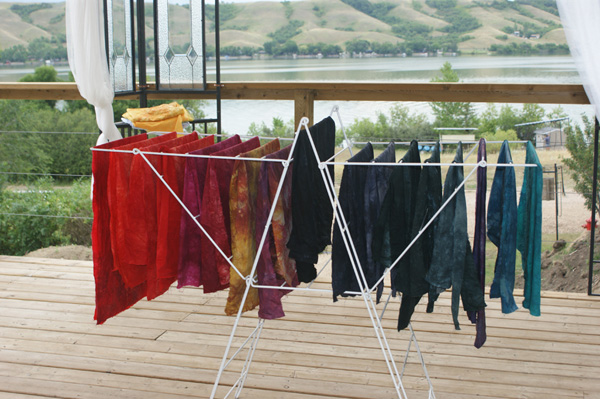
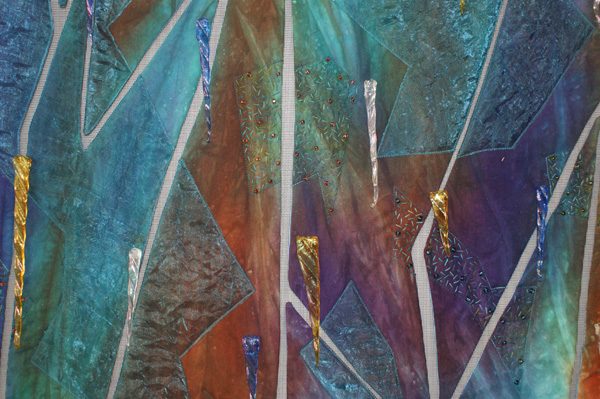
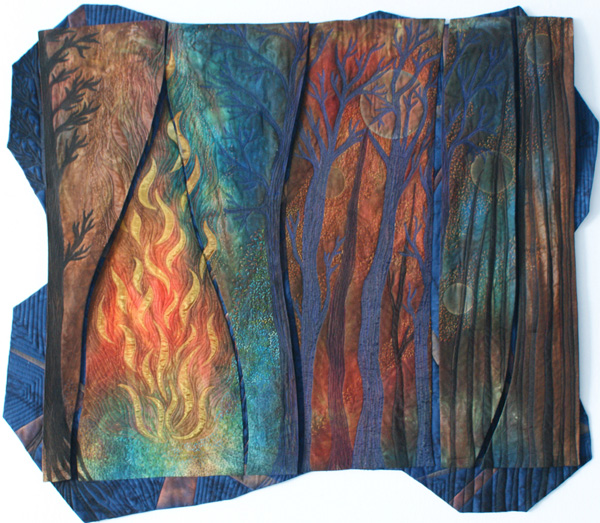
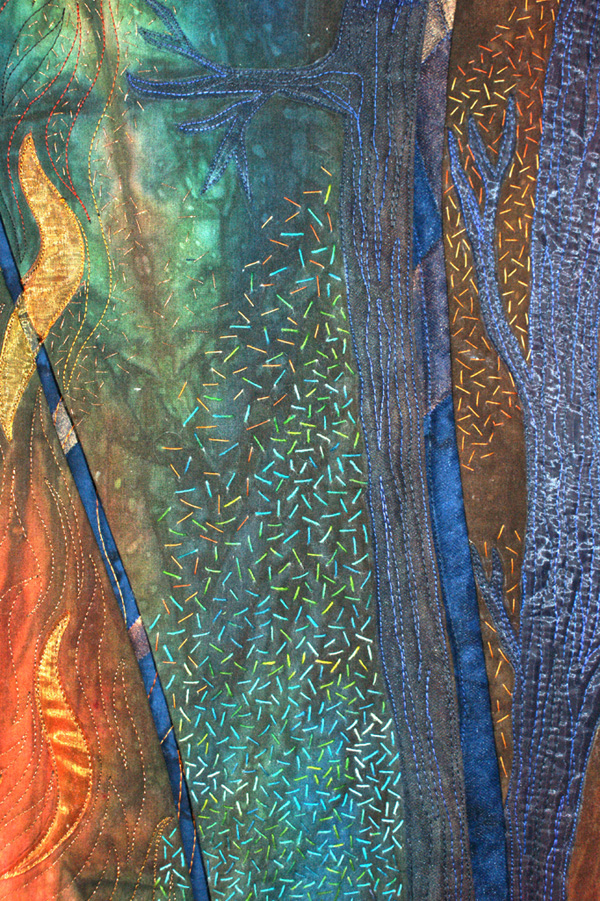
My early work was primarily informed by traditional embroidery and quilting techniques, densely machine and hand embellished. Over the past five years I have shifted my focus by using hand-dyed fabrics exclusively, which are manipulated both as whole cloth and pieced surfaces, embellished minimally letting the colours set the mood and evoke emotion in the onlooker.
I set high standards for myself to avoid stagnation and to ensure continuous growth.
Have you experienced fluctuations in your productivity and how have your expectations changed through the years?
I continue to make my studio practice a priority. Winter months are the time I am most successful in establishing a routine that offers uninterrupted hours, days and even weeks developing new concepts and actual work. During the warmer seasons I spend much time traveling and teaching providing me with the financial security for the winter. I also seek out opportunities to further my own art education during these seasons.
It was difficult at first to accept the fact that long productive periods in solitude would be interrupted by weeks of sharing new ideas. With each year this becomes a fact that is easy to embrace, as I know that I am “filling the proverbial well” by traveling, capturing ideas with my camera and in sketches. I set high standards for myself to avoid stagnation and to ensure continuous growth.
I consider my work my full-time job.
Tell us about your studio and how you work:
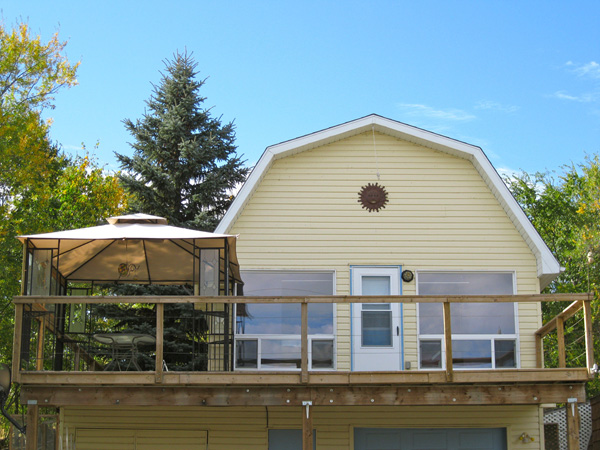
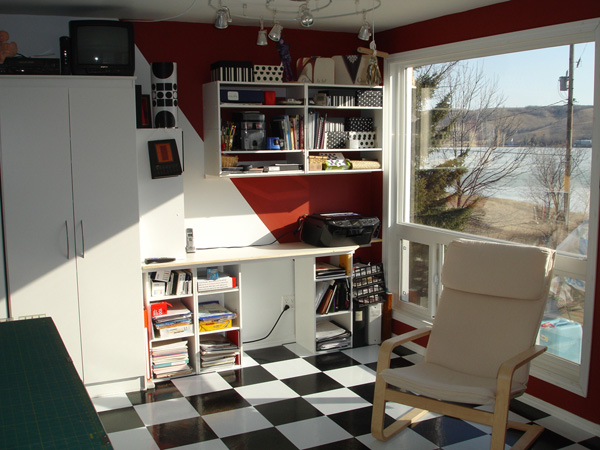
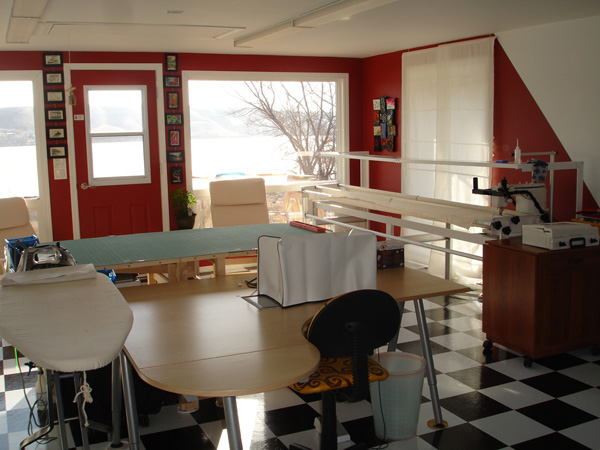
I have an 850 square foot studio over two floors, designed and built to my specifications on top of our garage. The workspace is separated from the library, with the library and art storage on the mezzanine level. The studio faces northeast and overlooks the most western lake in the Qu’Appelle Valley region in Saskatchewan.
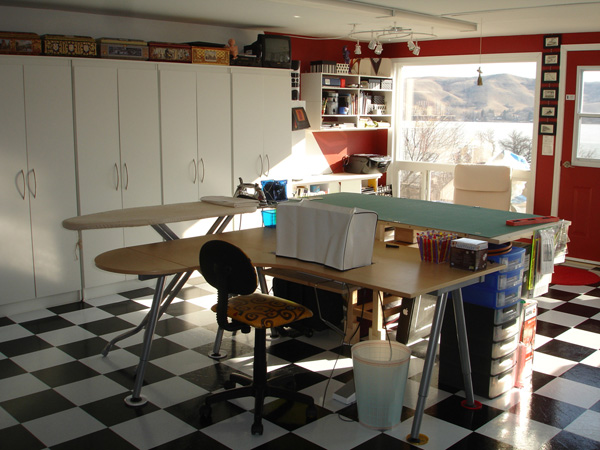
While many visitors make the comment that this ever-changing view might be distracting, I disagree strongly! Once I enter the space, I am focused and fully engaged in my work. The room is equipped with 8' x 8' and 12’ x 8’ design walls, a 3’ x 6’ cutting surface and an optimal sewing table adjacent to my ironing station. Storage for fabric and art supplies is provided in six spacious pantry cupboards, where the white doors double as additional design wall space. In addition I have a quilting frame with a mid-arm machine that is underutilized, I use it primarily to quilt bed quilts for family, friends and charity. A small desk and light table round out the workspace.
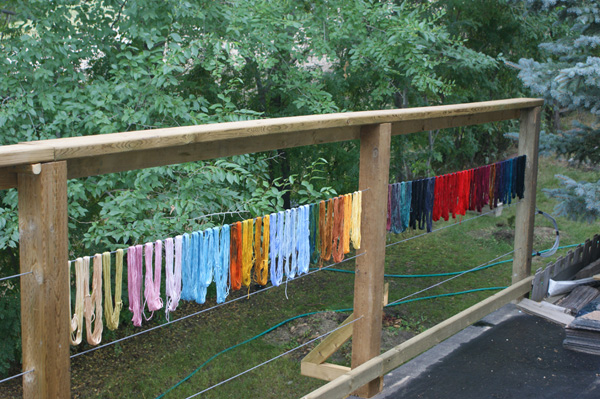
A dye kitchen with microwave oven and an apartment-size washing machine provide a separate space for wet work including my indigo dye vats.
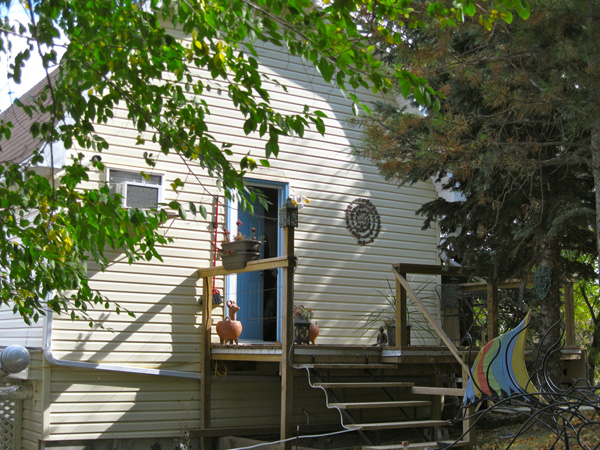
During the winter the workspace doubles as a classroom once a month for design workshops limited to eight students. The summer months see me incorporate the large deck overlooking the lake and a more sheltered back deck amidst mature trees for sketching, hand finishing of individual art work and dyeing.
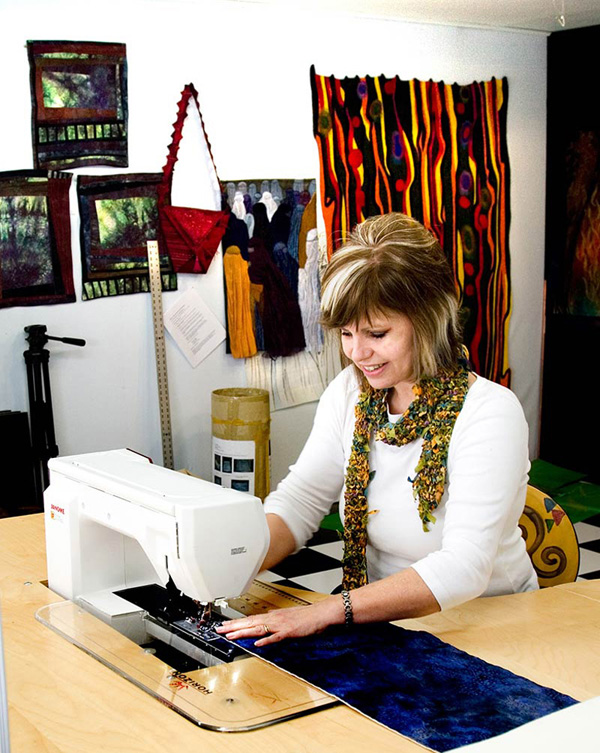
I consider my work my full-time job. The day starts often before 7 a.m. with office and computer work. Maintaining a blog and staying on top of email correspondence occupy the first part of the day. This clears the mind for hands-on work with fibre, ranging from dyeing, printing, piecing, manipulation and embellishment. I usually work till 5 pm, with deadlines looming the hours are increased accordingly.
What do you consider to be the key factors to a successful career as a fibre artist?
A successful career in the fibre arts field to me is multifaceted in its definition: Success is the opportunity to exhibit and share what I am passionate about. Success is the excitement I experience when I embark on research and the exploration of new work with familiar and unfamiliar materials. Success is the chance to share design knowledge and newly developed techniques with a wide audience. Ultimate success is staying focused and motivated to travel further and reach deeper into the unknown to achieve heights previously unimagined.
Where do you imagine your work in five years?
I have no definitive answer to this question - and I am happy I don’t have an exact path staked out. The unknown, coupled with challenges and opportunities to expand my horizons, is what keeps me motivated to pursue the creative path. At this time I have identified my strong affinity for combining photography with fibre art. Deepening my knowledge and understanding of digital photography, manipulation of images and successful transfer to fabric is what my research is concentrating on at this time. In addition I continue to explore the possibilities, plastic and recycled non-woven polyester fabrics (used dryer sheets specifically) held for my artistic pursuits.
What interests you about the World of Threads Festival?
The World of Threads Festival is a Canadian initiative with a strong focus on showcasing Canadian Fibre Art in the context of the International Fibre Arts Scene. The chance to exhibit my work, to meet other artists, their work and share their vision is an opportunity that is not offered every day. Being curated into this exciting line-up of fibre artists is an exciting step forward in my art career.
