Artist Interview 79: Leisa Rich
Howe Island, Ontario, Canada
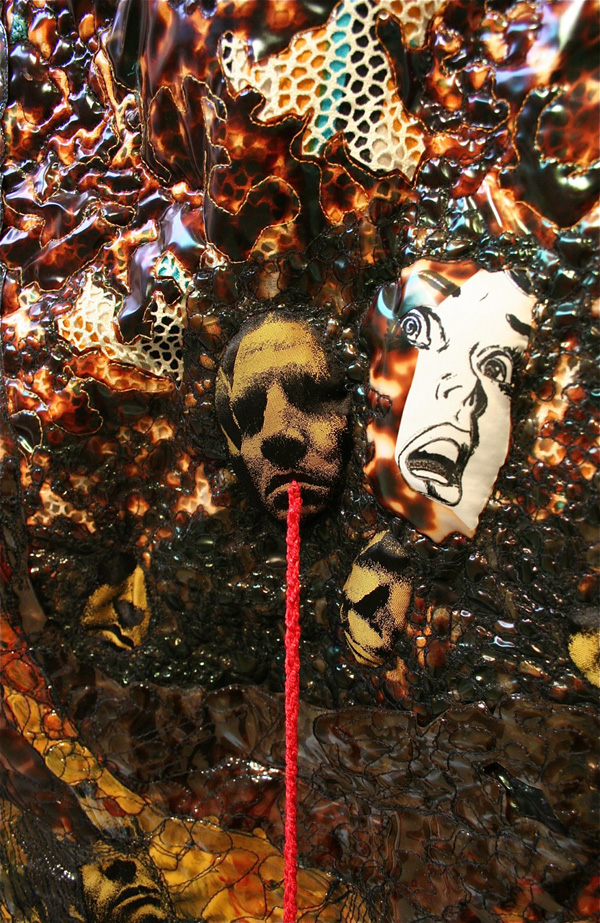
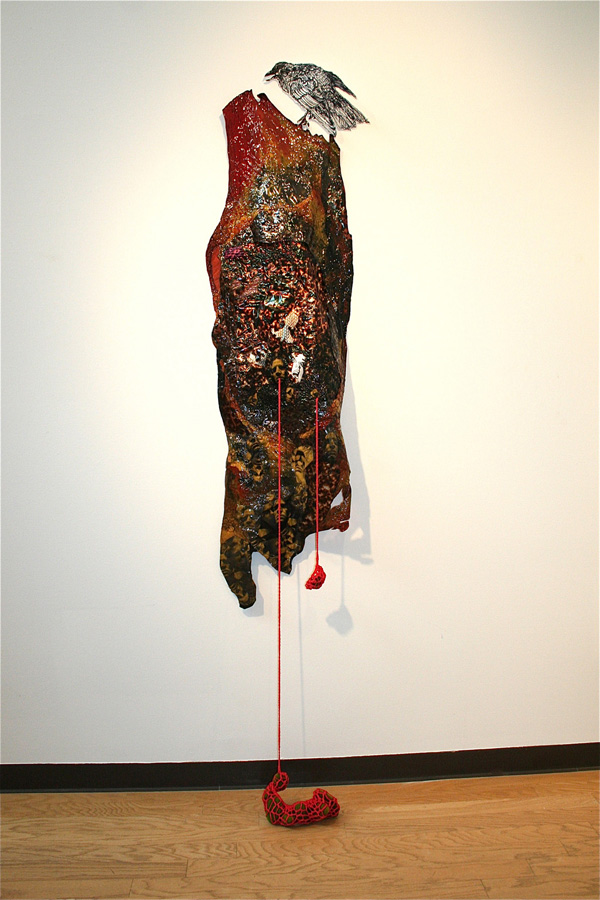
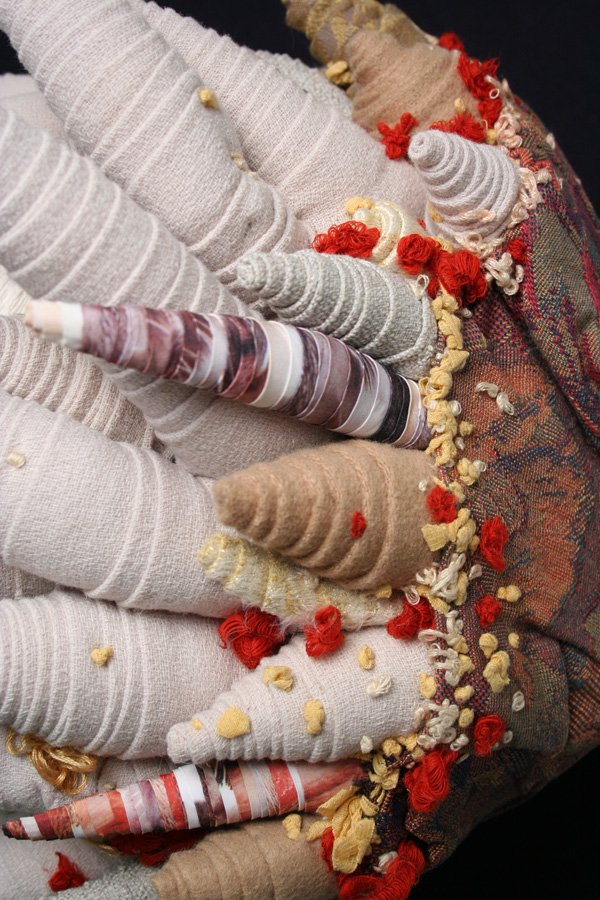
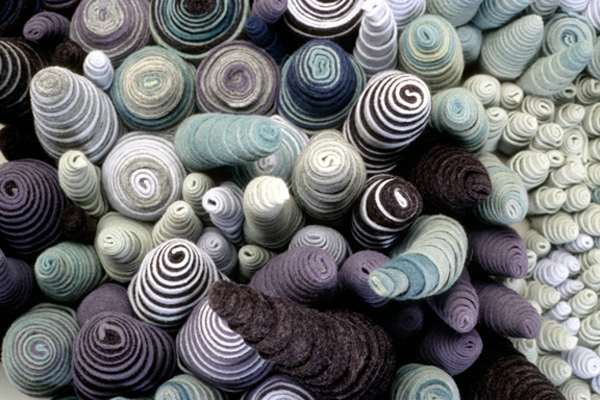
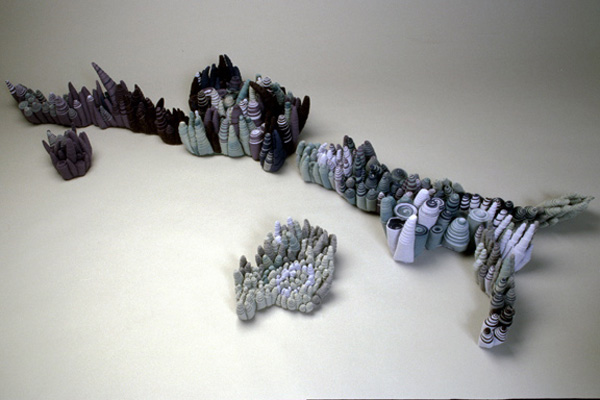
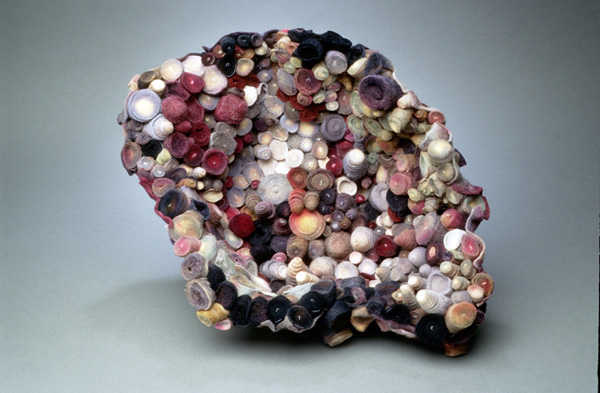
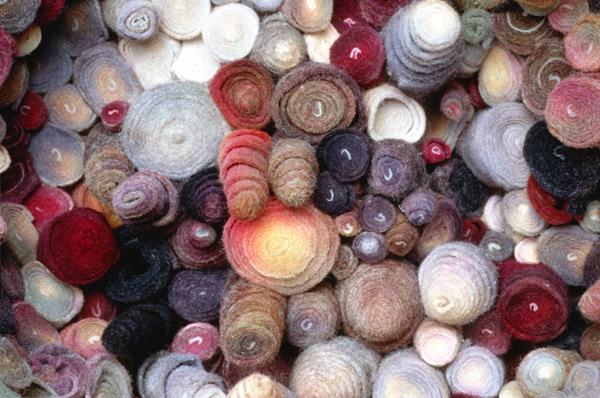
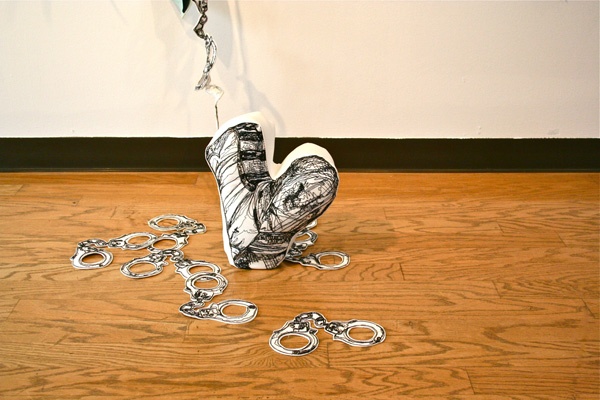
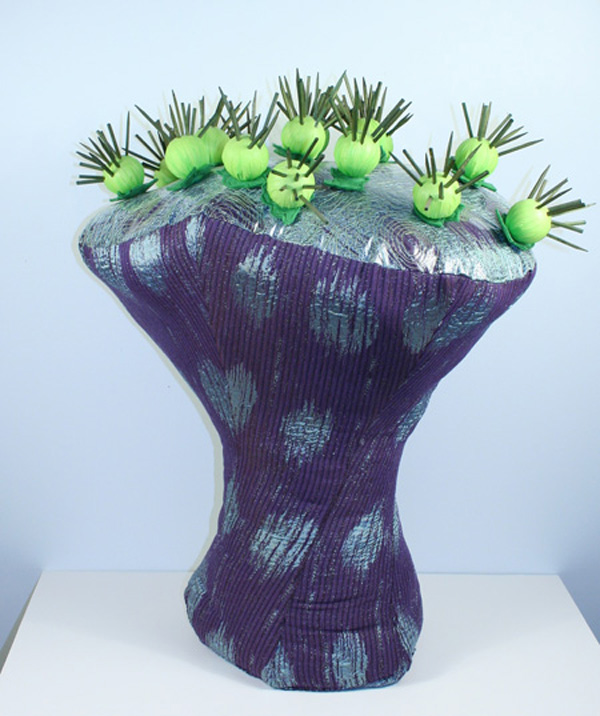
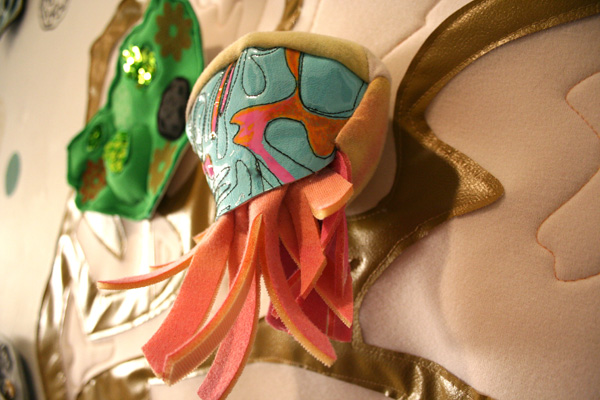
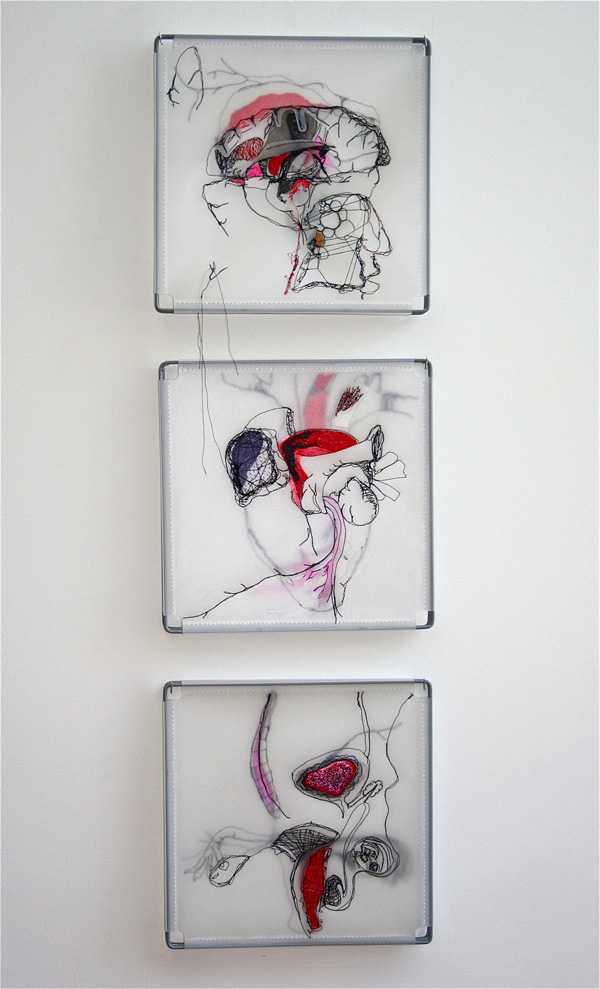
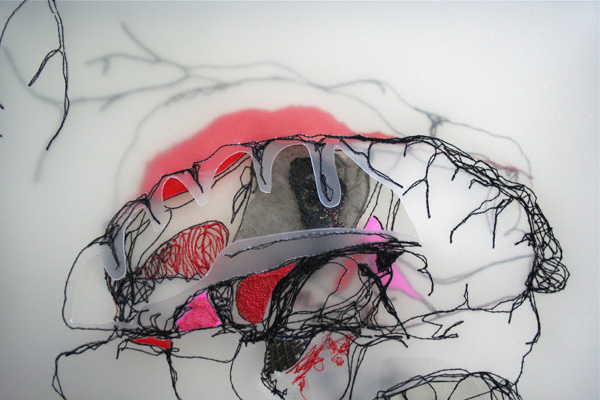
Using the senses of sight and touch, Leisa invites people of all ages to interact with her work. Her favourite technique is free-motion stitching, often referred to as thread painting. She also employs hand embroidery, crochet and quilting when constructing 3D forms. Her personal philosophy is that art is not always beautiful or appealing, but should provoke a response or should alter the viewer’s perception in some way.
Tell us about your work?
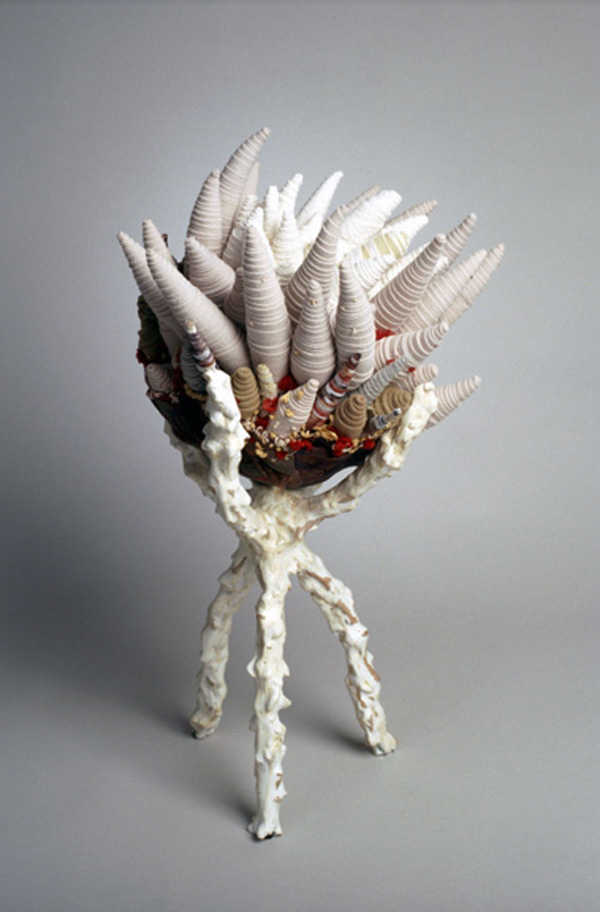
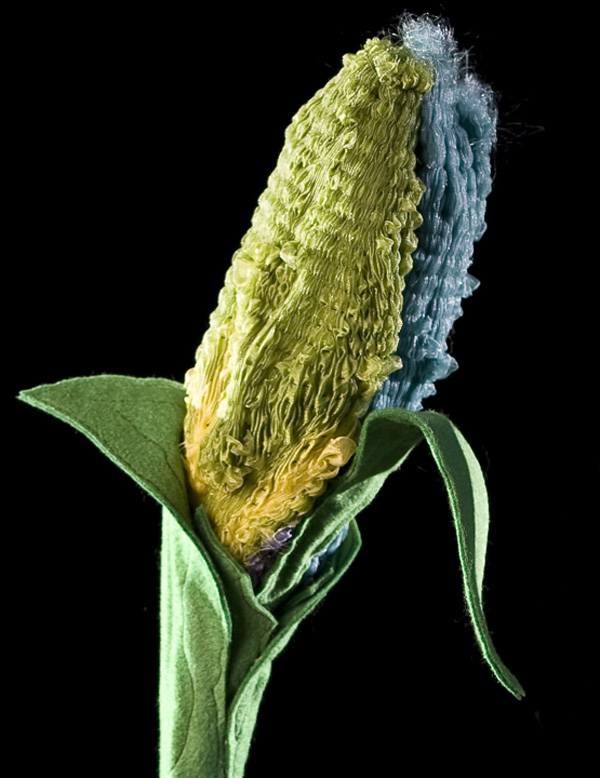
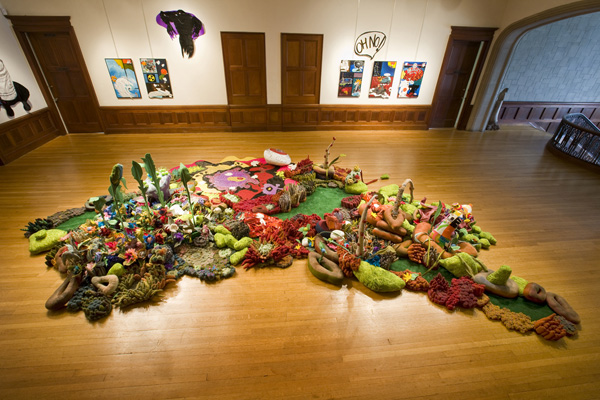
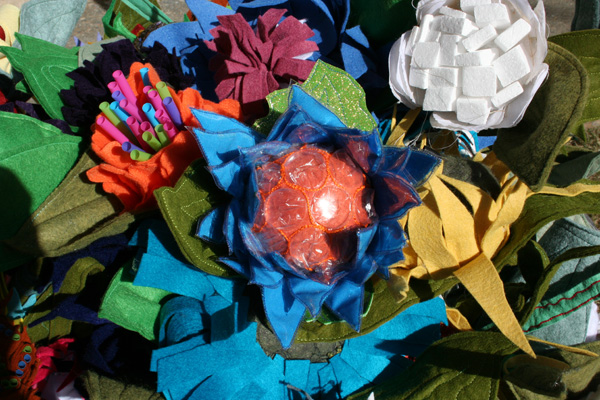
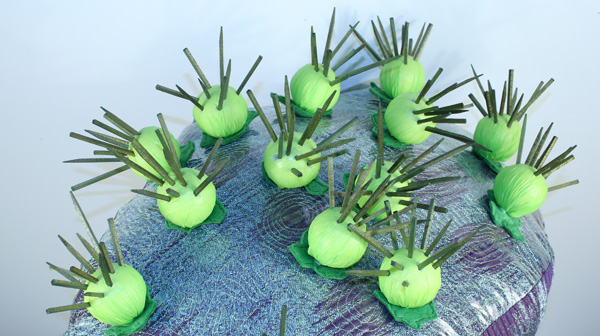
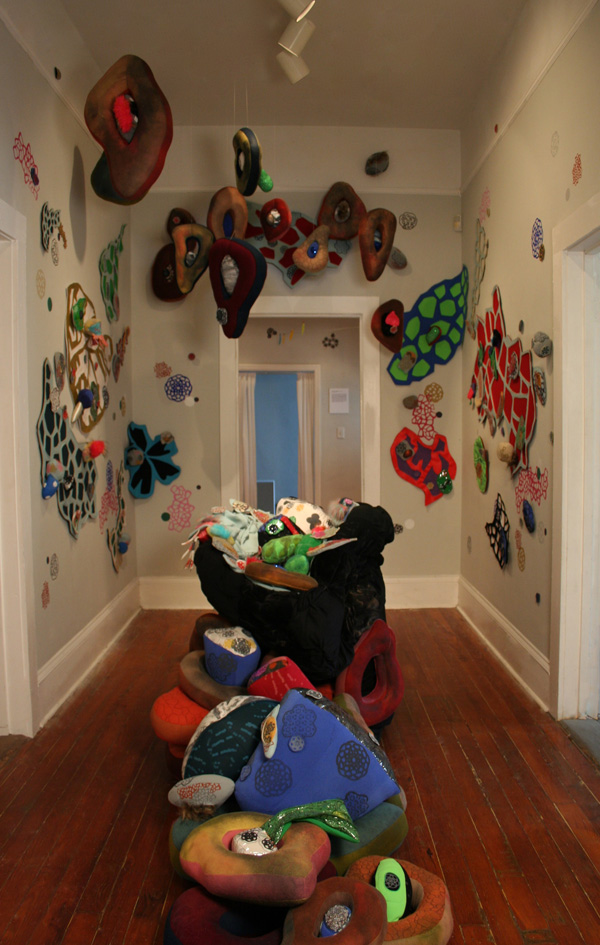
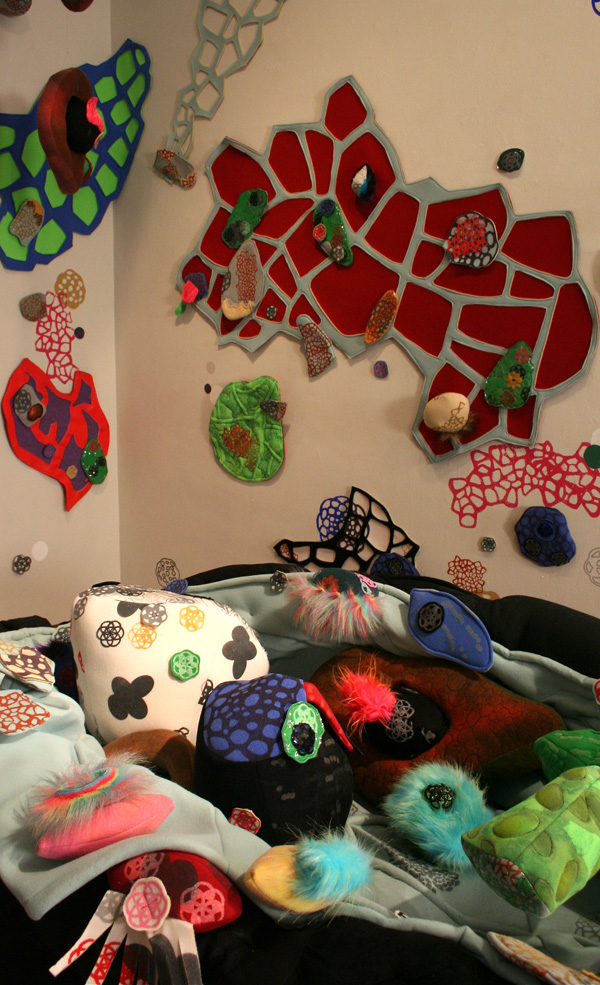
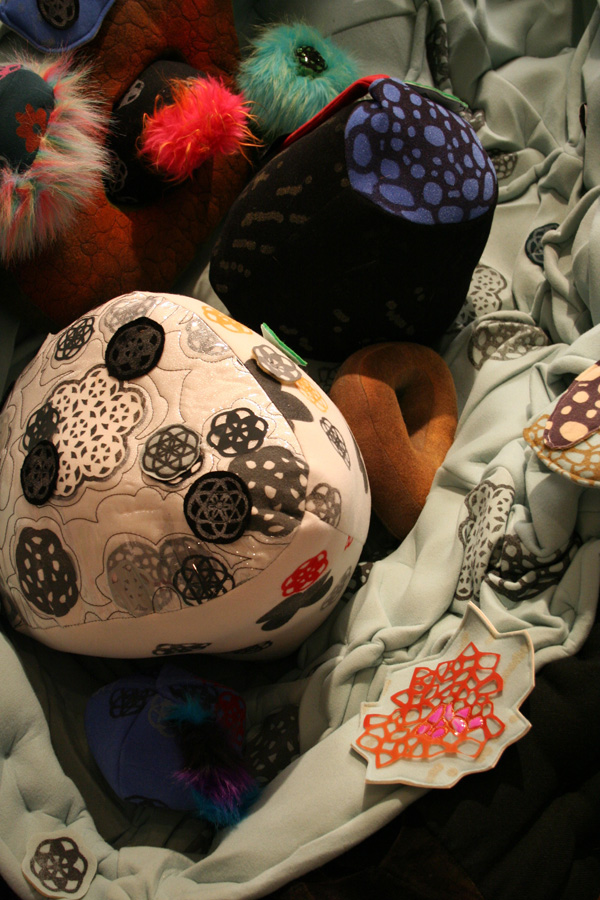
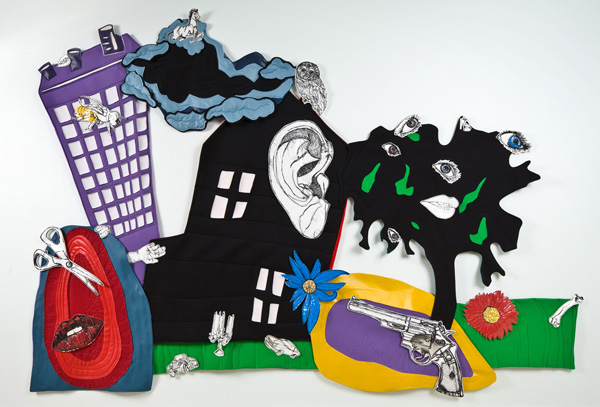
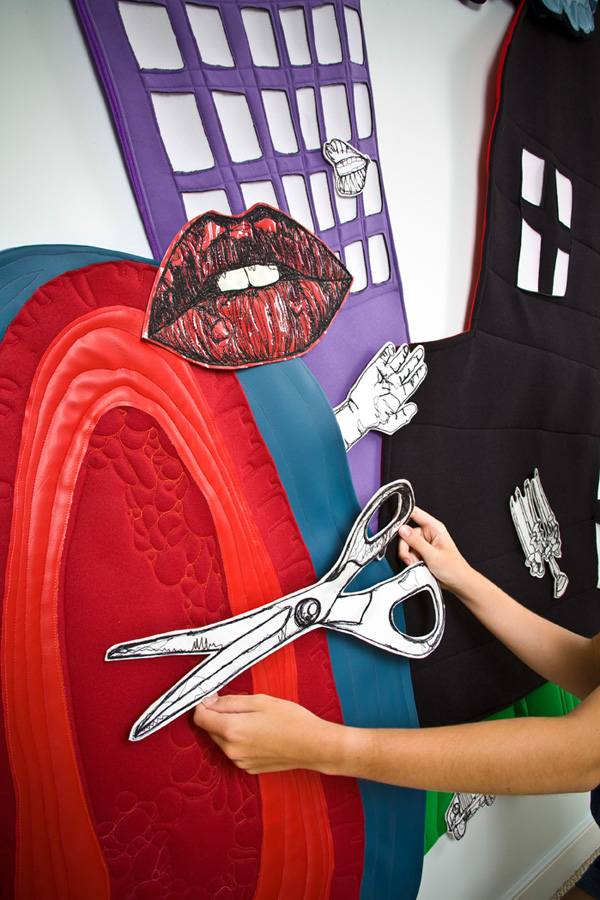
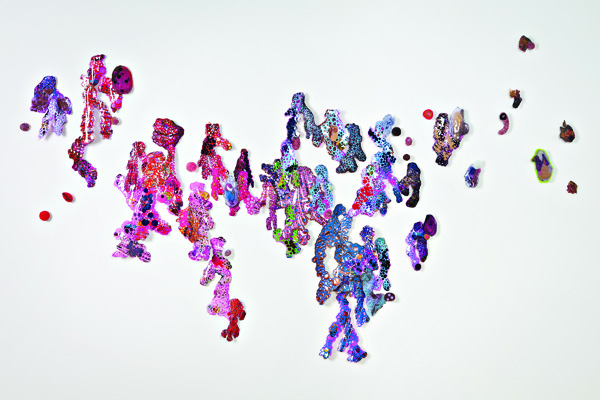
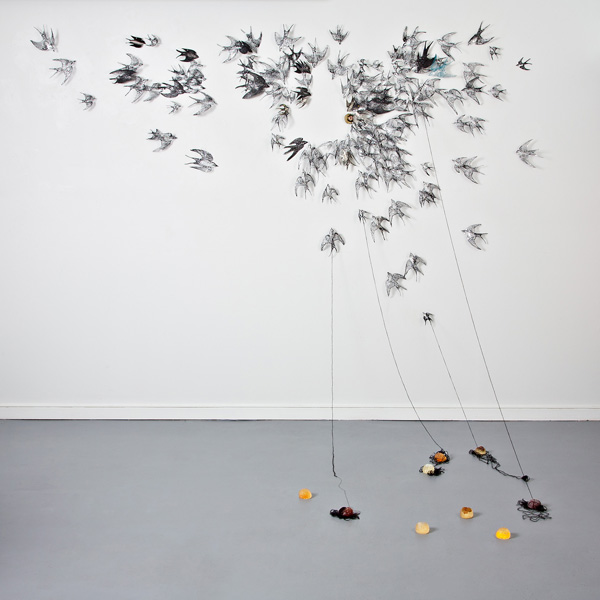
I am attempting to create a unique world – through the individual artworks and installations I create and the incorporation of found, recycled, new, man-made materials and natural objects - into which viewers and I can experience temporary escape. Using the senses of sight and the tactility of materials that invite touch, I invite people of all ages to interact with each work and become transported into a realm of my making; one that emerges from a passion I have for colour and texture, that sometimes contains gritty and repellant subject matter, which is often lush and inviting…a unique dichotomy of organisms that seem to come to life to populate a new and fascinating universe. My favourite technique is Free Motion stitching, a method of “painting” with thread using a sewing machine. This is known in some circles as machine embroidery – and constructing in 3D form using my sewing skills. I also employ hand embroidery, crochet, quilting and more in my pieces. I am also using quite a lot of plastics in recent work. I have an unquenchable thirst to learn and grow, so every idea and any material is possible fodder in bringing an idea to fruition. I started off as a weaver but by now, have tried just about everything!
Previous World of Threads Exhibitions
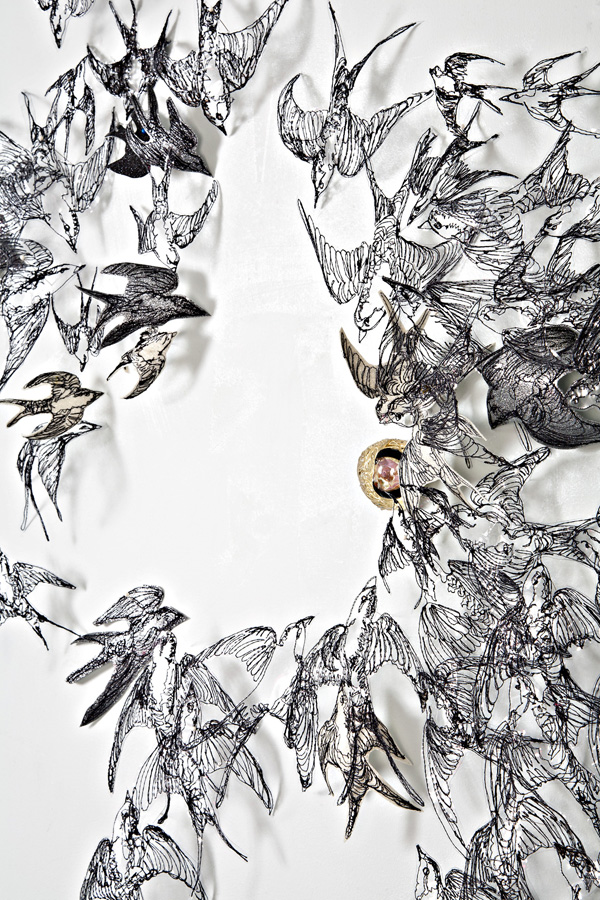
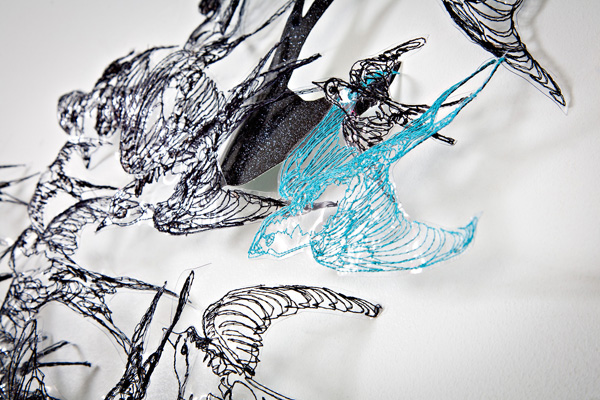
Leisa Rich has exhibited in three Festivals. She showed in the Festival 2012 major exhibition De rerum natura (On the Nature of Things). For Festival 2014 she was in the major exhibition The Red and The Black. In Festival 2016 she was part of the group show Quiet Zone 2.
Where do you get your inspiration?
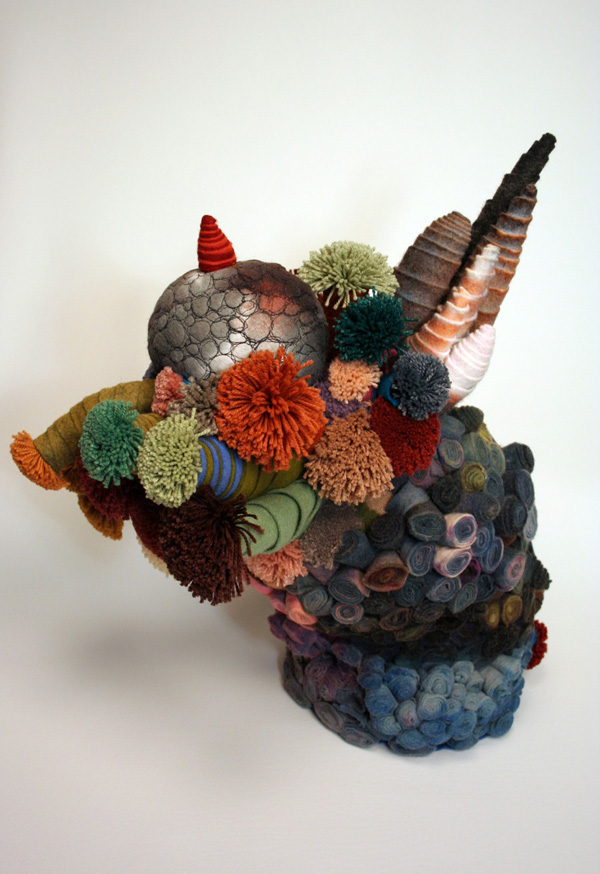
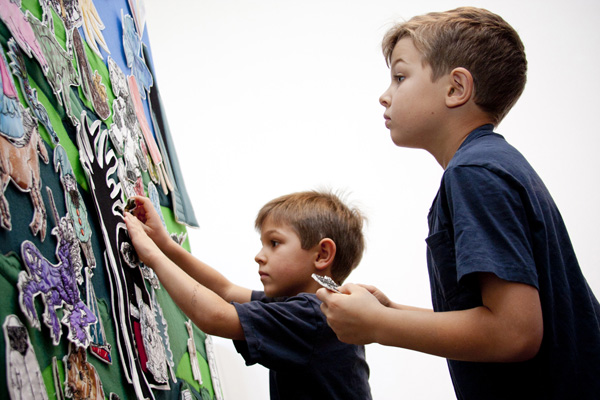
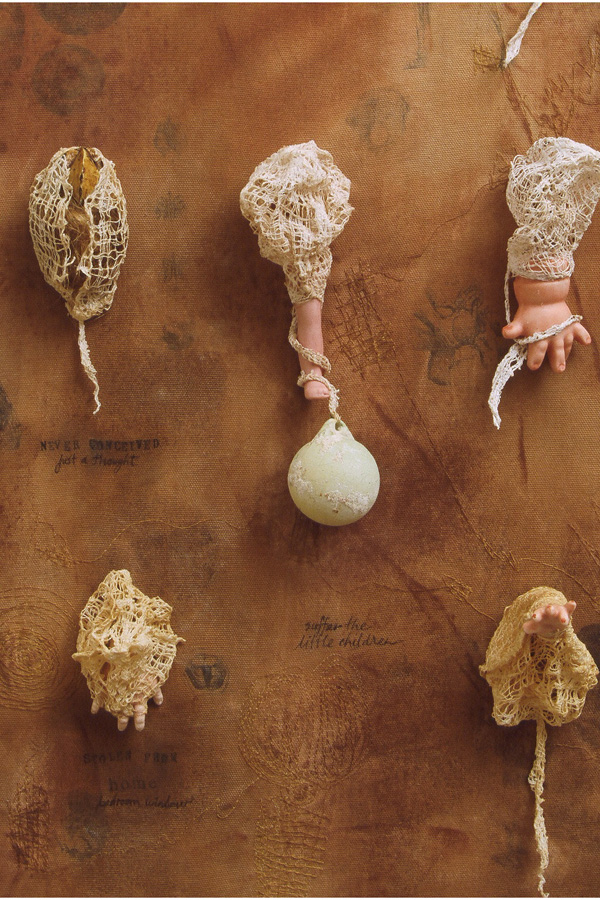
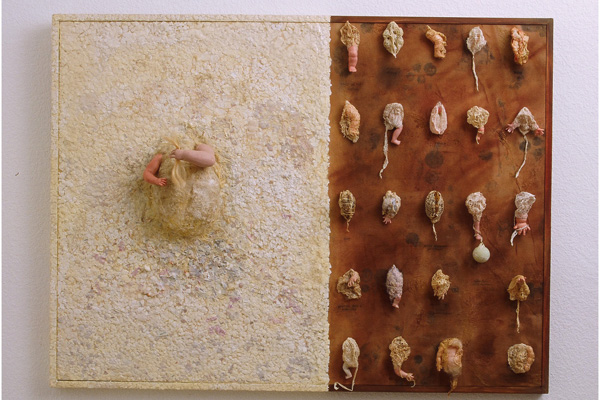
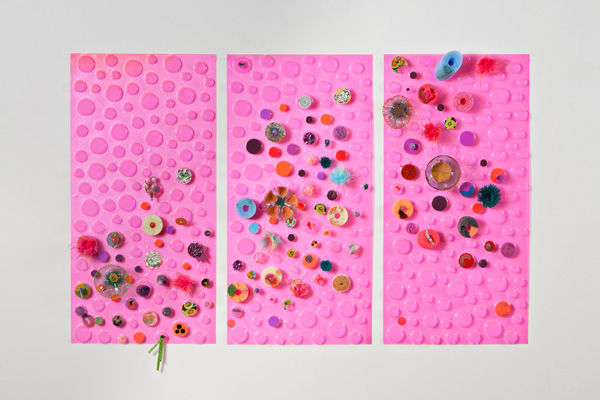
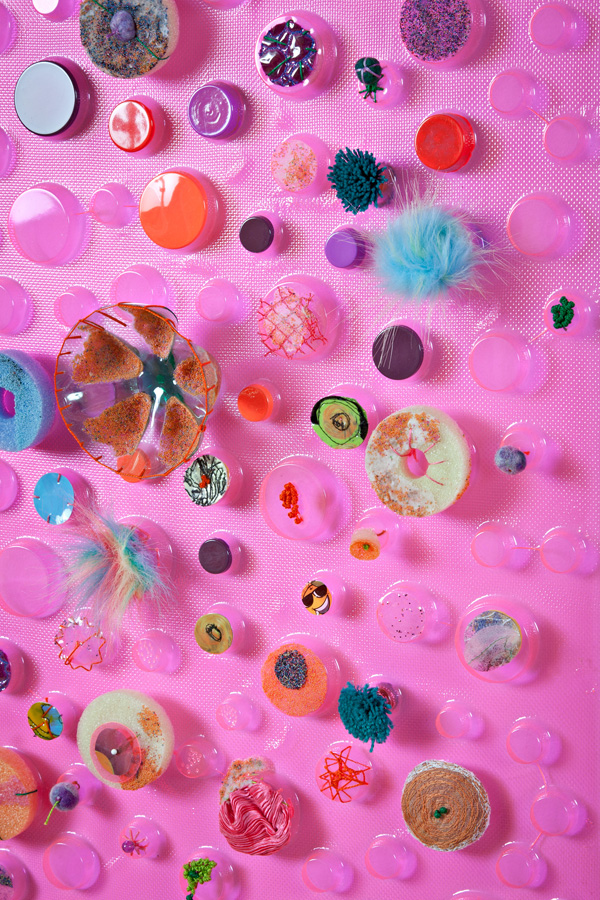
My main inspiration comes from intense personal experiences and sensitive reactions I have to the overwhelming dynamics of living in the world of today. My earlier work (mid 90’s-early 2000’s) addressed issues I was concerned about in a specific way. The pieces themselves were far from traditional, but the messages were visually stated more clearly, often through the use of a poem I wrote and incorporated by stitching or printing it into the work, or the use of materials and imagery that exposed the message in more clearly identifiable ways. For instance, I used a great deal of eggshell, made nests of thread, and used vintage porcelain doll parts in a series of works I made during the Elizabeth Smart disappearance and the exposing of the plight of the dumpster babies. I was a doting mother of two and of course, highly disturbed by the abuse of children that was then at the forefront of the media. In recent works, such as 2009’s solo exhibition Beauty From the Beast, I killed off humans (worked on that pre and post 9-11) leaving their detritus behind to morph through the wonder and power of nature, resulting in a wild world, devoid of humans, that I wished fervently to become a part of. Over the last few years I put humans back into the equation (everyone needs a second chance!) in viewer-interactive works that force them together, encouraging play, and highlighting a fun, bright world in which to immerse themselves for an interlude in between emails and expectations. The recent permanent installation I created for The Dallas Museum of Art is doing just that. I have had incredible feedback on how much ALL ages are enjoying the interactive panel they commissioned. In the immediate present, I am creating both interactive and other fibre works in new ways.
Why did you choose to go into fibre art?
Fibre art definitely chose me! While studying piano at Interlochen Arts Academy, a private boarding school for the fine arts gifted, I contracted Mono and was kicked out of dance – my minor subject – until I lost weight gained from thyroid complications. This led to my taking a weaving class on a friend’s recommendation of it being an “easy A”. By the third day, in a class I never expected to attend beyond the two months left in the semester, my life was irrevocably altered in a wonderful way!
Which is your favourite fibre medium?
Free Motion stitching is my favourite fibre art technique to use and sewing pieces together to bring them to life in 3-dimensional form, is the most satisfying to me. In another life though, I am going to become an expert felter!
What other mediums do you work in, and how does this inform your fibre work?
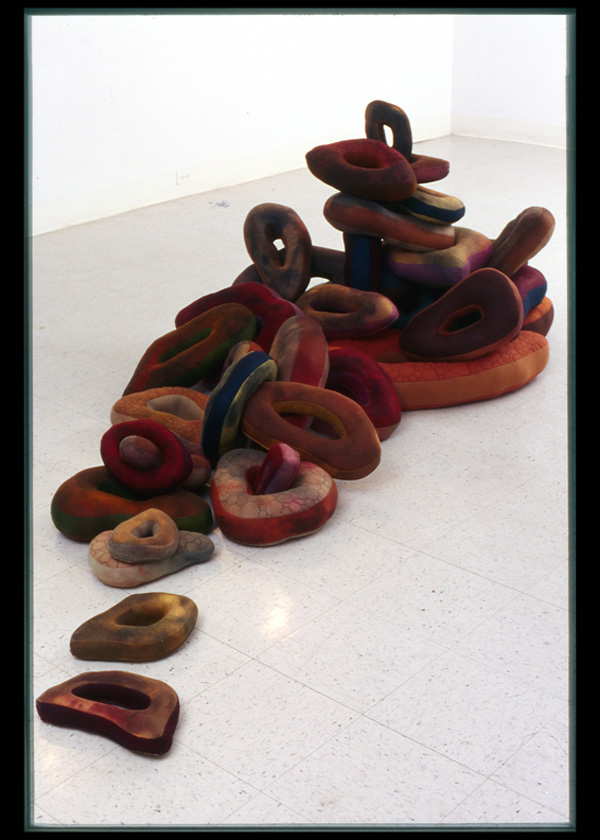
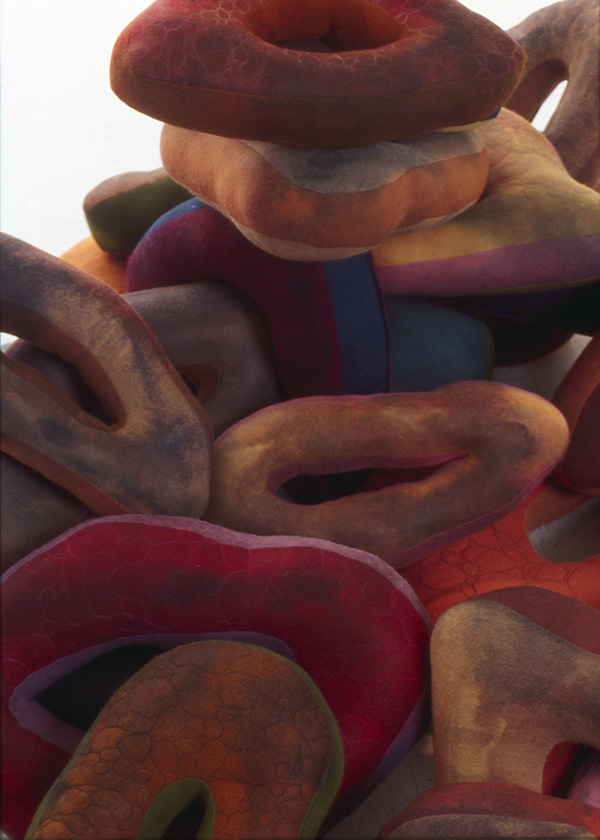
As an art teacher in my 37th year of teaching art, I can honestly say that I have worked with most mediums, techniques and materials! I was also a fashion designer for international knit/leather/fur designer Norma, based in Toronto, Canada, during her heyday in the 80’s. This gave me invaluable experience in production methods, use of industrial machines, and design sketching, pattern making and delegating and outsourcing work to professional knitters and crocheters. I branched off on my own and had a wonderful fashion company post-Norma, designing hats, jewelry and wearable art that sold in boutiques throughout Canada and the USA. Check your old labels for either Skin Covers, Eonz or Girls Who Wear Kaktus…maybe you’ve got some of my earrings in a drawer or a hat or jacket of mine in your closet! Being able to know how to pour resin, transfer an image, pull a print, form and throw clay, use a jigsaw, know various paint techniques, which glues to use, and much more, has proven invaluable both in teaching and in my personal art making. Most artists I know are experienced in lots of ways that they take into their fibre art, and I am no exception. This has been a boon in creating mixed media work.
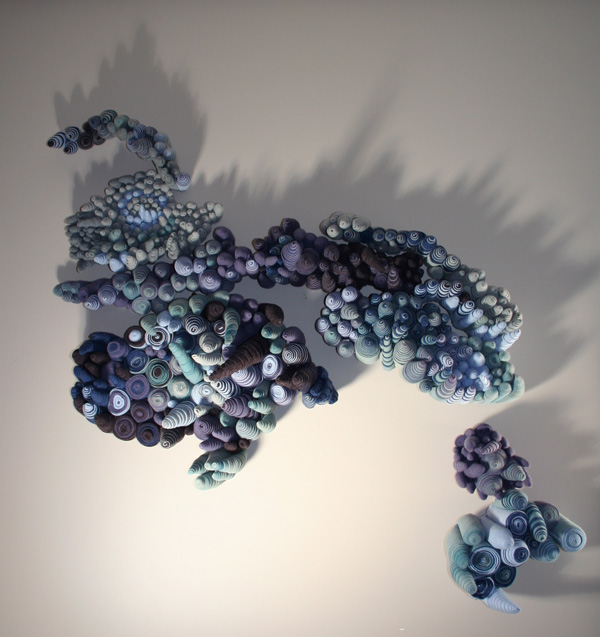
My bridge is the passion and obsession for the tactile that connects the works together.
What bridges the works that you have created in differing media?
There is somewhat of a “look” to my work that might make it identifiable to those who know it well, but because I use so many materials and techniques, my work is not what most would call a “body of work”. I struggle with doing pieces that resemble each other. I would therefore say my bridge is the passion and obsession for the tactile that connects the works together. A person buying one of my works is not just buying a piece of art; they are the recipients of a bit of me, too.
What specific historic artists have influenced your work?
I can’t honestly say that there are any specific artists of the past I have been, or am, influenced by. I traveled a lot as a child and adult, and I saw in person a lot of the world’s great Masters art, as well as art forms of various countries, religions and more. While I embrace, love and admire much of the art of the past, it is the art of the present that excites me more. However, I did extensively research Van Gogh for a graduate class in ‘06. Reading the hundreds of letters exchanged between him and his brother was a watershed moment for me. What I took away from it is that often for artists, no matter how huge your passion is for what you do, no matter how very hard you try, no matter the “right moves” you make, no matter the level of talent, sometimes you just might not make a living at it. When I am feeling down I think of Vincent, and I thank my lucky stars that I like to teach so I can put bread on the table, and that my husband has a good job. Were it any other way, I am not sure that I could survive. I do also love Gaudi’s architecture.
What specific contemporary artists have influenced your work?
My very first artistic influences were my sister Penny Hungle and her husband, Tony DeBlasi. My sister was a talented metal body adornment artist with an MFA from Michigan State University who later went on to graduate from MIT in architecture and is now an architect in Seattle, and my ex brother-in-law was a Painting professor at MSU for 27 years, who is now retired and living and painting in NYC. Their house was an artistic springboard for me, where the ethnic food parties they threw were attended by the art professors and deans of MSU, exposing me to wild points of view, exciting perspectives, creative ideas, and an open-minded art world that was the 60’s and 70’s. I was also heavily influenced by meeting and speaking with Magdalena Abakanowicz in ’76, whose work I admire to this day. Magdalena, whose fibre works spoke of her childhood enduring the Nazi invasion of Poland, transitioned in mid career to metal, yet has retained the textural quality her work was known for. Recent, strong inspirations have come from Do Ho Suh, Korean sculptor and installation artist, whose traveling apartment has become one of my favourite statements on what “home” is and how humans seek to create a personalized, nurturing environment no matter where we are. My favourite museum is MAD in NYC (Museum of Art and Design) for its incredibly innovative exhibitions, such as “Pricked: Extreme Embroidery” and “Radical Lace and Subversive Knitting” as well as “Slash: Paper Under the Knife, which I would also consider a fibre show. I have also been influenced by Tara Donovan’s installations that make use of simple materials in extraordinary ways and Andy Goldsworthy’s installations utilizing natural materials in nature settings. I love when artists alter place.
What other fibre artists are you interested in?
It seems that the internet has given us so much more to look at in art, so often – on blogs, websites, Flickr, Crafthaus (my VERY personal fav!) American Craft, and more – it is ridiculously impossible to give credit to, and name, the many talented individuals whose images come into my computer and whose works I see in galleries and museums. There must now be over 100 fibre artists whose work REALLY stands out to me and who have a huge impact on the fibre art field. Every day my Facebook connections reveal someone new and extremely talented. I am going to choose a few artists whose work contributes to changing the way fibre art and textiles are viewed, or which makes a difference to its viewers’ perspective.
Lynne Bruning, Denver, Colorado - eTextile Enchantress. Lynne is really transforming the way eTextiles are hitting the stage and are melding fashion and art with technology. She is hard working, practical and talented. It is tough to be all that, but Lynne is!
Knitting Relay on Facebook - this is a wonderful source for truly inspired knitting. Unfortunately, they don’t often give artistic credit, so while the work is great to look at, it is near impossible to identify what artist it is being done by, so one can research them further. They feature a lot of large-scale yarn bombings and cars constructed of lace, etc.
Jennifer Angus, Madison, Wisconsin (formerly of Toronto). Her large-scale installations reference wallpaper and are created from non-endangered bugs that draw the viewer in while also repelling. I love that about her work! What seems traditional wall coverings are revealed to be entirely too wonderfully creepy!
Orly Cogan, NYC, her bravery in bringing a playful sexuality to vintage textiles makes me smile. It is not easy to bring nudity to the masses, but Orly’s work manages to do just that and be a little dark and subversive, too. I like artists with an angel on one shoulder and a devil on the other!
El Anatsui, Nigeria, while much of his recent work is constructed of bottle caps and references Kente cloth, its resemblance to draped, hung quilts fascinates and draws me in. I like work that causes viewers to take a closer look and have something new revealed to them upon further inspection.
Ray Materson, Kalamazoo, Michigan, the best personal story of a complete personal transformation empowered by fibre art. I love hearing how Ray turned his life around – and a conversation I had with him not long ago convinced me he still struggles – but he keeps using his work in order to try to deal, heal and grow. Art is life changing, and Ray is the embodiment of that.
I could speak of so many more!
What role do you think fibre art plays in contemporary art?
Fibre art has really struggled over the last 60 years to carve out its identity and gain acceptance as a valid art form. The publication of “Beyond Craft” in 1986 by Larsen and Constantine was a watershed moment and an apt title…but despite the recent gathering momentum thanks to yarn bombing, sewing instruction shops opening up, more arts centers teaching fibre-related classes and increasing numbers of artists working in fibre, it sometimes seems we haven’t made all that much progress with the public. Artists working in fibre still struggle for recognition beyond the “craft” moniker and for financial compensation equal to the value of the product. The public certainly knows what a painter does and will pay dearly for a painting, but due to the lack of incorporation of fibre art into early school art curriculum and a lack of public education about fibre art, the public is still mostly in the dark about it and therefore, refrain from supporting it. As an art educator with almost 37 years of teaching art under my belt, I am too keenly aware that this is the truth.
That is why I made a personal commitment many years ago to incorporate fibre art into my curriculum at all levels, exposing my students to a broad variety of techniques in my classes, and not just the simple band weaving that is usually the extent of fibre art education, if a teacher throws it in at all. However, at the same time, maybe we “fibre artists” restrain ourselves by defining what we do too tightly. There are a huge number of artists in ALL disciplines incorporating textile into their work who don’t call themselves fibre artists. Even painter Rauschenberg used a quilt in “Bed” in 1955. It is exciting to see everything as fodder for art, and restrictions or expectations have dropped by the wayside within contemporary art. We DO have to “call” ourselves something or, at the very least, explain what we do if we retort “artist”, meaning we have to have a way to describe ourselves, and therefore, the term fibre art has become what the words painting, sculpture, etc. is…descriptors that clarify a little more our identity.
I believe that more fibre artists should take responsibility to change this by educating the public about their work and via free workshops they can give in schools to elevate the status of the medium and by encouraging more curators in public galleries and institutions to find ways of presenting fibre art that educates and facilitates positive experience of the medium for all. An exhibition at the Philadelphia Museum of Art (May-August 2012) titled, “Craft Spoken Here” curated by Elisabeth Agro, which attempts to do just that – educate the public about ‘craft’ that has transitioned into the realm of ‘art’. It is opportunities such as these, and the World of Threads exhibitions, given by experienced supporters of fibre, which help expose this important medium to the public while educating them, thus validating it as an art form.

Can you talk a bit about the commercial viability of fibre art and do you find it more difficult to show and sell your work than non-fibre artists?
I do believe that fibre art - and I am speaking about non-functional art, NOT craft here - is less commercially viable than most other art forms. “How do I clean it”? “Where do I put it”? “Will it fade” are some of the questions I get when people approach my work with more than a casual interest. The bigger issue is the lack of familiarity with it. Mass production of paintings, prints, photos, digital images, etc. means you can buy a piece of “art” at a discount store for under $50. The public understands what it becomes familiar with. Most of the public does not understand nor value fibre art. Finding collectors of it is tough, tougher than all other art forms! I make concerted, directed and knowledgeable efforts to sell my work and still struggle. Yet, when people come over to my house and see it displayed all over and that it doesn’t HAVE to be hung behind a sofa, they are always surprised and more interested than previously. It is all about “education”. It is our responsibility to help educate the public about what we do and why it is collectable.
I think people making art have the ability to change human understanding in important social, political and personal directions.
What is your philosophy about the Art that you create?
Art should come from the soul, from the heart, from the mind of the artist. If it doesn’t, to me it isn’t art. If there is no personal stake in the work, if it is made ONLY to sell well or to look good, to me it is not art but rather, decoration for interior design.
I point to two dictionary sources for a perspective:
Dictionary.com:
Noun
1.
the quality, production, expression,or realm, according to aesthetic principles, of what is beautiful, appealing, or of more than ordinary significance.
Webster’s:
Noun
a: the conscious use of skill and creative imagination especially in the production of aesthetic objects; also: works so produced
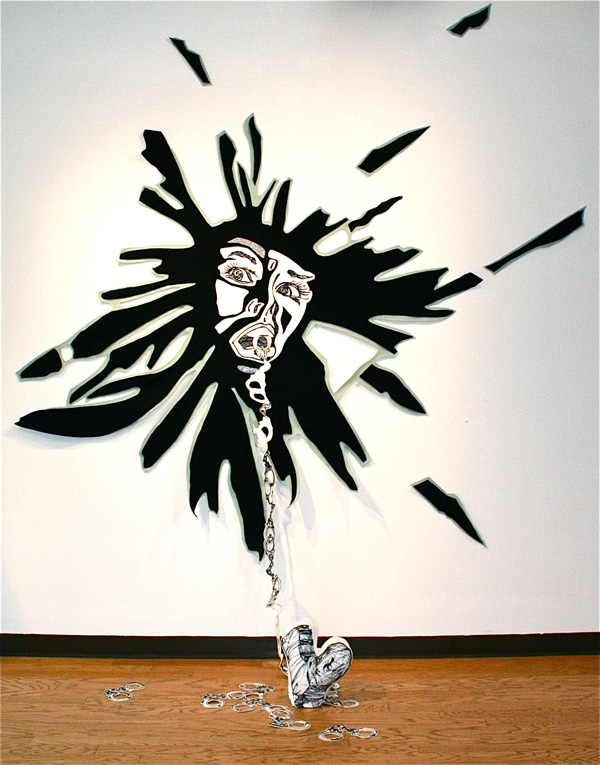
My personal philosophy is that art is NOT always beautiful or appealing and should absolutely, always, have more than ordinary significance, should provoke a response, or should alter the viewer’s perception in some way.
I think people making art have the ability to change human understanding in important social, political and personal directions and the responsibility to affect another human with their creations, in addition to pleasing themselves with the process and product.
Are you attempting to evoke particular feelings in your audience?
In my older work, I made use of a certain soft, tactile quality to entice viewers in, but also interjected something repellant to shake things up. I imparted more specific and obvious messages about issues I wanted changed for the better. As my life has gotten increasingly filled with demands and negative social, medical and personal challenges, and as I have gotten older and less vehemently activist, I am seeking to impart and evoke a more playful, positive direction in the interactions, in order to depart reality and make a happy place for viewers to escape into.
When did you first discover your creative talents?
I first discovered my creative talents at age 15 while at Interlochen, but I believe that my earlier self had already been sub-consciously influenced by time I spent in the hospital between ages 2 and 4, and by exposure to my sister and brother-in-law’s talents and travels during my childhood and early teens. During that time in hospital, I lived in a world of silence because of deafness, and either played with the soft, silky and satiny doll clothes my Mom brought for me to dress my Barbie dolls in, or finger painted in the hospital art room. In grade 9 I took art for the first time. I still have my report card in which the teacher stated that she believed I had an innate talent for it.
Where did you train and how did your training influence your art?
I took art at Interlochen Arts Academy (now Interlochen Center for the Arts) from 1975-1978, specializing in Fibres. I then returned to Canada and attended Nova Scotia College of Art and Design in Fibres for one semester in fall of 1978. Unhappy with its program, I took a semester off. I then attended the University of Michigan from 1979-1982, receiving my BFA in Fibres in ’82. Marriage and birth then intervened. I returned to school and received my Bachelor of Education in Art from the University of Western Ontario in 1993. Another baby and work intervened, and I returned for my Master of Fine Arts in Fibers, which I received from the University of North Texas in 2007.
Please explain how you developed your own style.
I have developed a style that is purely my own through education, curiosity, exposure to talent and more. Other artists previously influenced me; now I go with what is in my head, heart and soul. I think it is a work in progress.
How does your early work differ from what you are doing now?
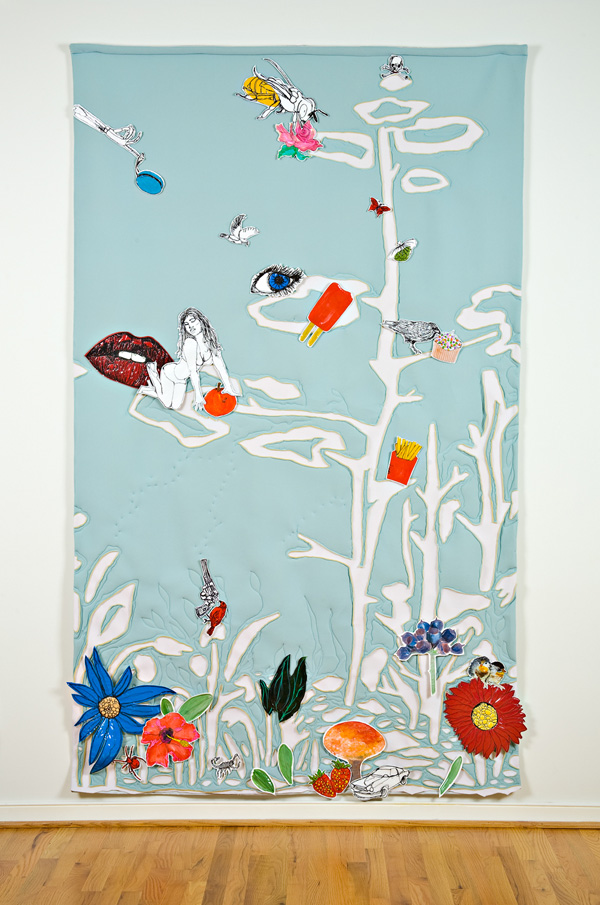
My earlier work definitely addressed specific social issues. It was less colourful, relied more on natural materials such as eggshell, incorporated more mixed media and was also highly literal. I was often influenced by what other artists were doing and would try to emulate techniques I saw in galleries and exhibitions. As I have matured, I am far less interested in what others are doing and am more directed to use my personal wishes of a Utopian, alternative and happy reality, as fodder for the direction the work takes. I also have a more formal approach and let the materials speak to me when doing non-viewer-interactive works. I still look at lots of artists’ works, but feel no compulsion to try what they are doing. That is a reason I take very few samples of my own work when I teach workshops and classes. I have noticed that the works of the students in classes that are taught by prominent teachers often look like carbon copies of the instructor’s works. I encourage personal response and individual creative direction in my students as they learn and try to facilitate their vision, as opposed to mine.
Have you experienced fluctuations in your productivity and how have your expectations changed through the years?
My productivity level is extremely high. While working full-time and raising children, I have always “made”. I love what I do and have a burning need to do it. I used to believe that everything and anything was possible; as I age and experience increasing physical limitations and monetary obligations of a child heading to university soon, money to be put into the retirement coffers, as well as a realization that, after 37 years I am still not “making it” financially as an artist, I have had to force myself to slow down a tiny bit. My friends and family will tell you that my “slowed down” pace however, is still the achievement of about two people!
What project has given you the most satisfaction and why?
I can’t name one project that has given me more satisfaction than another. Each project has had challenges given to me to overcome, provided unexpected surprises along the way, a positive outcome of one sort or another, and this has always nurtured me and given me the satisfaction of a job well done. The recent Dallas Museum of Art commission was a great one though…to know that the public is responding in the way I intended, gives me much satisfaction.
How did you initially start showing your work in galleries?
The first gallery showings I had were while taking fibre classes at Interlochen. Setting up and tearing down those exhibitions provided valuable experience. The first juried show I was in, took place in my hometown of Sarnia, Ontario, Canada. I was so proud when I had a piece of my work accepted! I have always actively sought out venues in which to show my work; some have been juried, some curated, a handful of group exhibitions and a couple of solos. Unfortunately, despite trying all of these years to get gallery representation happening, no gallery has ever taken a chance on showcasing my work. I am still looking!
You do a lot of teaching in the arts. Tell us about that.
At age 15 I was hired to teach a summer school weaving class to students ages 8-88 at a community college in my hometown. I had a fabulous time and discovered I had the same passion to inspire and instruct my students to see their ideas to fruition, as I had for my own art! They asked me back the next summer. The experience I had teaching over those two summers led to a life-long career teaching art in schools, arts centers, universities, community colleges, workshops and in private classes. Presently, I run the after school art program at The Galloway School in Atlanta; teach weekend workshops, art classes and summer art programs at Callanwolde Fine Arts Center; travel to teach – in June I will be teaching workshops at Snow Farm – The New England Craft Program in Massachusetts; in August at Peters Valley Craft Center in New Jersey and in September, I will launch a new workshop I have devised called “Artistic Genealogy: Charting Your Creative Journey” in Pittsburgh for the FiberArts Guild of Pittsburgh and the Pittsburgh Society of Artists. I am also listed as a Professor at Savannah College of Art and Design (SCAD) and am hoping to teach a class there, soon!
Tell us about your studio and how you work:
I work out of a dark, cold or hot (depending on the Atlanta season!) garage. I move things into the house, as needed. I work in silence, probably a residual from my years without hearing. I am still deaf in one ear. I have to work in concentrated bursts, due to my teaching schedule and role as a Mom. I yearn for the day when I have a large, well-ventilated, climate-controlled space and long, uninterrupted hours spent creating! Whether my goal will come to fruition remains to be seen!
Where do you imagine your work in five years?
Being asked where I imagine my work to be in five years is the hardest question in the entire interview! If I had been asked where I desired my work to be in five years, I would reply to be selling more of the art I love to create, to be represented by a wonderful gallery, to be collected by a major museum and to be paid fairly to do a massive public art, permanent installation. One can always dream…and just keep right on working toward those goals!
What interests you about the World of Threads Festival?
Being a Canadian by birth, I am so excited to have recently found out about the organization! Then to be accepted into the World of Threads festival, that was another bonus. This is an excellent venture that I am really happy to support and promote!