Artist Interview 74: Kerstin Bennier
Vienna, Austria
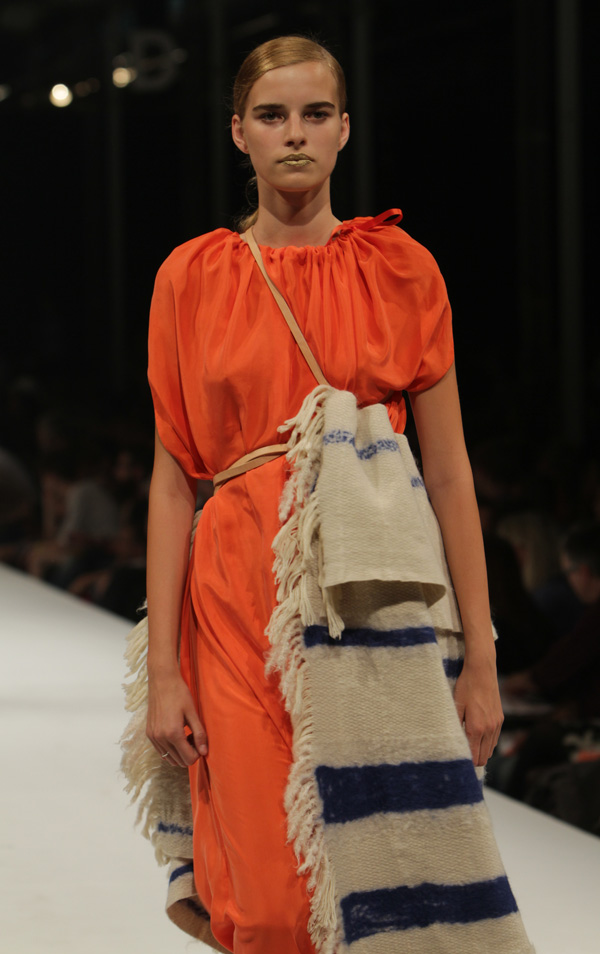
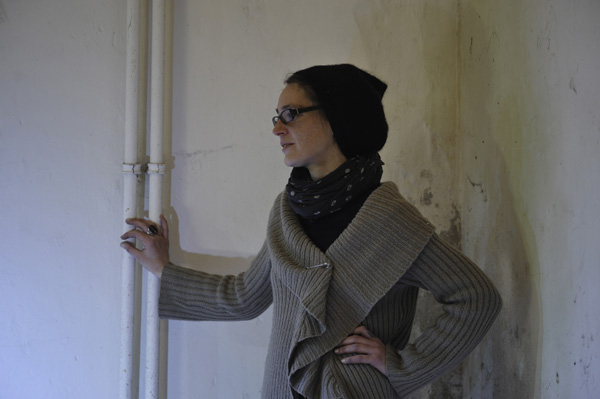
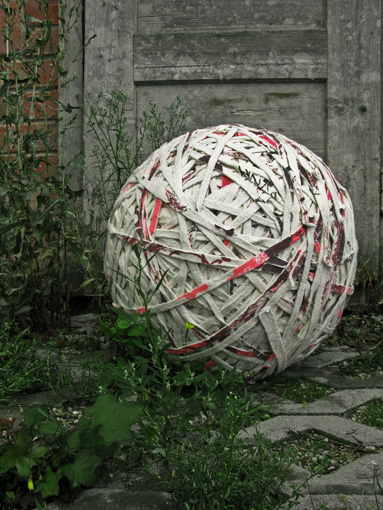
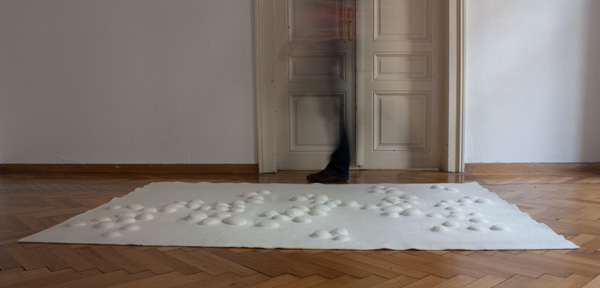
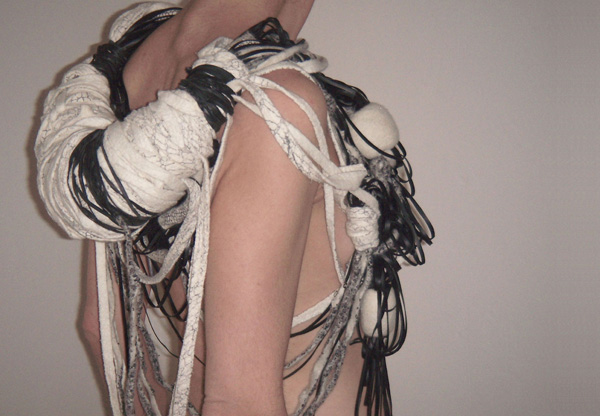
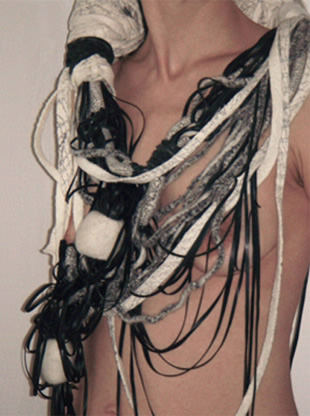
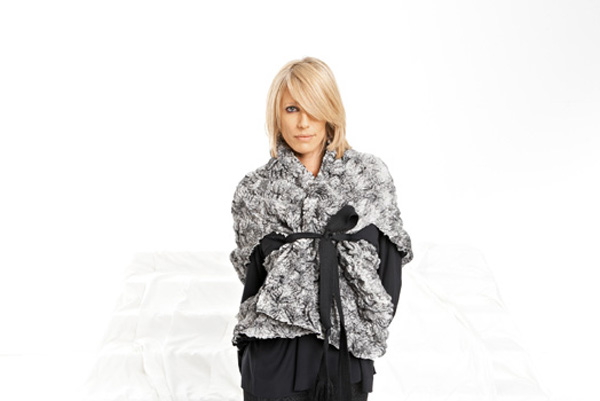
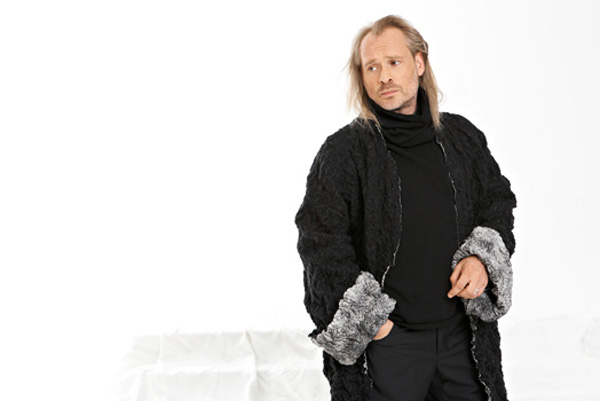
Specializing in felt, fibre artist and designer, Kerstin creates both 3D and 2D pieces of art. Inspiration comes from architecture, construction sites, or people. She enjoys the possibilities that felt offers, and which allows her to work in multiple dimensions.
Tell us about your work?
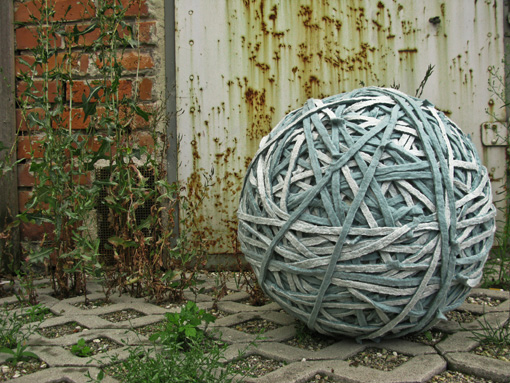
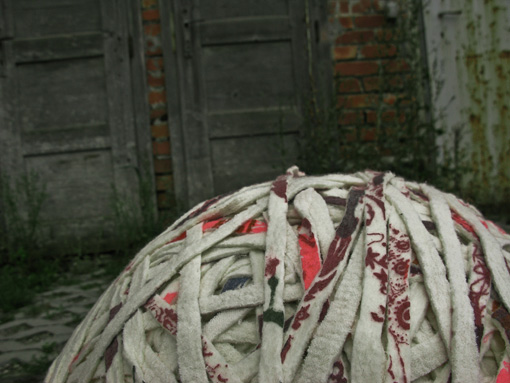
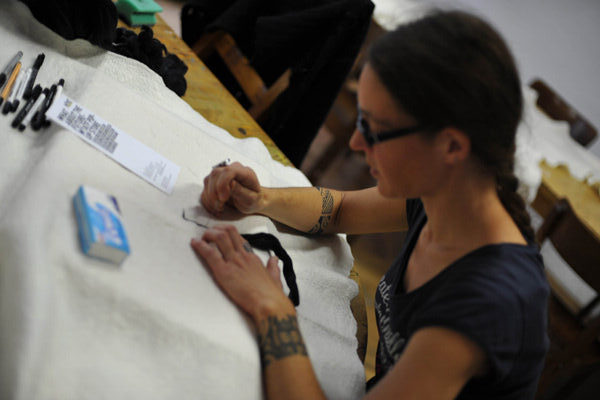
I am an artist and designer, working with the material felt. This material offers endless possibilities. I try to explore these opportunities in my studio in Vienna. My love of experimentation helps me to find new forms, combinations of materials and presentation techniques for felt. In addition to my artistic work I also do contract work for fashion, theater, interior design and architecture. This includes set designs and fabric design. Cooperation’s are also a very important source of inspiration for me.
Previous World of Threads Exhibitions
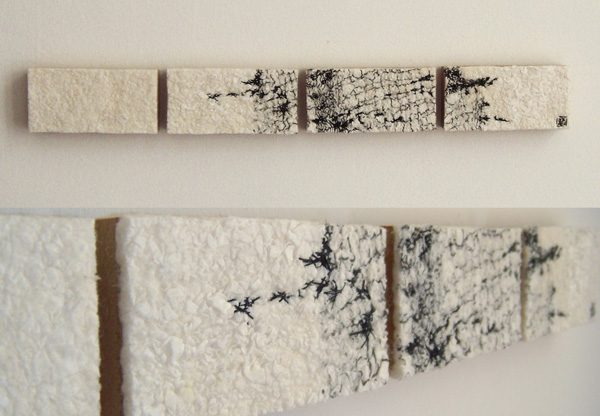
Kerstin Bennier exhibited in the 2012 Festival major exhibition Quiet Zone.
Sometimes mistakes or unplanned outcomes can also inspire me to work in different ways.
Where do you get your inspiration?
My main source of inspiration originates from my work, my daily surroundings and impressions I collect from these day to day situations. This can be anything from the architecture around me, to construction sites, or people I see passing by. I also get a lot of inspiration from my work and the materials I work with, and I develop further ideas through experiments. Sometimes mistakes or unplanned outcomes can also inspire me to work in different ways. Local artists and people I work with can help me see my work in a different way so that I can achieve a new relationship with my work and the material.
Why did you choose to go into fibre art?
During the course of my education I chose to enter the world of embroidery art, then during further studies I broadened my textile knowledge and experimented with further techniques and materials. In 2005, during university, I was introduced to felt by Lies Bielowski. This inspired to such a degree that I continued working with this medium. I enjoy the possibilities felt offers; it allows me to work in multiple dimensions.
Which is your favourite fibre medium?
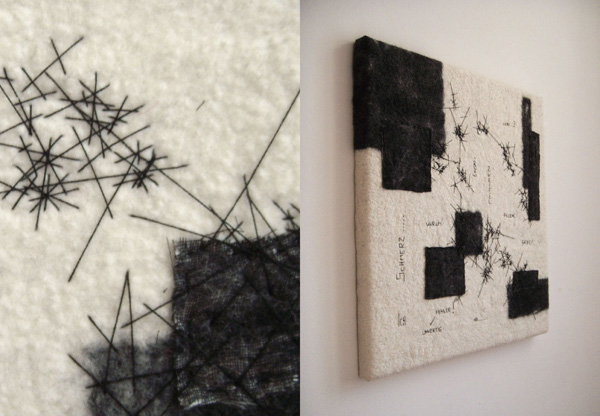
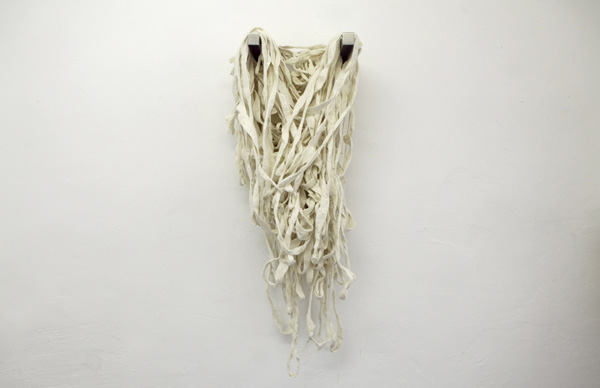
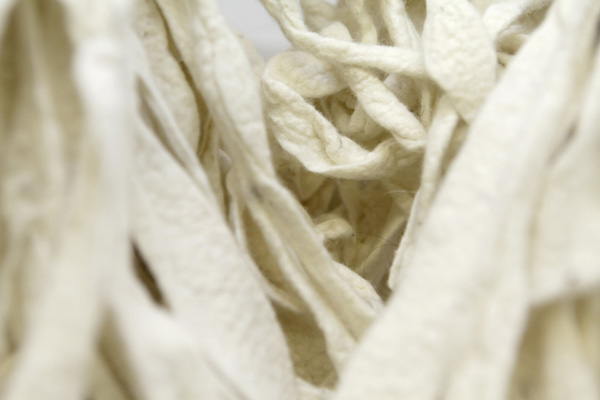
Felt. Felt offers so many opportunities to me, allowing me to explore all the possibilities. I can explore the surface, textures and different shapes and dimensions. I also enjoy combining felting with other techniques such as print, embroidery as well as other materials such as knits for example.
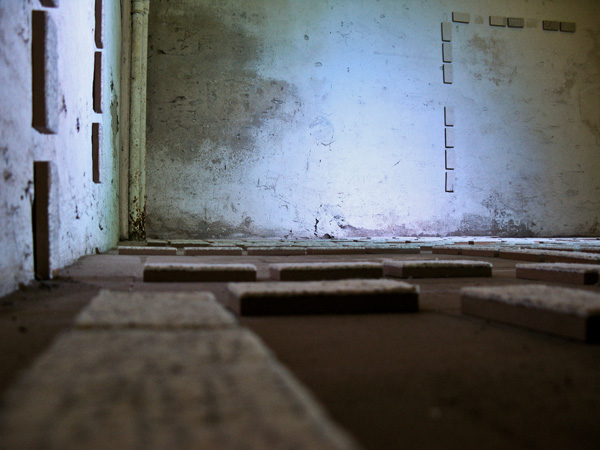
What other mediums do you work in, and how does this inform your fibre work?
Stage and costume design are also areas I often work in. This can be extremely inspiring as projects related to the theater are often more outgoing and diverse, again allowing me to explore my full potential and develop new methods of working.
What bridges the works that you have created in differing media?
I always try to work as clear and structurally as possible to reach the point. Within my artistic work, which is based in using felt, I work with a colour scheme. I almost exclusively work in black / white shades. In the area of theater it is also necessary to look on the needs and circumstances of the particular play. My goal is the necessary and desirable, for the expression to compress it so that a clear structure is visible. Although these two areas are very remote from each other sometimes in appearance, my approach in the run-up and execution is always the same. With the simplest possible means, shapes and lines to achieve a touching way of expression and a statement which supports the wants and needs. That to me is the connection that these areas have to each other.
What specific historic artists have influenced your work?
My first sustained contact with art was with Frida Kahlo (Mexican artist, 1907 - 1954). For me it was, and is still, incredibly fascinating, with what power she overcomes her life. In early childhood she suffered from polio, which affected her for the rest of her life. Furthermore, in her teens she was injured in a serious car accident. During the recovery time, she got more and more intensively in touch with painting. Her life story and the willingness with which she lived her life, impresses me.
Further, it is so that I am fascinated not only by individual artists and influences. Rather, it is all the decades and / or art movements which I find interesting. These are, for example, the 1920s and 1950s, and the group around the “Wiener Werkstätte”. In the 1920s, for me the opening and the urge for freedom is very fascinating. Specifically the changes in fashion for women and the abolition of the corset, for which Coco Chanel is known.
For me, the turn in design work in the 1950s was very exciting. The war was marked by hardship and from the 50's slowly everything returned to normal, with the urge for new beautiful designs and the "ideal world" after the war years.
The “Wiener Werkstätte” for me is interesting for the reason that the position of my work is in a similar area and involves similar issues. The aim of this group was to define the new concept of art. Design and exquisite craftsmanship have been combined for everyday and decorative objects. Pieces of furniture, textiles, jewelry, ceramics and much more were artistically designed and executed. This form of group and cooperation, as well as the approach to the concept of art, are the points that affect me in my work.
What specific contemporary and fibre artists have influenced your work?
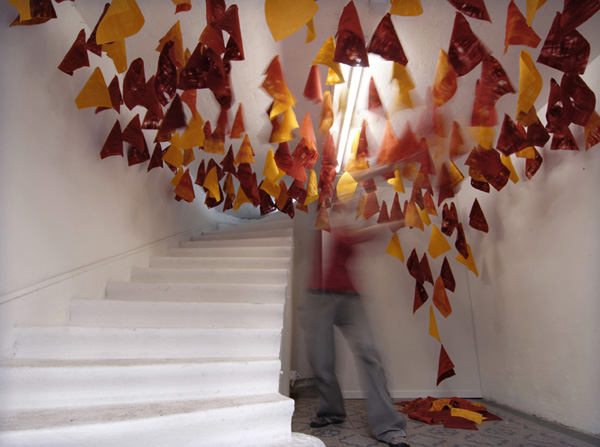
What most influenced me and my work is the work of Claudy Jongstra (Dutch artist). Several years ago, I do not know how long exactly, a colleague of mine told me about her. Since then I have been interested in her and have been following her work. Her way of working has inspired me to experiment more. To combine materials, of which I could not imagine beforehand whether and how the result would look. Should I have the opportunity and hope that it will be in the foreseeable future, to get in touch with her personally, it would be great for me! Just to talk about felt, the way of working with this material and hopefully I could learn many things from her. I think she would be a great mentor.
Dana Barnes, Soul Objects (New York-based designer) is another textile designer, who I greatly admire. Her works are excellent objects for interior design. Both, Dana Barnes work and the work of Claudy Jongstra inspire me to go along my way further and further. Both follow a path that shows in the art and/or design field, that it is possible to make 100% handmade felted extraordinary works and also to position them so that they can have success with it.
Another textile artist who fascinates me is Elis Vermeulen (Dutch artist). I greatly appreciate and admire her artistic work. Her work motivates and influences me to see not only the design context of my work, but that it is also important is to be an Artist, particularly the conceptual background, to define my artistic values and thus also to appear to the public.
What role do you think fibre art plays in contemporary art?
Textile Art for me is afflicted with a slightly negative connotation and that the textile medium is usually more associated with craft. For me, the textile material is the material with which I express myself, like a sculptor who works with stone or similar material. For a fibre artist seen from this point of view, it is probably a little heavier to find their way. It fights the battle against the "descent" into the craft, where the craft itself is not a negative. This is the medium for my work and for me it is just a very fundamental difference, whether I express myself with textile materials, or if I for order’s sake, trade in textiles work. I think this fundamental question does not exactly present itself in other forms of art work.
Can you talk about the commercial viability of fibre art and do you find it more difficult to show and sell your work than non-fibre artists?
In my opinion, it is difficult to position and sell each artist's work. For me, it does not necessarily depend on it being textile material. But it is perhaps easier for textile artists, to find the positioning in the design area, as in the arts area. I currently work in both areas and I regularly ask the question: Is it better to find my position here or there, (in art or design) or is it possible to find a place for my work in both areas? But when I speak with colleagues in other areas, I've found out that they have similar problems. I think young artists have the same starting point problems.
When did you first discover your creative talents?
From childhood onwards, my parents initially told that I had some creative talents and these should be supported. On the other hand, this is of course always a question of the beholder. What´s creative and what’s not. I take my things out of me, because I cannot do it in another way. And it´s not in my influence anymore if the viewer thinks it is creative or if he likes it...
How did you develop your own style?
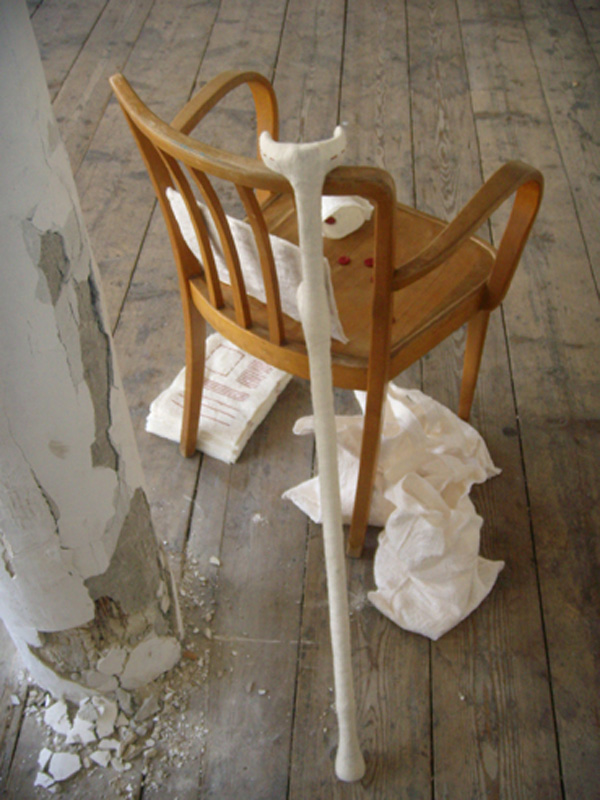
Initially I worked with bright colours, but this was mainly due to the materials I had from the courses I took. My piece The Beggars Opera, exhibited in 2006, was the first where I developed my own sense of colour and style. Now I mainly work with black and white, focusing on texture and patterns. Clarity and structure is very important to me in my work, in the process as well as the outcome.
When you were starting out, did you have a mentor?
I never had a mentor as such, as previously mentioned the material was brought to me via one of my university teachers, but the development and research happened independently afterwards.
You also do set design and fabric design. Tell us about that.
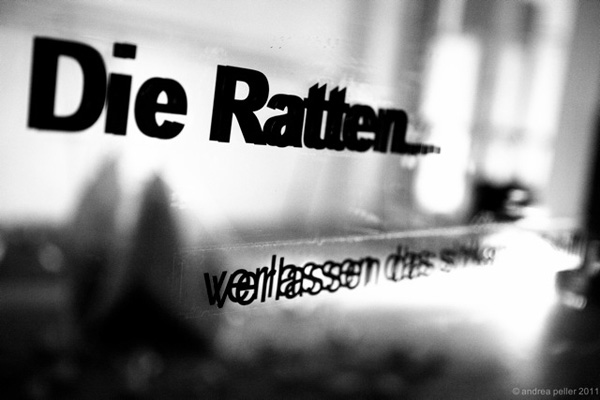
After finishing school I started my work in the theater. Over several years, learning and working in the various departments of the theater for example the dyeing of costumes, costume tailoring, prop making and stage construction, I finally found the way to the costume and set design department.
All of these experiences and points of contact with a variety of materials have created in me the desire again to make further studies. Within my studies in Linz at the art school, I came up with the pure textile and fabric design in context. Likewise, I was also having my first experience with the material felt.
This total package of fascination with the implementation and analysis of material have brought me up to the point where I am today, in the border area of design and art. For me a stage or costume design is very close to fabric design in the way of working. In both areas I have to deal with the desired characteristics and at the same time, some kind of cooperation is needed, either together with the director of the play or with the designer. Accordingly, I have to consider the wishes, ideas and material options and to work out a final product. This for me, is the exciting aspects of this kind of work.
Tell us about your studio and how you work:
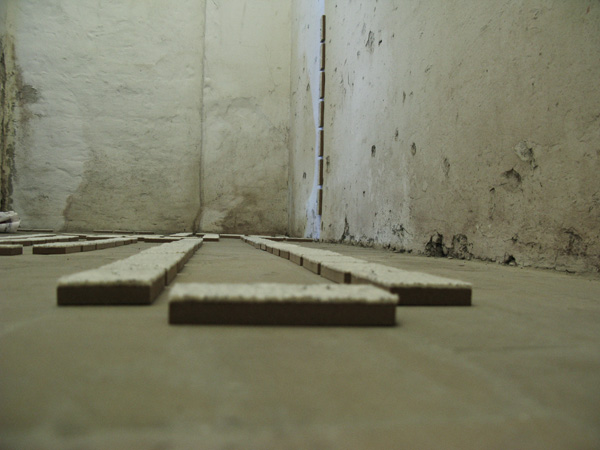
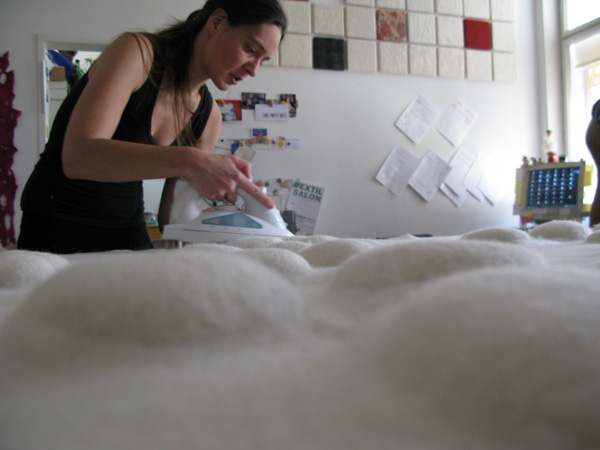
At the moment my studio is part of my home or better said my studio is my home. This means I am constantly confronted with it, which can be a good and a bad thing at times, as I sometimes have difficulty gaining distance from it. I hope to be able to separate these areas in the future, therefore benefiting my work and allowing me to work in larger dimensions.
Tell us about the 3in1 project you worked on that combined felt, knitwear and fashion design.
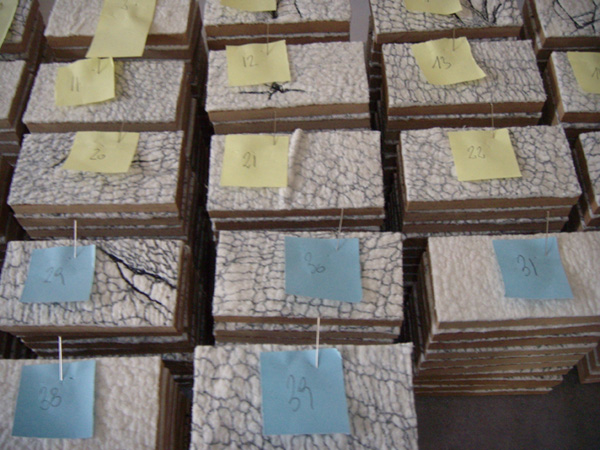
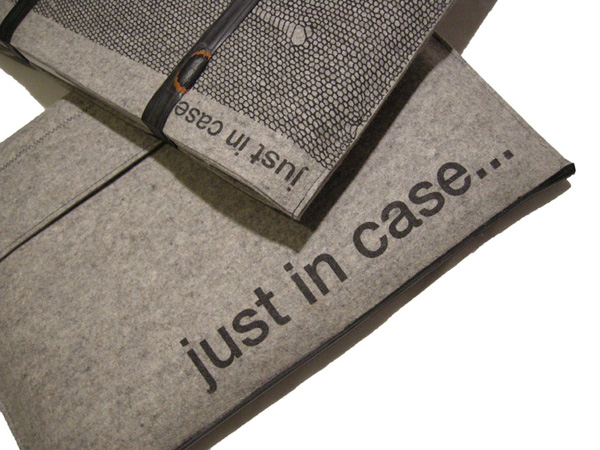
3in1 was a collaboration with Stephanie Mariella Sonnleitner and Veronika Persché. We combined our areas of expertise, felt, silkscreen and fashion and knitting. We created new materials and techniques for a fashion and accessory collection. This was then exhibited and sold in 2010 in the art museum Lentos (Linz, Austria). Parts of this collection, laptop covers, are still being produced and sold.
What interests you about the World of Threads festival?
I am interested in meeting and reading about other artists who are working in the same field that I am in.