Artist Interview 67: Bovey Lee
Pittsburgh, Pennsylvania, USA
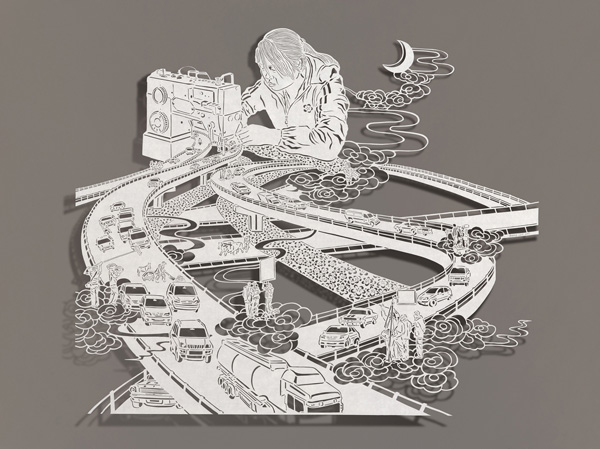
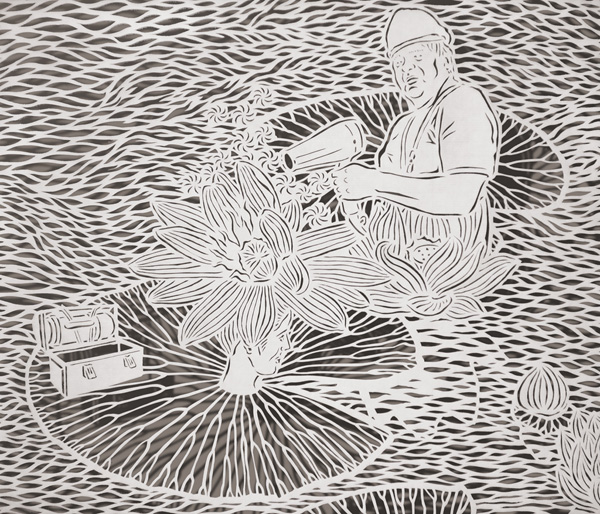
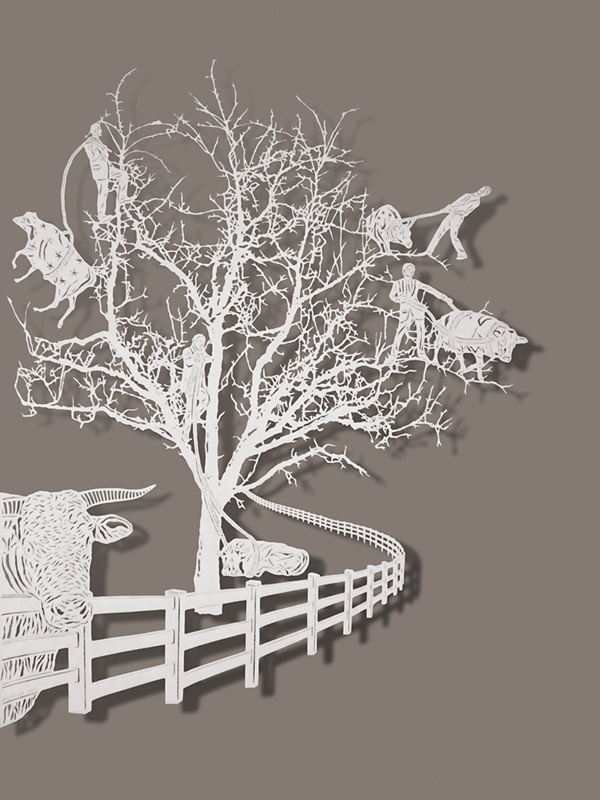
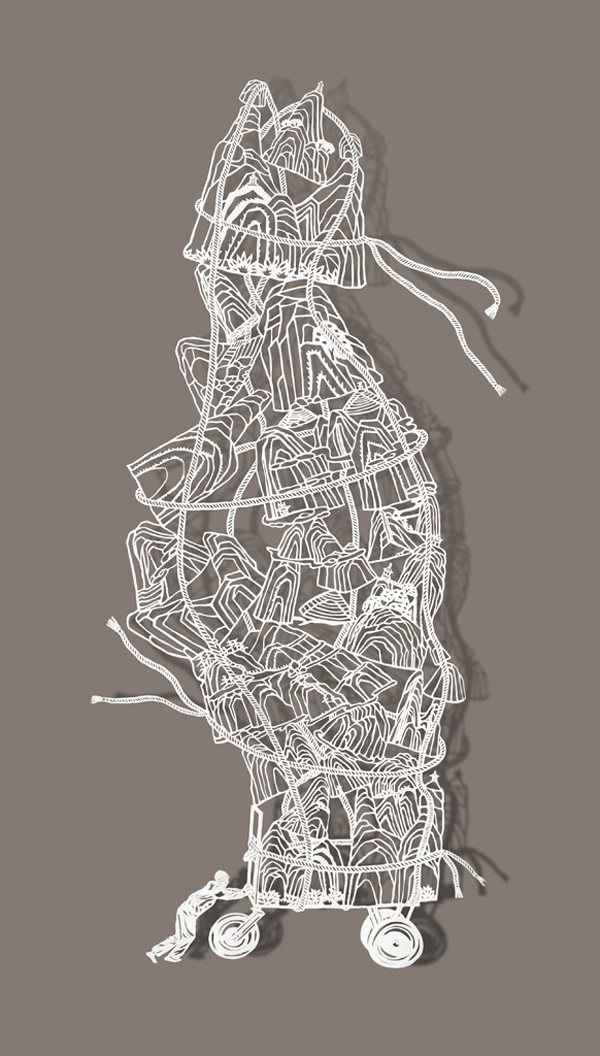
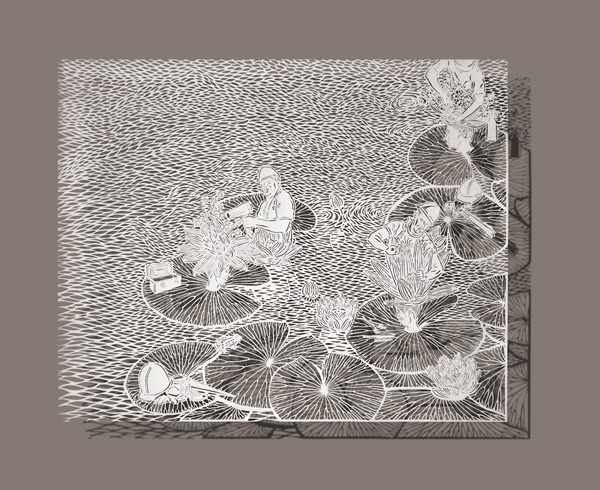
Paper cut is Bovey’s medium. She hand cuts each work on a single sheet of Chinese rice paper with a silk backing. She creates layered and dramatic narratives of paradox, tension and conflict, concerning urban environmental issues. She reflects and draws on ideas from headline news, socio-political affairs, personal stories and environmental issues.
Tell us about your work?
Power, sacrifice and survival are the underlying themes that connect all of my cut paper works. Within the parameters of these three subjects, I create layered and dramatic narratives of paradox, tension, and conflict concerning urban and environmental issues. I hand cut each work on a single sheet of Chinese xuan (rice) paper with silk backing.
Where do you get your inspiration?
My work is rooted from Chinese paper cutting, a traditional folk art. My biggest inspiration is the anonymous artisans, who for centuries created beautiful cutouts that tell stories of their families and communities. My vision to extend these artists' legacy is to bring cut paper into the realm of the contemporary art world. To reflect the world we live in today, I draw ideas from headline news, socio-political affairs, personal stories, and environmental issues in my work.
How did you decide on this medium?
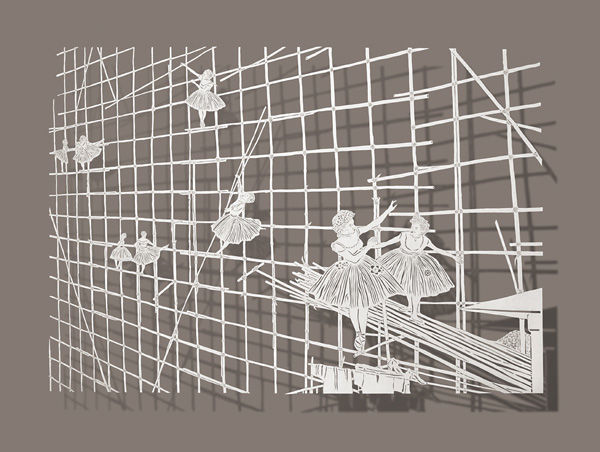
I knew about and loved Chinese paper cutting a long time ago. I began cutting paper in 2005 when I returned to Hong Kong and my father gave me his small collection of paper cuttings. I immediately wondered if I was capable of making something as intricate and beautiful. When creating the first paper cutout, I realized that it really suits my personality, strengths and sense of aesthetics.
Rice paper is particularly special to me, because it's the first art material I used when I was a very young child and practiced Chinese calligraphy and landscape painting. The Chinese invented paper, so I also feel a sense of cultural significance and relevance in using paper in my work.
Please explain how you developed your own style.
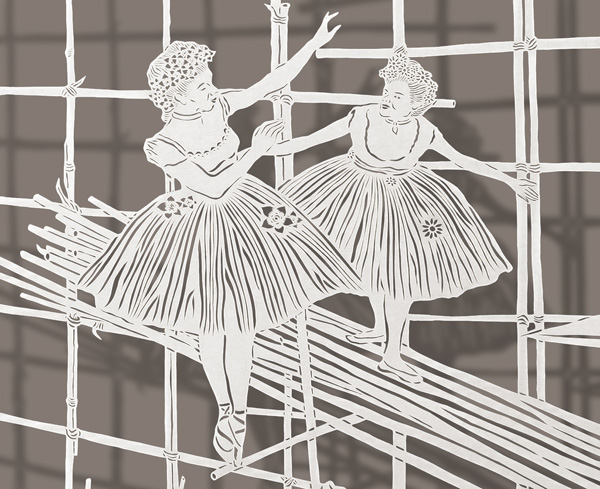
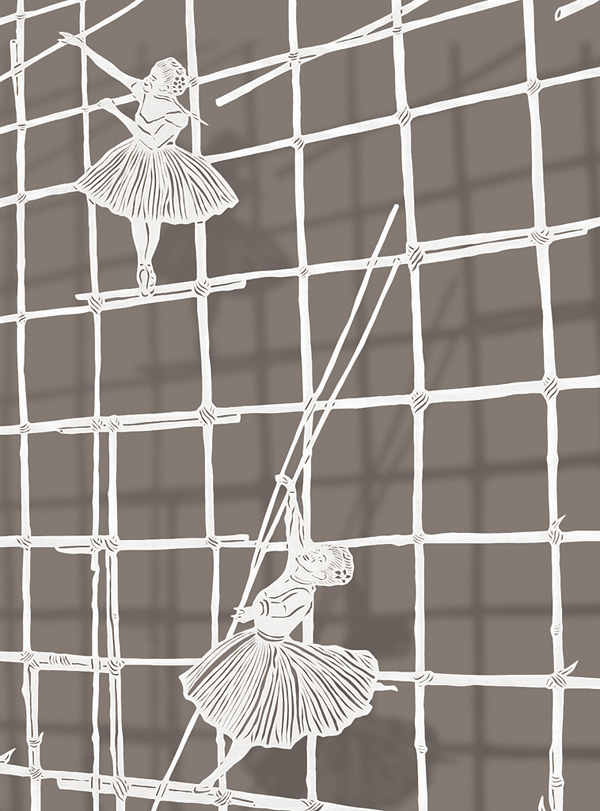
I have been making art for a long time. Looking back, nearly all of my works share a similar characteristic, i.e., patterning juxtaposed with figuration. As I get older, my works get more and more precise and detailed. And my cut paper works eventually employ a macro/micro approach that is necessary to build subtexts within the dominating narrative.
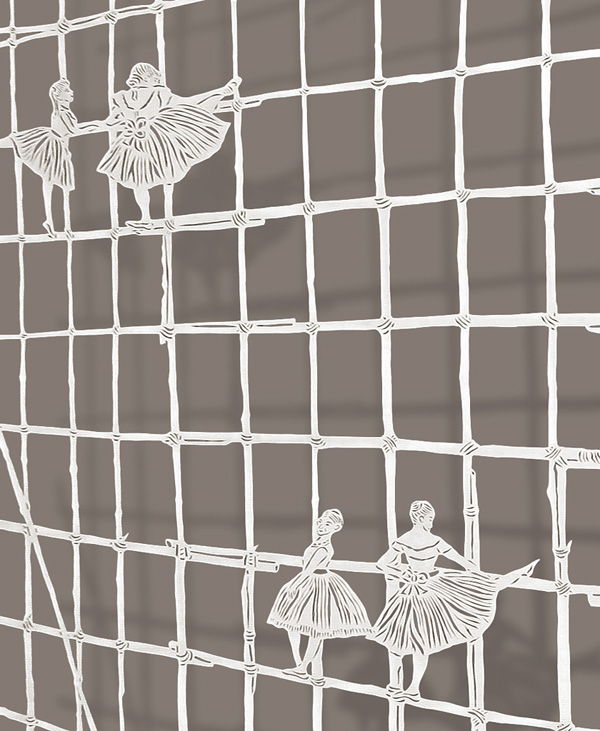
I would also say that my cut paper contains a level of digital aesthetics that set them apart.
What other mediums do you work in, and how does this inform your work?
I began learning Chinese calligraphy at age ten. It emphasizes dexterity, precision, mind and body synergy and play of solid and void. These are the same abilities required to make cut paper.
In college and graduate school, I specialized in painting and drawing. Drawing helps define my cutting method and I favour making unique, one-of-a-kind cut paper pieces like it is a painting.
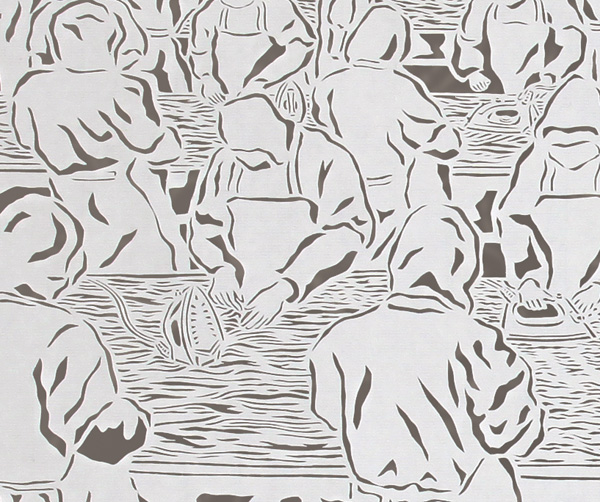
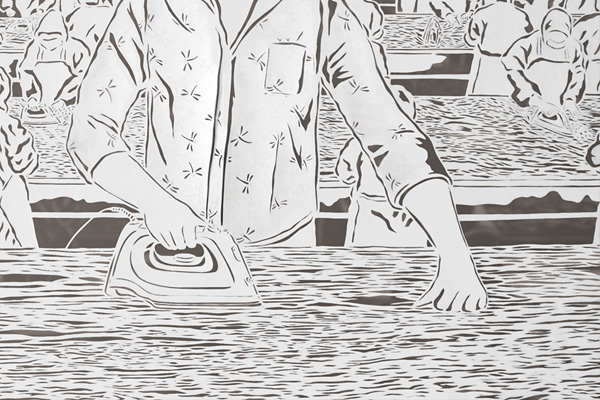
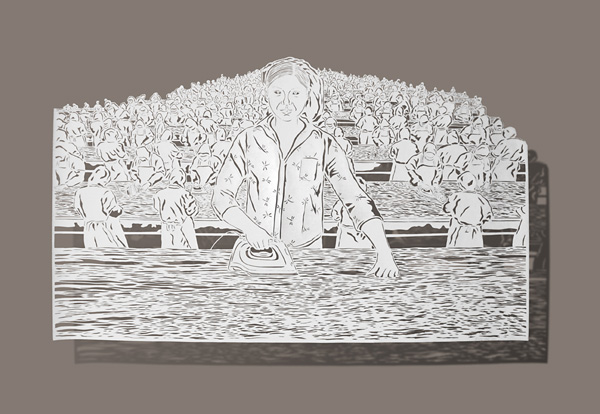
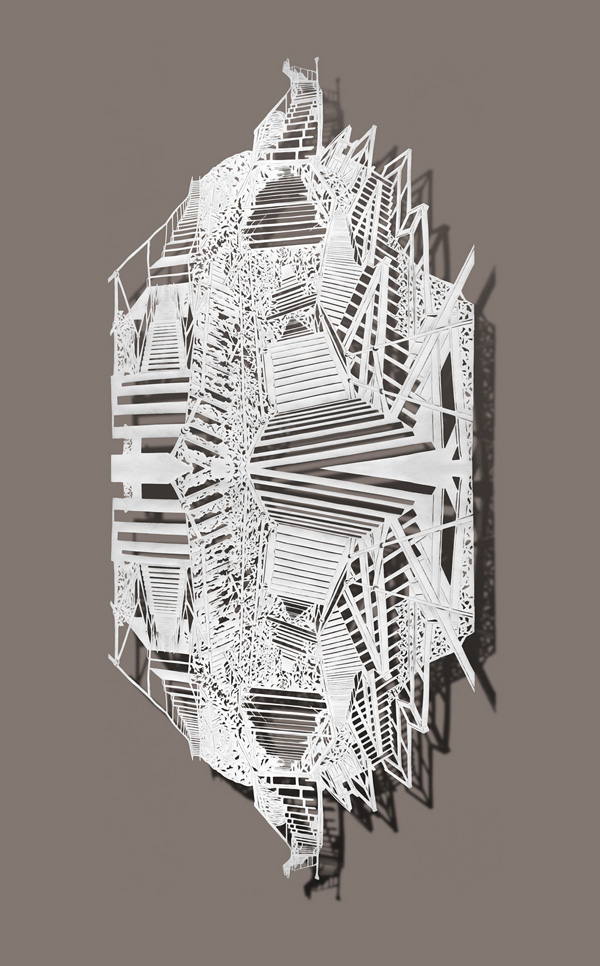
I also have a lot of experience in digital arts. Part of my creative process utilizes computer software to create templates for my cut paper works. It allows me to plan carefully but still have the ability to make many changes before finalizing a composition. I would also say that my cut paper contains a level of digital aesthetics that set them apart. For example, there is intensely tight patterning and use of perspective that needs a great deal of mathematical computation and accurate rendering in my works.
What specific historic artists have influenced your work?
The anonymous Chinese traditional paper cutting artists inspire me the most. Without their work and legacy, my work would not exist. Among these artisans, many are generations of women in rural areas and villages. They cut paper not because it was a career path to fame and fortune. They did it for familial and communal bonding.
Traditional Chinese paper cutting has been a tremendous influence on me. I salute and am inspired by paper cuttings made by unknown folk artists in the past. For example, my use of flowers, insects, birds and fish are also very common in traditional paper cutting. Symmetry, repetition and symbolic figuration dominates a lot of compositions in traditional cutouts that are also found in my works. I like very intricate details layered within complex compositions.
I also draw inspiration from Japanese woodblock print, patterns in fashion, architecture, and nature, politics, current affairs, environmental issues, the tension between the old and the new and the contrast between the East and the West.
What specific contemporary artists have influenced your work?
I try not to be influenced but learn from my contemporaries. I am more interested in studying how an artist handles his/her career.
What other artists are you interested in and why?
I love Picasso for his fearlessness and ambition and Andy Warhol for his perseverance and innovation. I like Takashi Murakami for his business savvy and prolificacy. At the moment, I am completely in love with Do-Ho Suh's work, which is pure visual poetry.
When did you first discover your creative talents?
I grew up in Hong Kong with my parents and two sisters. We three girls, all took piano lessons when we were in grade school. But I didn't like the repetition of practicing the same piece of music over and over. At age ten, I also began to learn Chinese calligraphy and then painting and drawing in my formative years. Early on, I realized and loved that every second and minute in the creative process is different, new and exciting. For a young girl, winning awards for her artworks was also very encouraging. I was rather committed in the visual arts in my youth and that passion goes on. I don't think there's anything else I'd rather do in life.
Where did you train and how did your training influence your art?
As I said, my art training began with Chinese calligraphy at age ten. In college, I evolved as a painter and studied fine arts at The Chinese University of Hong Kong. Shortly after graduation, I came to the United States and earned my first Masters of Fine Arts degree in painting and drawing from UC Berkeley. At that time, graphics software and the Internet were budding as potential creative media and outlets for artists. Recognizing the possibilities while fueling my curiosity, I obtained a second MFA degree in Digital Arts at Pratt Institute in New York.
As to the influence of my training on my work, Chinese calligraphy is very similar to cut paper because both deal with the play of solid and void and require immense precision and concentration. The immediacy is also very similar, as there is no undoing of a mistake. I believe my work has a certain level of digital aesthetics because I use the computer to create templates. I have created geometry-based works that can be difficult and time-consuming to do by hand. When I cut a line, I glide the tip of the blade like I would draw with a pencil or paintbrush.
When you were starting out, did you have a mentor and how did your mentor help you with your artwork and guide your art practice?
My grade school teacher, Mr. Ng, taught me Chinese calligraphy and encouraged me to make drawings and paintings. He entered me into competitions and exhibitions. Through Chinese calligraphy, he taught me what it took to be an artist – discipline, focus, hard work, dexterity and competitiveness. He deserves much credit for who I am today. I am very grateful to have had his influence.
How does your early work differ from what you are doing now?
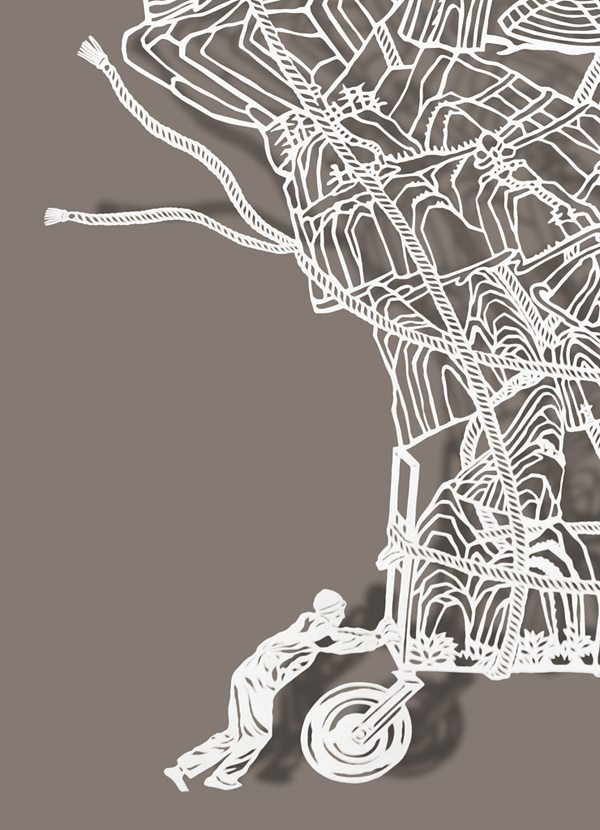
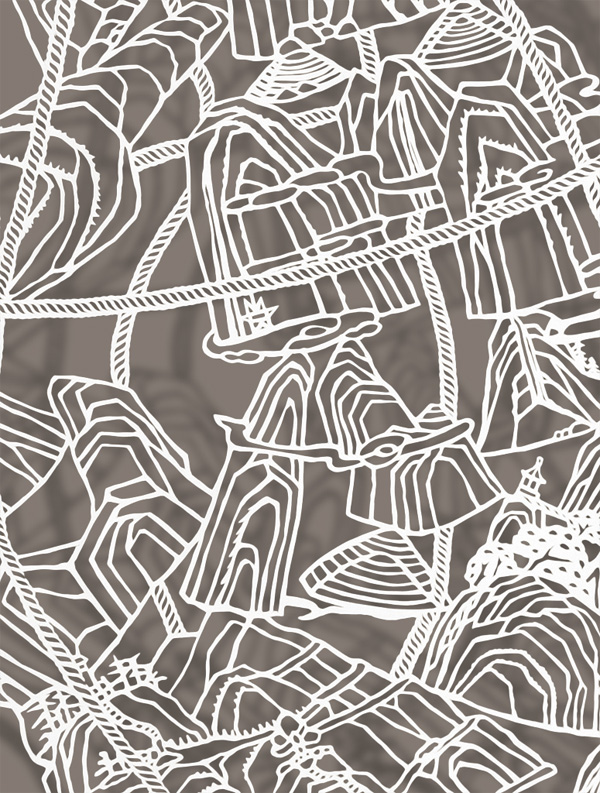
In my earlier works, from 2005 to 2007, I integrated thematic images that spoke to and of my cultural identity and gender. In 2008, the world confronted a colossal economic crisis and natural disasters, so my paper cutouts focused on the issues of power, sacrifice, and survival exploring flora, fauna, marine life and their symbiotic relationships with nature and humanity. Most recently, I have expanded on the idea of survival by examining our occupational roles and how they enable us to build families, societies, and nations.
How did you initially start showing your work in galleries?
I got representation from my Hong Kong gallery, Grotto Fine Art, in 2006 when I brought my first body of cut paper works to show anyone who might be interested. The gallery director loved the works and offered me a solo show on the spot that opened in 2007. It did really well and I saw the potential of the medium and what I could bring to the table, so to speak. Previously working as an art professor for nearly a decade, the show gave me the courage and opportunity to work as a full-time artist.
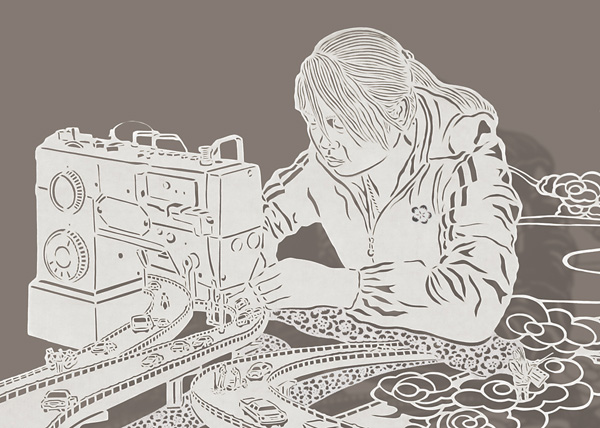
Adjustment is common for me. I switch things around and do not hesitate to change anything if it makes the exhibit better.
When working on an installation, how much do you improvise when you are on location?
This depends on the installation piece. Overall, I come into a space with a very specific plan and idea of how everything will come together. The positioning of a piece does sometimes need to be altered and this is when I like to improvise. Seeing a floor plan is different than being in the actual space. Adjustment is common for me. I switch things around and do not hesitate to change anything if it makes the exhibit better.
What project has given you the most satisfaction and why?
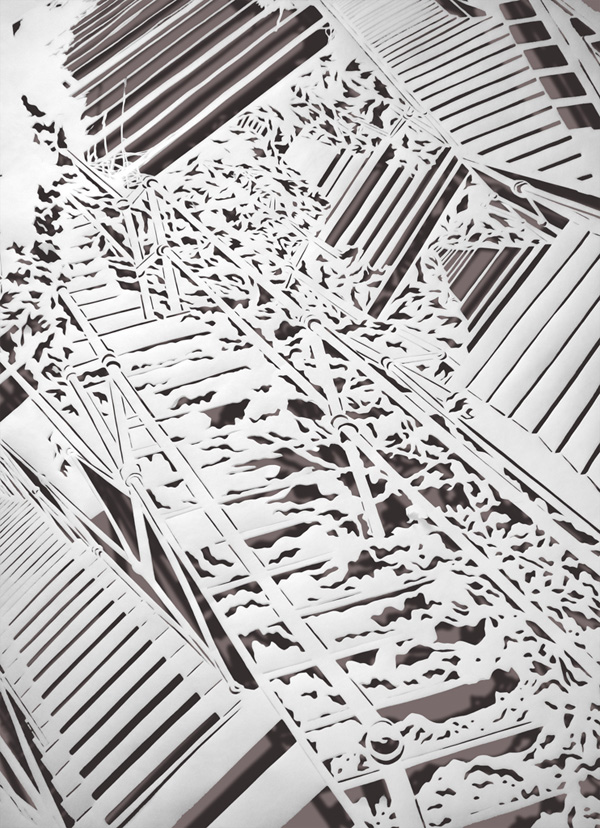
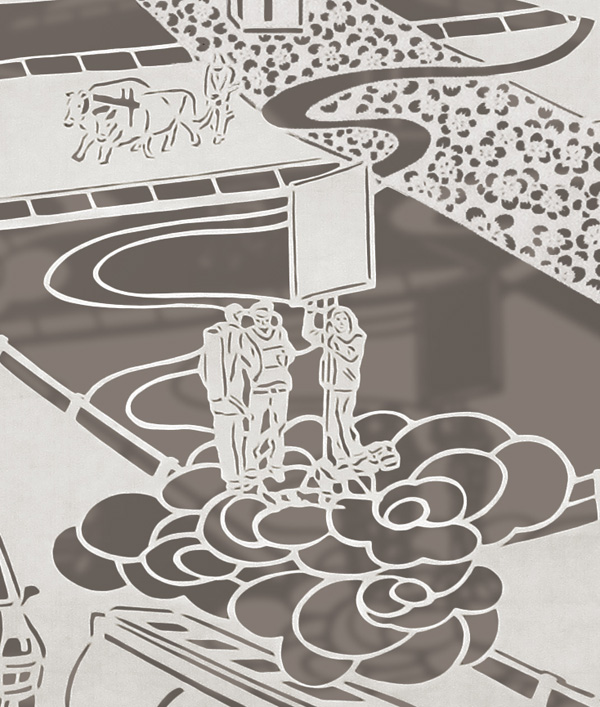
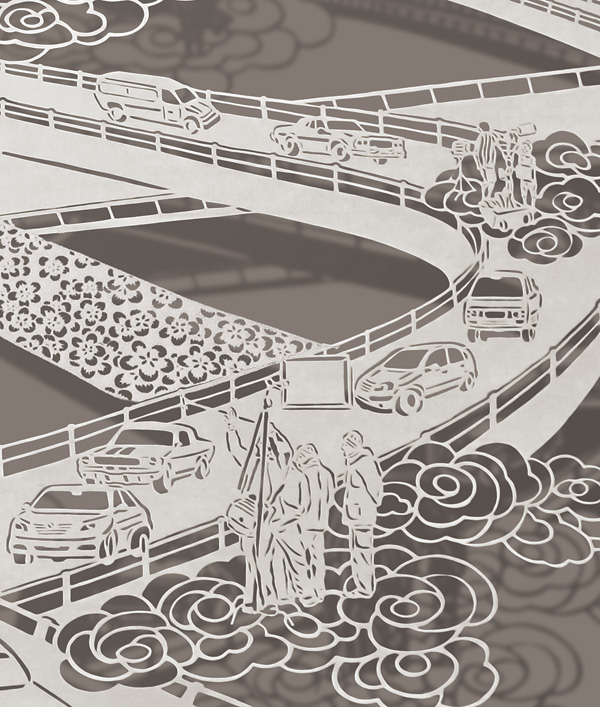
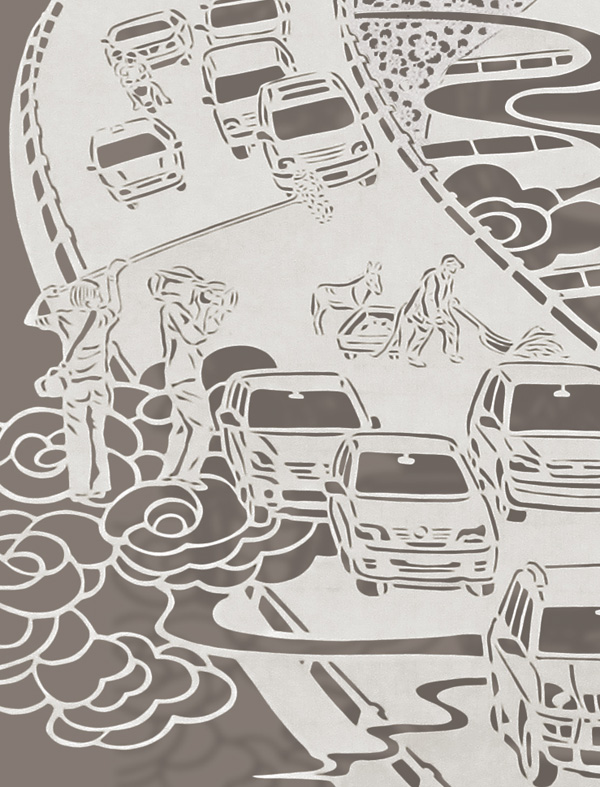
I felt a great sense of accomplishment after finishing four months of painstaking cutting of "Atomic Jellyfish," the first large cut paper piece I made with extreme intricacy. It sets the tone for other pieces following it. Many people first know my work through "Atomic Jellyfish." I also am really happy with "Hanging Gown," an earlier piece I made in 2006 when I first began cutting paper. The chain link fence has become my signature motif.
What do you consider to be the key factors to a successful career as an artist?
A successful artist is someone who is self-motivated, confident, diligent, persistent and highly disciplined. In the art world today, it also takes a very business savvy individual to be successful.
What project has given you the most satisfaction and why?
I felt a great sense of accomplishment after finishing four months of painstaking cutting of "Atomic Jellyfish," the first large cut paper piece I made with extreme intricacy. It sets the tone for other pieces following it. Many people first know my work through "Atomic Jellyfish." I also am really happy with "Hanging Gown," an earlier piece I made in 2006 when I first began cutting paper. The chain link fence has become my signature motif.
Tell us about your studio and how you work:
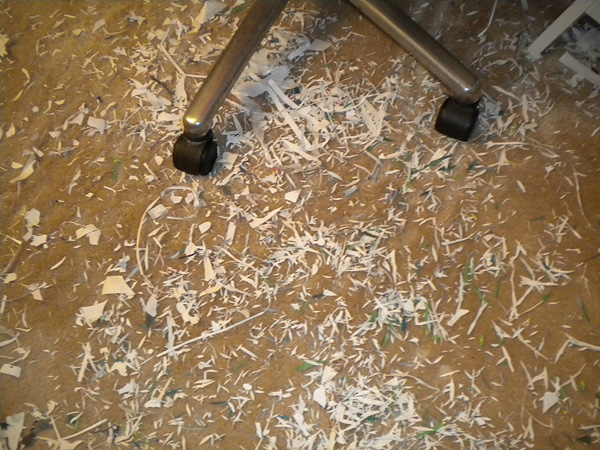
Space, light and silence is my ideal environment for working. Typically, I work in silence and get a lot done at night. If I listen to music, it is on the repeat setting to keep my emotion constant for that block of time.
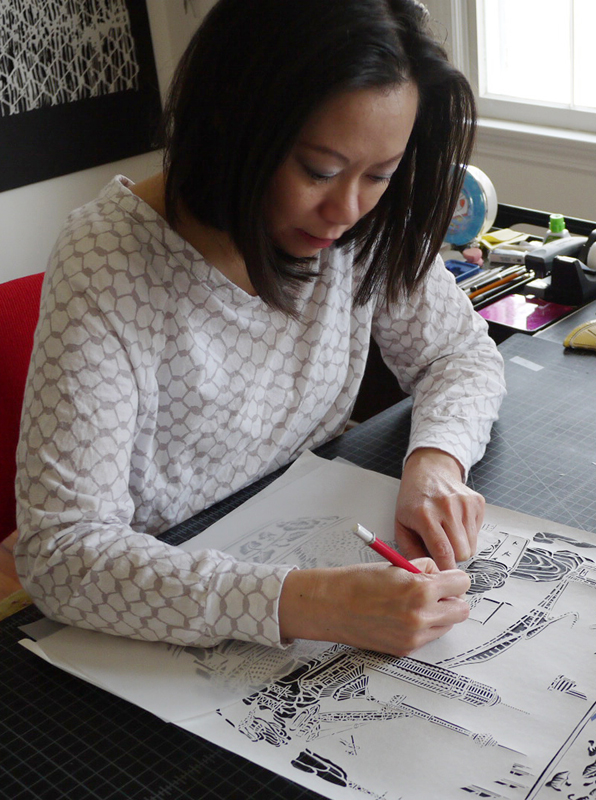
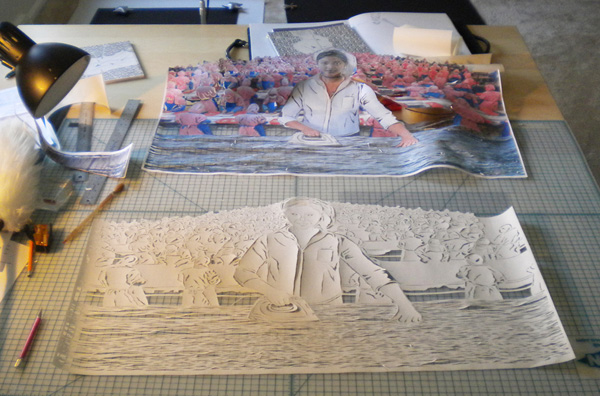
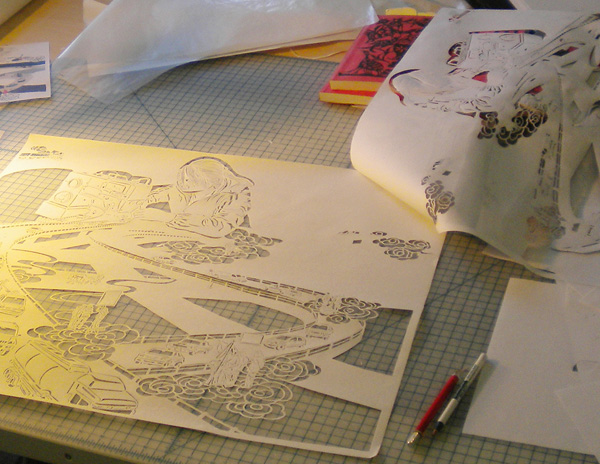
The tools and material I use are simple: self-healing cutting mat, X-Acto knife and blades, staples, clips and paperweights. I use Chinese rice paper exclusively because it is the first art material I used as a young girl practicing calligraphy. China invented paper and I feel a sense of intimacy and legitimacy in using it.
My work process is systematic and contains three phases. Forming the idea is the first step. I spend a lot of time reading the news, observing people and things, researching from books, magazines and the Internet. During this initial phase, I keep all creative options open. Then I go through the process of filtering, refinement and polishing the idea. This involves putting the idea on the computer. For each cut paper work, I create a digital template that serves as a positioning guide to aid me during the hand cutting process. The laborious cutting occurs last, because it is an irreversible phase. I have to be very certain of what I cut out and leave in.
What is your philosophy about Cut Paper Art?
My approach to cut paper balances the revival of the medium by bringing concepts and aesthetics that are new and relevant and creating works that instill familiarity, intimacy, and memory.
