Artist Interview 41: Lizz Aston
Toronto, Ontario, Canada
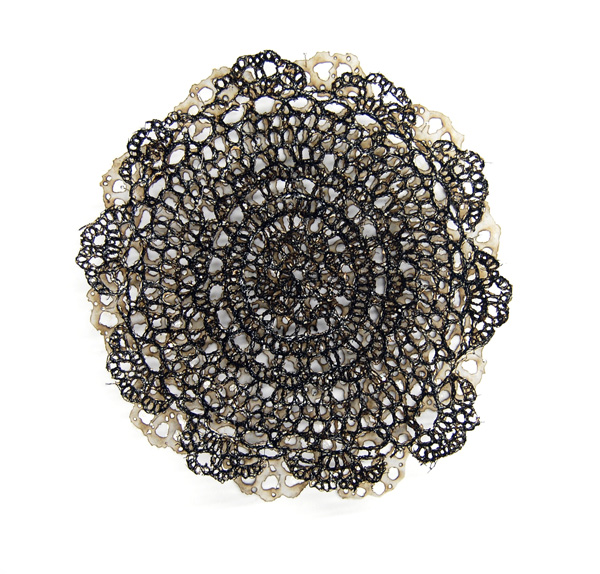
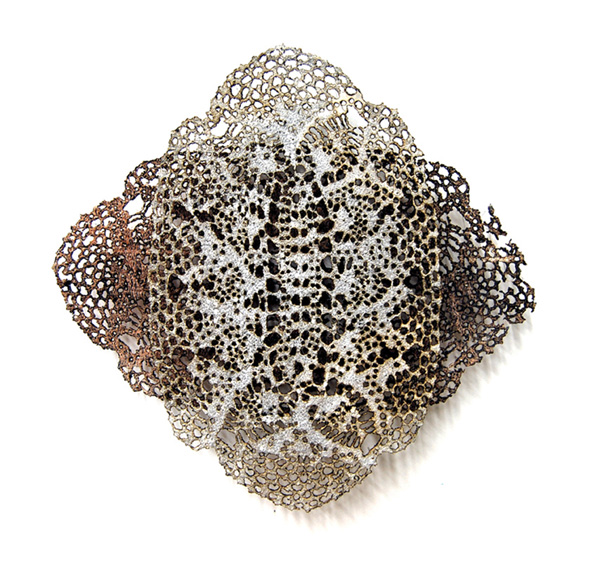
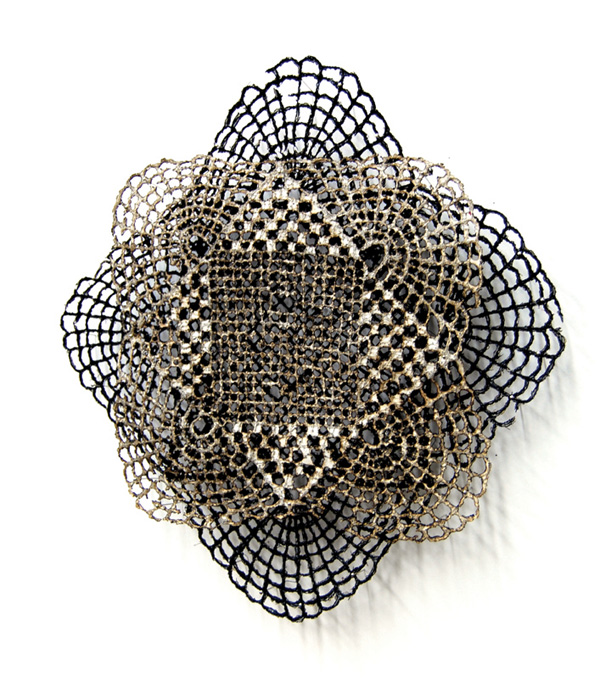
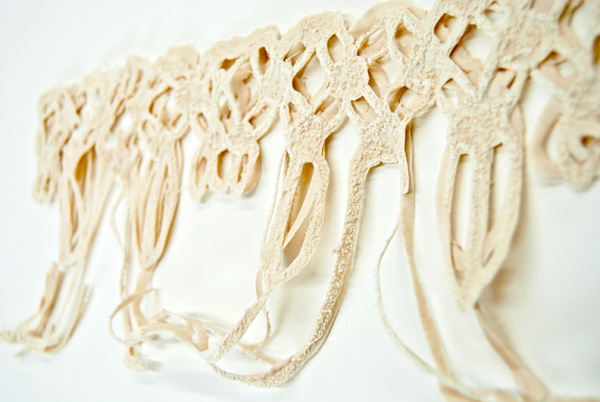
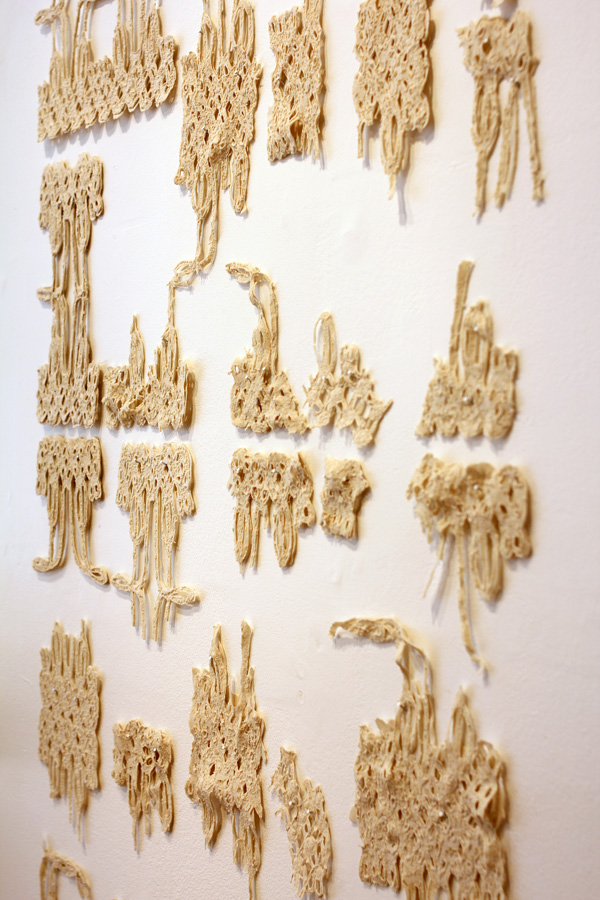
Fibre-based artist Lizz is interested in bridging connections between traditional textile practices and contemporary art and design. She uses paper, fibre, thread and stitch for her art pieces. She enjoys exploring ways to manipulate paper and uses its many transformative qualities, to recreate the interlaced patterns and knot-work of handmade doilies; later burning out the negative space to create intricate multi-layered paper sculptures.
Tell us about your work?
In my work, I am interested in examining our relationships and the residual connections we feel to domestic textile practices and objects of the past. Focusing on traditional women's work, I take reference from practices including spinning, knotting, papermaking, embroidery and crochet to explore these forms of textile construction within a historical and cross-cultural context.
Years of researching and sampling my ideas has brought me closer to understanding my practice, as I work to build upon a dialogue within my work that explores ways of translating my ideas in an unexpected, three-dimensional context.
Through my innate love of experimentation, process and material subversion, I have begun to shape an incredibly diverse body of work that builds upon themes including the history of knotting, residual memory, fragility, the value of old technologies and the passage of time.
Previous World of Threads Exhibitions
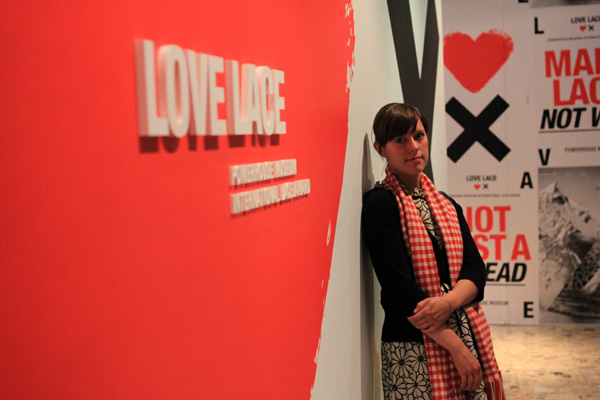
Lizz Aston exhibited in two Festival 2012 exhibitions, the major show De rerum natura (On The Nature of Things) and Interlace, deconstruct, the spaces in between.
Where do you get your inspiration
I enjoy looking at handmade textiles as source material, collecting crocheted objects and white-work embroidered linens. Going to Aberfoyle flea market is a huge inspiration to me, as well as sourcing out instructional diagrams and illustrations from old how-to books.
The most important source of inspiration for me though, is to be constantly engaged in looking at what is going on in contemporary art and craft today. More than anything, I enjoy going to galleries, looking at art and doing research online, as well as attending lectures and workshops.
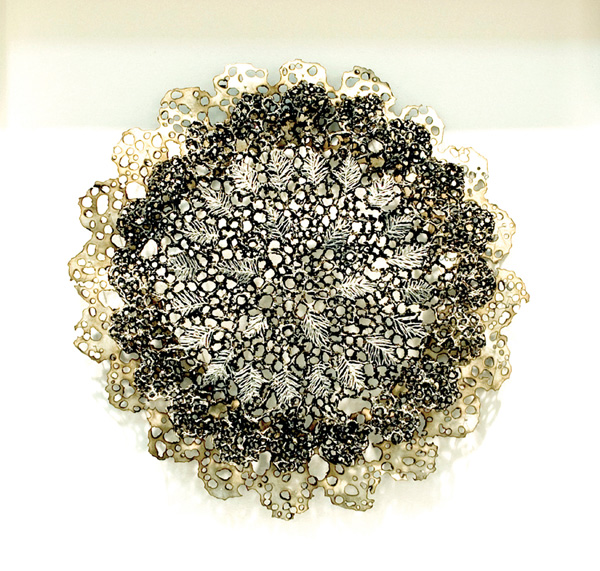
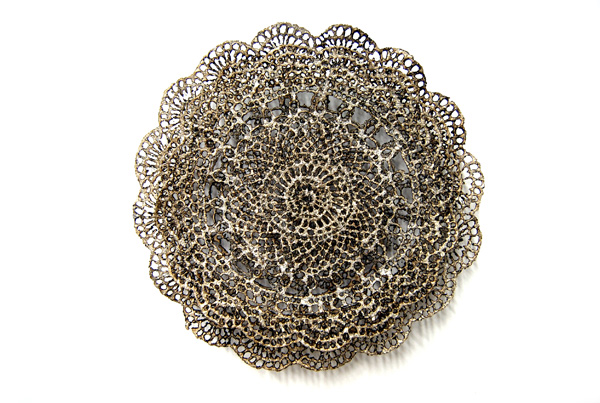
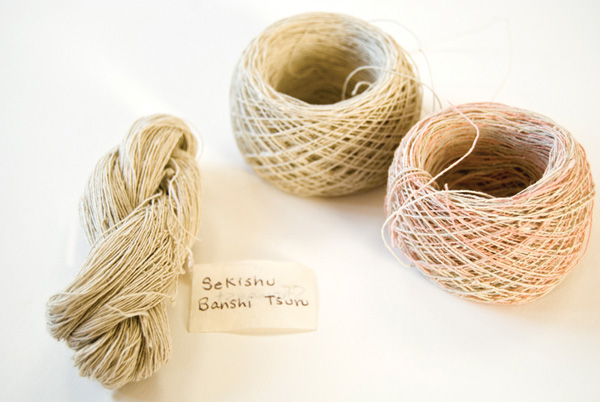
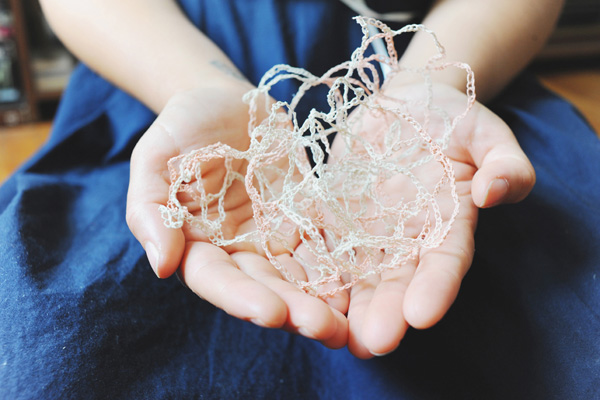
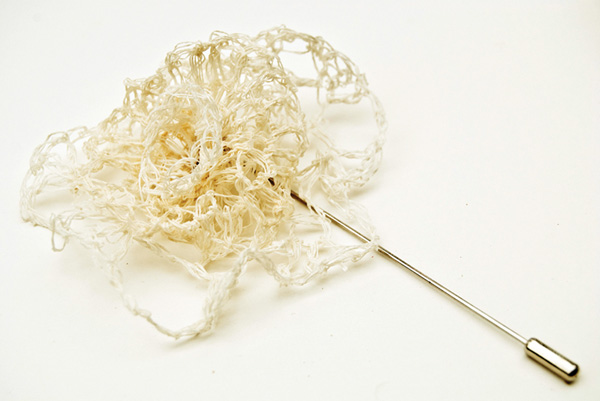
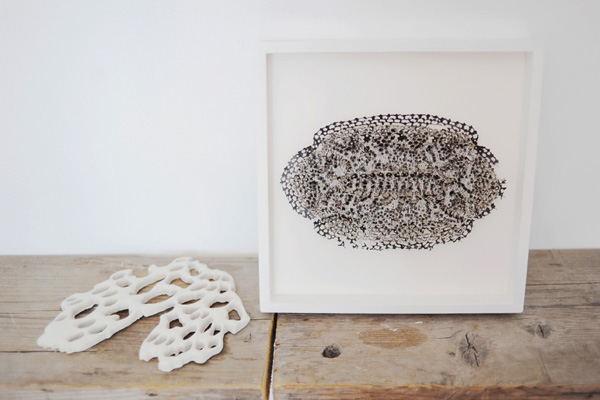
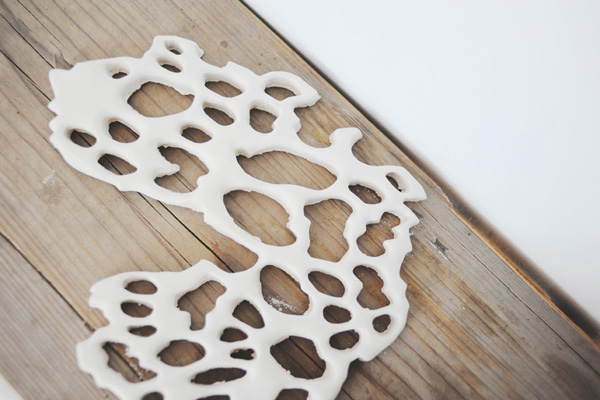
I have worked with manipulating paper materials to mimic work in porcelain. Using methods such as spinning paper into thread, or working with it to crumple, stitch, starch, crochet or even burn the material, I am able to create a series of forms that gives shape to my ideas.
Why did you choose to go into fibre art?
When I was younger, I was really lucky to be accepted into an arts based high school in Mississauga. The time I spent there, immersed in a specialized arts program, came to inform the beginning of my life as an artist working within a craft based medium.
Focusing on exploring my ideas through the use of paper, fibre, thread and stitch, I would eventually learn that there was a larger identity at play in the work I had been making all along. It wasn't until I learned about the Textiles program at the school of Crafts and Design, Sheridan College that I would finally find a voice in what it is I do.
Which is your favourite fibre medium?
Paper is definitely my favourite material! In my work I like to explore ways that paper can be manipulated to give form to my ideas as I make use of its many transformative qualities.
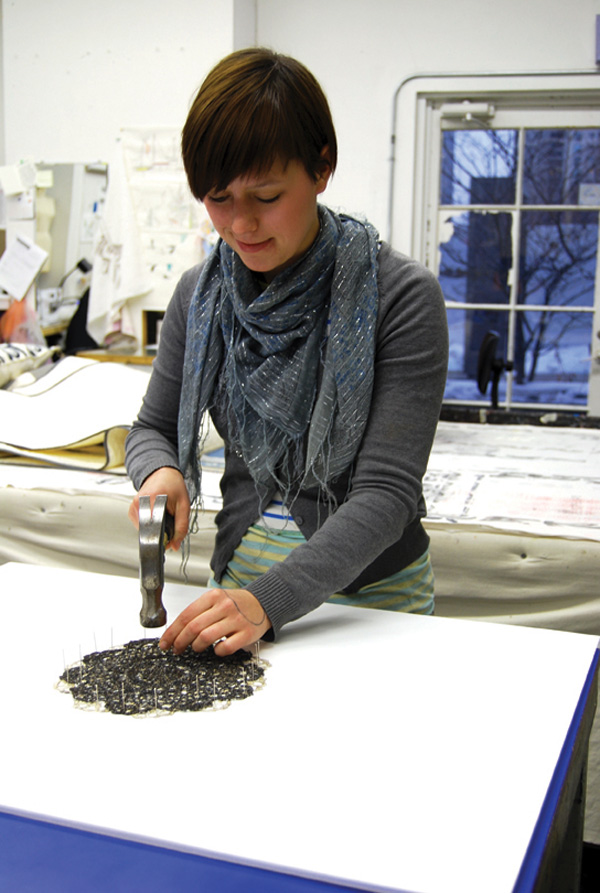
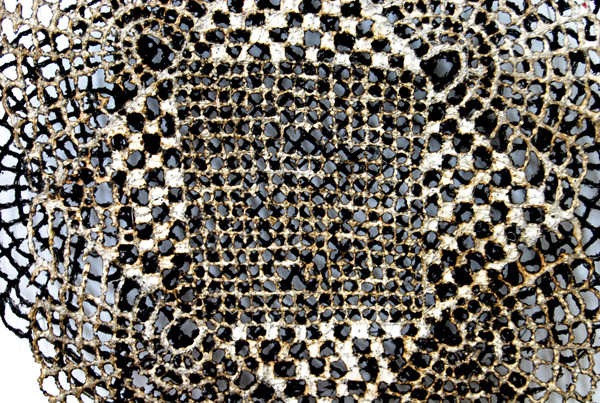
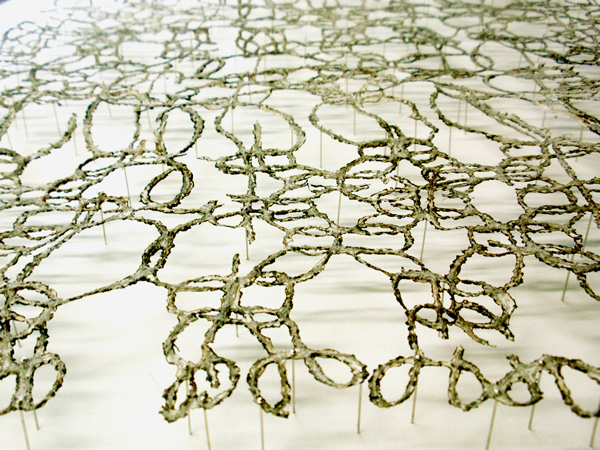
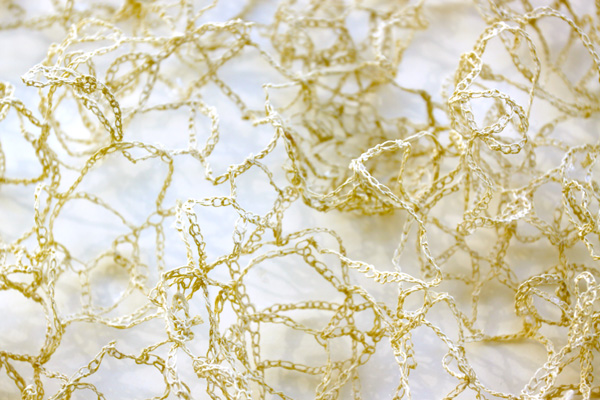
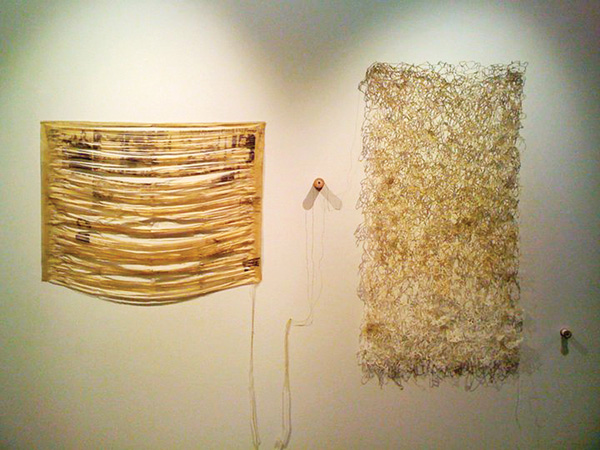
In my Antiquated Notions series, a network of threads is stitched onto paper, recreating the interlaced patterns and knot-work of handmade doilies; the negative spaces are then burned out to create intricate multi-layered paper sculptures.
In other projects, I have worked with manipulating paper materials to mimic work in porcelain. Using methods such as spinning paper into thread, or working with it to crumple, stitch, starch, crochet or even burn the material, I am able to create a series of forms that gives shape to my ideas.
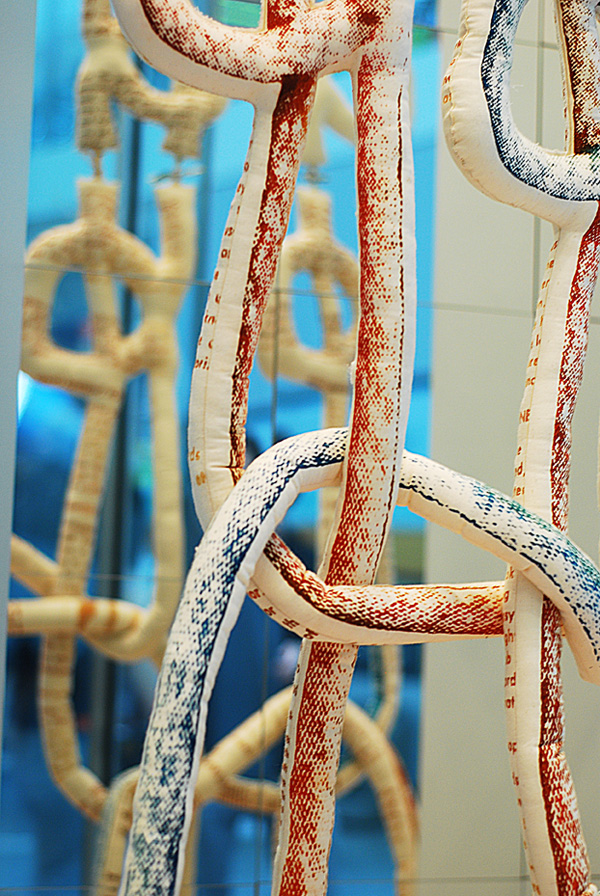
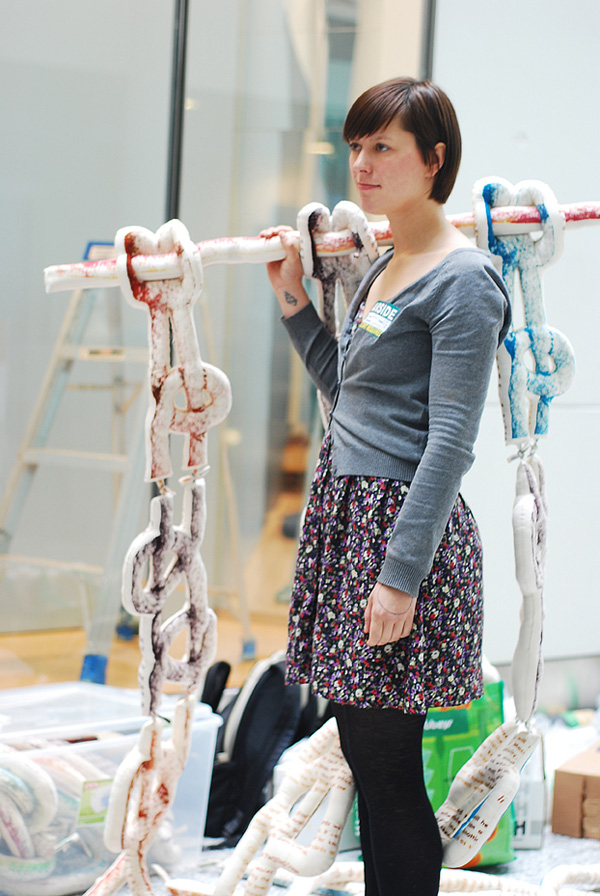
Working in a wide variety of new and familiar materials, allows me the freedom to continue to learn and develop my ideas.
What other mediums do you work in, and how does this inform your fibre work?
Recent projects have seen my work branch out in the form of furniture and ceramics. This past August, I took part in a collaborative exhibition entitled Studio Remix at the Ontario Crafts Council. Stepping out of my familiar comfort zone, I was paired up with ceramics artist Sylvia Nan Cheng to teach, learn and make-work in an alternate studio.
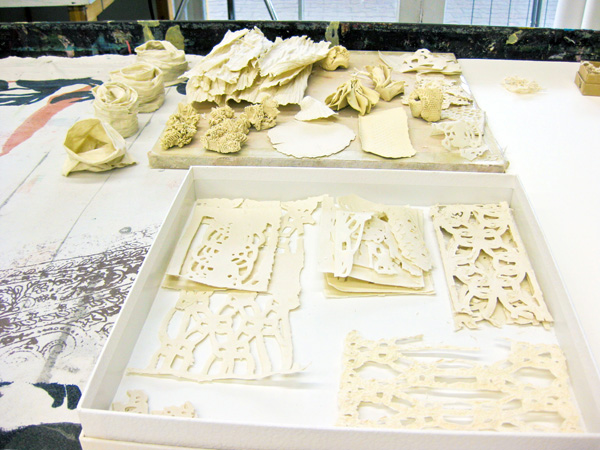
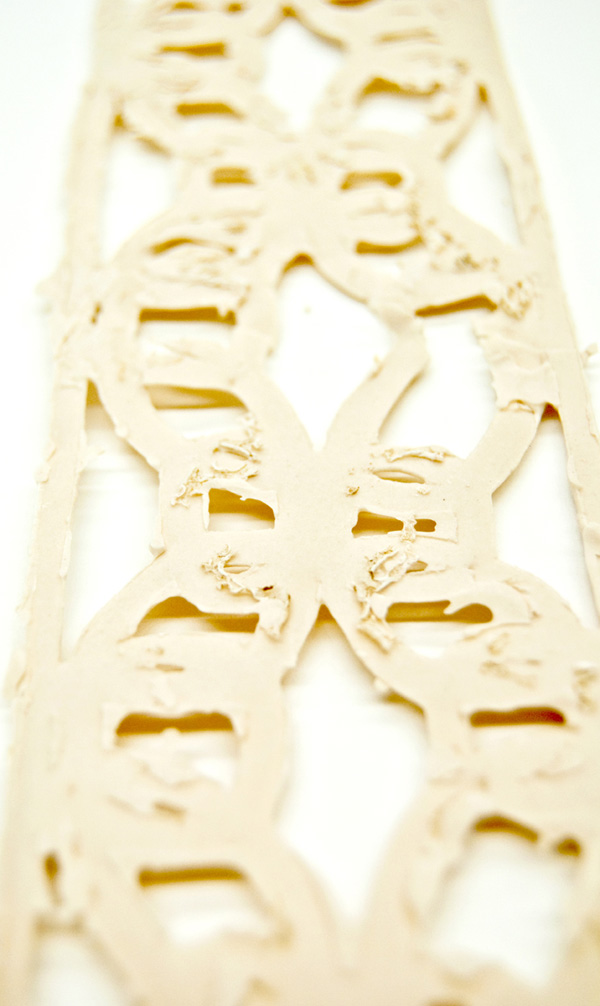
After six months working in my new material I began to experiment with ways of combining paper and clay to build up a series of textural surfaces that could then be fired in the kiln.
The resulting work would be a repeating 'wall paper' pattern made in porcelain, like layers of paint and paper peeling away from the walls, the materials were informed by the residual memory and impression of what was once there before.
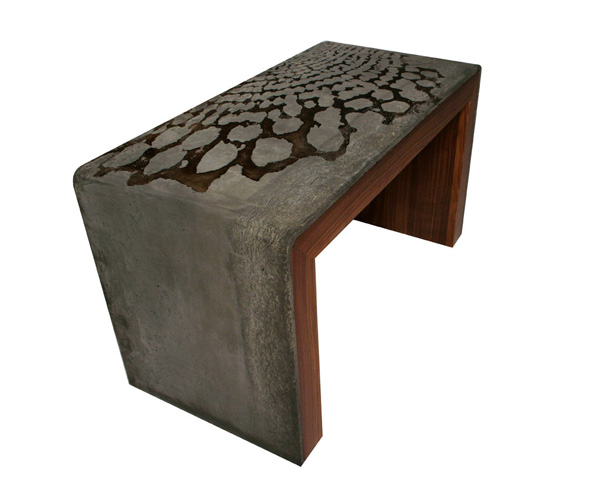
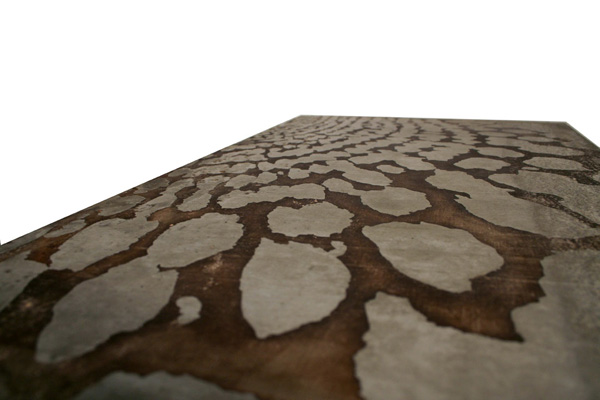
Currently, I am working to develop a number of prototypes in collaboration with my furniture maker partner, Jean Willoughby. Casting furniture pieces in concrete and steel, as well as working in walnut, we are interested in examining the shift in perspective that occurs when the interplay between two distinct practices comes together.
Using imagery taken from photographs of my sculptural works in paper, I would like to push the exploration of burning in my work, as we sample the effects of natural food acids used to burn patterns, etching into the surface of the concrete. The project also includes experimenting with casting to create three-dimensional form, as well as cutouts to explore the use of positive and negative space, and cast light and shadow as it relates to pattern.
Working in a wide variety of new and familiar materials, allows me the freedom to continue to learn and develop my ideas as I expand upon the investigations that inform a greater discourse into my body of work.
What specific historic artists have influenced your work?
I find myself being drawn to the incredibly visceral sculptural work of Eva Hesse. Born in Germany in 1946, Hesse escaped Nazi persecution, fleeing to New York with her family. She studied painting and drawing at Cooper Union and Yale in the mid 1960's, and soon after began working out of her studio space on an empty floor in a textile factory with her partner. It was here that Eva began making her first experimental, sculptural works. What draws me to her work is her love of irregular shapes and use of surfaces, translucency and repetition. Her minimal sculptures made up of dangling string, papier-mâché, dyed nets, latex and polyester resin, showcase her innovative approach to working with materials and the sophisticated interactions that came out of these studies.
What specific contemporary artists have influenced your work?
My work is greatly influenced by the sculptural pattern-field work of Toronto based artist Jeannie Thib. I was first introduced to her work while stumbling upon an exhibition at Leo Kamen Gallery years ago.
With this introduction, I felt an immediate connection to the way she investigates textile-based pattern within a sculptural context. Working with materials such as felt, marble, glass, steel and landscaping cloth, she creates large-scale installations made up of patterned cutouts and stackable damask forms, expanding upon the anticipated way in which we view these forms of textile construction.
Other contemporary artists whose work I enjoy include Cal Lane's plasma cut, steel lace work. One of my favourite pieces she made was of a plasma cut-lace wheelbarrow. The wheelbarrow was then filled with soil and rolled across a space, allowing the dirt to sift through the intricate patterns of negative space, thus recreating lace-work on the floor below.
I am also really drawn to the work of artist Jean Shin, whose sculptural process transforms the use of cast-off objects, to create large-scale installations made up of accumulation. My favourite installation by her entitled Alterations incorporates a dense scape of cylindrical forms made out of leftover fabric from shortened pants and blue jeans.
What other fibre artists are you interested in?
I have found a meaningful connection to the work of Toronto based artist and curator Tara Bursey, for our shared interest in the use of vegetable matter and skins as a sculptural textile material. In her work she subverts the use of food materials to make objects that include onionskin gloves and shrimp-lace doilies. Her practice is a diverse one, encompassing sculpture and installation as well as drawing, craft and self-publishing.
Another fibre artist who inspires me is the work of a former teacher, Dorie Millerson who constructs intricate, miniature needle lace structures. Taking imagery from old family photographs, the home and objects that suggest inter-connectedness, her work explores themes of attachment, memory and the potential for interlacement to suggest human experience.
Tell us about your studio and how you work:
I am currently in my third and final year as an artist-in-residence in the textile studio at Harbourfront Centre. The past two years I have spent here in this cross studio setting has really pushed me to work hard for what I love, being inspired on a day to day basis by an incredible community of craftspeople that make up the studios around me.
This makes it really easy for me to dive in to my work, even at times when I am feeling overwhelmed, as there is always someone nearby in a neighbouring studio pulling an all-nighter to finish work in time for a show.
I think fibre art plays a vital role in charting out an ever-changing and broadening discourse in contemporary art.
What role do you think fibre art plays in contemporary art?
I think fibre art plays a vital role in charting out an ever-changing and broadening discourse in contemporary art. The last decade has seen a rapid expansion and resurgence of interest within the craft community and I feel like these are very exciting times for people who appreciate what we do. More and more often, you see craft creeping into unexpected spaces, challenging notions about contemporary art and design and the work that I have seen just keeps on getting better.
What interests you about the World of Threads festival?
I think that the World of Threads Festival provides a great platform for which to present the work of a wide range of textile artists coming from many different perspectives. Reading the weekly fibre artist interviews gives me an opportunity to step outside myself, as I learn about a diverse range of themes and ideas shared by other fibre artists.