Artist Interview 18: Rasma Noreikyte
High Wycombe, United Kingdom
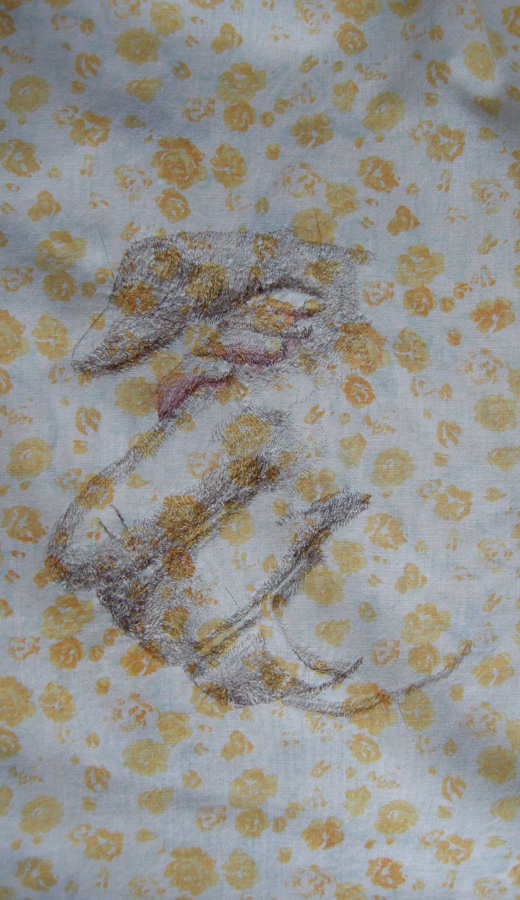
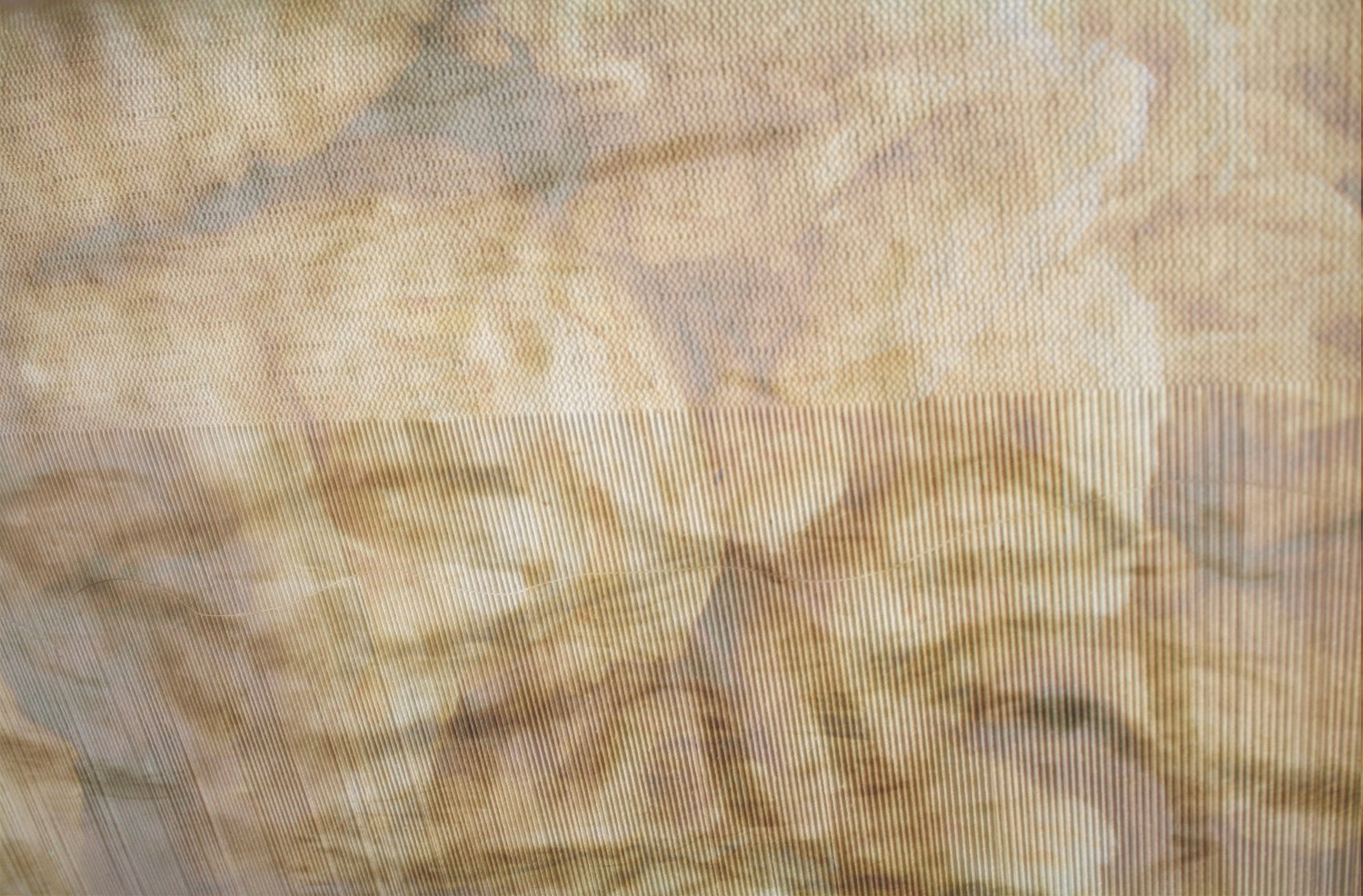
Rasma was born and raised in Lituania and studied in traditional Lithuanian folk textile and its history. Her favourite fibre mediums are tapestry and embroidery. Rasma now resides in the UK.
Tell us about your work?
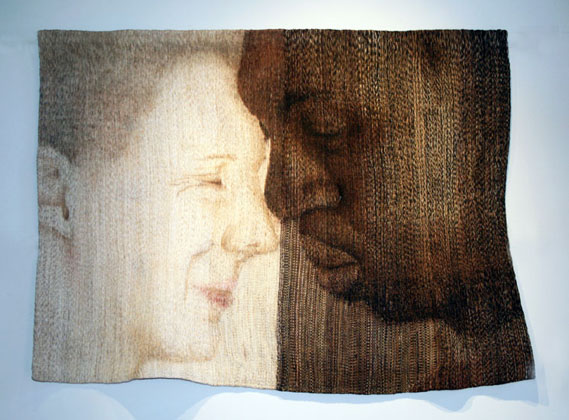
In my works I speak about the human being, the situation we are in, the century we live in. All my work is about real people, people who were around me, people who are with me.
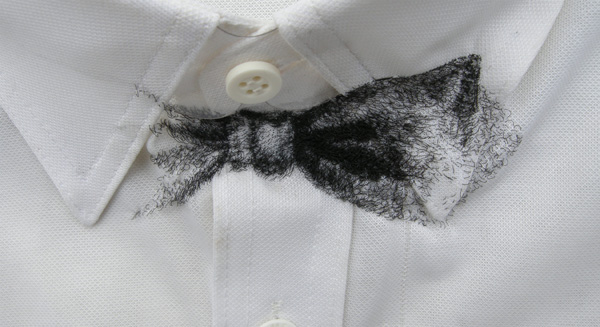
In the 21st Century the cult of the human body is increasingly prominent. Constantly the body is being perfected and viewed as a fashion object in its own right.
Skin colour is also subject to being 'in fashion' or a vogue of the moment. Like other aspects of fashion, such as ornamentation on garments, or the structure and feel of clothing, 'skin' and its varied textures and colours, creates differing responses in those who look at it and feel it. For some, certain colours or well worn textures are more attractive. For other people, skin may even bring out negative feelings of revulsion.
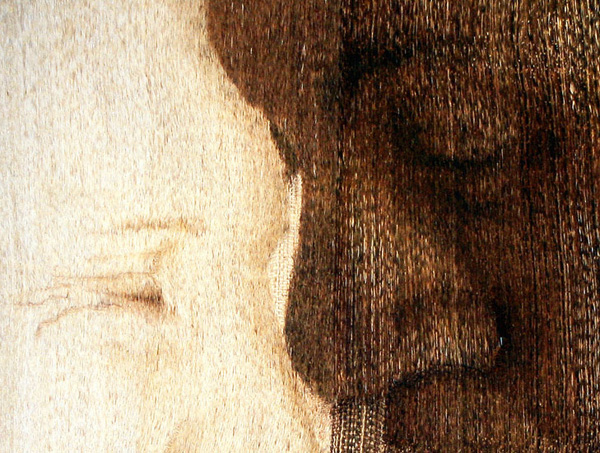
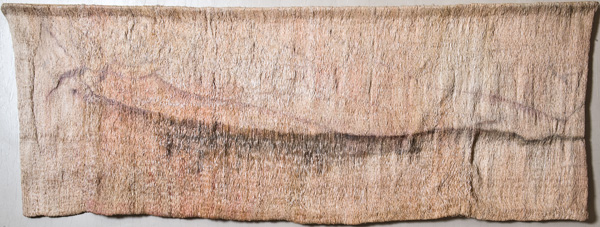
Some people do not turn away from aging, wrinkled skin that 'tells the story' of the individual who must wear it. They find the very human and subtle experience of life written on its surface. Each wrinkle is a journey, a moment in time. I am one of those people.
Previous World of Threads Exhibitions
Rasma Noreikyte exhibited in the 2009 World of Threads Festival exhibition Common Thread International Exhibition Part 1.
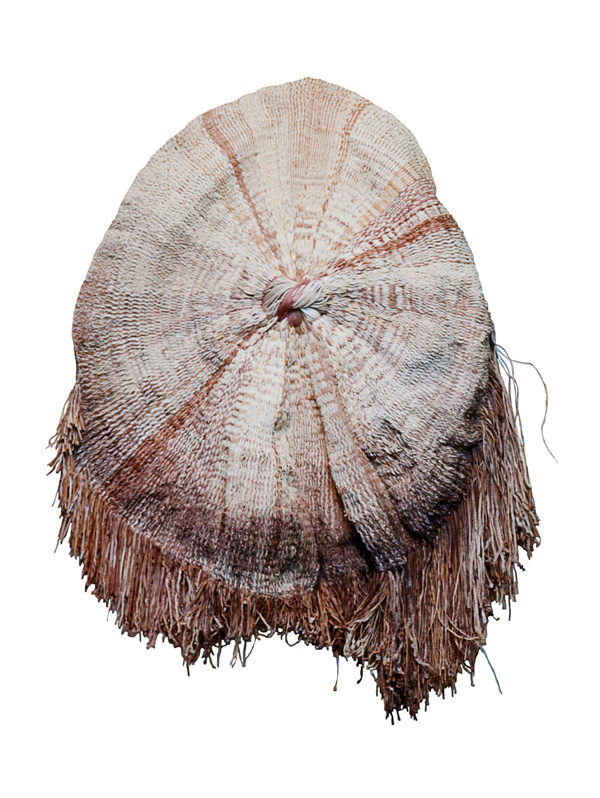
Each wrinkle is a journey, a moment in time.
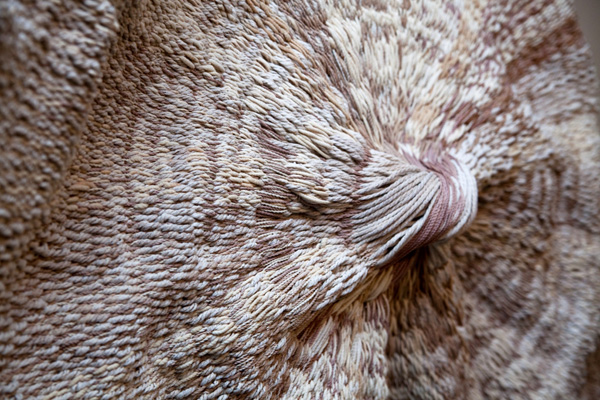
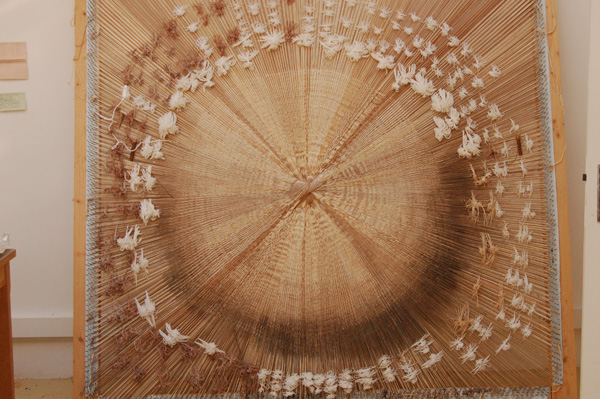
The human body is the consummate creation of God and nature. It has been an inexhaustible theme in art for centuries - I too draw on this powerful theme. As an artist I am captivated by the physical evidence of humanity. I am drawn to human 'hairiness'- hair in all its forms and colour, the texture and 'corrugation' of skin, veins, and the light captured on the surface of skin.
Modern life is changing the way we view our body. Technologies allow us to control and change our body irreversibly. Just as we control and change the places where we live and the way we live our lives. We are wantonly concerned with perfection and in following our human fashion, our bodies become similar, standardized and sanitized.
I seek to bring more ambiguity and difference to how we view our bodies and therefore, how we view the experience of being human. For me, celebrating difference unites us together. Deep human pre-occupations of love, beauty, wealth and recognition are universal. Though skins may be different, and I seek to detail and celebrate this difference, ultimately it is to prove the similarity of the human emotional experience. This is an experience that is deeper than 'fashion', control and manipulation.
Here's some text to highlight. Here's some text to highlight. Here's some text to highlight. Here's some text to highlight. Here's some text to highlight.
Where do you get your inspiration?
My inspirations come from daily life, from people I am with, my family. Sometimes inspiration comes suddenly, for instance, watching my daughter play.
Why did you choose to go into fibre art?
I remember, while I was in high school my teachers emphasized craft lessons. In one of these lessons we were taught how to weave a little tapestry. We had to create a picture for the next weaving lesson. I was putting the colours together, very primitive and naïve, trying to make some pictures, I knew so little. Funny enough I fell in love with tapestry. After finishing my high school, I was still experimenting with threads and colours, making little woven pictures from it. My grandmother, who was looking at me doing it, advised me to try to study textiles. This is how it started…
Which is your favourite fibre medium?
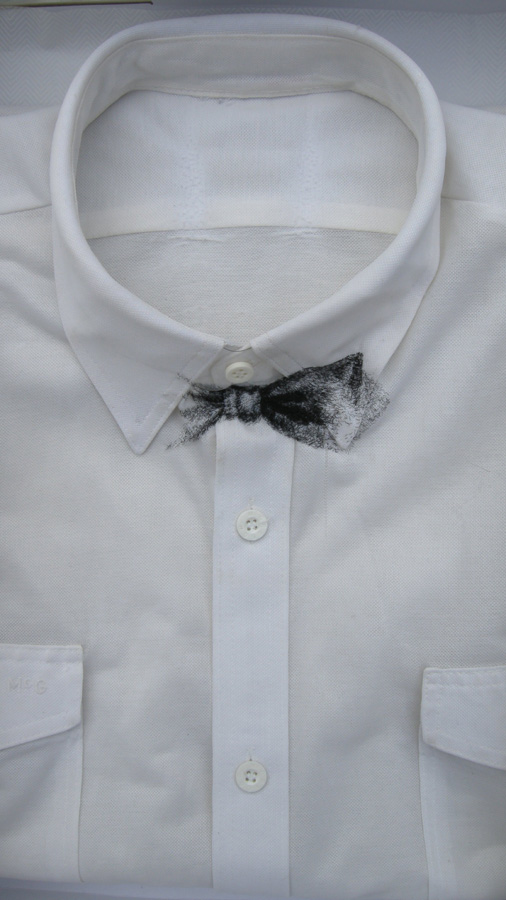
My favorite fibre medium is tapestry and embroidery. I also fancy working with wool
What other mediums do you work in, and how does this inform your fibre work?
I like to use photos while I am creating cartoons for my tapestry.
What specific historic artists have influenced your work?
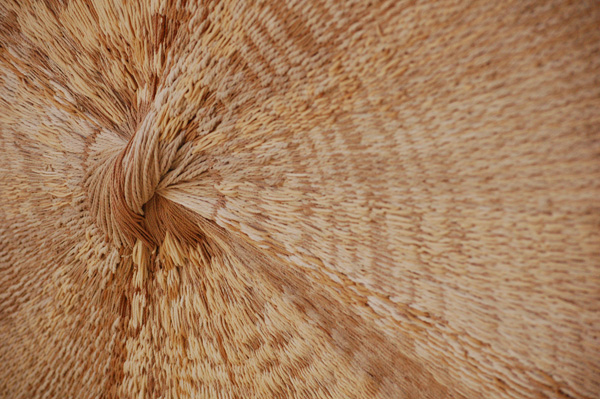
It would be really hard to name a specific set of artists that had a noticeable impact on my work, although I am really fond of Rembrandt van Rijn and his works. I love how he uses his works to channel ideas, which speak about human beings of all cultures and all times. Nevertheless, my favourite tapestries, paintings and drawings are from the 16th and 17th centuries. Talking about tapestries and the things that fascinate me the most, are the number of individual details, size of the works and richness of the colours and surfaces.
What specific contemporary artists have influenced your work?
I believe my way of creating has been shaped by a huge number of artists. I feel linked to people who share the same vision of the world around us as I do; artists who are fond of human nature and all types of skin and are against any artificial alternations that are so widely used nowadays. Gerhard Richter: who uses many techniques of graphics and blurring colours, while portraying human experience. Another artist that I want to mention is Marina Abramovic. The performance art that she uses, differs greatly from others I've mentioned previously. Instead of creating static pieces of art, Marina uses her body as a tool of expression and, for a limited time, her body serves as a piece of art.
There is a special bond between me and people who try to create and express themselves using not only figures. For instance, Yayoi Kusama, who uses only dots to show her point of view of the world. Furthermore, Mark Rothko and his world of colours. This artist is a magician of blending and creating the mildest shades of colours in his works and provoking calmness and peacefulness in one's mind. The contrasts of colours that he creates are not aggressive or sharp, but they interlink with tranquility and generate pastel impression
What role do you think fibre art plays in contemporary art?
To my mind, fibre art possesses the same significance as paintings, sculpture or photography, in contemporary arts today. It holds the same position as any other art – to provide a suitable medium for an artist to express himself or herself fully.
What other fibre artists are you interested in?
I have a huge adoration towards Annika Ekdhal. She is originally from Sweden. I admire the attention to detail in all her works. Additionally, I love Japanese fibre artists. Japanese art and culture intrigues and fascinates me – the essence of their kind of art is traditions. Textile artists, such as Machiko Agano and Naomi Kobayash, pay extreme amounts of attention to forms and materials they use, as well as technique itself. I find it immensely important to find, re-discover and invent new ways to weave, that would develop some kind of relief in tapestries. All in all, Japanese textile is the best example and a challenge. One of my dreams is to travel to that charming country, where culture and traditions are deep, respectful and followed every day.
Tell us about your studio and how you work:
At the moment I do not have a studio. Still dreaming about it! The flat we live in is full of boxes of my goodies, and my daughter adores to play with them.
What was your motivation for submitting your work to the World of Threads Festival?
At that time I was highly interested in exhibiting my works in other continents than Europe. My research exposed the World of Threads Festival as an extremely important event. Therefore, I had big aspiration in submitting my works there.