Artist Interview 14: Pat Burns-Wendland
Shelburne, Ontario, Canada
Pat Burns-Wendland has been a handweaver and dyer for over forty years. She received the designation of Master Spinner form the Ontario Handweavers and Spinners in 1983. She graduate with High Honours for Seneca College in the Dressmaking/Fashion design program in 2000. Pat has exhibited extensively in Canada and the United States.
Tell us about your work?
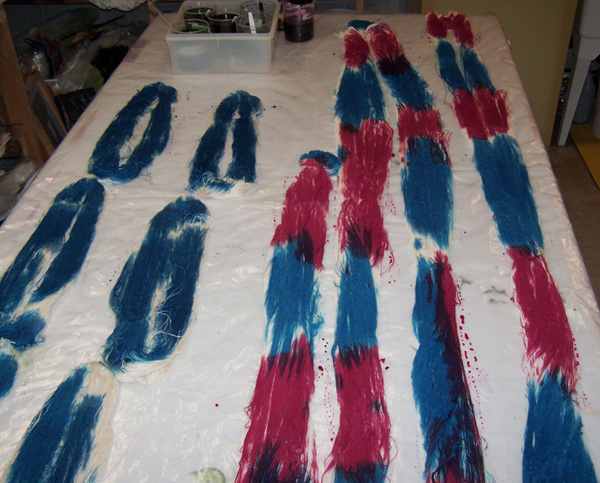
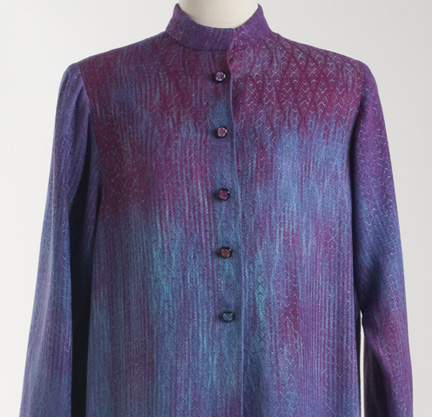
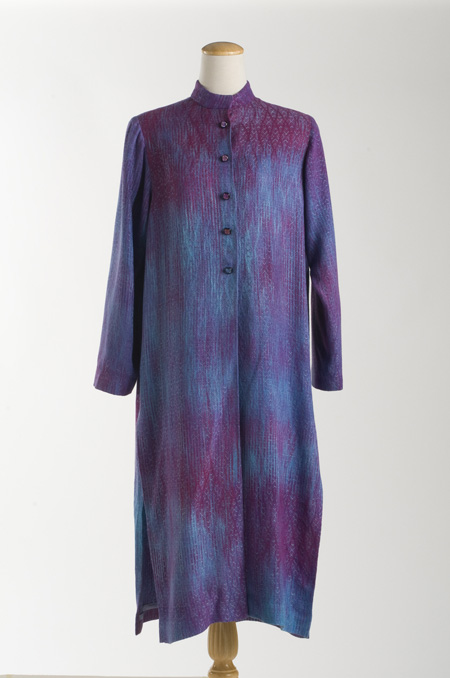
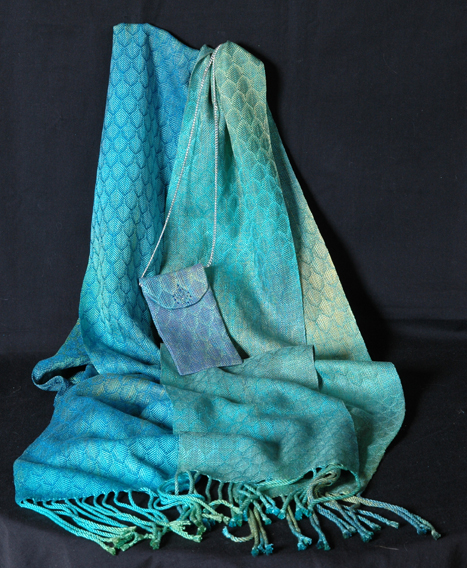
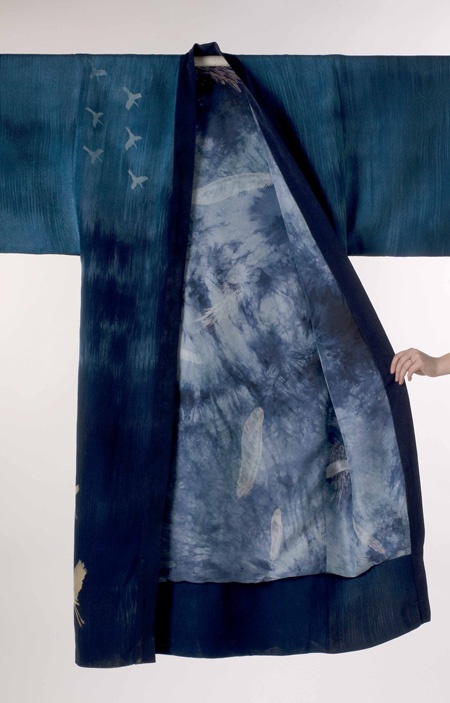
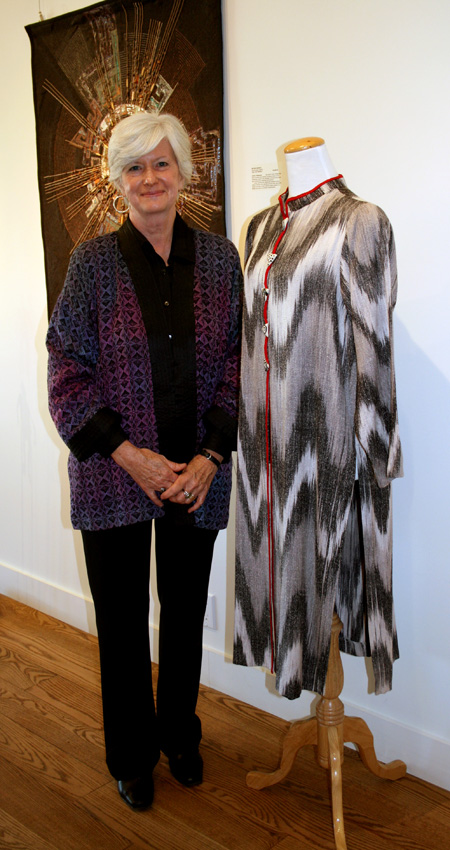
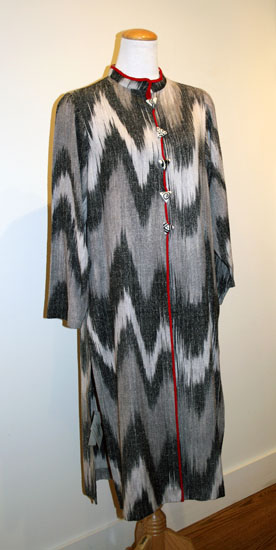
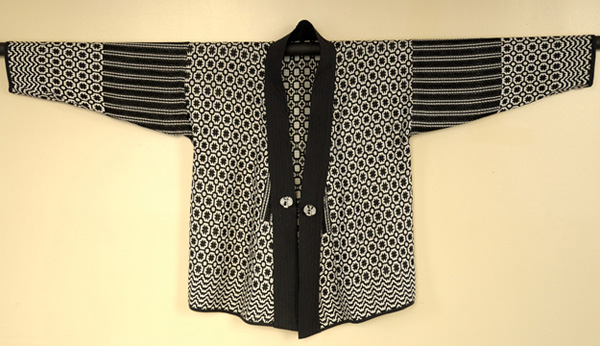
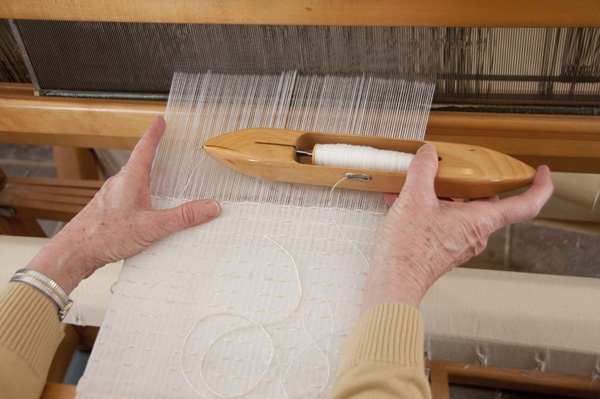
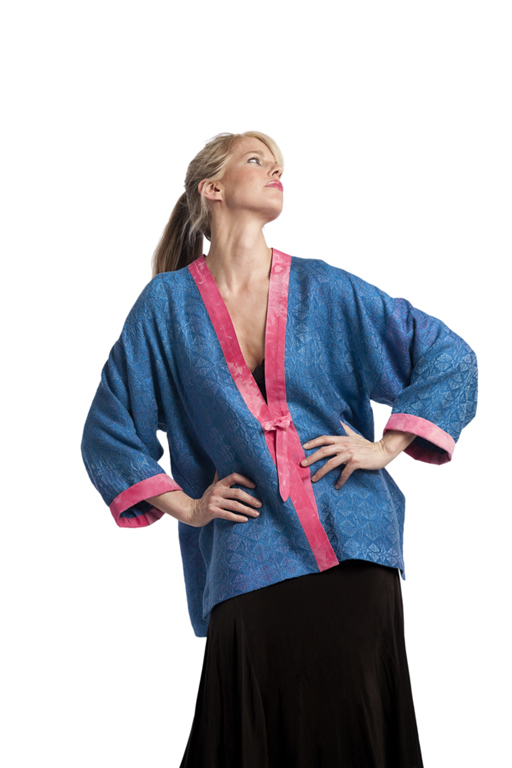
My work is all about the cloth. I hand dye and weave all my fabrics to produce my garments and accessories. Natural fibres such as silk, wool, cotton, tencel and now bamboo are the basis for my work. Procion MX and Weak Acid dyes are used to paint the warps before they go on the loom. A limited run of between eight and ten yards of fabric ensures that each garment is unique. Recently, surface design has been added to my repertoire, to enhance the cloth. I do all the dyeing, weaving and sewing myself in my home studio.
Previous World of Threads Exhibitions
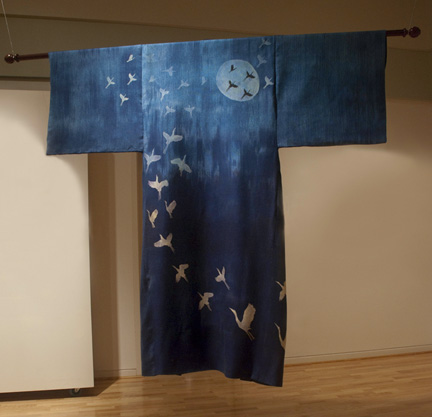
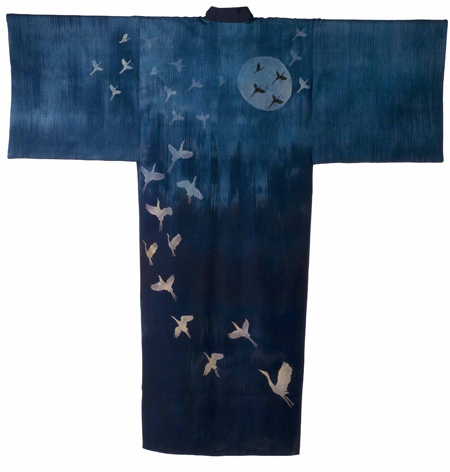
Pat Burns-Wendland has been in three Festivals. In Festival 2009 she was in two exhibitions, Common Thread International Exhibition Part 1 and Part 2. At Festival 2016 Pat was in the Kimono Road Exhibition. For Festival 2018 she was in Cat Walk II.
I'm intrigued by the art of the cave dwellers and the aboriginal art of Australia as well as Canada and the United States.
Where do you get your inspiration?
Inspiration for me can be something as simple as a beautiful glass button, a piece of fur used in trimming, but mostly from other artists I have worked with. I have had the opportunity to be a part of a fibre collective for the past number of years and we tend to inspire each other or to collaborate to create something totally different.
Why did you choose to go into fibre art?
My introduction to fibre began with spinning. My Mother had started to spin and it fascinated me how you could take the raw fibre and create beautiful yarn. The spinning was very relaxing, almost meditative and at that time, my fulltime employment was very stressful and this was my release.
Which is your favourite fibre medium?
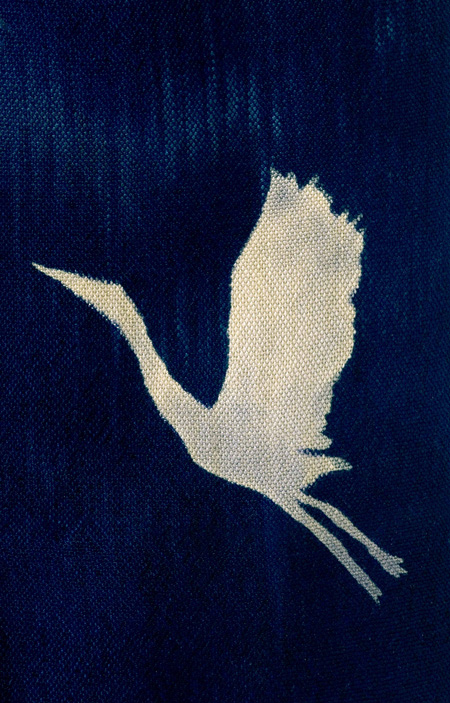
Of course weaving is my favourite but I have developed a love for the art of printing on fabric as well. Most of the time I will use manufactured silk or cotton fabric for printing on but there are times when I will weave absolutely plain cloth of silk, tencel or cotton and print, stamp, stencil and foil the surface of the cloth.
What other mediums do you work in, and how does this inform your fibre work?
I work a lot with dyes and textile paints. At the moment I am experimenting with devore, stitching and burning. All of these mediums help to create unique looks.
What specific historic artists have influenced your work?
With the exception of their use of colour, I can't say that any specific historical artist has influenced me. I am however intrigued by the art of the cave dwellers and the aboriginal art of Australia as well as Canada and the United States.
What specific contemporary artists have influenced your work?
There again, colour, I use the artwork of Klimt, Georgia O'Keefe, William Morris for colour inspiration.
Fibre has been a part of our lives since man first covered his body with fur.
What role do you think fibre art plays in contemporary art?
Fibre has been a part of our lives since man first covered his body with fur but in the art world, fibre does not get the recognition it deserves. This is something I have been trying to promote in the area where I live. For many years, fibre artists were not allowed to enter the juried art shows because "craft" was not considered art. It is all about educating the public.
What other fibre artists are you interested in?
Candice Cole from the United States. I admire her sense of design and use of colour and weave structure in her garments. Jane Dunnewold, San Antonio, Texas. Jane is a master of surface design and I have been fortunate enough to take several courses with her to learn the art of manipulating the surface of the cloth with dyes, paints, foils and discharge paste to create something unique and hopefully beautiful. Lucille Crighton, Toronto, her colours and complex weave structures are awe-inspiring.
Can you tell us about your studio?
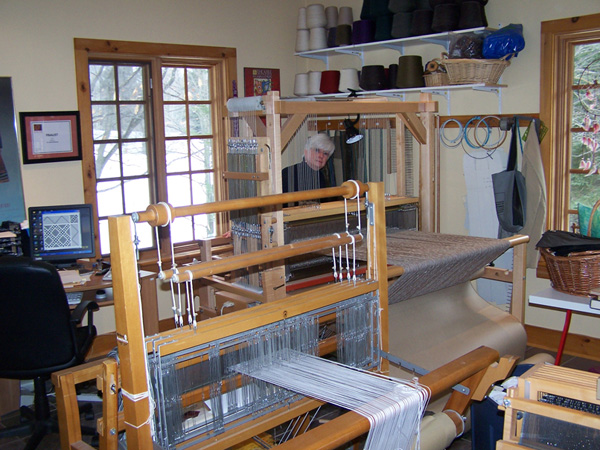
I actually have 3 working studios in my home. On the main floor is my weaving studio, housing my four looms and all of my yarns, along with my two parrots that keep me company during my weaving process. I have moved my sewing to our loft, which has my sewing machines, serger, industrial iron and judies for fitting garments. My third studio is in the basement and this is my dyeing studio. Here I have a designated washing machine and laundry tubs for the finsing and finishing of my yarns and fabrics. I have a large table for dyeing my warps, as well as doing my surface design work. From both my weaving and dyeing studio, I have access to the outside. In the summer, I can wheel my small loom out onto the deck and watch the wildlife.
What was your motivation for submitting your work to the World of Threads Festival?
I had heard about this festival for quite a few years and finally decided that if I was to gain recognition for my work I had to begin entering International shows.
Is there anything else you'd like us to know?
This year I have been involved with an Exhibition called Stitches across Time. Artifacts from the Dufferin County Museum and Archives were selected and the artists were to interpret one or all of these chosen pieces to be their inspiration for contemporary work. This has been such a learning experience for me not only as an artist, but as an organizer. We hope to bring awareness, much as the World of Threads has done, to our part of Ontario about the importance of textiles as an art form.