Artist Interview 12: Robert Davidovitz
Toronto, Ontario, Canada
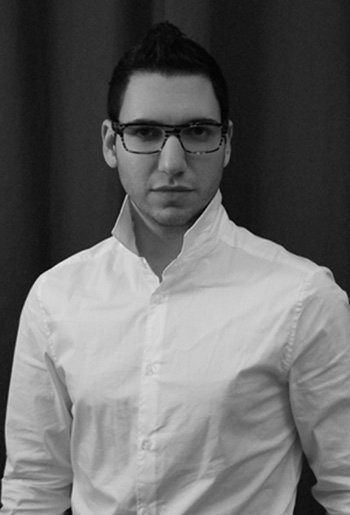
Robert Davidovitz is an Israeli born, Toronto based artist. He received his B.A. in Visual Arts from York University in 2007, and since then has been exhibiting his work on a local and national level.
Tell us about your work?
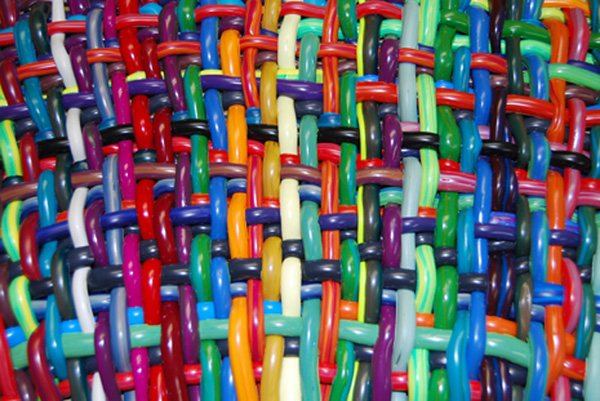
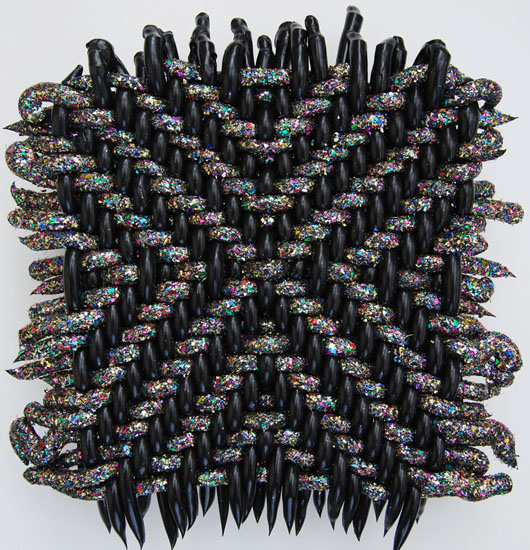
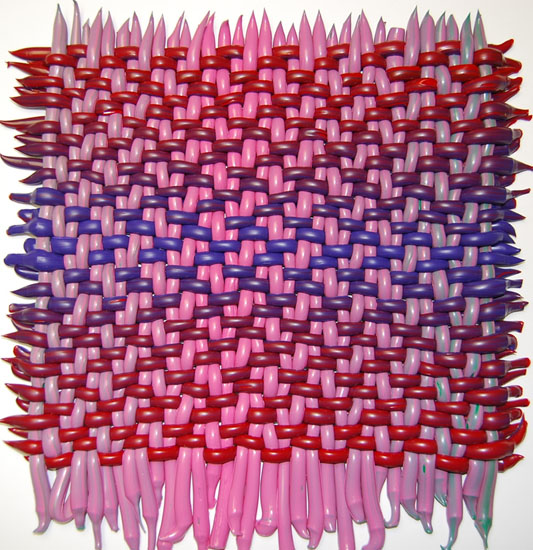
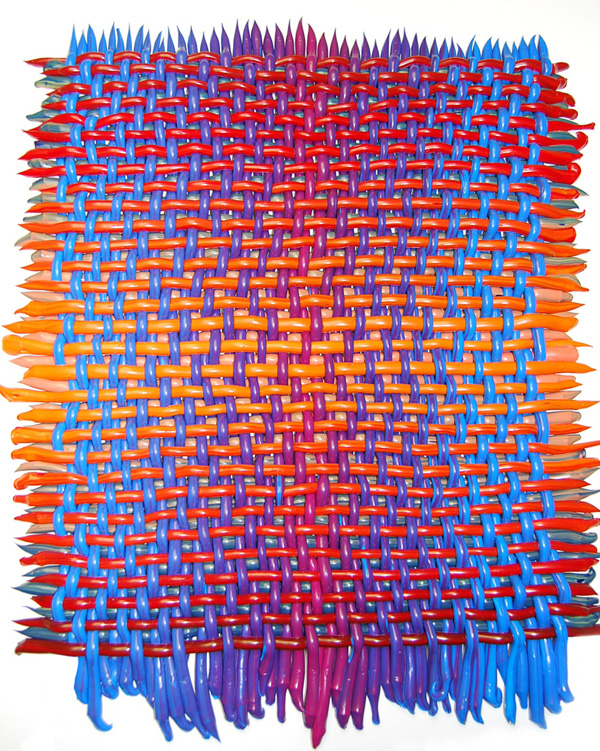
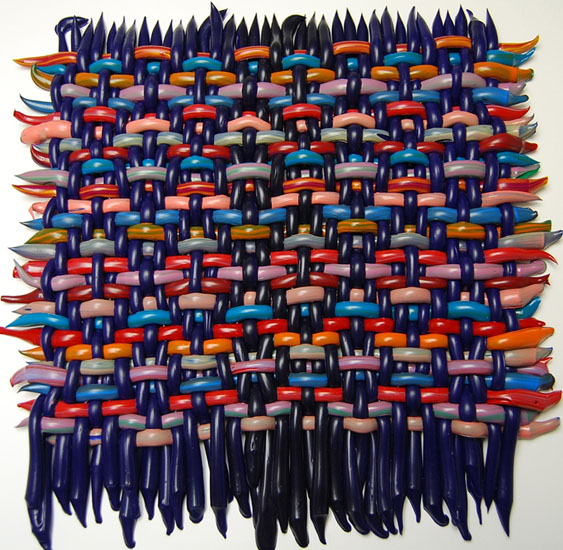
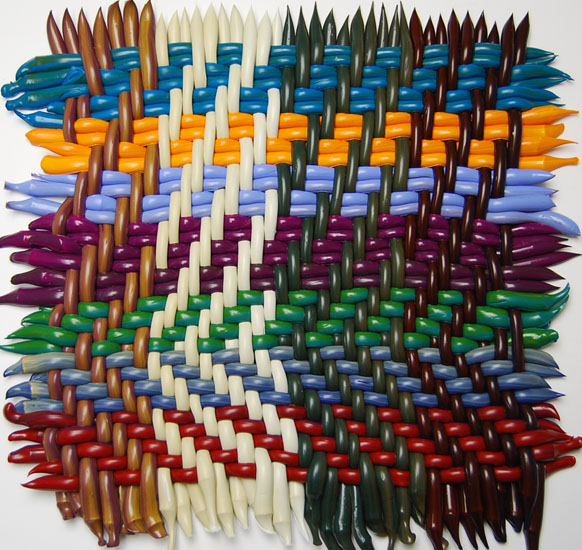
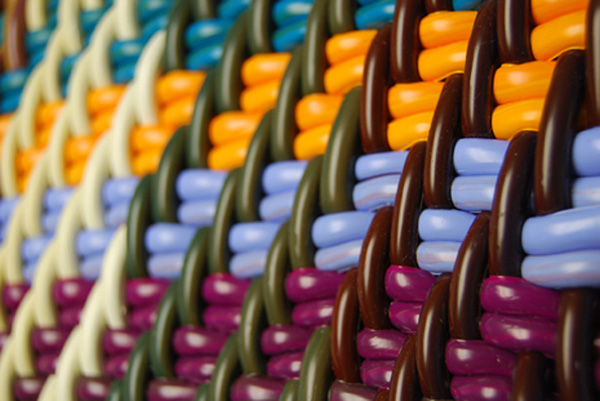
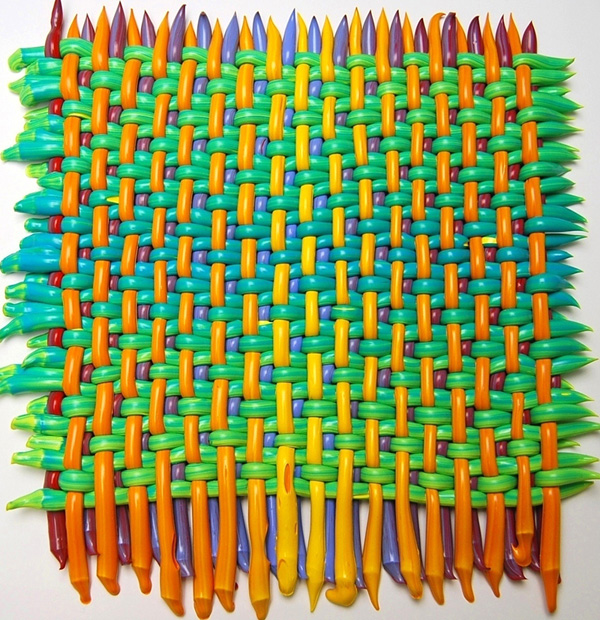
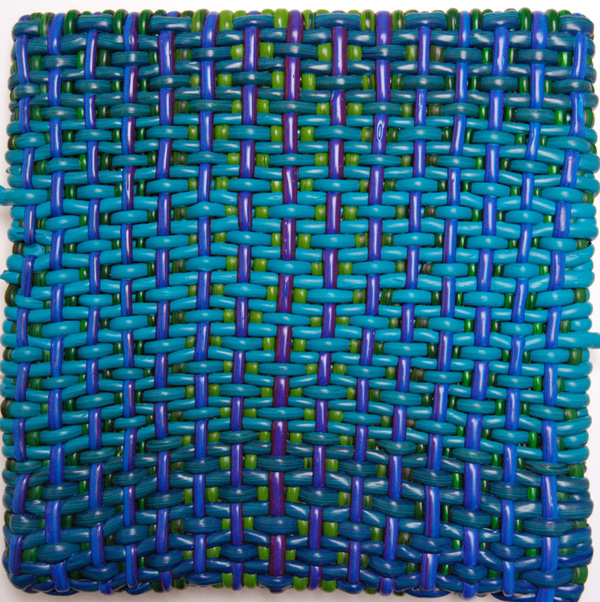
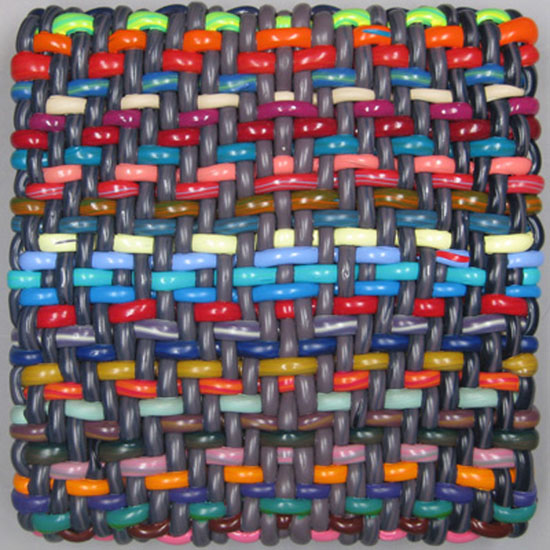
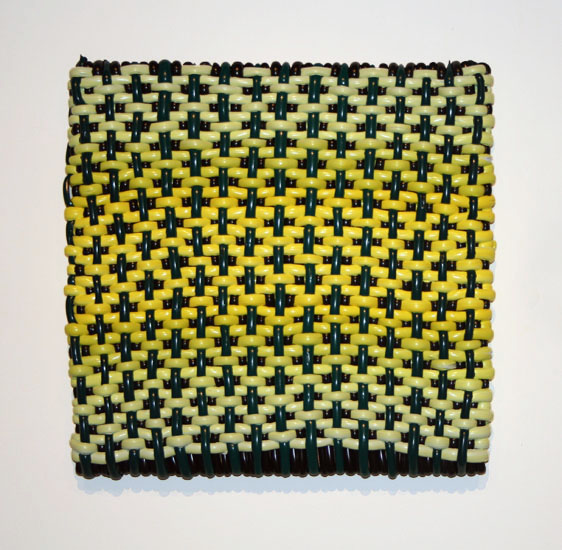
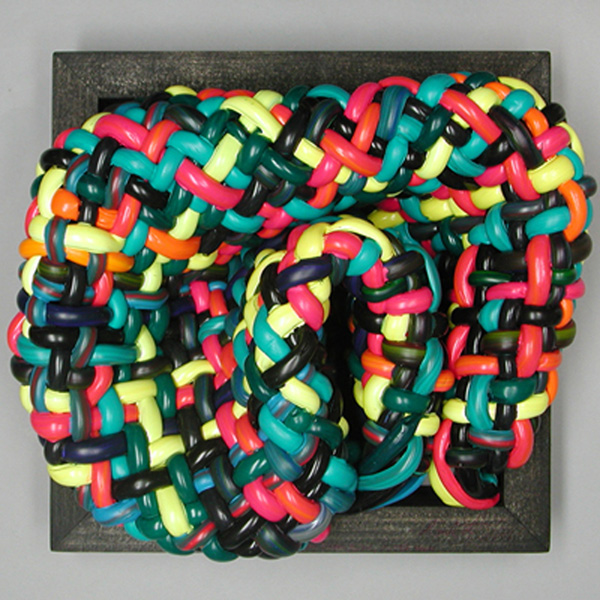
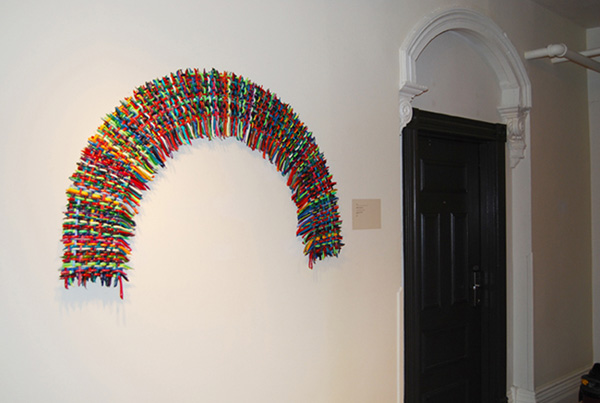
My work is a combination of two media: paint and textile. I use the traditional technique of hand-weaving to create paintings. Each piece begins with a process of extruding strands of acrylic paint, that once dry, are woven like thread. Contrasting in colour, pattern, and texture, these tactile objects explore a craft process that allows for endless compositional possibilities.
Previous World of Threads Exhibitions
Robert Davidovitz has been in four Festivals. In Festival 2009, Common Thread International Exhibition Part 3. At Festival 2012 he showed in the major exhibition Memento mori. For Festival 2014, he was in the major exhibition The Red and the Black. In Festival 2016 his work was included in the major exhibition Cosmic Geometry.
"What if I tried this with paint instead of icing, a canvas instead of a cake?"
Where do you get your inspiration?
Certainly, I get inspired by other art I see and experience on a daily basis. I've always been attracted to works of art that create a magical aesthetic experience. However, I am equally, if not more, inspired by art that subverts rules and conventions. My goal with my own work is to challenge the perception of the media I use while at the same time creating an emotional response.
Why did you choose to make paintings inspired by fibre techniques?
I've always been a painter, but actually came upon the idea of weaving paint completely by accident in my late teens. At the time I was working in a bakery and while decorating a cake with a pastry bag I thought to myself, "what if I tried this with paint instead of icing, a canvas instead of a cake?" Since then I have continuously experimented with this concept of extruding paint, eventually leading to the weaving of paint strands.
My studio works much like a bakery.
Which is your favourite medium?
Since I began weaving paint, I am constantly finding new and exciting variations/definitions of what fibre is, and what could be done with it. My appreciation of fibre began when I was a child. I remember my grandmother sitting on her floral upholstered chair under a big sun-drenched window, teaching me how to needlepoint. I smile every time I come across it. Lately, I have been interested in fibre art that is digitally manipulated. I also gravitate to fibre mediums that use an interdisciplinary approach or an unconventional presentation.
The first medium I ever explored was stain glass, passed down to me from my dad who taught me the basics as a child.
What other mediums do you work in, and how does this inform your fibre work?
I have been making these works concurrently with other projects for the past seven years. I like working in a variety of mediums and it is refreshing for me to embrace projects from a multidisciplinary approach.
The first medium I ever explored was stain glass, passed down to me from my dad who taught me the basics as a child. What this medium taught me more than anything is to be a disciplined artist, as it demands a strong hand-eye coordination and acute attention to design principles.
In high school I explored many different approaches to art, including painting, sculpture and particularly photography. I went on to focus on photographic exploration while attaining my undergraduate degree at York University. Compositionally, I approached photography through the eyes of a painter, and in fact my subjects were often derived from paintings of classical Greek mythology. My first such works were very figurative in nature, focusing mainly on the human body. Soon the stories of each photo became more elaborate and abstract. Ultimately I realized that my photography was a way of fulfilling my desire to be a painter.
What specific historic artists have influenced your work?
Leonardo da Vinci has always been my number one inspiration. I came across his final works, the Deluge drawings, a few years ago and recently saw them exhibited at the British Museum in London. These were especially inspiring to me because they bring together Leonardo's multidisciplinary approach and understanding of nature. Another one of his works that has been influential is "Leda and the Swan", which at the time inspired one of my photographs. The detail on Leda's braided hair is breathtaking. I've always been inspired by how this master's work manages to be both conceptually and aesthetically innovative.
To be honest, there are so many artists that have inspired me, it is difficult to single out others. I will say, however, that Picasso and Pollock both opened my eyes to abstraction. In each of these artists I have found inspiration from a conceptual standpoint. Picasso's emphasis on space and Pollock's boldness, are qualities I strive for in my art.
What specific contemporary artists have influenced your work?
Lynda Benglis is an American artist that I find very interesting. In particular, I love her poured latex and polyurethane sculptures.
Anish Kapoor is a British sculptor whose work I admire for its material authenticity and simplicity.
Canadian multi-disciplinary artist Joyce Weiland is another influence, thanks to her multi-faceted experimentation.
What other fibre artists are you interested in?
Diane Itter was an American fiber artist who influenced me with her laboriously knotted works. I enjoy her playful approach to pattern and colour exploration.
I recently visited Kai Chan's retrospective at the Textile Museum of Canada, which blew me away. His minimalist work has an ephemeral quality I admire, and left a memorable and lasting impression on me.
What role do you think fibre art plays in contemporary art?
I believe that fibre art emphasizes the human element in art, which in the digital age is sometimes forgotten. For this reason I believe it is increasingly more relevant.
Tell us about your studio and how you work:
My studio works much like a bakery. I mix paint with spatulas in large bowls and use pastry bags to squeeze strands of paint which are then stored on baking trays. Once they are dry they are woven into paint swatches. It's a time consuming process, which I enjoy very much. The main challenge is limiting my artistic output due to resources such as time and space.
What was your motivation for submitting your work to the World of Threads Festival?
My studio works much like a bakery. I mix paint with spatulas in large bowls and use pastry bags to squeeze strands of paint which are then stored on baking trays. Once they are dry they are woven into paint swatches. It's a time consuming process, which I enjoy very much. The main challenge is limiting my artistic output due to resources such as time and space.