Artist Interview 7: Dagmar Kovar
London, Ontario, Canada
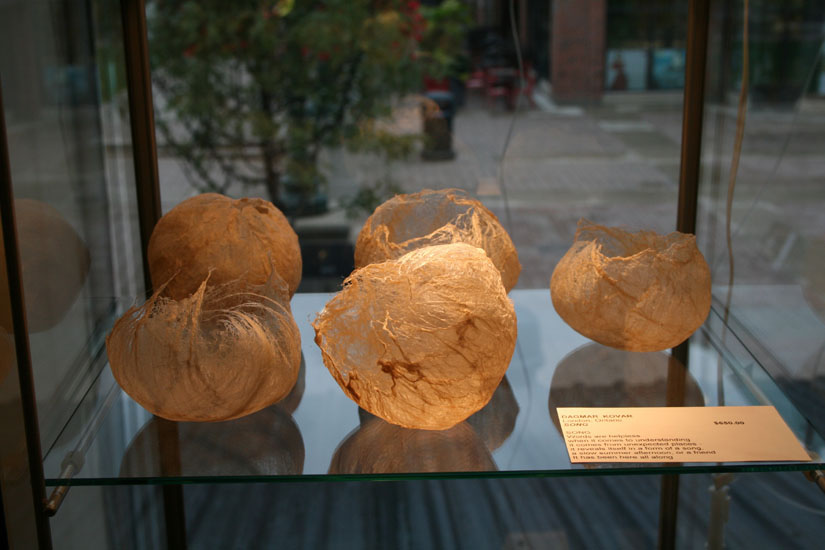
Dagmar Kovar was born and raised in Bohemia. There, in Prague, she studied chemistry, her original profession. When she moved to Canada, she changed focus and started an art practice. She now lives and maintains a studio in London, Ontario
Tell us about your work?
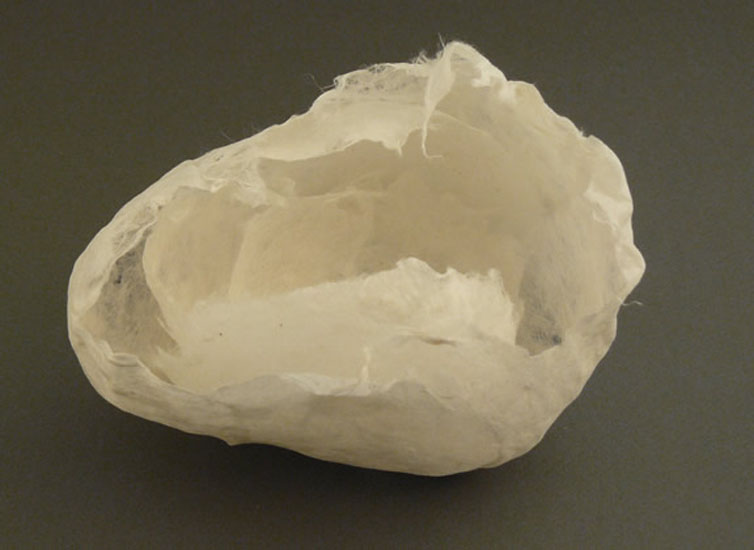
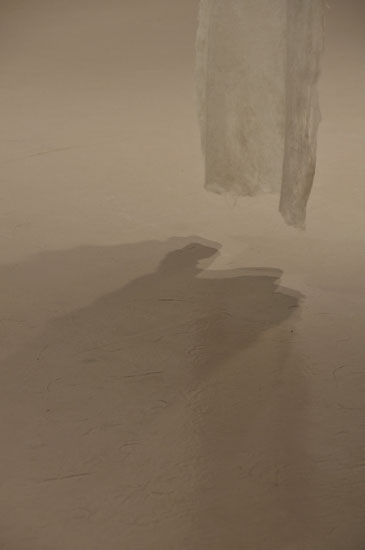
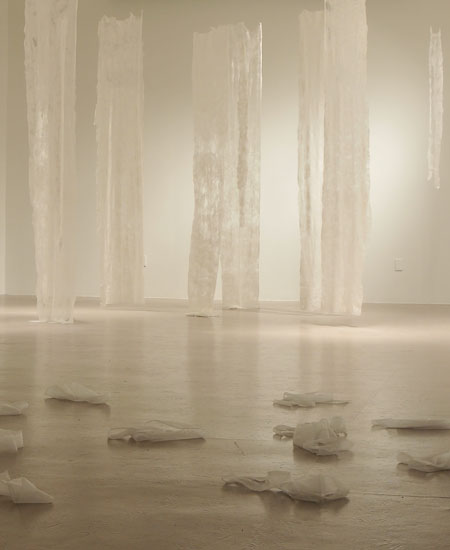
In the essence, my works explore how we connect with life. Time from time, in a whirl of our busy lives, we get disconnected from our selves and we forget who we really are, what we want and why, we forget how to listen to our intuitive voices. What we need is to quiet down to be able to listen to our selves and the world. I create contemplative works with which I hope to open a door to an inner dialogue in the viewer.
Previous World of Threads Exhibitions
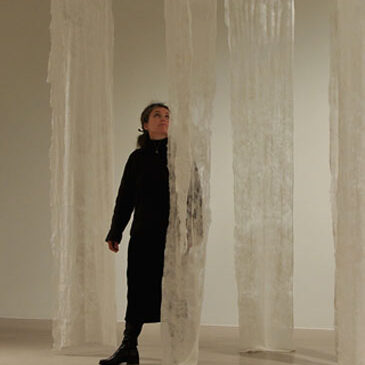
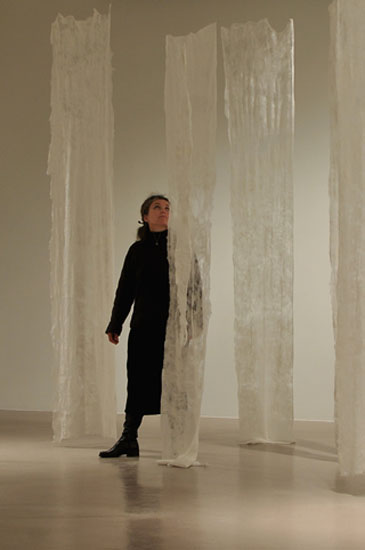
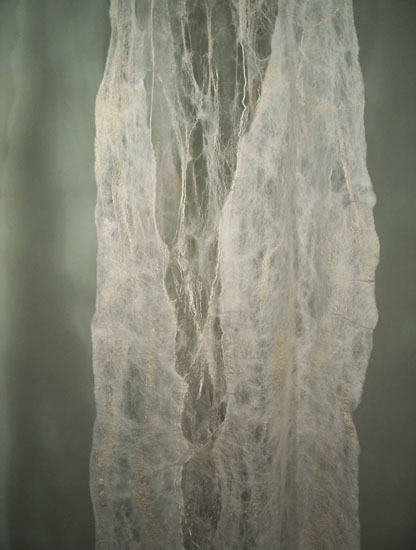
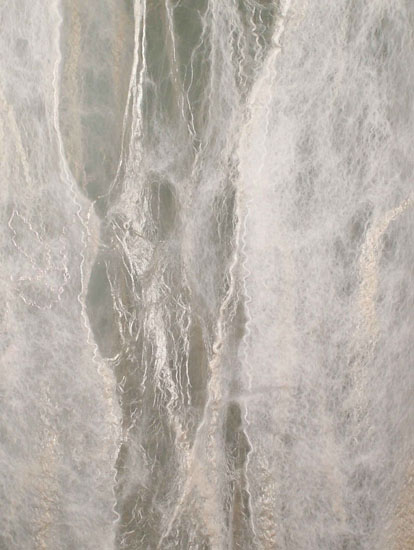
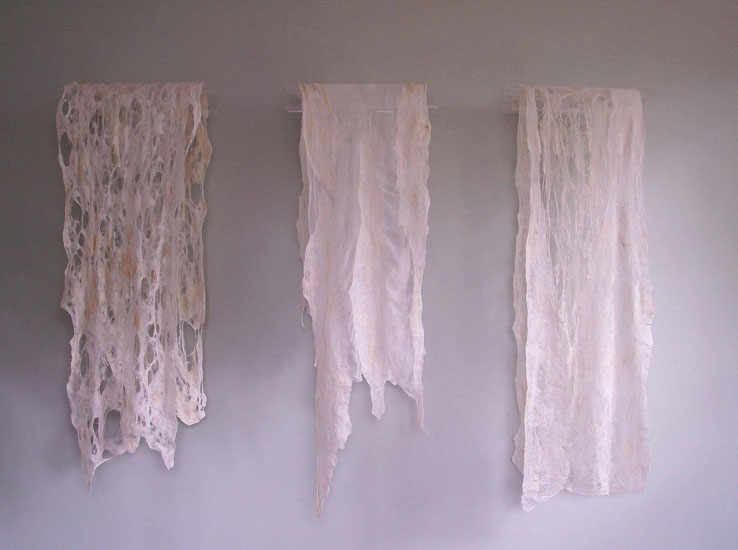
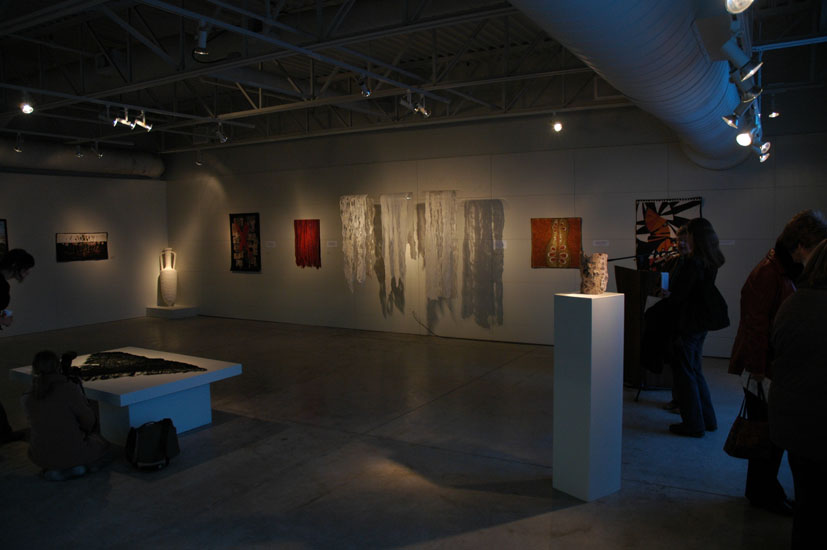
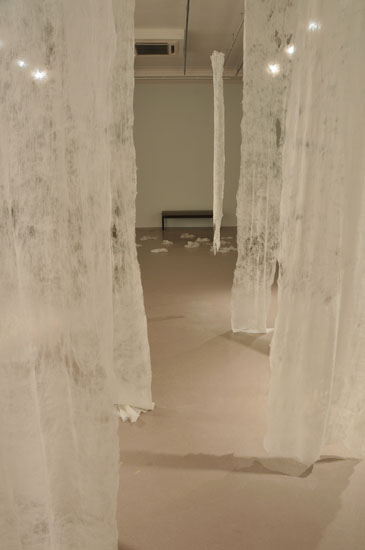
Dagmar Kovar has been in seven Festivals. She was the winner of Best Contemporary for Evolution of Silence in the Festival 2007 Common Thread exhibition. Dagmar has also exhibited in Festivals 2002 and 2005. For Festival 2009 she was in the Common Thread International Exhibition Part 2. Festival 2012 saw Dagmar at the THREADSpace, Threading the 3rd Dimension exhibition. In Festival 2014 she was in the major exhibition The Red and the Black. Festival 2016 saw her in the Quiet Zone 2 exhibition.
Where do you get your inspiration?
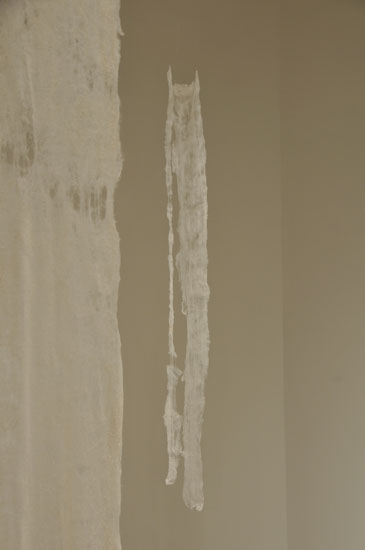
It is fibres, which are often an initial reason for my work. I find them and the process of working with them a significant source of my inspiration. When working with them, I like the physicality of the process, the fact we can influence and inspire each other. I intentionally keep the process in a state of spontaneous interaction.
In addition to fibers themselves, my inspiration comes from observation of people, from dance, poetry, and nature.
Why did you choose to go into fibre art?
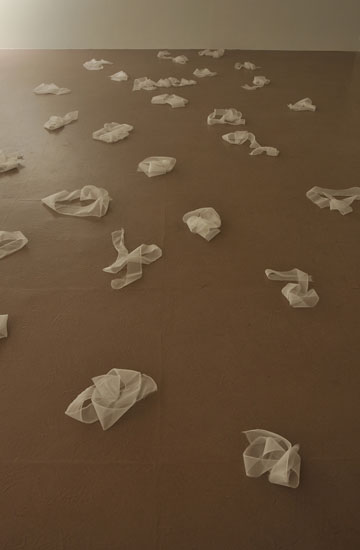
It was rather a process than a conscious act of reason. I started my career in chemistry, where I achieved a Master's degree and worked in research labs for number of years. Then, gradually, I was drawn to work with fibres through many small life events. Eventually, I found myself fully immersed in work with them. It is probably an enormous expressive strength of fibres, together with their historical connection with humanity, which inspires so much of my work. The fact, that my mother sewed all the time and I grew up around a sewing machine with piles of fabrics around, must have left some mark as well.
Which is your favourite fibre medium?
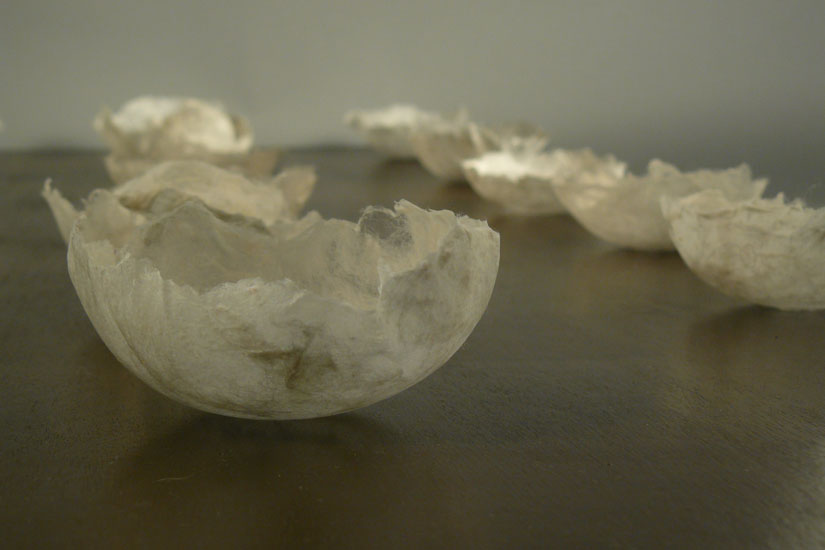
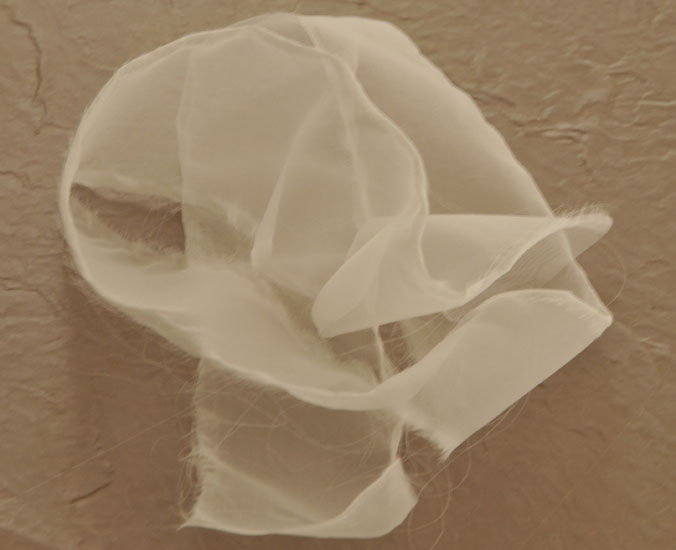
I love to work with natural materials. Wool and silk are my favorite. I love their touch, warmth and softness, the way they move, their seeming vulnerability, yet strength, comfort, and again, their connection to history. Often they themselves are a source of inspiration for my works.
Do you work in any other mediums, and how does this inform your fibre work?
I draw. Drawing keeps my mind and eye fresh. It helps me to see and to respond spontaneously. In work with fibers, each step is long – it is easy to get lost in technique and loose spontaneity. Drawing helps me to maintain intuition in the process.
Sometimes I work with clay. I use it for making models for my gestural works. I like its speed and use it for "thinking "through my hands.
I feel connected to "unknown craftsmen" of the past. All those craftsmen who honoured their medium and could listen to its needs.
What specific historic artists have influenced your work?
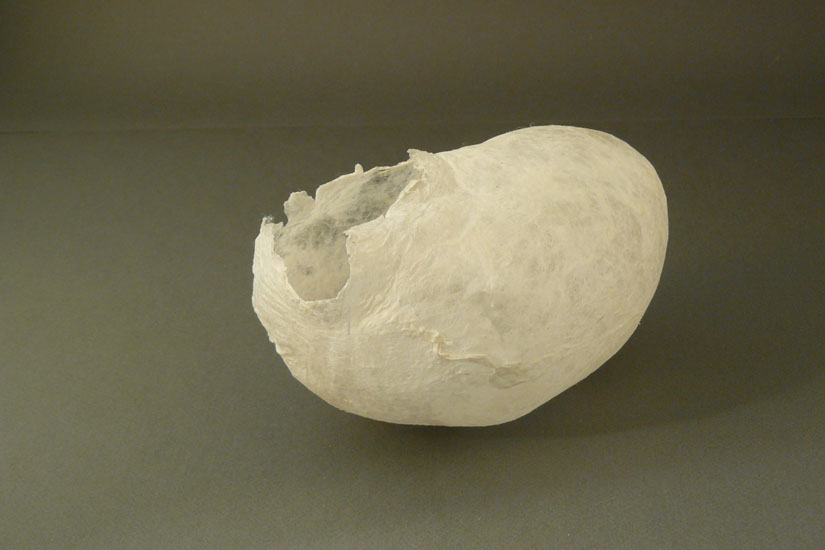
I feel connected to "unknown craftsmen" of the past. All those craftsmen who honoured their medium and could listen to its needs. They created treasures from which we can learn so much today. It is hard to identify their names, so the term 'unknown craftsmen' was fashioned. I like this term. It shows quiet power of work of past craftsmen who laid the ground for our today's work.
It is the energy captured in the work (of art, craft, or nature) which speaks to me. I look for balance between material, process and the idea, for sensitivity to the nature of material and the processes involved. Works of many folk artists follow this line. Their work is uncomplicated, functional, yet extremely sensitive to the material and esthetics.
The 'unknown' potters, basket makers, paper makers, and weavers from around the world continue to influence my work. I am especially connected to and inspired by the works of Japanese and Korean craftsmen.
What specific contemporary artists have influenced your work?
There are many artists, whose work and life influenced my work - Agnes Martin with her sensitive intuitive drawings and writings; Lenore Tawney with her revolutionary three dimensional weavings; Eva Hesse with her strong yet sensitive fiber works; Magdalena Abacanowicz with powerfully expressive fiber sculptures; Pablo Picasso with his playful approach to work with ceramics; Rumi with his poetry and philosophy; Steven Heinemann. with his absolutely sincere approach to his medium and technique, and many, many more.
What other fibre artists are you interested in?
Again, there are many exceptional contemporary fibre artists I admire – Shihoko Fukumoto, Japan, who focuses on creating vibrating contemplative works with indigo; Naomi Kobayashi, Japanese, who works with paper and string, to make daring weavings and contemplative installations; Kyoung Ae Cho, USA, who inspires me with her "conversations with nature", to name just a few.
Tell us about your studio and how you work:
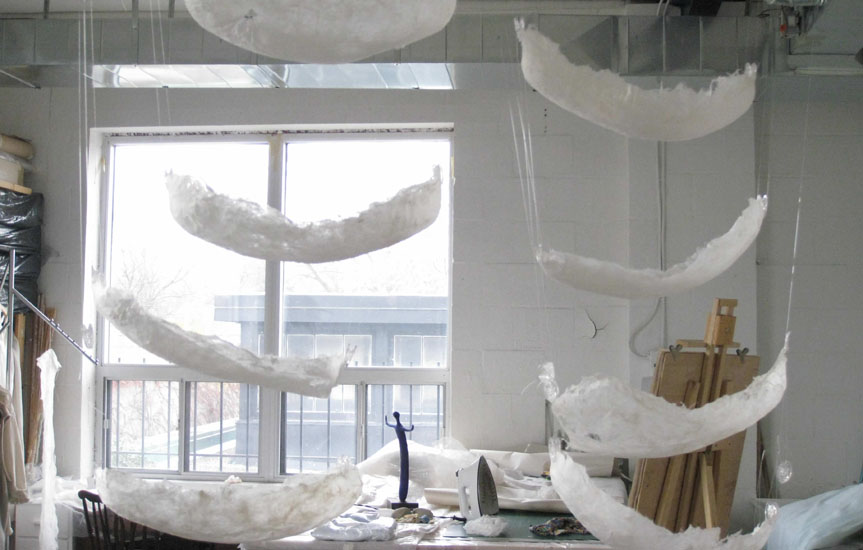
I keep a studio separate from my home. This is important for me in order to keep focus on my work. The space itself is inspirational. There is a nice view from two large windows and 13 feet high ceiling. At ideal times, I work there five days a week, five to eight hours a day. Other times, I strive to work there as much as life allows – sometimes just two hours a day. On days I cannot spend time in the studio, I study works of other artists, draw or work on time consuming Shibori pieces.
What was your motivation for submitting your work to the World of Threads Festival?
It was an opportunity to get involved in the internationally recognized fiber art event juried by jurors of high reputation. I was guaranteed to be in good company. Over the years the Festival grew into a real celebration of fibres, fibre artists and techniques – what an honour to be a part of it.