Artist Interview 9: Emma Nishimura
Toronto, Ontario, Canada
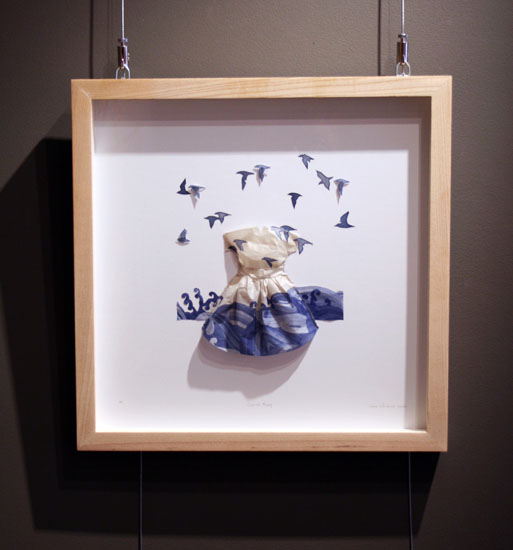
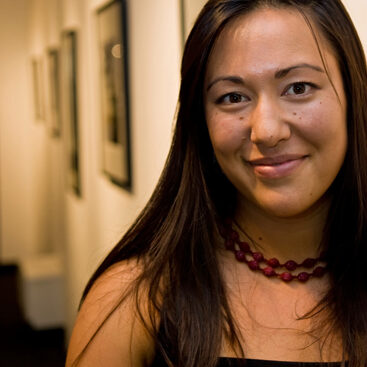
Emma Nishimura grew up in Toronto. She studied in Nebraska. Her work uses traditional etching processes, sewing and Japanese paper to create both two and three-dimensional pieces that address ideas of memory and loss, assimilation and integration.
Tell us about your work?
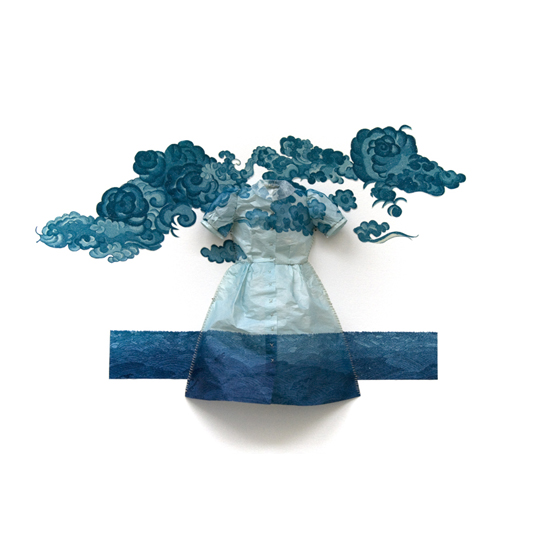
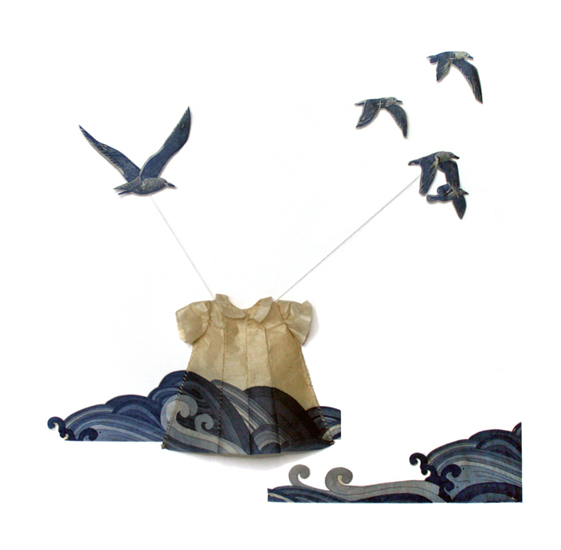
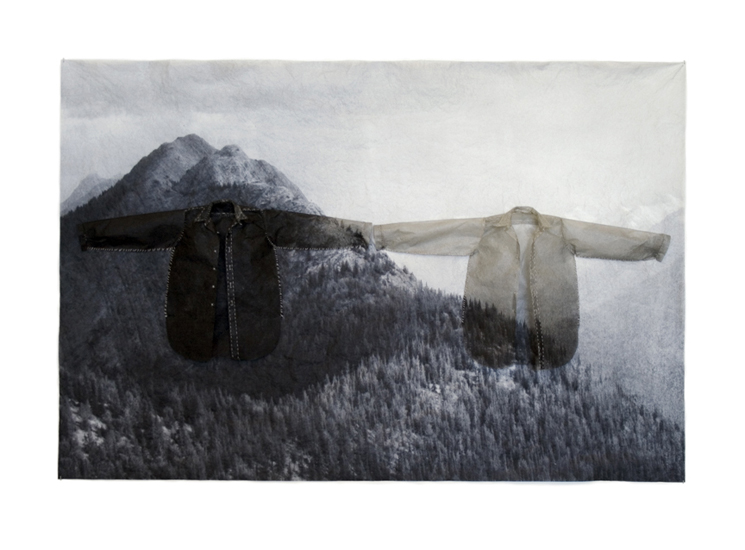
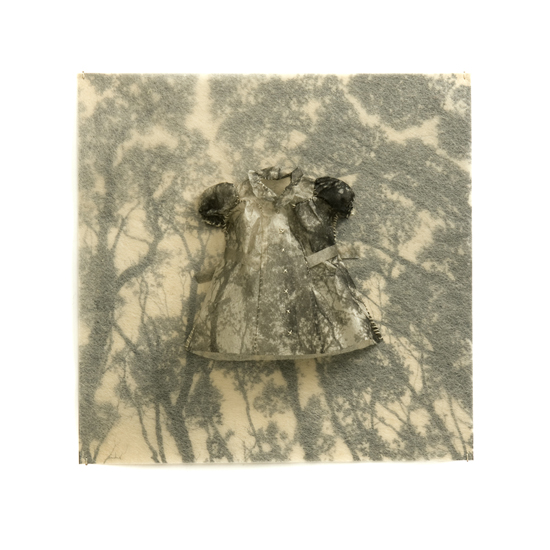
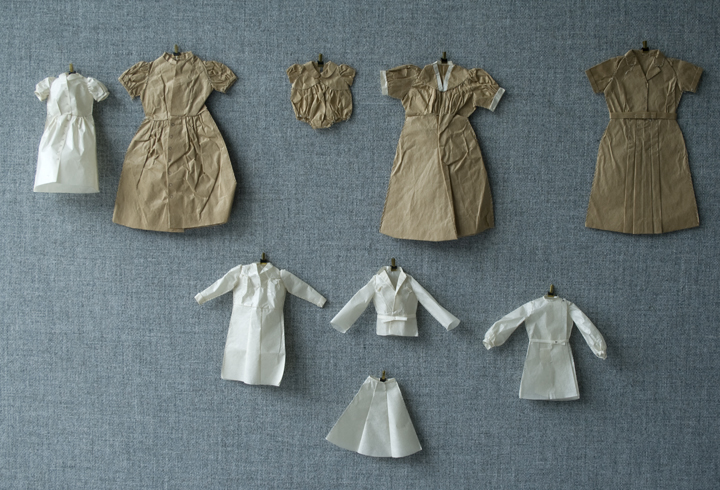
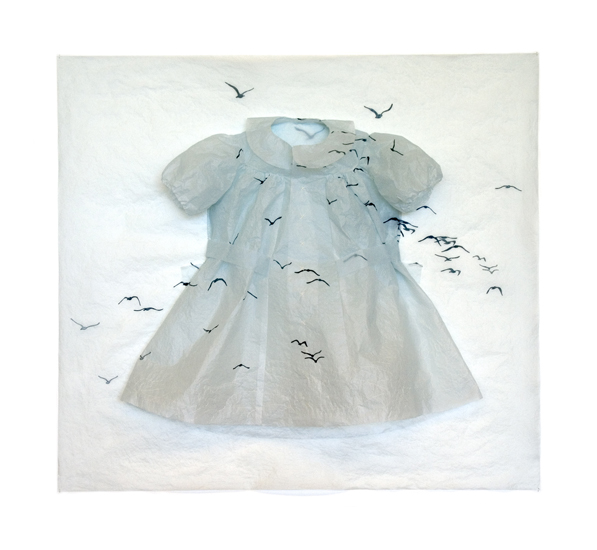
My most recent work stems from my grandmother's story, her journey, which in turn has become a part of my own. Four years after my grandmother's death I found a box labeled 'Baachan's sewing patterns' in the basement of my Mother's home. Inside lay over two hundred miniature paper articles of clothing; dresses, jackets, children's jumpers and shirts, all of which my grandmother made as mock ups before beginning the actual clothing. The box also contained five books of detailed clothing patterns that she began working on during the summer of 1941 in a drafting class. Within the pages of these patterns are other pieces of paper full of Japanese names and measurements. The date on these pages is 1943, and all of the people mentioned would have been living with my grandmother in Slocan, the camp where my Grandmother, along with hundreds of other Japanese Canadians, were interned during the Second World War. My grandmother was interned in Slocan from the spring of 1942 until 1945.
Slocan in the interior of British Columbia in the Kootenay region, was one of thirteen internment camps in BC. There were six other camps located outside of British Columbia, throughout Canada.
I grew up listening to the stories of my grandparents, of their struggles throughout the war and after. I witnessed them wrestle with their past, trying to move forward, but always held back by their history. Thus, working in combination with my grandmother's sewing patterns and my etchings, I have begun a series of print-based works that explore my family's stories and the experiences of other Japanese Canadians. I have focused on the ideas of assimilation and cultural integration and how different individuals found their own sense of belonging within the circumstances dealt to them.
Previous World of Threads Exhibitions
Emma Nishimura exhibited in the Festival 2009, Common Thread International Part 1 and Part 2 where she won an Honourable Mention for "Seeking Solace". At Festival 2014, Emma was in the major exhibition The Red and the Black and she also had a Solo Show.
Where do you get your inspiration?
I gather inspiration from a variety of sources including family stories and my own experiences and travels. In addition to those inherently personal sources, I am constantly drawing inspiration from books, poetry, Japanese patterning, sewing patterns and many other artists.
My grandmother was interned in Slocan, an internment camp for Japanese Canadians in the interior of British Columbia, from the spring of 1942 until 1945.
Why did you choose to go into fibre art?
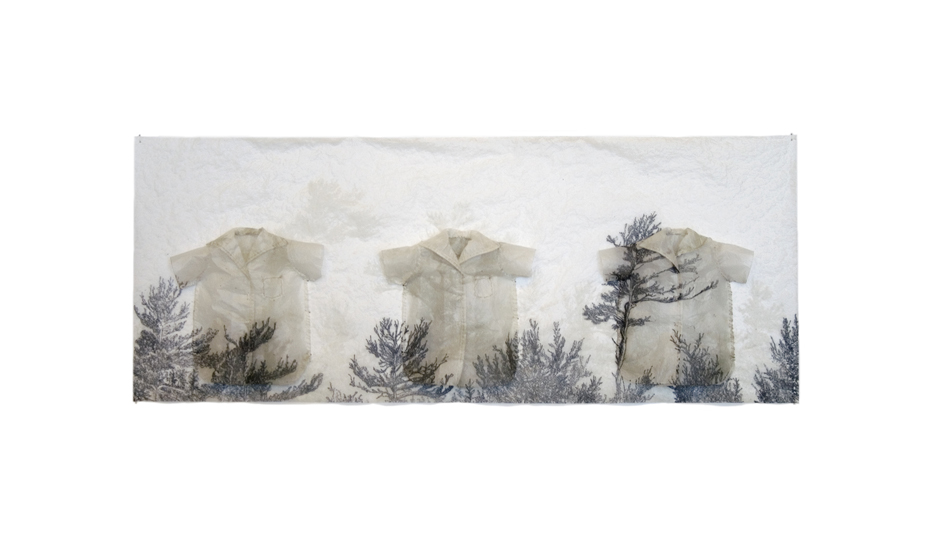
Ever since I was a child I have loved to sew. I love the materiality, the textures and the endless possibilities that fibre art offers. I grew up in a family that valued and fostered a great appreciation for the arts and I began taking sewing classes when I was around eight years old. And thus, it seems that sewing and piecing work together in this manner, has always been a natural part of my process in the creation of art. I love the journey that occurs throughout the making of a piece, I enjoy all of the different steps it takes, just as much as I appreciate the final product.
Which is your favourite fibre medium?
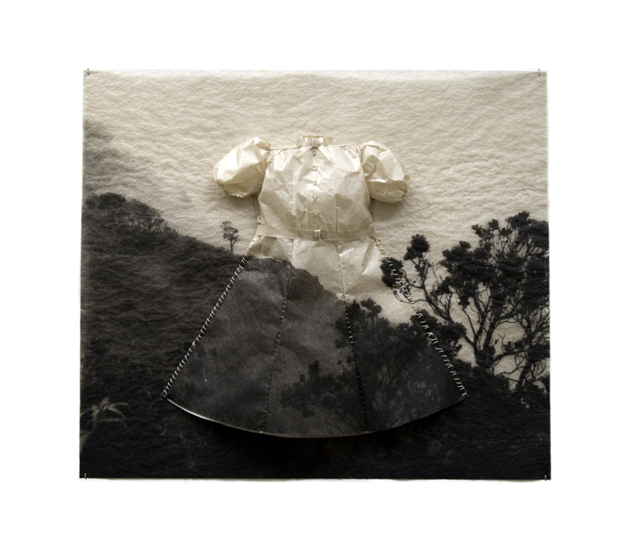
Japanese paper would have to be my most favourite fibre to work with; it's potential for printing upon, it's strength, illusion of fragility, it's malleability, and the inherent associations it has with other printed matter all combine to offer up endless possibilities for creating infinitely detailed and textured works of art
What other mediums do you work in, and how does this inform your fibre work?
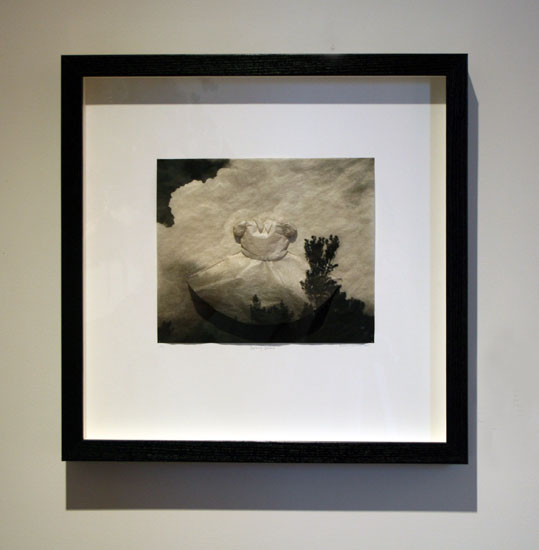
My primary medium is printmaking; it is what I have been trained in and where most of my work begins. However, over the last few years the creation of garments out of my prints has been my fascination. Combining sewing with my print work has allowed for an entirely other layer of materiality and dimensionality within my work.
What specific historic artists have influenced your work?
The art of Betty Goodwin has had a lasting influence upon my work. Specifically it is her series of soft ground etchings that contain the impressions of vests that belonged to her father that initially captivated me. Ideas associated with clothing, with the traces that people leave behind and our fascination and desire to document and create tangible memories of the past
What specific contemporary artists have influenced your work?
Artists such as Cybele Young, Lesley Dill and Julie Mehretu as well as other artists dealing with issues of memory such as Shimon Attie, Rachel Whiteread and Kristine Aono continue to inspire and influence my work and the research behind it
What other fibre artists are you interested in?
Recently introduced to the work of Lucy Orta, a British artist working in both London and Paris, I find myself quite fascinated with her work and her creation of garments that comment upon critical contemporary issues.
What role do you think fibre art plays in contemporary art?
Printmaking and fibre art both hold deep roots and they are able to stand firmly alone within their own traditions. However, within contemporary art, both can be incredibly inventive and can challenge preconceived ideas of what print and fibre art are supposed to be. Together they offer great opportunities for integration into other art forms that are able to speak to a great number of ideas and issues.
Please explain the process you go through from inspiration to conclusion.
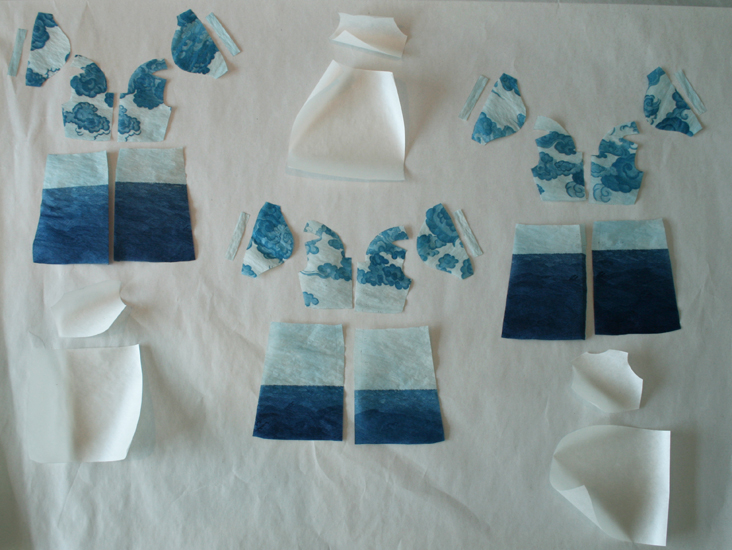
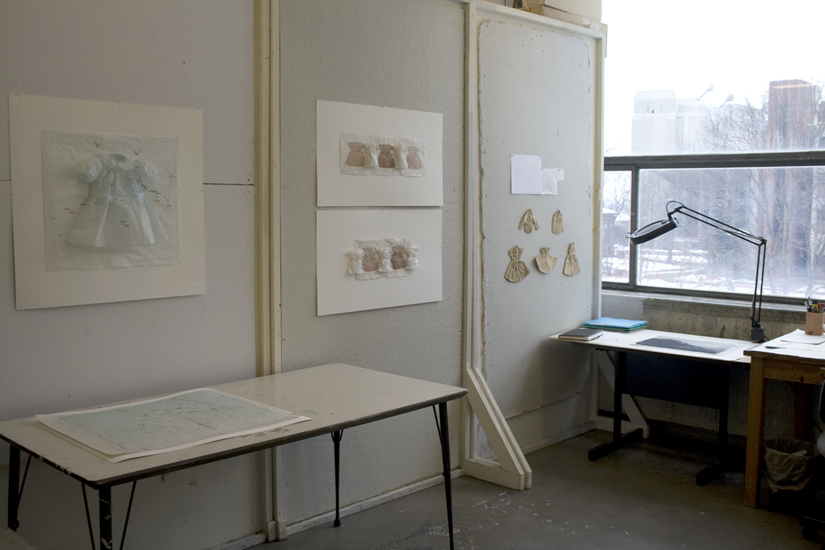
It is hard to summarize my working process in words, as my inspiration comes from all over and the final pieces are usually very long in the making and often times different from my original vision. However, I usually begin a piece by writing down ideas and thoughts. Once I have more of an idea of the conceptual nature of my project, I then begin creating rough sketches from my imagination or from photographs that I've taken. At this point in time, I also make a mock up of the article of clothing that I am going to be working with, using my grandmother's patterns.
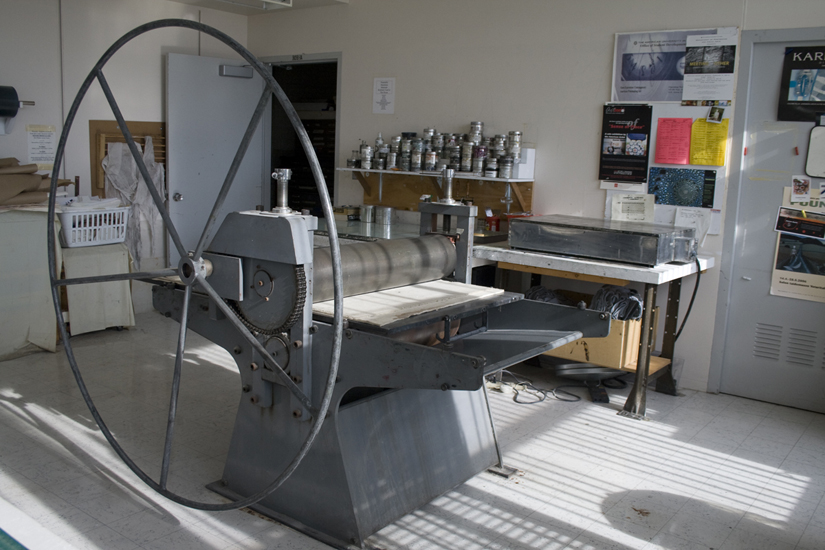
At this stage I go into the printmaking studio and begin the etching process. Copper plates are prepared and drawn on or go through a series of photographic processes. The plates are then etched, proofed and printed. Throughout the duration of these processes I always experiment and let the work evolve as different technical challenges emerge. Once the printing stage is complete I take the prints to my studio and continue to work on the pieces, sewing, cutting and layering paper and prints until I arrive at the finished piece. The works are then mounted onto a backing and finally framed.
Where do you imagine your work in 5 years?
Five years from now, I'm not sure where my work will be. However, I have no doubt that I will still be combining the use of printmaking, paper and sewing in the creation of works of art. These processes have become integral to how I work through ideas and am able to explore new possibilities