Artist Interview 78: Megan Q. Bostic
Raleigh, North Carolina, USA
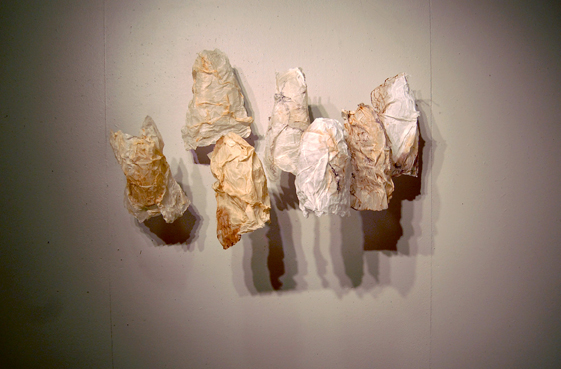
The work of fibre artists Megan, is an internal monologue revealing a personal exploration of response to loss. Her sculptural and installation-based work relies on material exploration and textile-based techniques. She uses materials that are considered fibres, e.g. rat silk paper and cotton, and she also uses materials that aren’t necessarily fibres, but are somewhat fibrous in nature, e.g. commercial paper products, soft plastics and thin metals.
Tell us about your work?
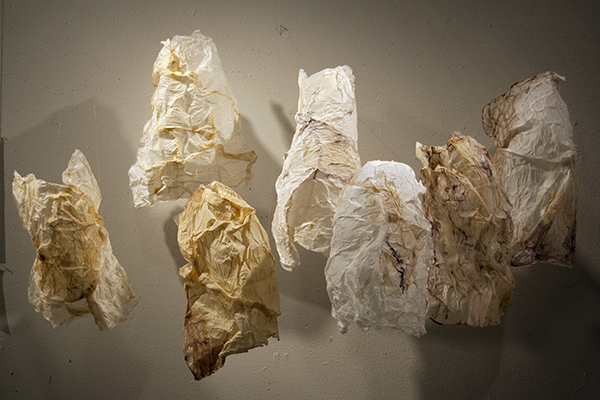
My work is conceptual and is about articulating difficult emotion into visible form. Increasingly sculptural and installation-based, my work relies on material exploration and textile-based techniques. I constantly strive to make my work evocative, experiential and indicative of the emotionality contained within the concept.
Previous World of Threads Exhibitions
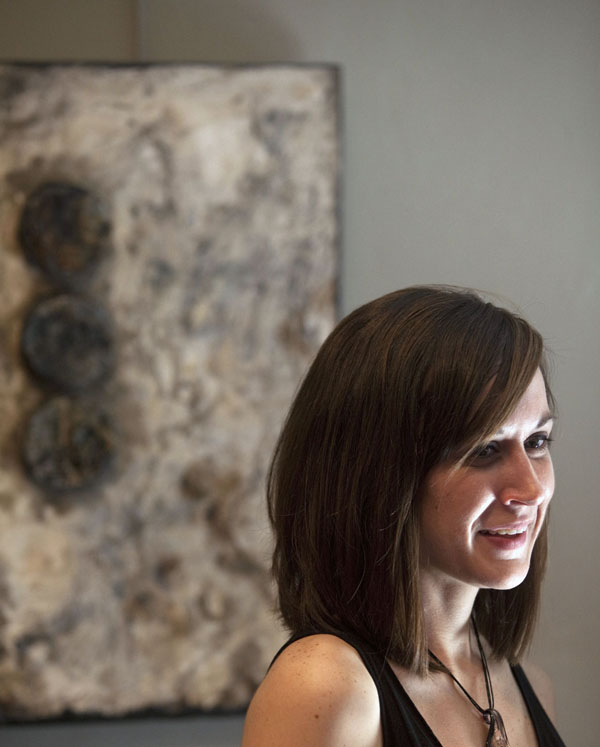
Megan Q. Bostic exhibited in two of the major 2012 Festival exhibitions, Momento mori and Quiet Zone.
My work has and continues to incorporate textile techniques and fibre processes.
Where do you get your inspiration?
My inspiration is varied in terms of source, but is always rooted in emotionality. W.S. Merwin, an American poet and 2011's US Poet Laureate, visited my campus last year on the very last night of his laureateship. He spoke about the "anxiety of influence" that all artists have. He went on to say that if you see or hear or read something that resonates with you, there's a reason; it's a discovery of affinities. Whoever made what you saw or heard or read---they've just revealed in you something that already existed. I carry that with me now and seek to find those discoveries.
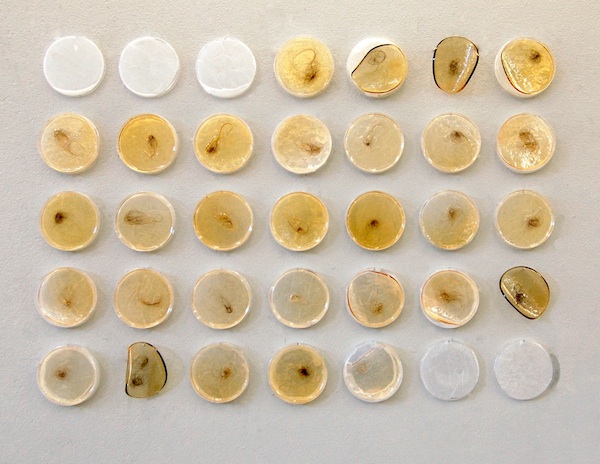
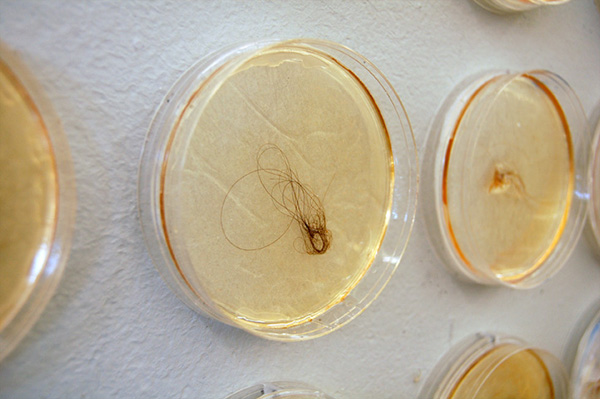
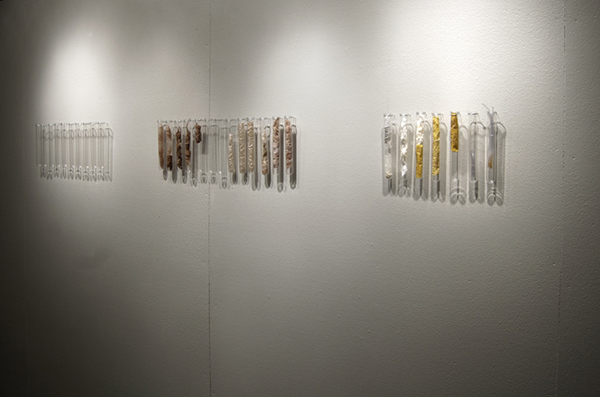
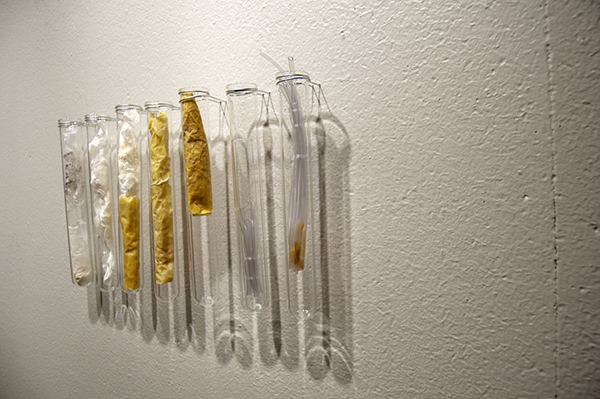
My work deals with the nature and the manifestations of grief and mourning---both personal grief experiences and the grief experiences of others, and so writings and works focused on those topics are my focus: science-based journal publications, non-fiction writing, memoirs, and poetry. Most recently, I've been conducting a series of interviews with women who have experienced loss, and the piece I'm currently working on, Core Samples, is based on those conversations.
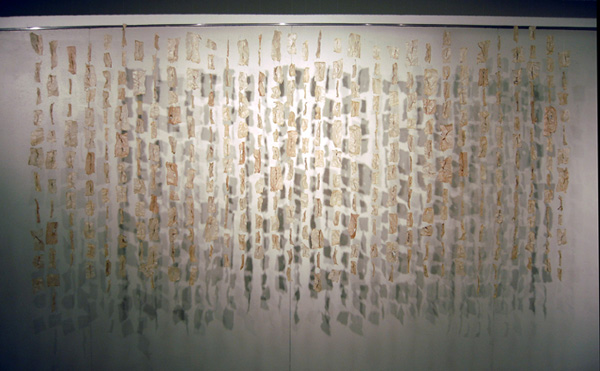
The First Year of Grief
Every day
never feels
like the yesterday
I need it to.
What do you think of us placing your work within the context of fibre art and how does fibre techniques and materials relate to your practice?
My work originated in pure fibres--both as it relates to materials and as it relates to techniques. I think that too many of my predecessors worked too diligently and too thoughtfully for fibre art to have a rightful place in the world of fine art for me to disregard the title. I do hope to contribute to work that expands the definition of fibre art. I utilize materials that are considered fibres---raw silk, paper, cotton; I also use materials that aren't necessarily fibres, but are somewhat fibrous in nature---commercial paper products, soft plastics, thin metals. My work has and continues to incorporate textile techniques and fibre processes.
What mediums do you work in, and how does this inform your fibre work?
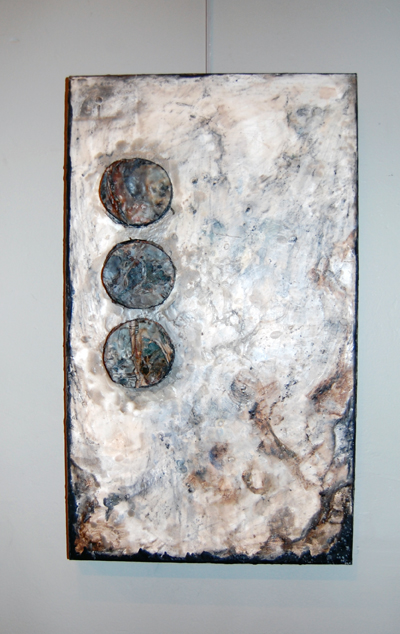
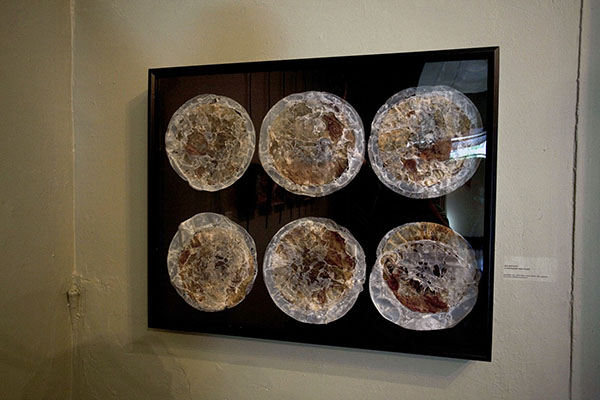
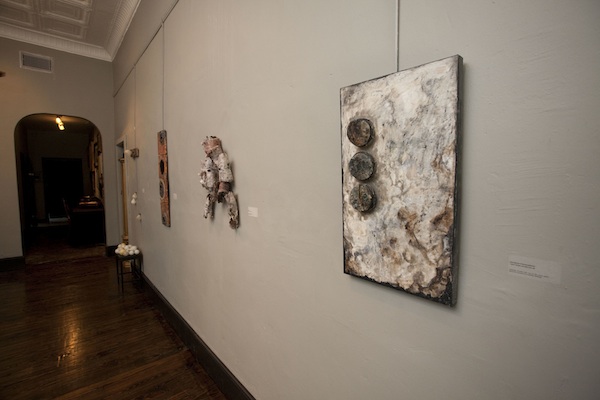
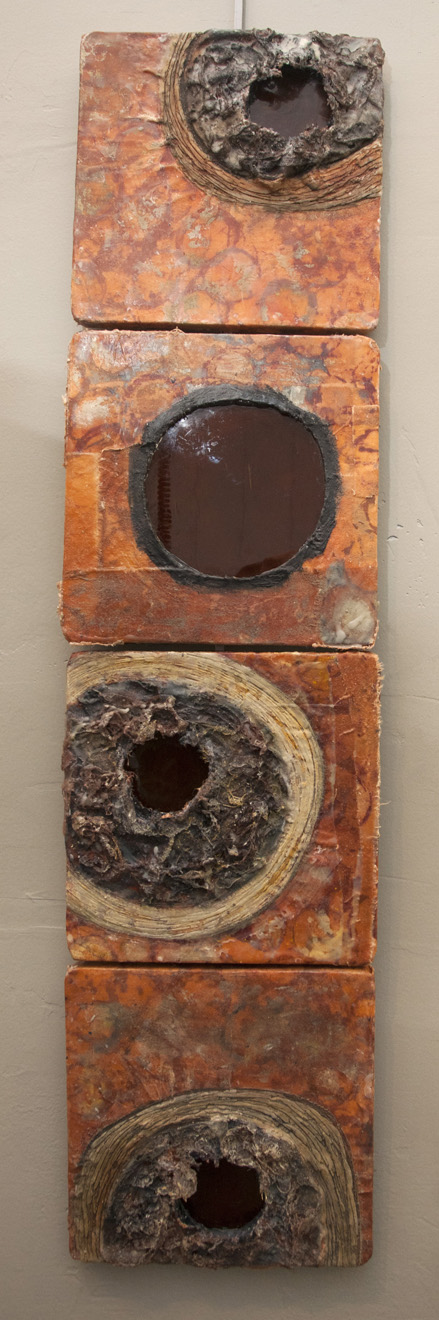
I work most often in fibres and found materials, utilizing waxes, stiffening agents and oil pigment.
Which is your favourite fibre medium?
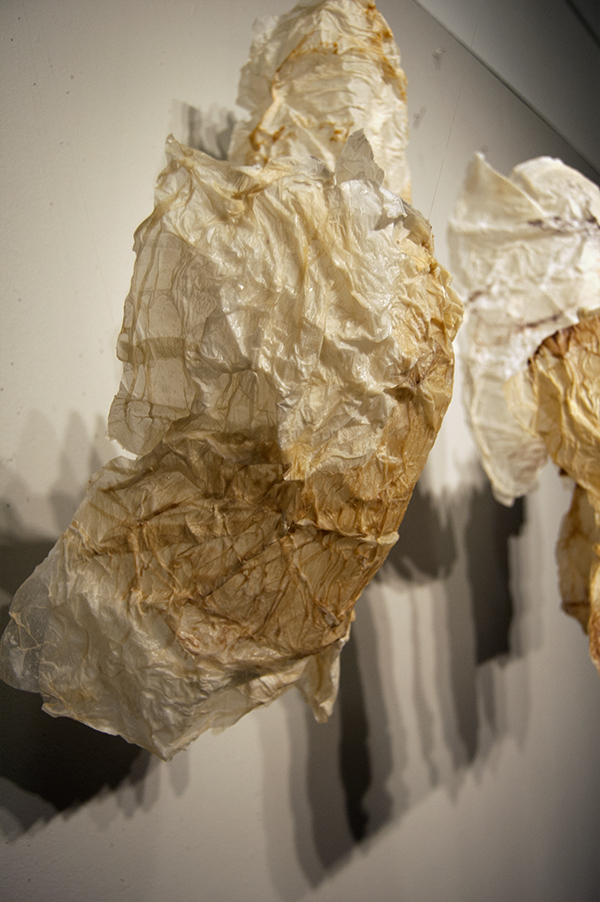
My favourite fibre medium is silk organza. The translucency, the weight, and the versatility of the fibre are always compelling. It has such character on its own, and speaks a specific language, but it can be manipulated in such powerful and evocative ways.
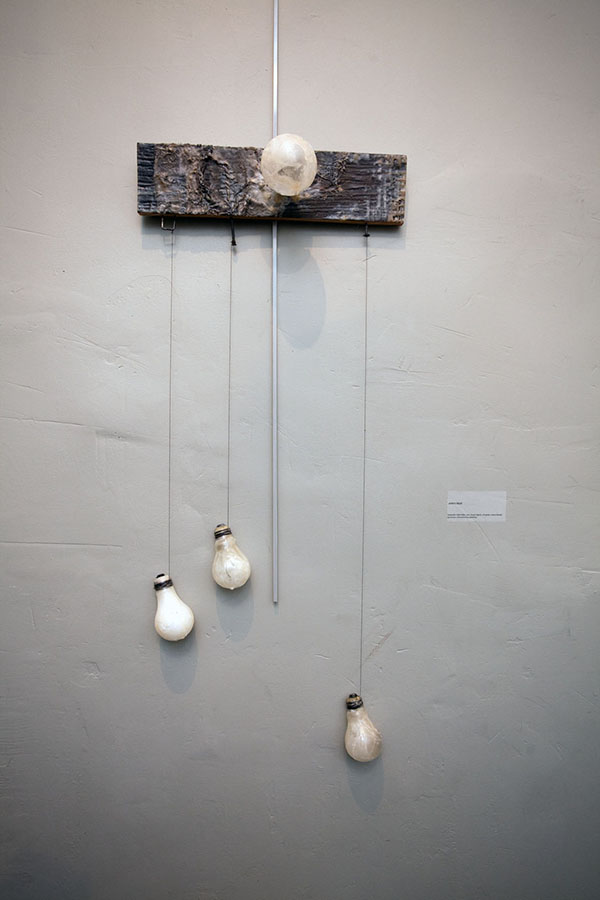
My materials, and how I treat them, must speak the same language as my concept, which is why I typically favour found materials.
What bridges the works that you have created in differing media?
All of my work starts with, or stems from and is connected to my concept. My concept informs what research is necessary, the processes that must be utilized, even the way I work. More than anything else though, the concept informs what materials I use. My materials, and how I treat them, must speak the same language as my concept, which is why I typically favour found materials. I'm very attracted to the associations we have with them and the stories they come with already, and what layers of meaning I can add on.
What specific historic artists have influenced your work?
As my work increasingly moves away from the wall, I'm looking towards sculptors. I am drawn to the emotionality of the work of Auguste Rodin (French sculptor) and the way his pieces thrive on light and the resulting shadow. I am inspired by Constantin Brancusi's (Romanian-born sculptor) process and approach to working with materials.
What specific contemporary artists have influenced your work?
Contemporary art is continual fodder for influence, inspiration and precedent. Most recently, and most significantly, I've been influenced by Bruce Nauman (American artist), Alan Cohen (American photographer), and Gabriela Gusmão (Brazilian artist).
Upon entering the modern & contemporary part of the permanent collection at the National Gallery of Washington DC, I was confronted with Bruce Nauman's (American artist) piece, Fifteen Pairs of Hands. The pairs of hands, all resting on their own white pedestals, appeared meticulously arranged in a variety of forms, each evoking an emotional state and their own sets of questions. The way that the pedestals were arranged nearly forced the viewer to physically interact with the space that the hands inhabited, and certainly forced the viewer to visually interact with the hands. This piece jump-started my thinking about how to make my pieces quietly confrontational.
After visiting an Alan Cohen exhibit, Earth With Meaning, at a local museum, I was overwhelmed. Frozen in their march around the room, the black and white photos are only twenty-four inch-wide squares at most, but they fill the gallery with their powerful documentation of place. Some of the photos are nearly abstractions; all are seeping with texture. From what I understand, Alan Cohen (in the photos I was most attracted to), set out to capture the essence of particular places—to visually translate the emotion that exists on once-troubled ground (e.g., WWII concentration camps). Upon viewing the photographs I was compelled by them, but most of the places he photographed for that particular series were not recognizable to me at first. It was only after reading the title of each photograph, that the work developed new layers of meaning. Hearing him speak about his work, and how he tries to capture what eludes capturing, really affirmed my intention for my work.
There is an article I read when my inspiration is dwindling: "Looking As a Way of Touching." Written by Gabriela Gusmão, and published in a 2009 issue of the Journal of Modern Craft, the article is basically a statement of practice about a multimedia project she developed, Intervention Street. Upon every reading, I find myself soaked up not in her actual project, but in the poetic way she describes things—it is a unique, personal, honest reflection on her practices in dealing with materiality, her view of public spaces, and the life cycles of materials. Through her writing, I am challenged to develop my senses as a means to strengthen observation skills, to remember the importance of rough drafts, and to constantly be open to meaningful mistakes and the possibilities they render.
What fibre artists are you interested in?
The sculptural weavings of Lenore Tawney, an American fibre artist who worked in the mid-to late twentieth century, consistently resonate with me. There's a piece of hers, from the 1970s, which has a poem for a title: Four Petaled Flower 2.
The poem reads:
What is my true name?
I am the wind along the grass
I am the stream
I am the white clouds floating up
I am the ocean's roar
I am the cry of a bird
I am a waterfall
I am a tear
I am a river on its way to the sea.
The poem could stand alone, and the work itself would be just as admissible without a title, but pairing them together serves to magnify each of their powers, something I'm working to achieve in my work.
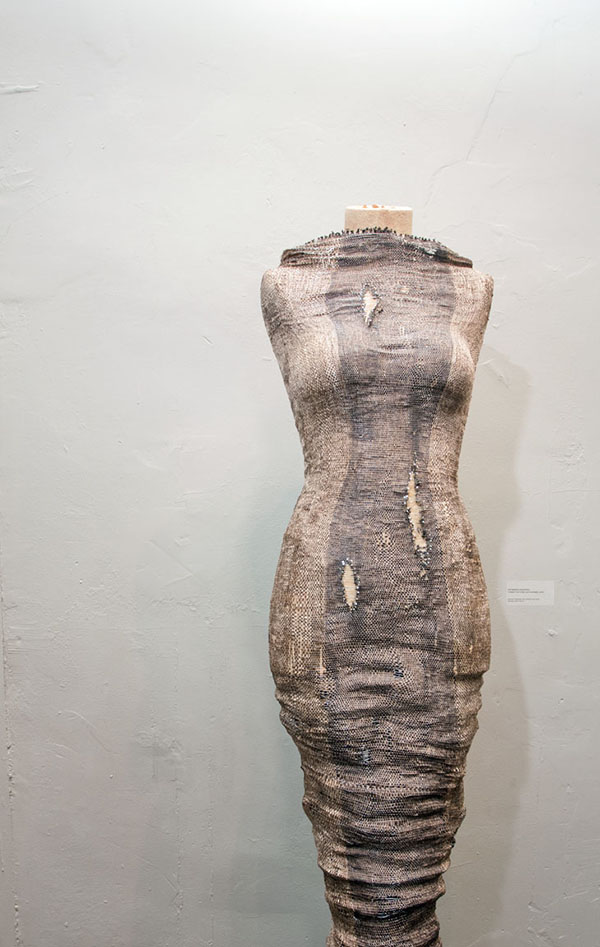
Regarding form, I am endlessly intrigued by Joan Livingstone's evocative work with epoxy resin--Doppelganger, Uma, At Capacity---and the subtle references of the body in each. She bridges seemingly dichotomous ideas in her work with profound emotional and intellectual dexterity.
Conceptually, Deidre Scherer, an American fibre artist who started working in the 70s, is a source of precedent for me. Her series of fabric and thread portraits, The Last Year, chronicle an elderly woman's final year of life with nearly overwhelming poignancy.
What role do you think fibre art plays in contemporary art?
I'm intrigued and encouraged by the trend in overlapping materials, media, and artist classifications.
What is your philosophy about the Art that you create?
The heaviness of certain emotions and experiences are difficult to give words to, and they seem to elude verbal expression. The process of creating something visual and tangible allows me to sort through the experiences and find meaning in them.
With your art, are you attempting to evoke particular feelings in your audience?
I'm trying to evoke empathy, and some sort of shared understanding of loss---we've all experiences loss in some way. I create with emotional integrity and I hope that my audience picks up on that.
When did you first discover your creative talents?
I've always had a fondness for materiality; as a child, I loved deconstructing materials—pulling them apart and examining their contents. And, from late adolescence on, I knew that working in the visual arts was a certainty for me, but I didn't know what medium I felt at home in, until I was in my third year of undergraduate studies, pursuing a fine arts degree. We had to take several survey classes---basics in printmaking, ceramics, painting, fibres, etc. On one of the first days of my fibre survey class with international artist Jan-Ru Wan, she gave a presentation about her own work. The way she used (and continues to use) found materials in her work to create these emotionally resonating installations was one of my first memorable discovery of affinities, and enabled me to be on the journey I'm on now.
Please explain how you developed your own style.
It took a while for me to find my own voice. During my undergraduate studies, I realized that I would always alter the state of traditional fibre materials---by waxing them or stiffening them in some way. I would take their fluidity and drape away from them, and protect their fragility with a coat of a harder medium, like wax. I was making concept-related decisions about my work, but subconsciously. And so that realization---that my concept was seeping out in every aspect of my making process---pushed me to progress my work into the more explicitly and purposeful concept-saturated, material-centric work that I make today.
Where did you train and how has your training influenced your art?
I attended undergraduate school at East Carolina University in Greenville, North Carolina, USA. I studied under Jan-Ru Wan, Christine Zoller, Leea Pienimäki-Amoussou, and Robin Haller. Currently, I'm pursuing a master's degree in Art + Design (Fibres & Surface Design) at North Carolina State University in Raleigh, North Carolina, USA, studying under fibre artists Susan Brandeis and Vita Plume. The distinctiveness of each artist's teaching style, working processes, materials studied, concepts explored, and techniques utilized have been invaluable.
What project has given you the most satisfaction and why?
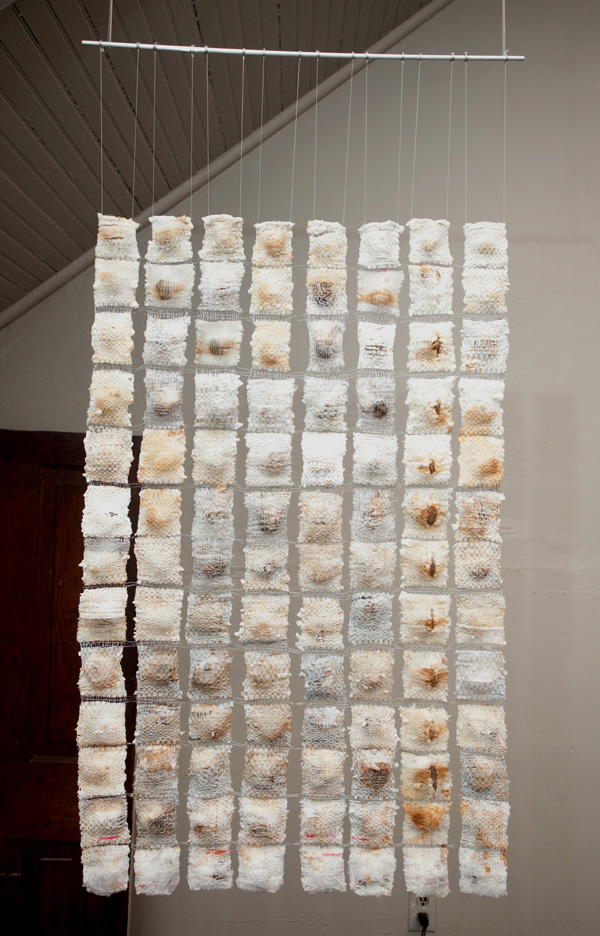
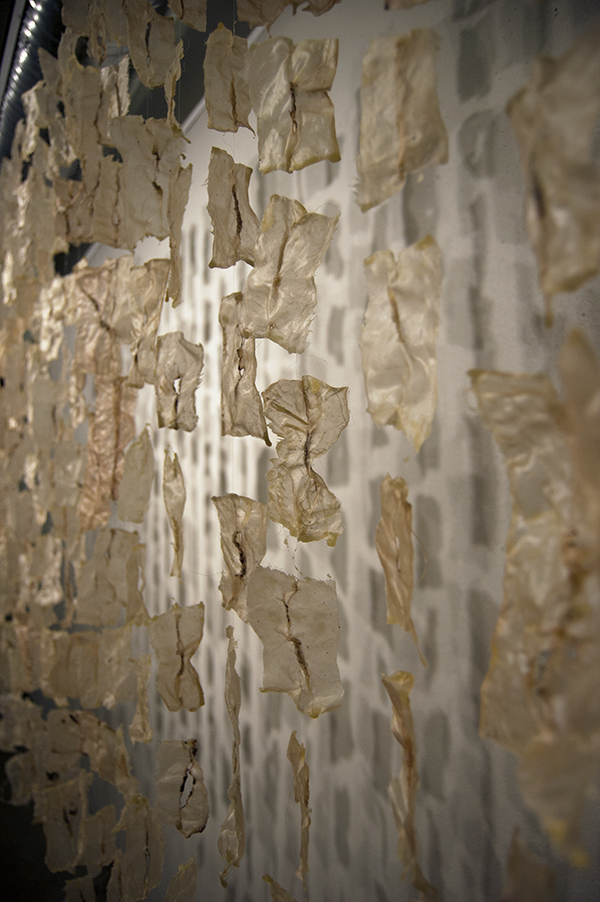
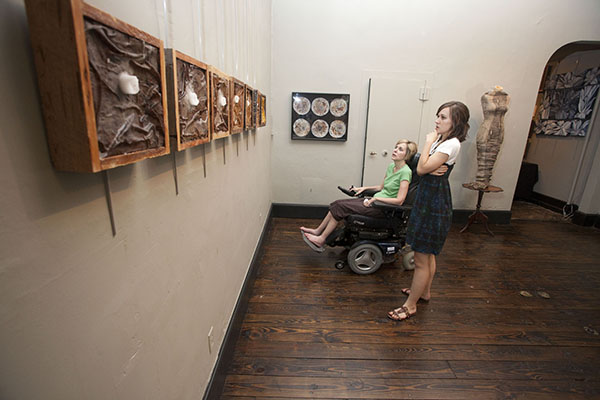
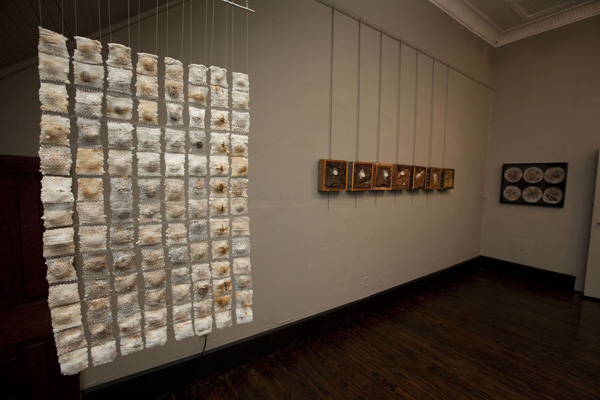
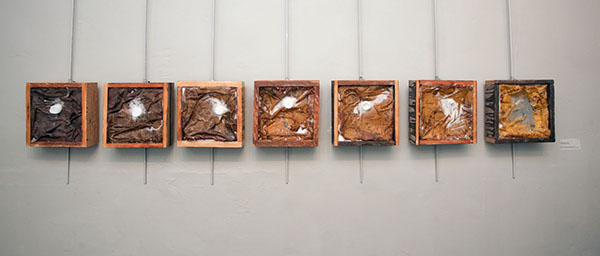
The First Year of Grief piece has been the most cathartic project for me. I spent nearly a year working on the piece, from conceptualization to final hanging arrangement. The process of creating that piece allowed me to process the experience that the piece referred to: the death of my mother. The handling of each of the 365 components (silk organza rectangles) involved the protection of the raw material (waxing), partial destruction of the material (burning), and an attempt to mend the material (stitching).
I work either slowly and contemplatively or aggressively and diligently.
Tell us about your studio and how you work:
My studio tends to occupy my entire living area! I have a one bedroom apartment and although I make vain attempts to keep my "studio" space contained to my dining room, when I'm in the middle of working on a project, my "studio" expands into the living room, kitchen, bathroom--- any open floor space, really.
I do have certain collections of materials, mediums, and supplies that I thrive on storing in a somewhat organized fashion.
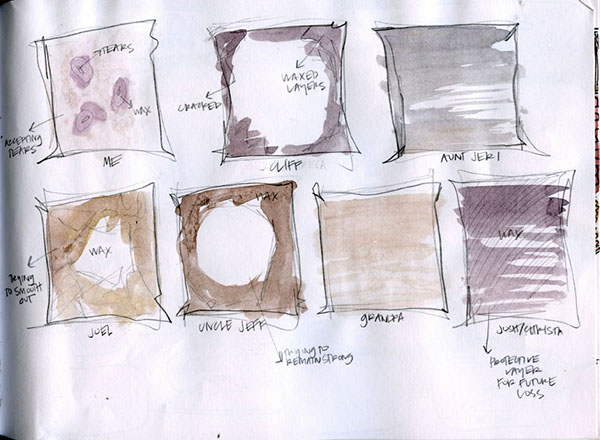
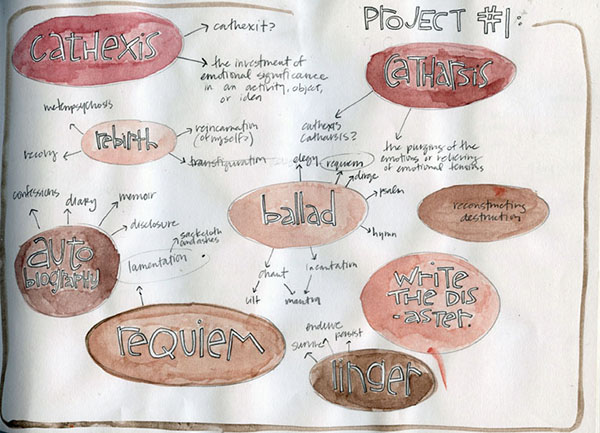
My working habits exist at two extremes: I work either slowly and contemplatively or aggressively and diligently. Usually, when I'm immersed in conceptual thoughts, it's a slow, thoughtful process that involves reading, writing, reflecting, and researching. My sketchbooks are always rather coherent ramblings and musings on concept and idea generation. In the making part of the process, however, I work vigorously, experimenting with and exploring materials, manipulating and exploiting them rapid-fire, working until there's some visible progress towards a solution.
What do you consider to be the key factors to a successful career as an artist?
As an emerging artist, that's something I'm still trying to figure out, but a commitment to the development of your own work and a sense of integrity surrounding the work that you do seem crucial.
What interests you about the World of Threads Festival?
The size of the festival, its inter-nationality, and the metaphor contained within the title.