Artist Interview 59: Barbara Heller
Vancouver, British Columbia, Canada
Tapestry art defines Barbara's life. She is concerned about humanity and its relationship to the environment, both natural and man-made and to itself. Through familiarity and the non-threatening nature of textiles, she induces the viewer to take a closer look at preconceived assumptions, and hopefully make changes to their own lives and how they live.
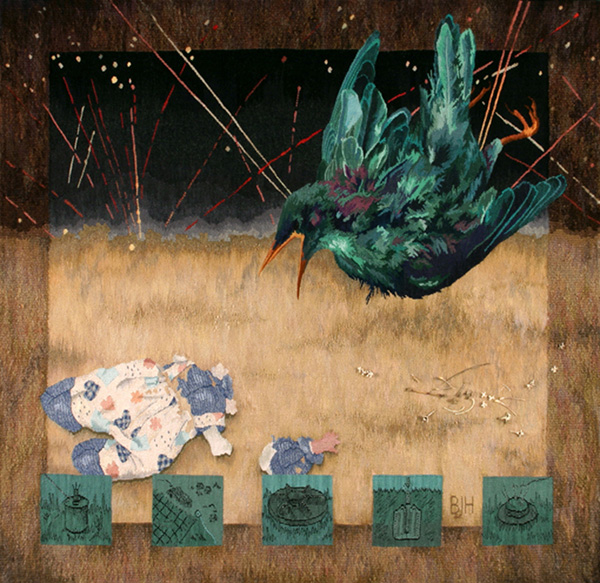
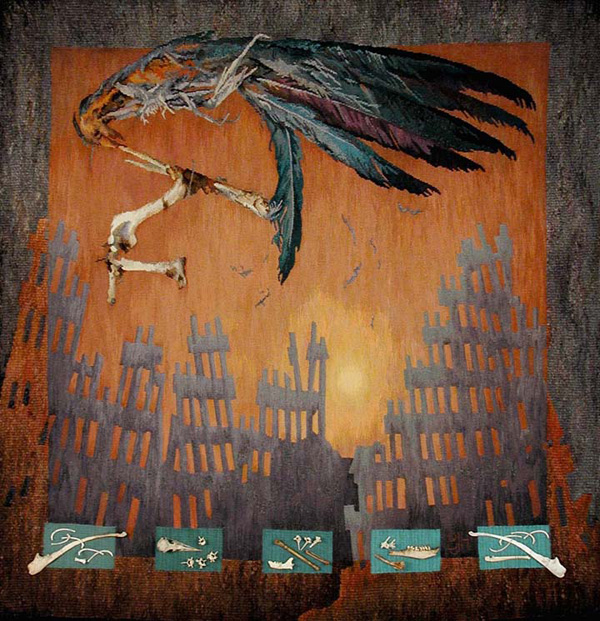
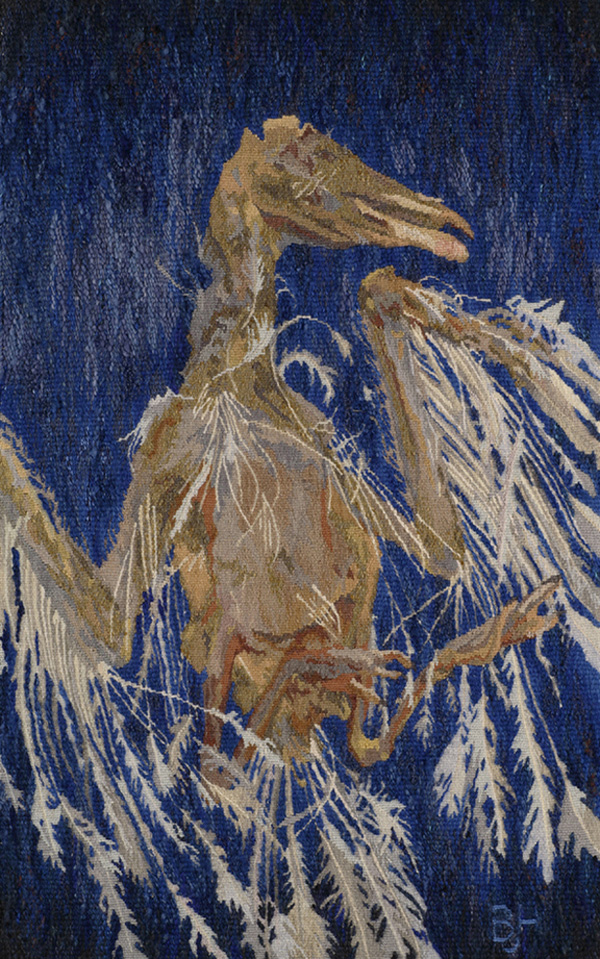
Tell us about your work?
I am concerned about humanity and its relationship to the environment, both natural and man-made, and to itself. I worry that we have lost our sense of who we are and how we fit into our world. Medieval tapestries were political or religious parables clothed in classical allusions. I use this ancient art form with modern symbols and metaphors to circumvent the rational mind and reach people on an intuitive, emotional level. The familiarity and non-threatening nature of textiles allows me to seduce the viewer into taking a closer look at preconceived assumptions, and perhaps, to make changes.
Where do you get your inspiration?
I draw on my own photographs, old family photos, my Jewish heritage, the mystical side of world religions and my experiences, to develop a personal iconography to express my concerns. If something bothers me, I transmute it in my art, whether it be a miscarriage, the events of 9/11, landmines and senseless wars, what is happening to the environment, what is happening to us. And, when politics overwhelms me, there is always the beauty of the natural world to draw on.
How did you decide on this medium?
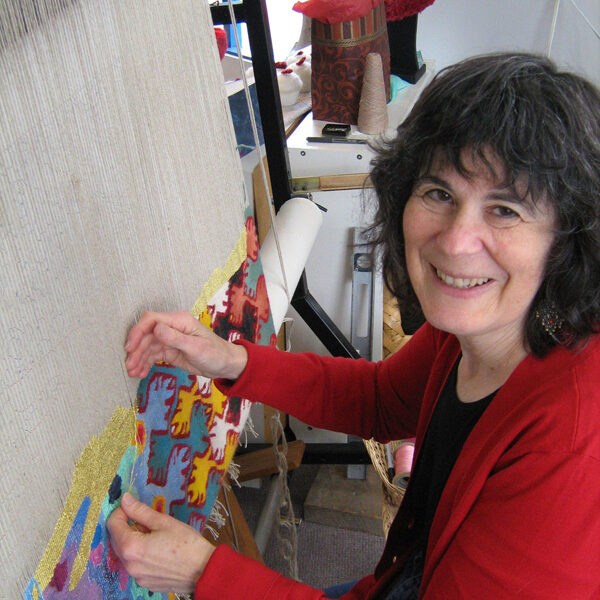
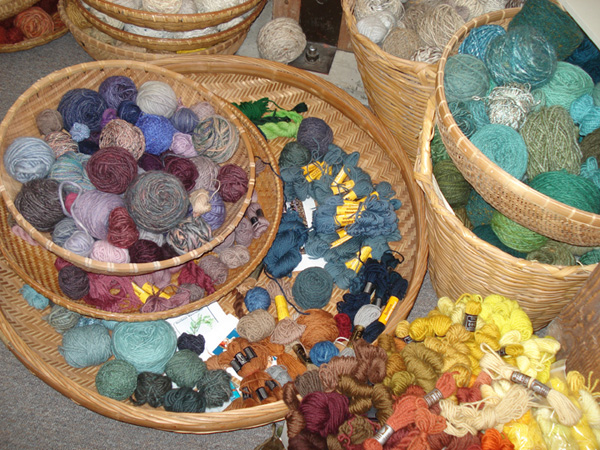
It is more like the medium picked me. I was a printmaker, but got chemical pneumonia from the fumes. I was a surface designer, but had a new baby and if you are painting on fabric, it is hard to leave off when the baby cries. Tapestry was a way to continue to express my imagery in a non-toxic medium that offered freedom of expression. Besides, I love spinning and dying the yarns and the subtle rich colours and textures achieved. I love sitting at the loom; the slow meditative mantra of weaving suits me.
What other mediums do you work in, and how does this inform your work?
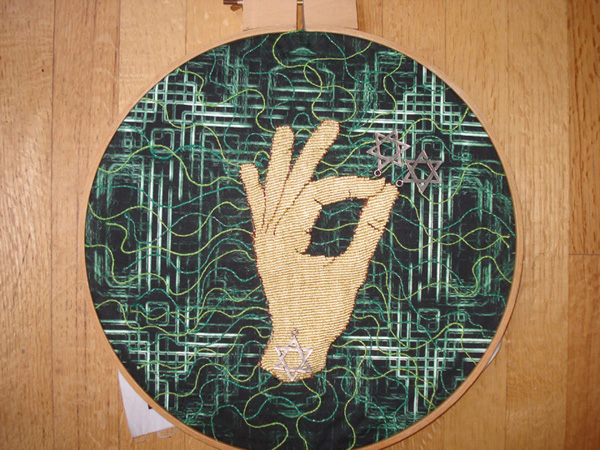
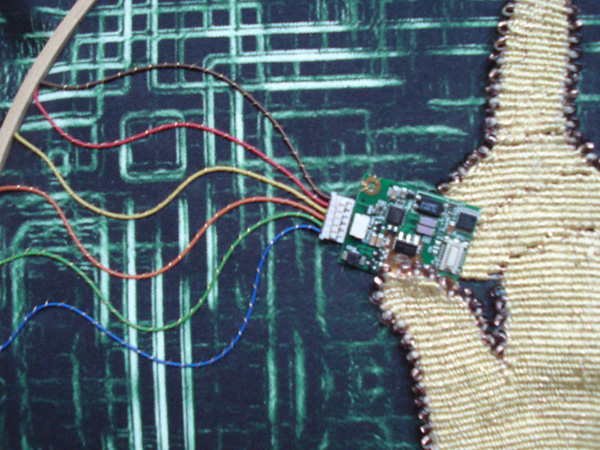
I draw, I think, I read. More recently I have sewn "things" to my tapestries where appropriate. Currently I am working on a series that combines shaped tapestry, printed fabric and embroidery. I am open to whatever works to tell the story.
I do see myself as a political artist and I want to make people stop and look and think.
Are you attempting to evoke particular feelings in your audience?
YES. I do see myself as a political artist and I want to make people stop and look and think. Images are selected for their emotional resonance and every aspect of designing a tapestry serves to emphasize the message. That message is often only subtext and not readily apparent, but it is always there in my mind.
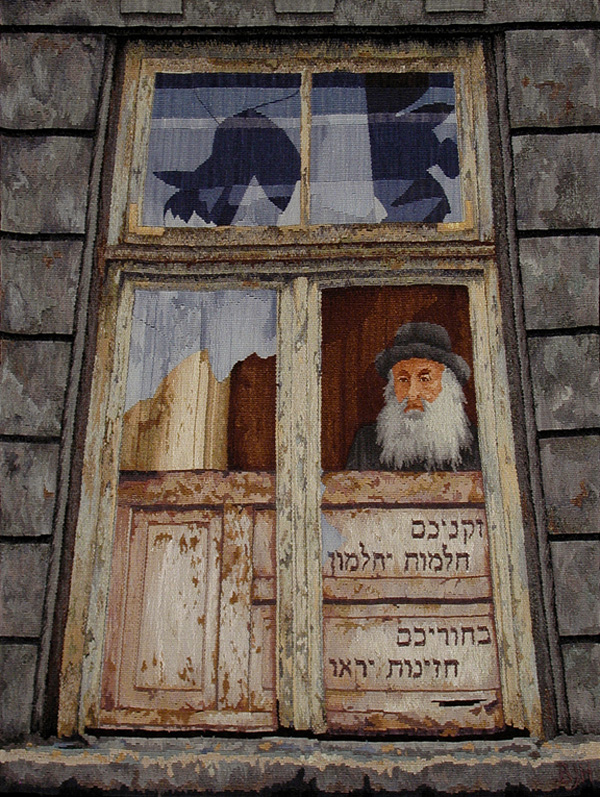
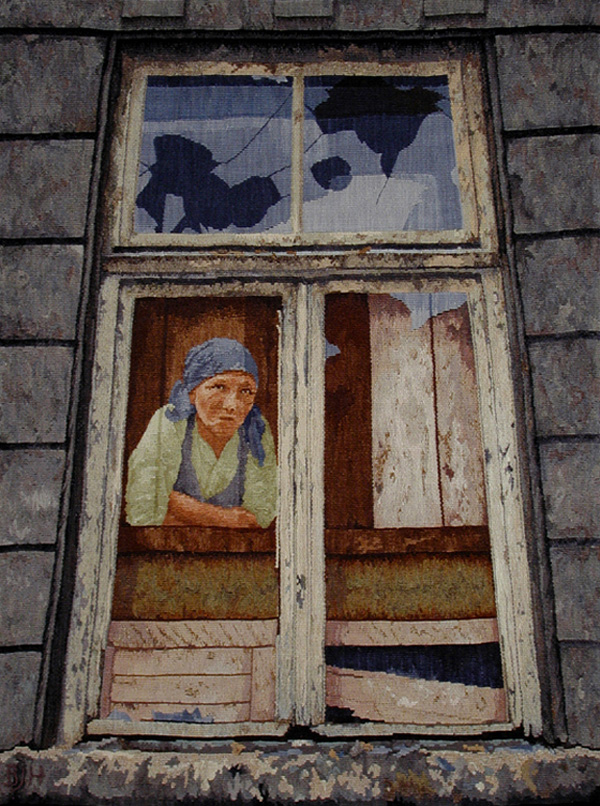
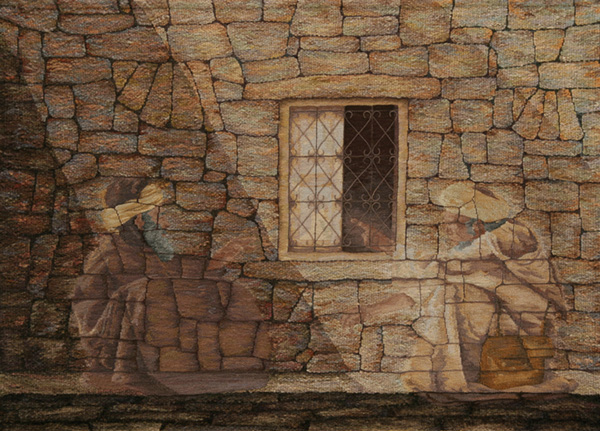
In the Ghost Image series, I used old family photos placed in foreign settings, involving man-made stone walls, to present a nostalgic view. The subtext was that the spirits of these people live on in the ruins of their former homes. The stones were piled one on another but were still part of the place from which they were chosen; even when they crumble to the ground and are no longer visible, the spirit will live on in memory.
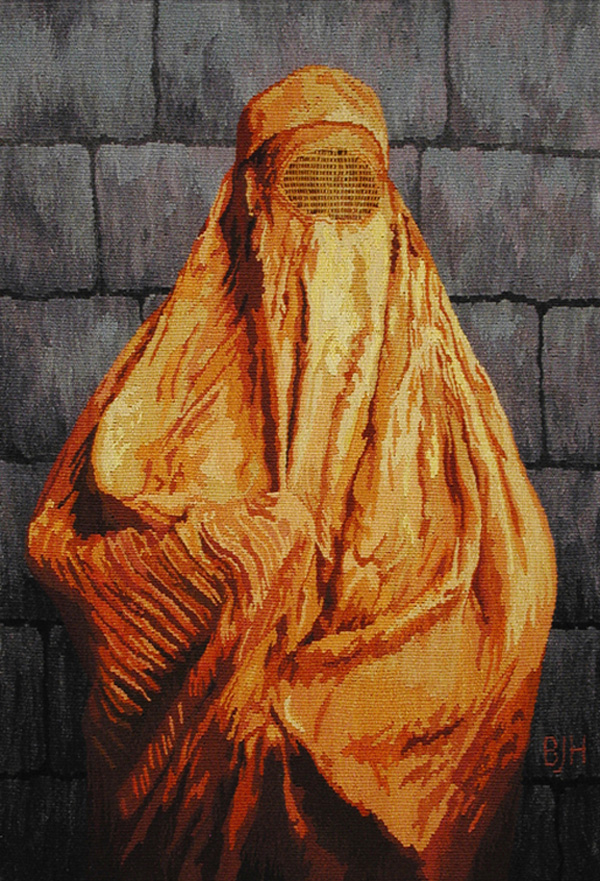
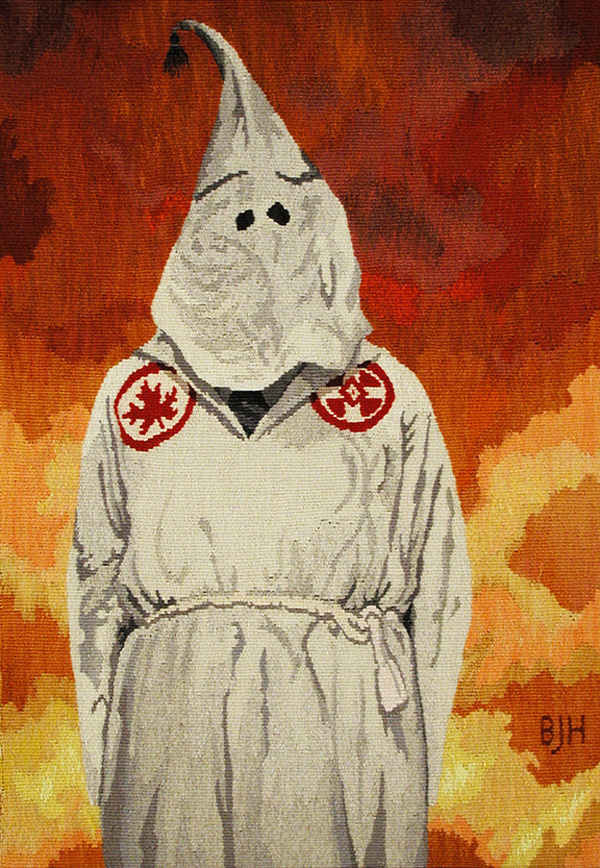
In the Cover Up series, I chose images of people whose head and body were covered by their clothing, sometimes even their eyes were covered. We cannot make eye contact with these people and this is already unsettling. I wove these nine tapestries during the height of racial profiling. I wanted to say that we should not judge people through our preconceptions of them. I purposely chose some controversial figures, such as a Canadian Ku Klux Klansman and a woman in a full burka, who would evoke a strong emotional response. I then added subtle clues that perhaps they were not what we imagine them to be. The Klansman wears an old school tie and his hood has a tassel on the top and baby seal eyeholes. In spite of the fact that I have even covered the hands of the Afghani Woman, her pose is strong and she seems to stare out from behind her veil in a challenging way. I want the viewer to question his or her assumptions and quick judgments about other people.
What specific historic artists have influenced your work?
In the fibre arts I am drawn to the anonymous weavers of medieval tapestry and the makers of other more recent textiles who created from the heart, often without artistic training.
What specific contemporary artists have influenced your work?
I am influenced by artists with ideas, often those who hold political viewpoints. If you were to ask this question on another day, I am sure I would have a different answer, but here are three that come to mind today.
Anselm Kiefer, German, whose work is monumental, highly textured and thought- provoking with a strong political subtext.
William Kentridge, South African, whose work is overtly political and overwhelming. His drawings, his paintings, his videos – I am in awe of his virtuosity.
Andrew Wyeth, American, for the sheer subtle beauty of his vision. He painted what was around him yet the images are universal and touch the heart.
What other fibre artists are you interested in and why?
In terms of contemporary tapestry artists who have influenced my work – they are too numerous to list here. Often I get nudged by new ideas from looking at the work of others, and then I have to hurry to the studio to think and explore a new direction.
I do not buy into the ghettoization of various media or the art/craft division. Good art is good art.
What role do you think fibre art plays in contemporary art?
It seems that today anything and everything is possible in art. People cross boundaries and work in mixed media all the time. I do not buy into the ghettoization of various media or the art/craft division. Good art is good art. Fibre with its associations with domesticity and femininity is an excellent medium from which to critique contemporary ideas. It is non-threatening and enables one to deal with controversial ideas without intimidating the viewer.
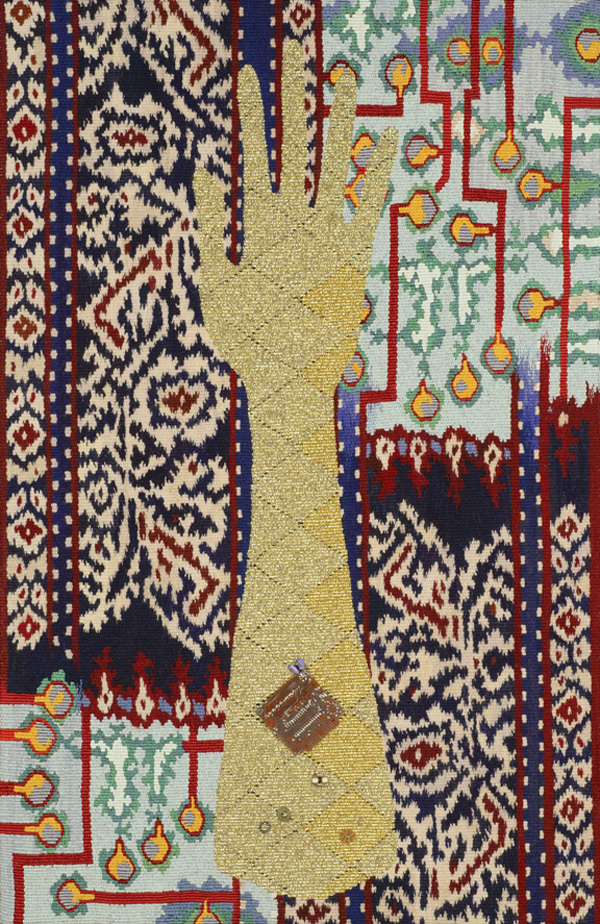
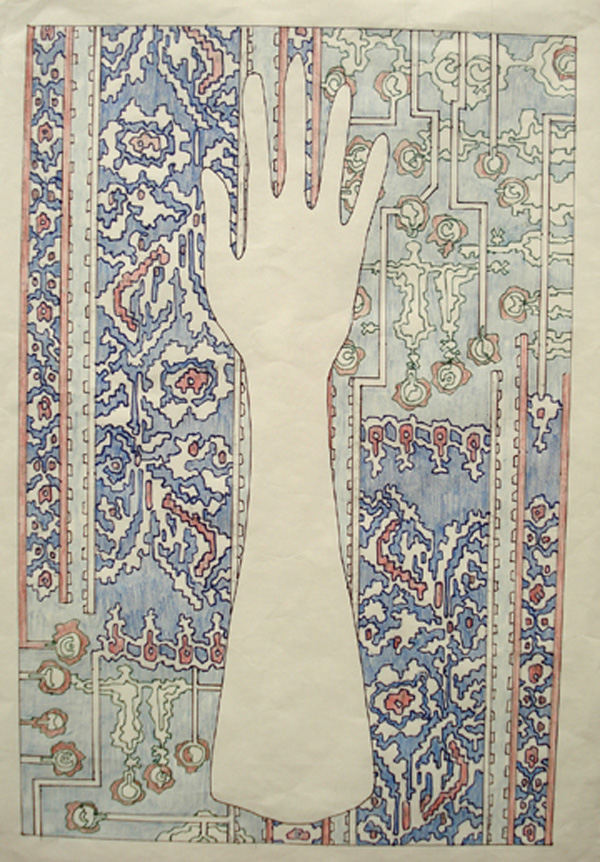
Can you talk a bit about the commercial viability of fibre art and do you find it more difficult to show and sell your work than non-fibre artists?
Certainly there is a bias against fibre art in contemporary art galleries. Gallery owners tell me that this is because of all the work they would have to do to educate the public about the value of fibre art; the time it takes; its intrinsic worth as an art form. In these difficult economic times, they say they have to hang art on their gallery walls that sells quickly. And then, there is the association in the mind of the public with fibre as craft. There is really no money in tapestry – when I sell my work, my "hourly rate" is half of minimum wage.
I cannot answer the question of whether it is more difficult to sell my work than non-fibre artists. My themes are often difficult and not what people want to hang on their livingroom wall. This would be true if I was a painter or printmaker. I have not had difficulty showing my work, both in group tapestry shows and solo shows. I do have a commercial gallery which represents me and I have entered and been accepted into non-fibre shows as well as tapestry exhibits.
And why do men working in fibre usually do better commercially than women? Is it a gender bias or do men take a more practical approach to their art as work, as a means of earning a living?
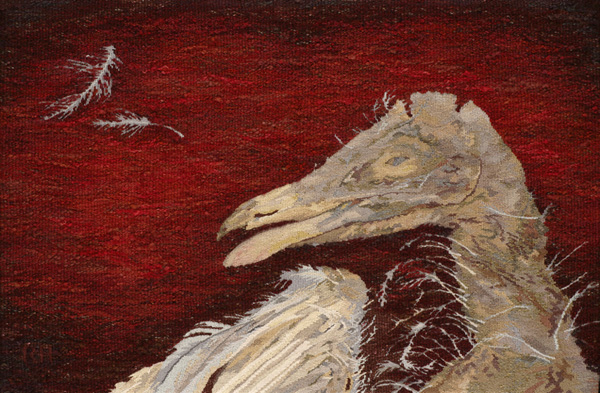
I grew up in a home surrounded by art. I have always been a maker. In high school I thought art would be an avocation but it has now become my vocation.
How did you initially start showing your work in galleries?
I started out participating in craft shows in the late 1970's and then began answering calls for entry I found in textile newsletters and magazines and being accepted into exhibits all over North America. That was very exciting. One needs to take chances and pursue leads and show ones work at every opportunity.
How does your early work differ from what you are doing now? And have your expectations changed over the years?
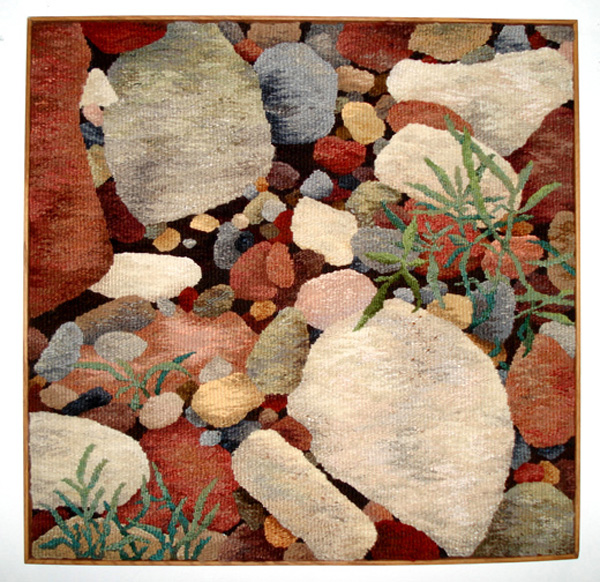
My earliest work was as a printmaker and so my early tapestries were quite graphic in design. Over time they have become more and more painterly as I seek to create the illusion of reality. At first I would set myself colour and design exercises in the guise of tapestry, in order to push the boundaries and learn my craft. Sometimes an idea would have to wait many years until my ability caught up with my vision.
I always expect that the next tapestry will be my best and sometimes I am not disappointe
The best way to develop one's own style, is to weave every day and to pursue ideas and push the limits.
Please explain how you developed your own style.
In 1974, while I was getting a second degree in Art Education at university, I saw a travelling show of tapestries from Poland. These artists wove under communism and their work was not political. They had little money and used the simplest of materials; but the work was so strong and so varied and was often on a grand scale. I realized that you could do anything in tapestry, that there were more approaches to tapestry than that of medieval and renaissance Europe. It was an exhilarating thought and led me to devote time to learning to weave tapestry myself. I learned to weave from books and from experimenting and from logic. I was never formally trained in tapestry and I consider this a plus in my own work – if you don't know the rules, you do not worry about breaking them. I always seek the most elegant solution to realize my vision in tapestry.
The best way to develop one's own style, is to weave every day and to pursue ideas and push the limits. The image has always come first for me. The task is to find the way to best depict the idea I want to convey.
Tell us about your studio and how you work:
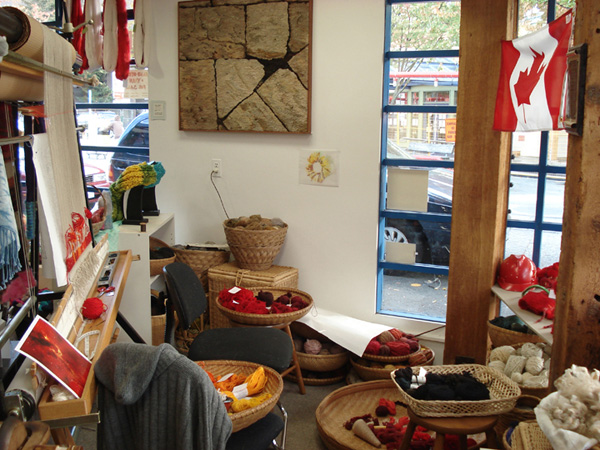
When I started, I worked at home. In 1979 I was given the opportunity to have a studio on Granville Island in Vancouver, really a peninsula under the Granville Bridge. The federal government was developing the Island to include a farmer's market, a maritime market, several theatres and restaurants and studios for artists and artisans. It was a heroic vision and I have never regretted being part of it. As I got pregnant at the same time I got my studio, I have always shared my space in order to keep it open to the public the required hours under my lease. Being open to the public is a mixed blessing, as I have met wonderful people from all over the world, developed a fan base as people follow my progress on each new project, sold work, and I've also resented the interruptions when people come in. I do lock my door sometimes and work in peace and I do my designing at home. I used to be able to weave 6 to 8 hours a day but now my body complains more. However, I still try to weave for a few hours every day.