Artist Interview 48: Fuyuko Matsubara
Indiana, Pennsylvania, USA
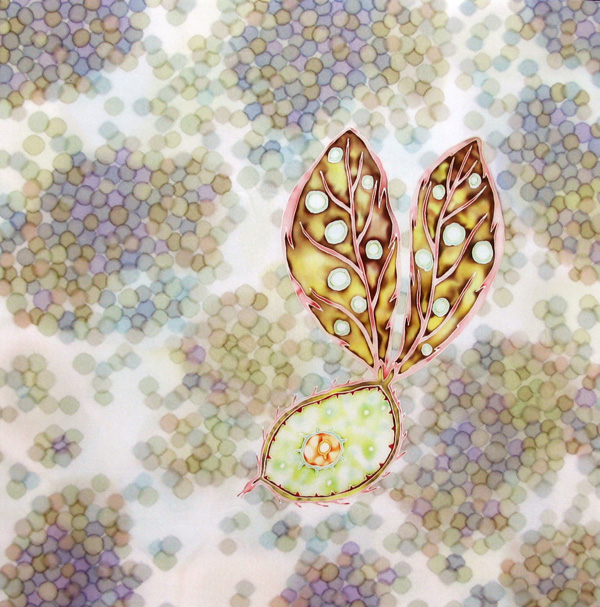
Using a technique she developed and calls a combination of "warp painting and weft painting”, Fuyuko creates pictorial weavings, involving complex methods of dyeing and re-weaving. Beautiful natural surroundings inspire her, like the course of sunsets, streams, clouds, or hills covered with fog and mist. She works with textiles because it uses a wider range of colours than any other craft area.
Tell us about your work?
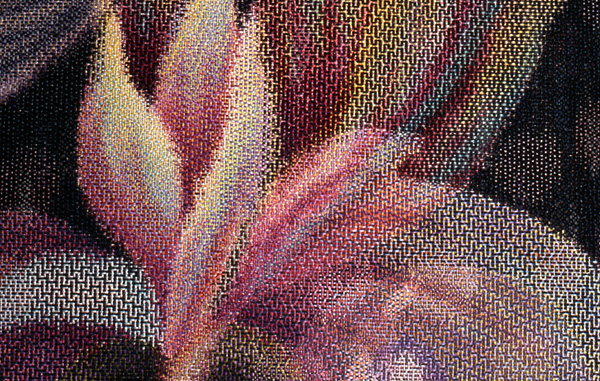
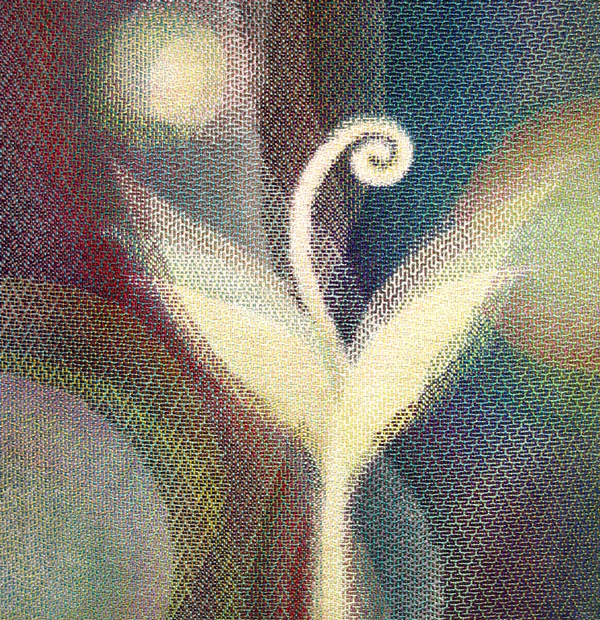
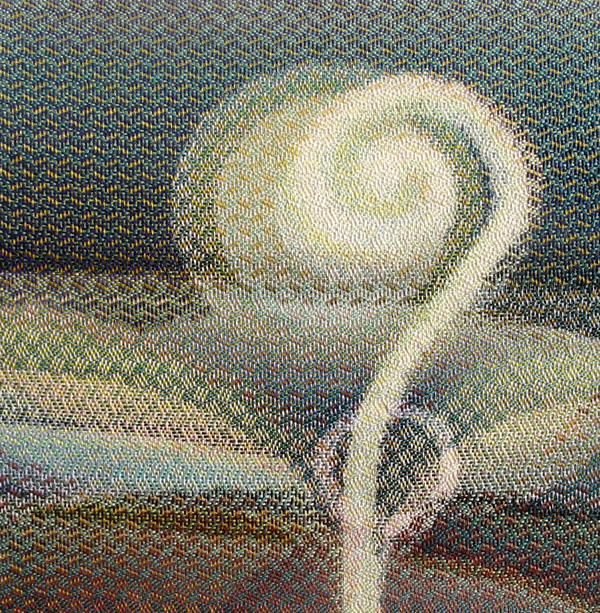
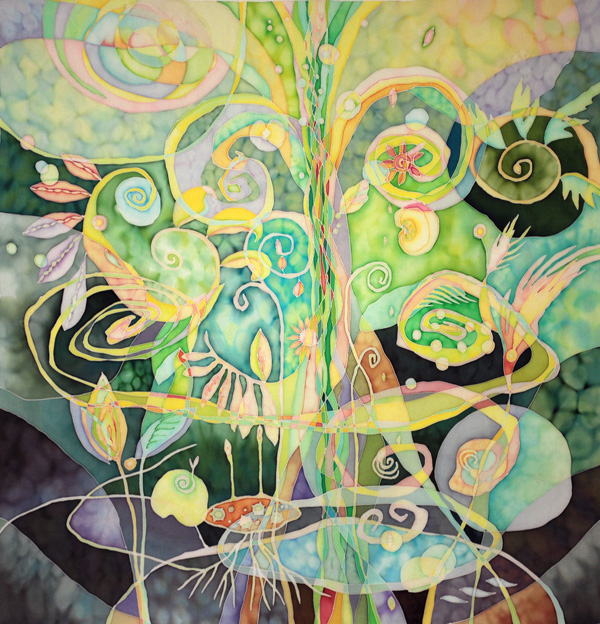
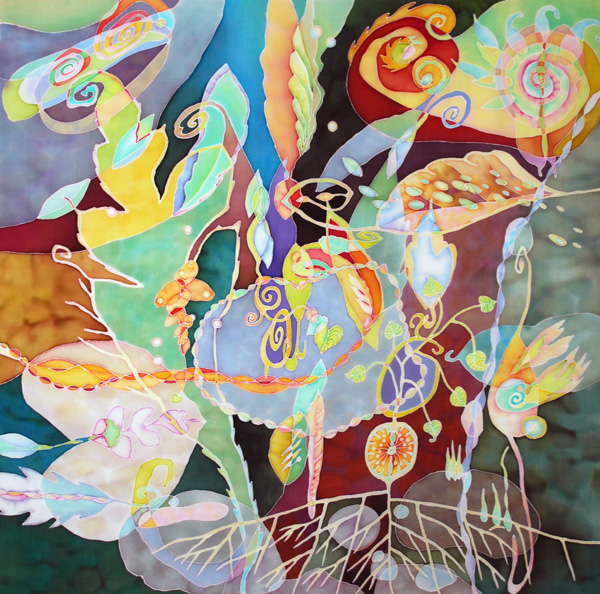
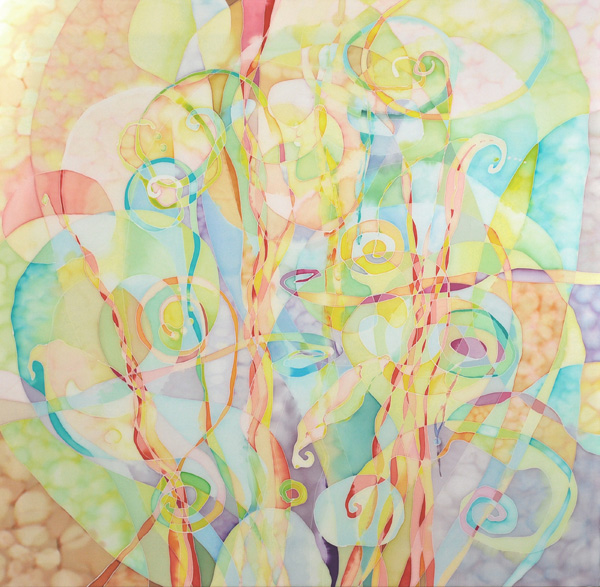
My main medium is weaving. I also work on silk painting. In both mediums, my focus is on pictorial expression. My work relates in many ways to traditional painting; instead of paints, I use dyes. The difference between my fibre work and traditional painting is that my work utilizes the techniques and materials unique to fibres. As I developed my imagery, I developed my own techniques.
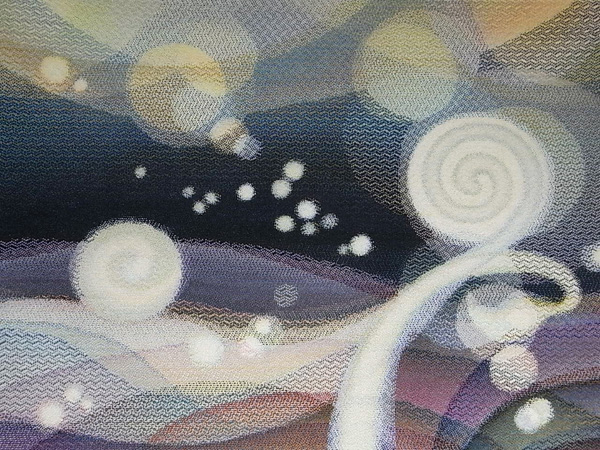
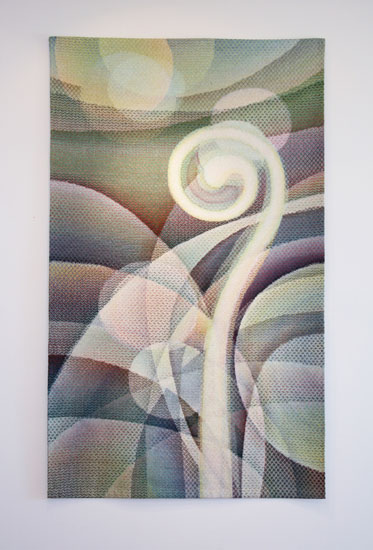
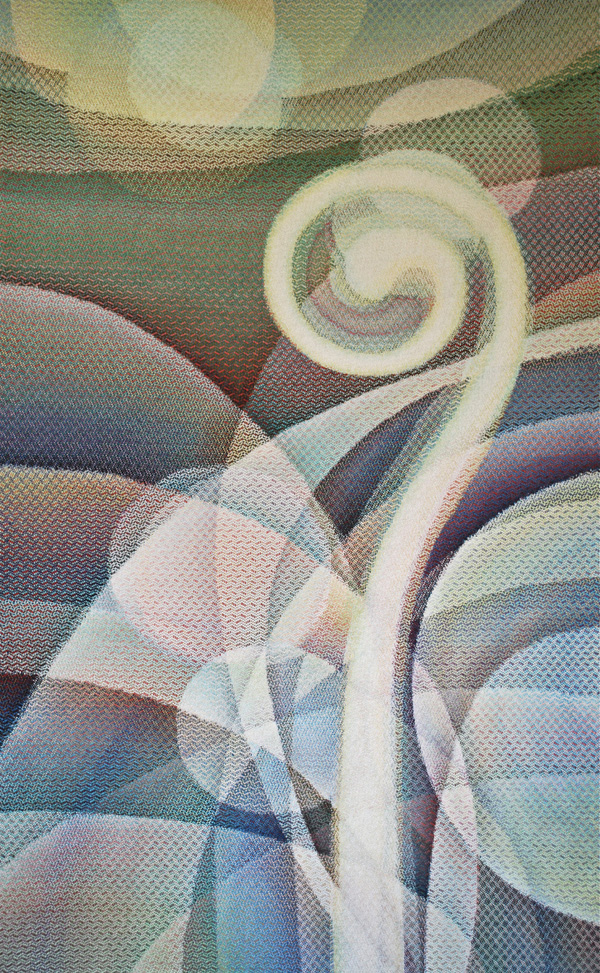
With both mediums my intention is to express invisible worlds. I have been working on the theme that I refer to as "positive energy" for about twenty years. Currently I am working on a series of pieces entitled "A Phase of Light" with my weaving. Light has many positive attributes and provides energy in our lives. I pick one or two words to title each piece in this series. It is an interpretation of that aspect of light.
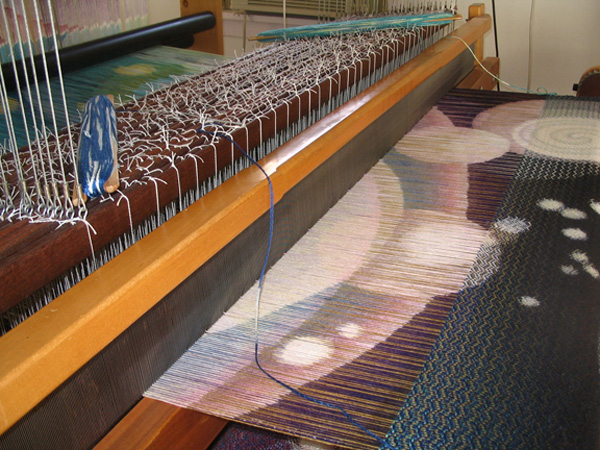
My weaving process is quite elaborate. I entitle my technique "A combination of warp painting and weft painting." I weave four white cloths first with my own plied yarn with different fibres. Then I paint with dyes. After washing, I take them apart and put them into one weaving. The images and colours are woven in, rather than on the cloth. It is a complex and time-consuming process and requires a detailed plan. Before I start weaving, I work on drawing and painting in order to develop my imagery.
Previous World of Threads Exhibitions
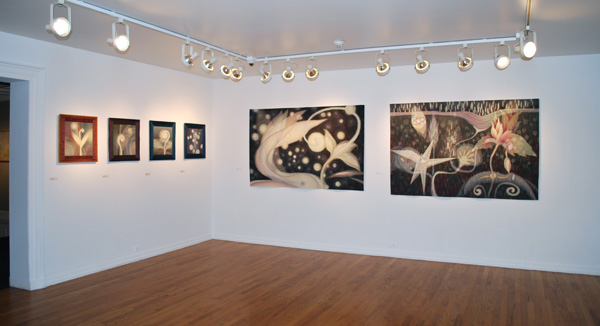
Fuyuko Matsubara exhibited in Festival 2009 Common Thread International Part 1. She was awarded "Best Traditional" for her artwork "Phase of Light: Hope".
Where do you get your inspiration?
While working on a piece, I always find something I would like to pursue more in depth. This can be the theme, weave structures, or colour combinations, so that my work is a source of inspiration in and of itself. Also, during meditations, images, titles, or compositions come to my mind. An abundance of beautiful natural surroundings always inspires me. For instance the colours of sunsets, streams or clouds, trees and hills covered with fog and mist, the intricate structures of spider webs with dew on them, and the mesmerizing colour gradations of flower petals.
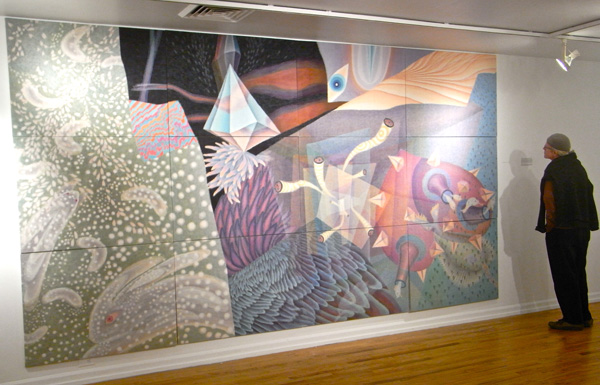
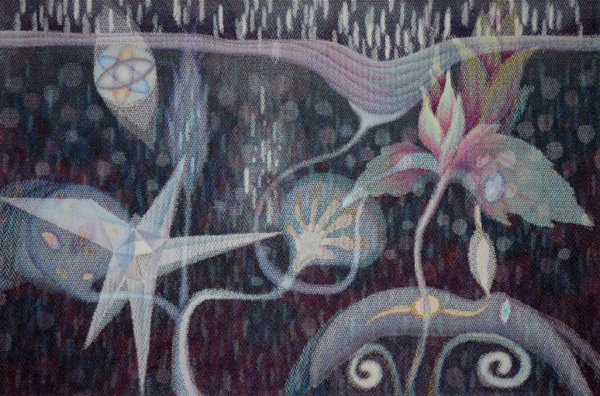
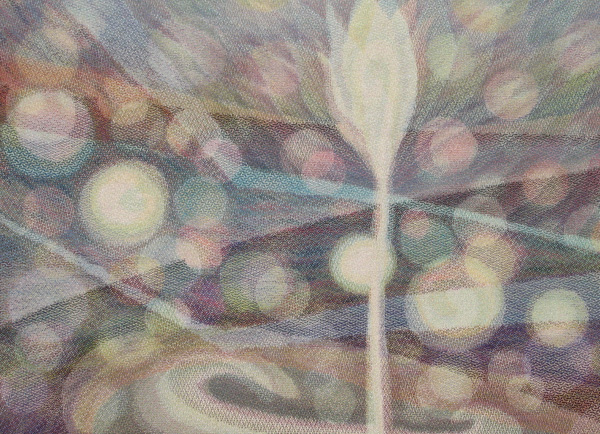
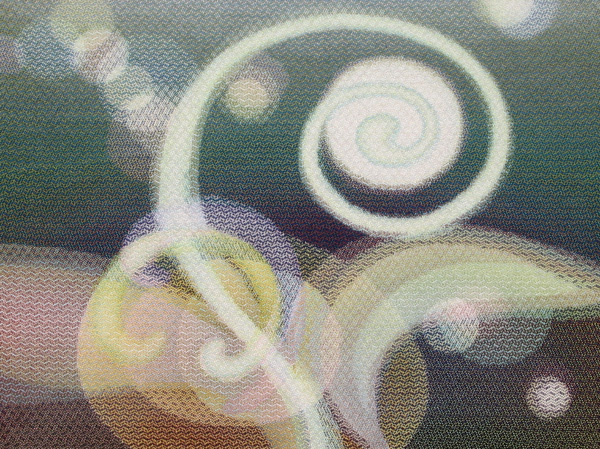
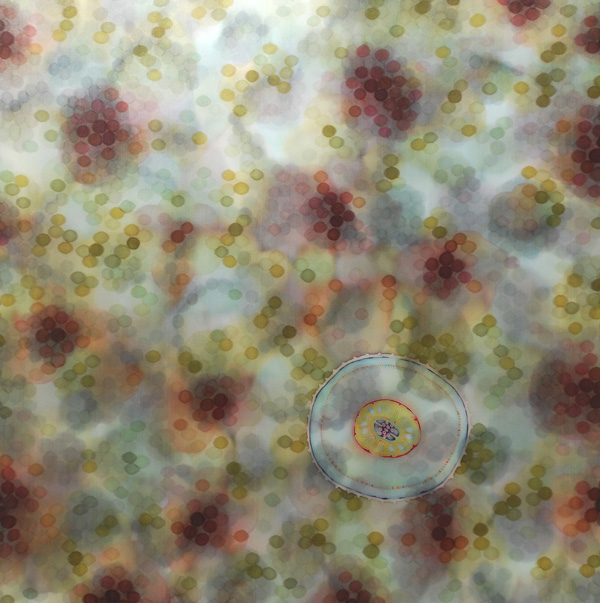
The work consists of 12 panels. Each panel contains an image that is compositionally complete and may be viewed as an independent piece. The image of each panel "bleeds" into or connects to adjacent panels. Any combinations of adjacent panels may be viewed as one image. When the 12 panels are viewed together, they create a single composition entitled "In the Earth". The concept behind these arrangements reflects my view of the elements of the world as they may be dealt with individually or as groupings.
What I am trying to express in the pictorial image of "In the Earth " is "beings" (life forms) and their environment in the realm of the Earth. The image is representational and imaginative in order to express both visible and invisible dimensions. The beings in my imagery are constantly growing in their environment. The beings and the environment are interactive and interchangeable in terms of their forms because they are made of similar components that are like atoms. I refer to these components as "light corpuscles". The characters in my imagery are overlapped and layered in order to express my idea of the Earth as multi dimensional. Both micro and macro cosmic beings are co-residing in my imagery to simulate actual elements that can be found in the Earth.
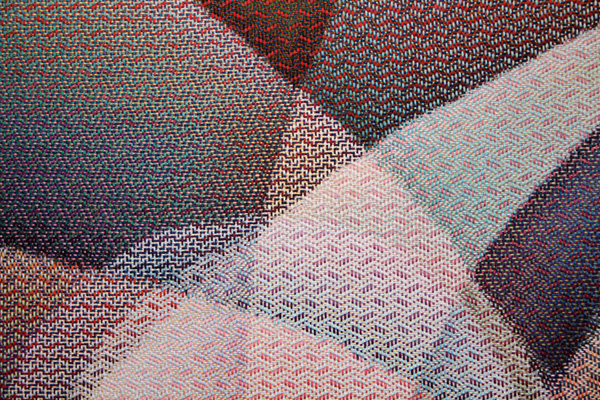
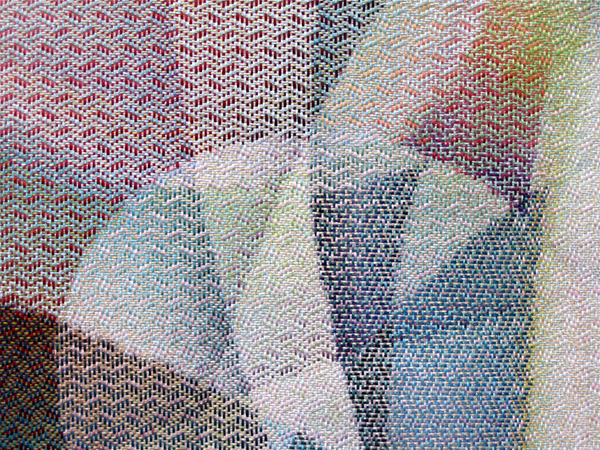
The reason is that it uses a wider range of colours than any other craft area.
Why did you choose to go into fibre art?
I wanted to work with materials. So I choose Craft and Industrial Design as my major when I applied to art school way back in Japan when I was a teenager. During my third year in college, I had to choose an area of study to concentrate. My first choice was not fibre because it attracted the most female students in our major at that time. After trying other areas, I changed my concentration to Textile. The reason is that it uses a wider range of colours than any other craft area. I started to weave and I found that weaving was such a deep subject to study so I continued to dig in. The more I dug, the more I learned, and I continued…
Which is your favourite fibre medium?
I like most fibre mediums. I like cloth, threads, yarn and fleece as many fibre artists do. I like to express my ideas through pictorial images with layers of colours and representative motifs. And I love the complexity of the constructions. So weaving and silk painting are great mediums for me. I also enjoy hand quilting and stitchery. I like raw material and love to construct with it. I enjoy convoluted building processes.
What other mediums do you work in, and how does this inform your work?
As I described before, I work on drawing and painting. I use pencils and colour pencils for drawing and I use watercolours, acrylics, and sometimes oils for painting. I use these mediums to plan my weaving work. My weaving process takes a tremendous amount of time so that finalizing images in drawing and painting is important. Drawing and painting take less time than weaving and the materials are easier to control than dyes. I use my drawing and painting to search for the right compositions, lines and colours.
My silk painting is so much more spontaneous and takes less time than any of the mediums I mentioned. I don't work on drawing for my silk painting. I just enjoy the free flow of lines and colours directly on silk.
What specific historic artists have influenced your work?
I love the strong spirits of Renaissance artists, especially Leonardo da Vinci. Although I have admired his work for a long time, especially his drawing work, it didn't hit me very hard until I travelled to Italy and saw his "Last Supper" in person. The trip to Italy convinced me that spirituality in artwork is the most important aspect. I admire the paintings, sculptures, objects around the world through which artists sincerely worked to convey and present spirituality. Although the outcomes and appearances are quite different from my work, the ways the artists pursued and practiced art in their lives influenced me.
I also love to look at Hieronymus Bosch's work for his imaginative and precise depiction of the world.
What specific contemporary artists have influenced your work?
Not contemporary, but modern artists, both Paul Klee and Hundertwasser have been the source of great inspiration. I admire their exquisite layers of colour, free spirits, and bold usage of free patterns. I liked Francesco Clemente's work about 20 years ago but I haven't seen his newer work. All of them seemed to me to enjoy working with colours, patterns, and forms freely. I like the joy and human spirits that they convey in their work in a somewhat unpretentious manner.
What other fibre artists are you interested in and why?
I like Norma Minkowitz's work. I saw her work here and there in some galleries without knowing her background. I still don't know that, but I really like her airy and mystical sculptural work. Her crochet technique is amazing, pushing limits. I found her approach to form stoic. Later I found her older work in some publications. Her development of forms and concepts over the years is truly admirable.
What role do you think fibre art plays in contemporary art?
The distinction of areas in contemporary art is becoming more and more blurred. Many installation and sculpture artists use fibre as materials. Many fibre art programs in universities are disappearing or absorbed into sculpture programs in the U.S.A. On the other hand, creating home craft items seems to gain popularity. Among the chaos of contemporary art, fibre art also seems to be loosing its position. I hope art programs in universities support educators with sufficient knowledge of fibre mediums and its traditions.
Tell us about your studio and how you work:
My studio is at home. My husband is also an artist. We don't have any children. So our home is our studios. I use one bedroom as a loom room. The living room area is for my painting and construction. I have a large tabletop with Formica in the studio. One bedroom is used for an office and library. The whole cellar is my husband's studio.
I have a full time teaching position at a university. It makes it pretty difficult to find time and peace of mind during semesters. I usually use my summer break for my weaving work. I also like to work on plans, such as drawings and paintings over the quiet summer.
What was your motivation for submitting your work to the World of Threads Festival?
It was an international exhibition in fibres. The exhibition sites seemed accessible and able to attract a large number of people from Toronto and the surrounding areas. Also the website was very informative and comprehensive.
In the past, people created textile work with great passion and finesse with their hands and spirits. It was definitely a great part of our human lives. I embrace the tradition and hope to carry it on.
Is there anything else you would like to tell us about you or your work that we have not covered?
When I was an art school student in Japan, I didn't think traditional and ethnic textile work was interesting. When I came to Cranbrook Academy of Art for graduate studies in fibres, my teacher Gerhardt Knodel suggested that I look back at my cultural background and also this led me to a richer appreciation of historical and ethnic textiles. Moreover, my experience working as a textile restorer at the Metropolitan Museum of Art in New York City, greatly influenced me in the way I look at textile as an art form. In the past, people created textile work with great passion and finesse with their hands and spirits. It was definitely a great part of our human lives. I embrace the tradition and hope to carry it on.