Artist Interview 37: Lindy Pole
Toronto, Ontario, Canada
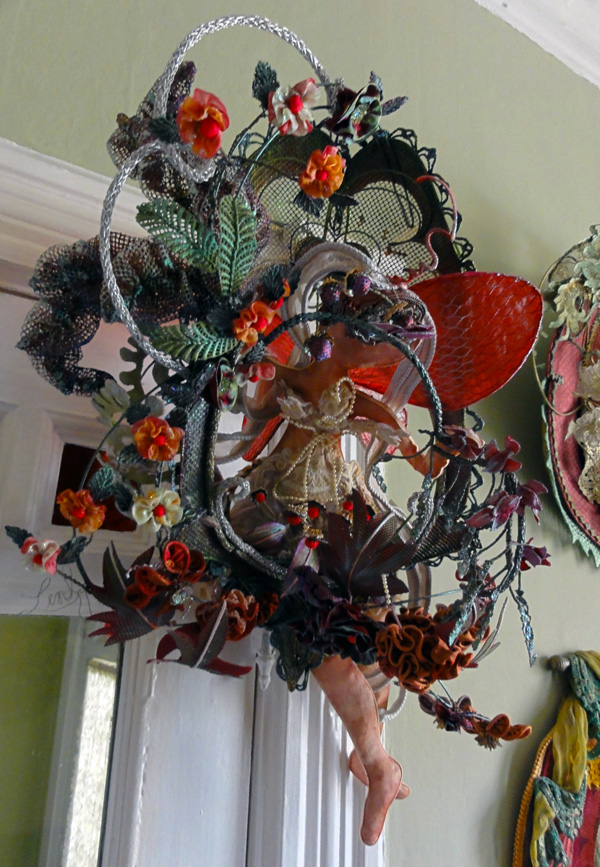
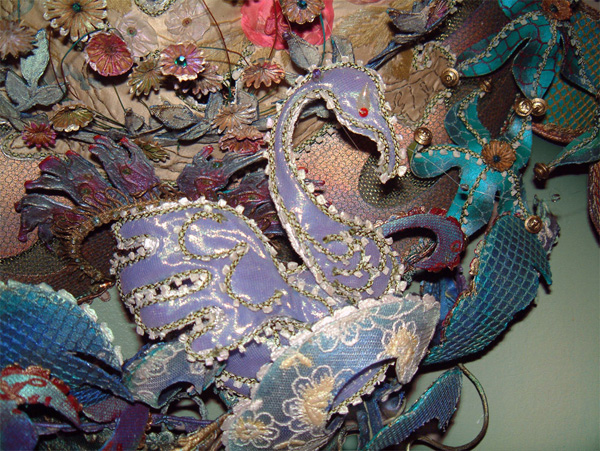
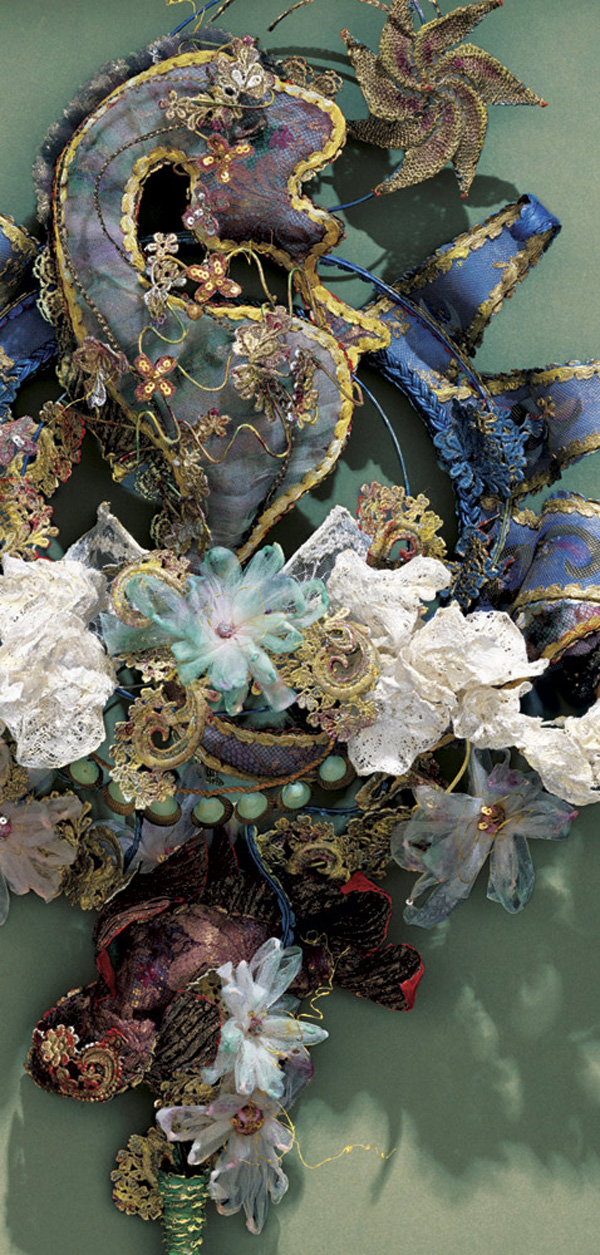
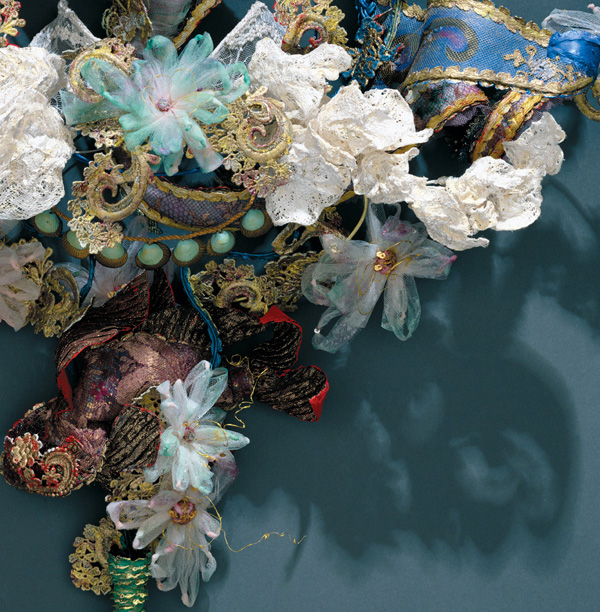
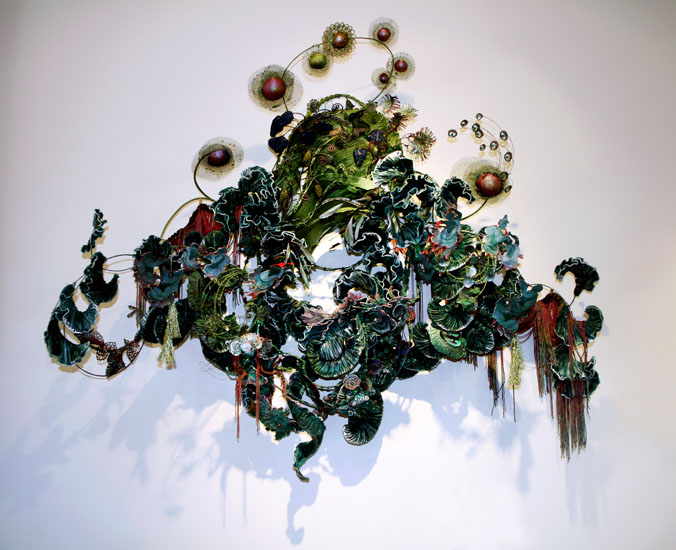
Sculpture artist and costume designer Lindy uses intricate grouping and layering of fabrics and adornments in her 3D fabric collage wall hangings. Her pieces are constructed using an assortment of random combinations of themes and materials. Lindy likes to work with her hands, sewing little stitches to mold and form shapes at the tips of her fingers.
Tell us about your work?
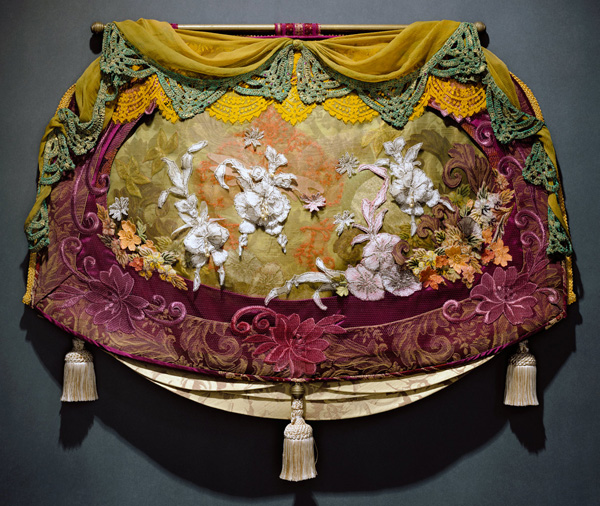
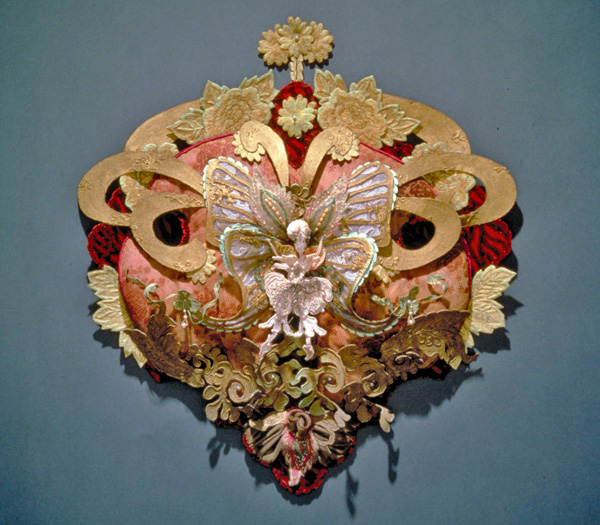
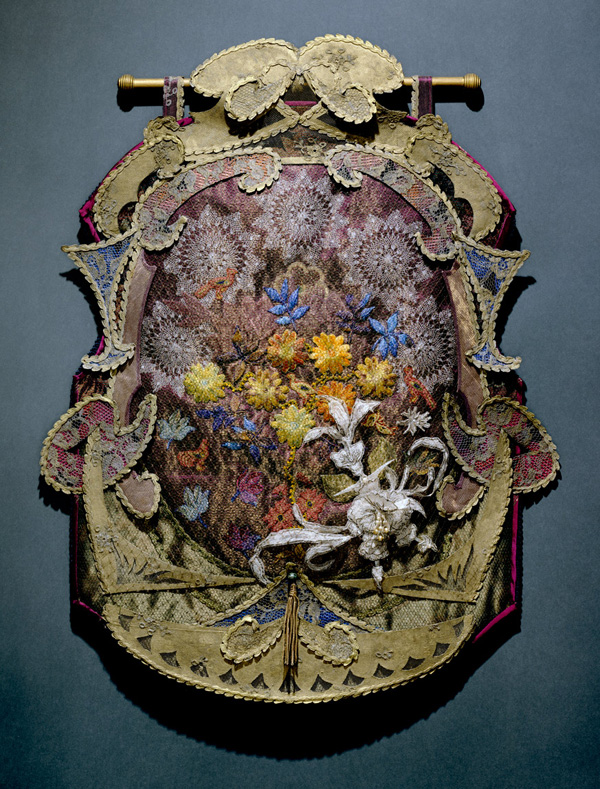
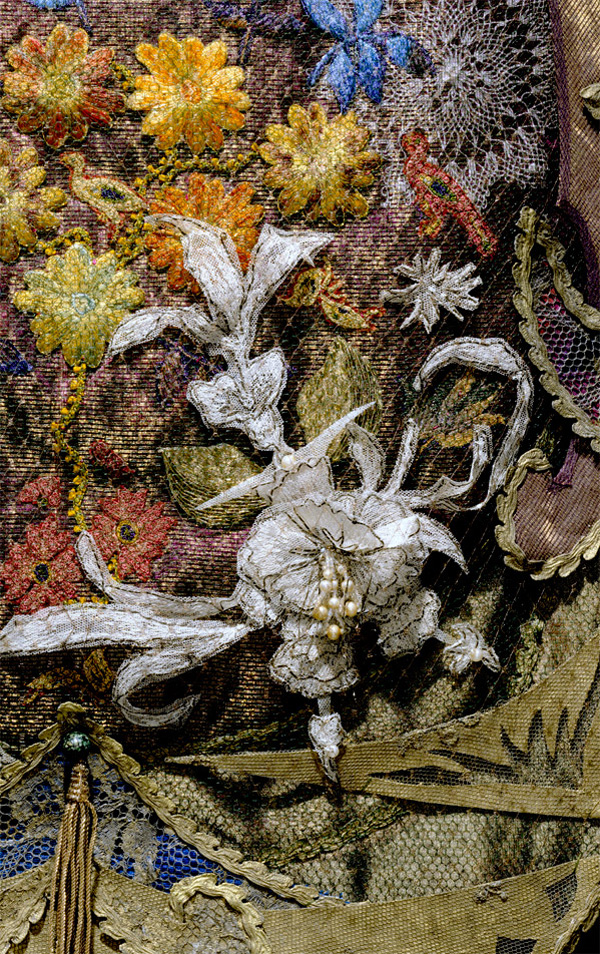
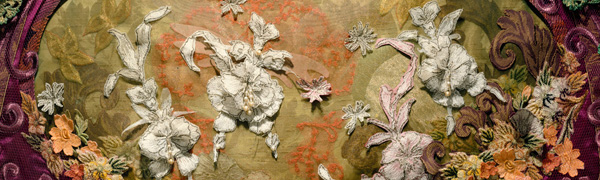
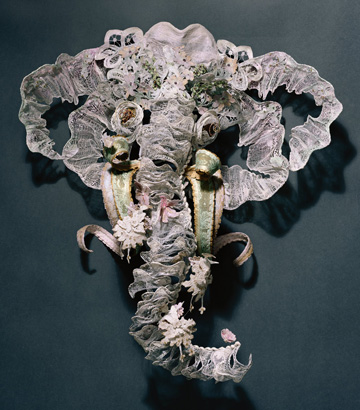
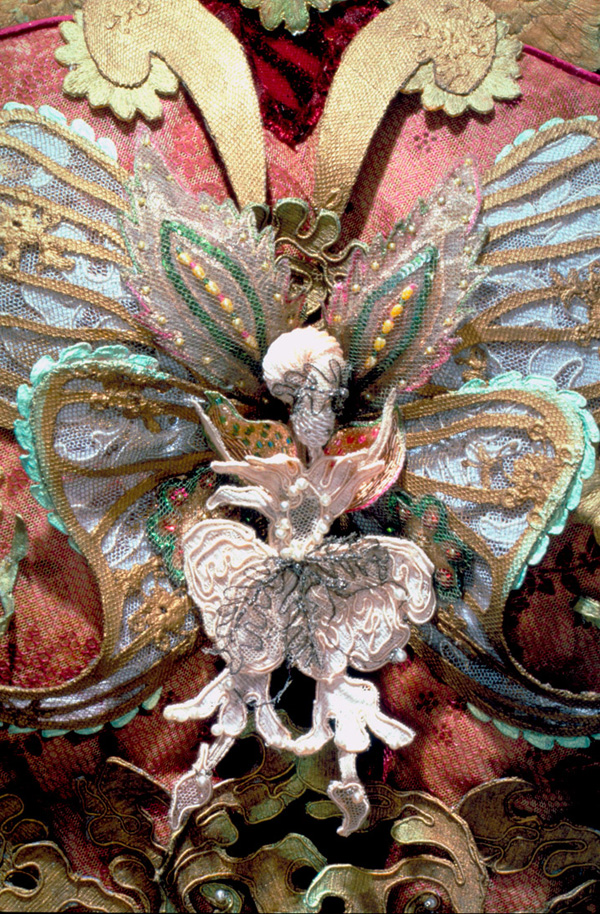
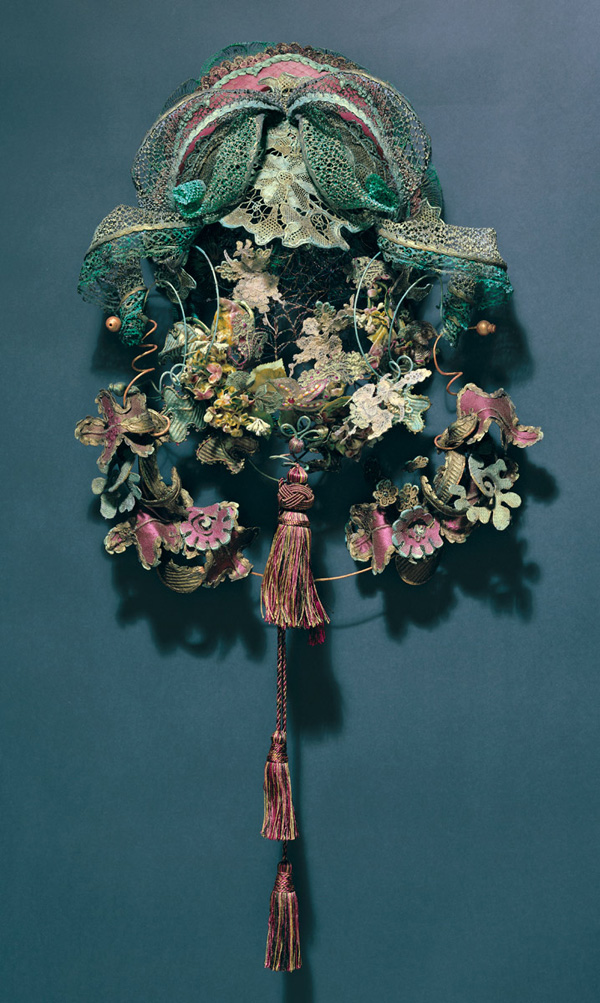
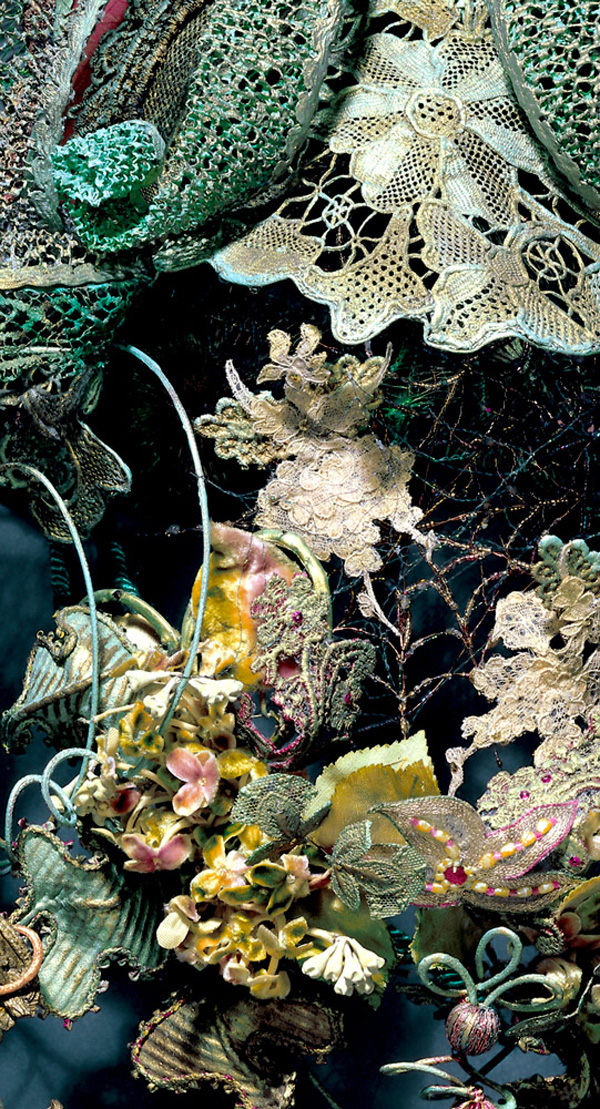
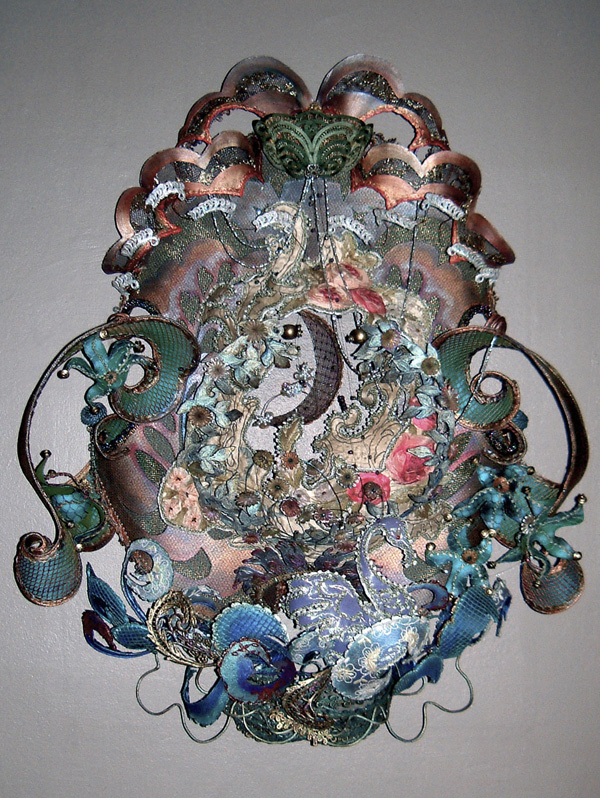
The current fabricated sculpture series than I'm working on, exhibits an intricate grouping and layering of fabrics and adornments as seen in elaborate period costumes and headdresses. However, these techniques are now presented in a pictorial, often symbolic or allegorical fashion, as stage-like settings. Translation of colour, shape, texture and composition to portray mood is key. The individual parts used to construct each sculpture may be cut-out, constructed, formed, fashioned, molded, layered, painted, dyed, sewn, quilted, beaded, embroidered, or any combination of the above and anything else that comes to mind in the moment. The work is of transforming fabrics, rather than in the creation of them. As the series progresses, the parts become more 'sprung', wired - moving and waving when provoked. Each piece of the series becomes an engineering challenge, demanding versatility and strength while still exuding a delicate and gentle nature.
Previous World of Threads Exhibitions
In Festival 2009 Lindy Pole exhibited Fabricated Sculpture Series #20 in the Common Thread International Exhibition Part 1.
Where do you get your inspiration?
Generally, the inspiration is dreamlike and fantasy based, but the settings are earthbound, connected to nature. The pieces demonstrate a timeless quality with shapes which ignite the memory and feed the imagination. Glimmers of the Baroque or Gothic may be revealed. For instance, a gathering of eclectic styles may be seen, giving an overall Victorian feel in the ornate, complex and decorative presentation. Folklore, myth and theatre merge to present the viewer with puzzles of shape and content, holding stories within. For specific information, I keep picture books of nature, insects, animals, aquatic life. I find further inspiration in forms of attire and embellishment through the ages – corsets, armour, shields, jewelry for instance – and, in architectural elements. My pieces are constructed using assorted and sometimes even random combinations of themes and materials.
It occurs to me, this work reflects the world in which we live, a notion that everything we know is on the verge of disappearing, with climate change, environmental threats and the incessant onslaught of technology. Something, or everything precious and fragile and to be cherished, is slipping away.
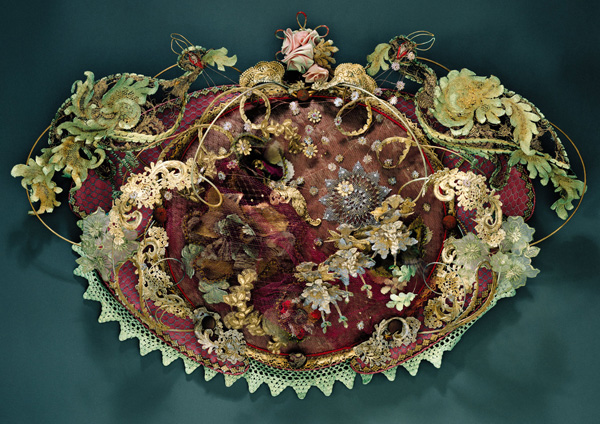
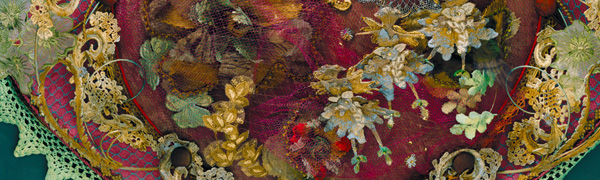
"Wouldn't it be challenging to use these techniques of layering and composition and make little worlds".
Why did you choose to go into fibre art?
One day, as I was pondering a period hat that I had just completed, I thought: "Wouldn't it be challenging to use these techniques of layering and composition and make little worlds". I like to work with my hands, sewing tiny little stitches, molding and forming shapes at the tips of my fingers. It seemed a natural progression at the time, to combine my acquired skills of working with fabrics, with my painting experience.
Which is your favourite fibre medium?
Lace - I just love it! In my pieces, I use left-over, worn or broken bits for the most part. Antique bits are very good! Much of the other fabrics I use are cast offs, remnants or ends. Of course I do invest in good new materials for the basics of construction.
I made the first piece for a dear friend and then I just kept going.
What other mediums do you work in, and how does this inform your fibre work?
Painting has been a major occupation in my life. This has enabled me to approach fibre art with a more fluid touch, focusing on freedom of movement and colour transitions.
What specific historic artists have influenced your work?
I adore Van Gogh. The emotion reeling from the canvas and the vibrancy of colour and texture are inseparable. Swirling, swirling intensity of experience in the moment! Does he actually see as he paints? He has influenced me with his passion. Monet: more soft, capturing a fleeting moment in time and perhaps a flutter in between moments. Magical and mysterious! He has influenced me with his hypnotic vision. Degas: with dancers posed in solitude, exuding strength of body and spirit while cloaked in a dream-like softness. He has influenced me with his devotion.
Pre-Raphaelite painting: for its jewel-like vibrancy and symbolism, the connection to myth and legend. Spiritual by nature, yet oozing with sensuality! I do not really have a favourite. All of these painters have influenced me with their daring. I admire the Arts and Crafts movement for its emphasis on craftsmanship and integrity of design. The forms are bold, inspired by nature, the decoration detailed and clear. William Morris embodies the Arts and Crafts philosophy. Art Nouveau: in all its aspects, with its exquisite flow and proportion, taking its inspiration from nature, plants, flowers and gentle creatures. It has a spell- bound effect on me.
Iconic art: so theatrical in its presentation. Still, secretive, yet clear in colour and form. I am intrigued with the allegorical nature of this art form.
Illustrated children's books and children's pop-up books: I remember lying on the floor as a child with my face inside a pop-up page of Swan Lake. I was lost in that world. There followed my love of stage and stage effects, leading to my design work with dance and theatre and on to my current work. And, I must mention, Mother Nature. The genius of design, the smallest, smallest details echoed and reflected in magnification. The hundreds and hundreds of sunsets I have soaked in while reclining on the beach on the shore of Lake Huron, colours merging and shifting effortlessly.
What specific contemporary artists have influenced your work?
The theatre world is over-flowing with fibre artists of all sorts. My admiration for these artists' ingenuity, hard work and devotion, has been of great inspiration to me. The attention given to detail is quite astonishing. Although the costume and set details of theatrical productions may often be lost to the spectators, the care and artistry displayed, transforms into strength of form and presence on stage and adds to the richness of experience.
Tell us about your studio and how you work:
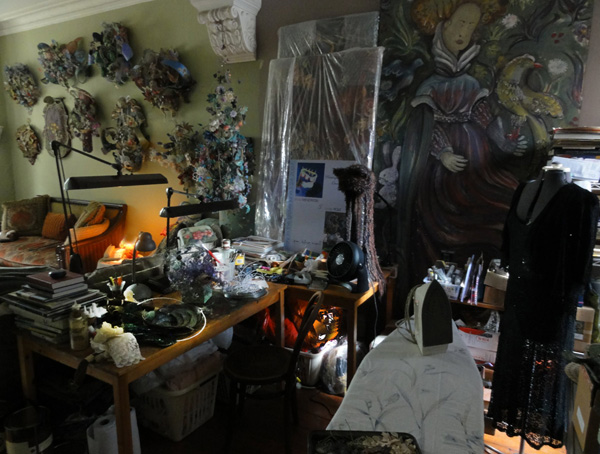
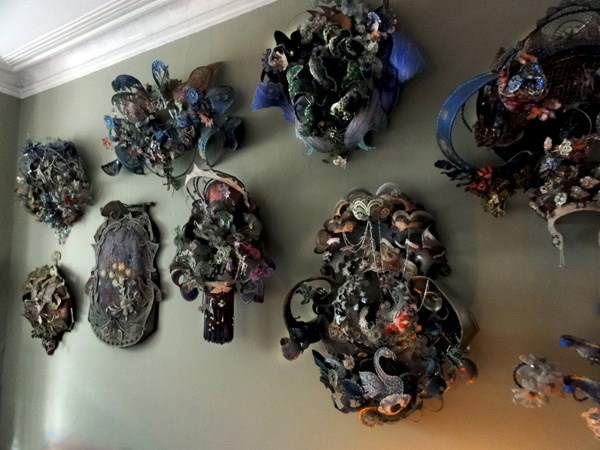
My studio is in my home, sectioned off at the far end of my living room. As I finish a piece I hang it nearby. This has transformed the surrounding space into somewhat of a gallery. Everything I need for my work is at arm's length, compact and cozy!
What role do you think fibre art plays in contemporary art?
Acknowledgement of creativity in all its forms is so important. To appreciate other genres can only be a good thing. Fibre art helps to enrich the world of contemporary art. Fibre art, with its tactile nature and its ingenuity, broadens the landscape and potential for further exploration and accomplishments within the confines of the art world.
What was your motivation for submitting your work to the World of Threads Festival?
There are not a lot of venues interested in showing work of this nature. I was also excited to see the work of other fibre artists and to share in the experience.
Is there anything else you would like us to know about you or your art?
I made the first piece for a dear friend and then I just kept going.