Artist Interview 35: Laurie Lemelin
Toronto, Ontario, Canada
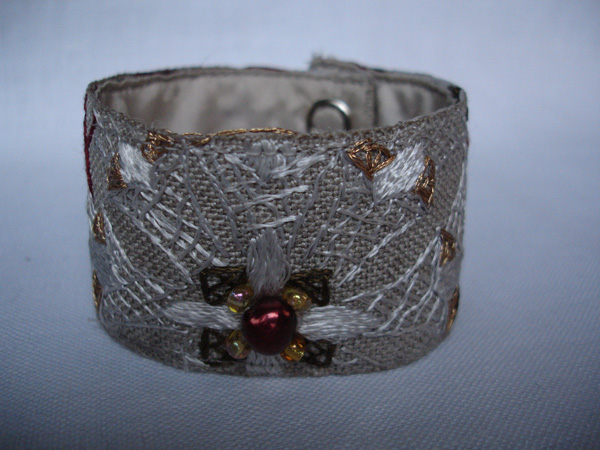
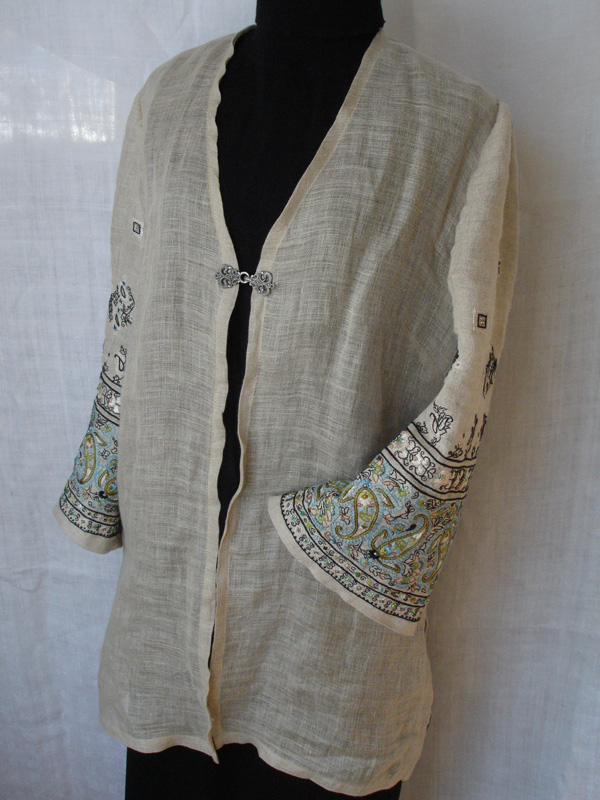
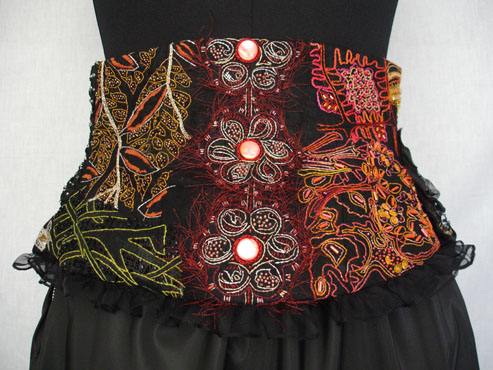
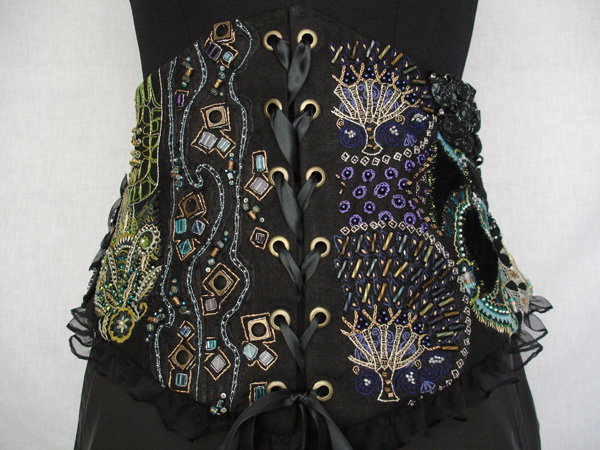
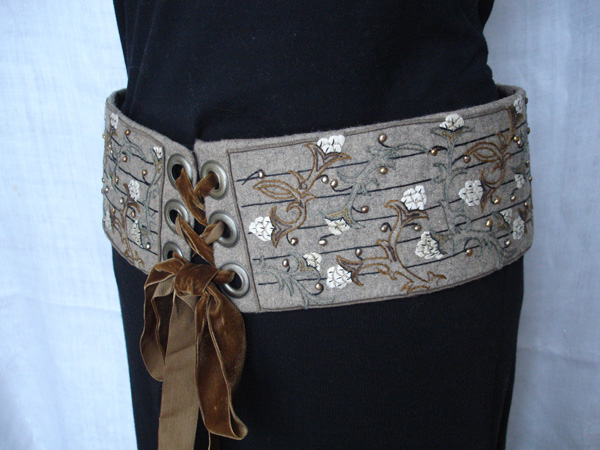
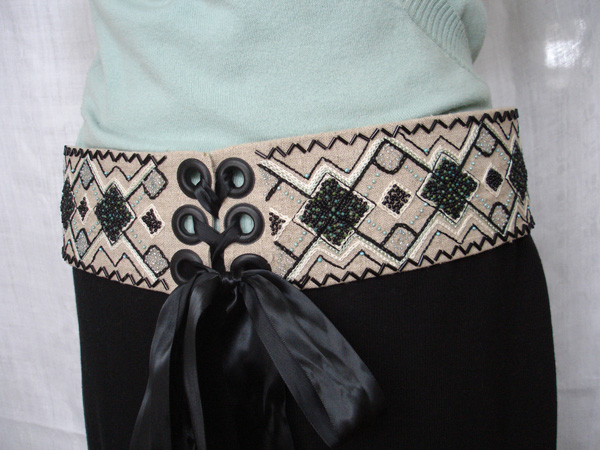
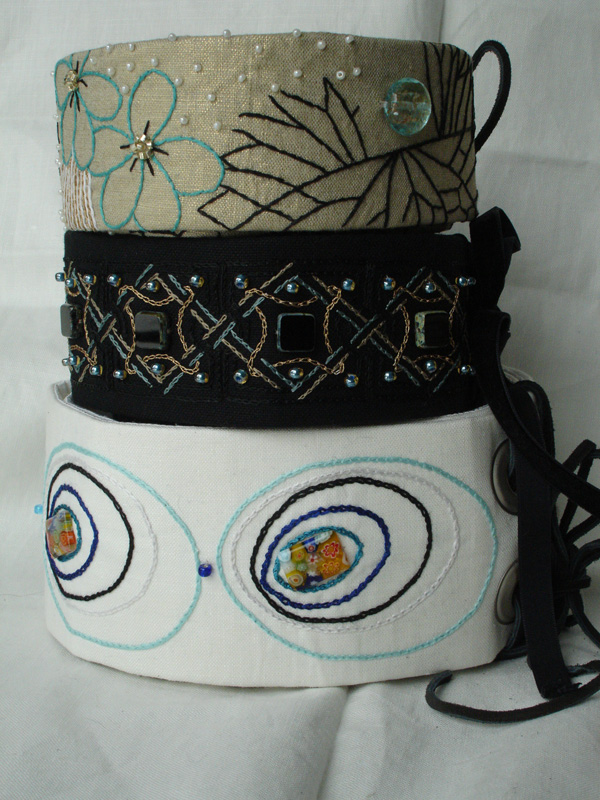
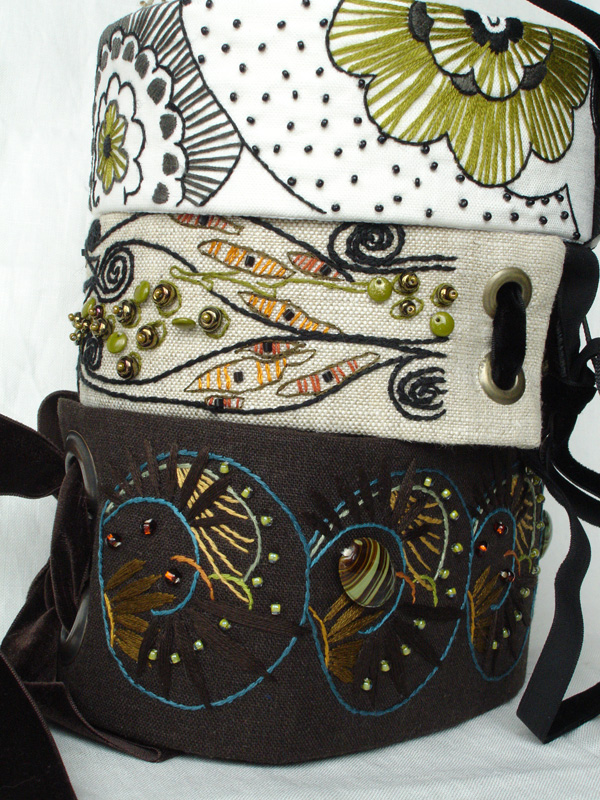
Laurie’s enduring interest in fashion, pattern and textiles had led her to design and the creation of beaded and embroiled one-of-a-kind accessories and wearable art. Working with silk cotton and especially linen, she constantly experiments with new stitches and materials to embroider into a garment. Laurie says that fabric is pliable and can become 3D with just a few folds or a small amount of stitches.
Tell us about your work?
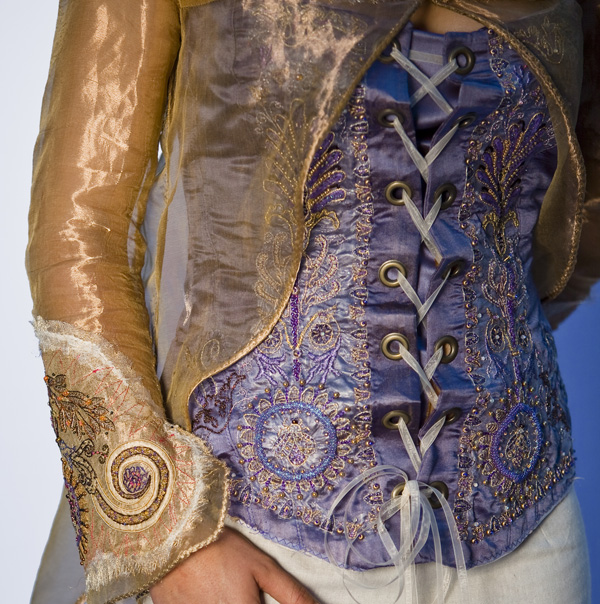
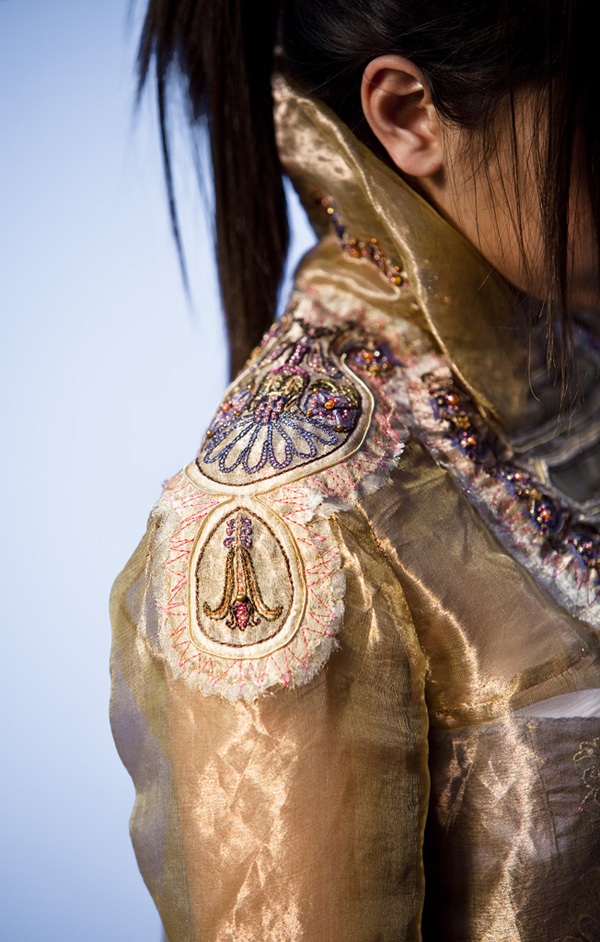
Hand embroidery has long been thought of as charming samplers and tablecloths, created for domestic pleasure but the degree of embellishment that has been produced all around the world for centuries is from where I take my inspiration.
My work starts with a life-long fascination with fashion. My earliest memory of making clothes for my Barbie doll has influenced my pursuit to create clothing and accessories that illicit a feeling of passion from the wearer as well as from the person viewing it. I work with fabrics that I love - silk, cotton and especially linen. I am constantly experimenting with new stitches and materials to embroider into a garment. I have post-it notes all over my books, for the 'next stitch to try'.
I have recently been experimenting with different techniques to manipulate fabric. Creating a 'relief' with fabric, changes the look and feel of cloth so immensely. The idea that a few puckers, pin tucks or projections could alter cloth so dramatically is where I am working on trying to perfect. Add to that with surface embellishment and I hope to create some exciting three-dimensional garments.
Previous World of Threads Exhibitions
Laurie Lemelin exhibited "In Full Colour" in the 2009 Common Thread International Exhibition Part 1 .
Where do you get your inspiration?
I live in a lovely, older area of Mississauga. With its mature trees and interplay of colour and texture, I just have to look out a window to find something incredible every day. Architecture and Fashion are constant sources of inspiration as are magazines and books. Something such as a photo of a Morrocan doorway or an etching can become the basis of a new design. It is sometimes the composition, it could be the colour or pattern or it might be as simple as a beautiful Murano glass bead.
I keep notebooks of information (a throw back to my Fine Art days!) where I draw out my ideas, pattern options, lay out a new colour way or just cut and paste bits from magazines. The act of organizing, gathering and collecting, has become part of my creative process. I'll be thinking of a set of colours that I want to use and will find the perfect combination in a magazine. Sometimes I will need to lay out that photo along with my fabric choices, thread, trim and anything else that applies. Once I get a feeling from this grouping, I will continue with overall design and pattern choices.
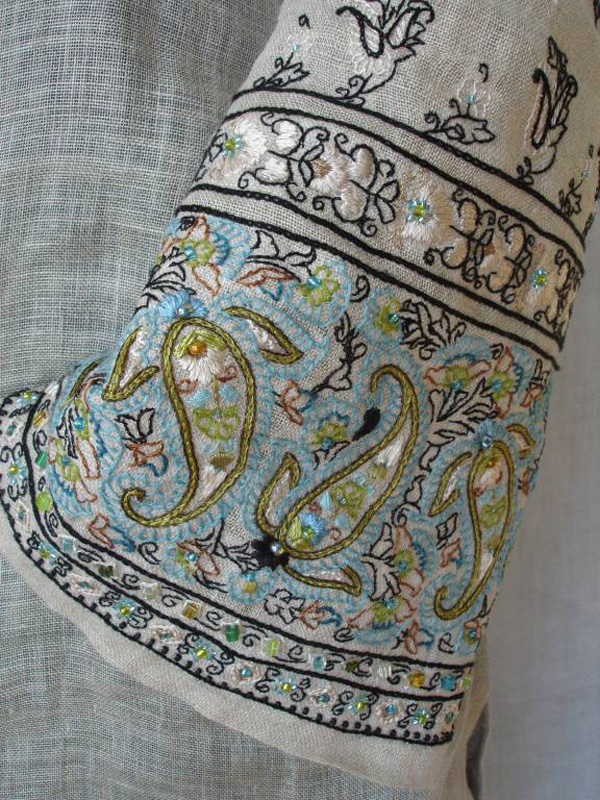
There is a Zen like quality to embroidery. Your body isn't physically taxed which seems to allow you to get intimate with the details.
Why did you choose to go into fibre art?
It was never a question. I've been sewing since the age of nine, so I developed a love of textiles from an early age. While studying Fine Art, I worked with a lot of different mediums, but I continued to use acrylics to paint the patterns that I designed, until I realized I was missing a component of what I love - texture! Fabric is pliable and can become three-dimensional with just a few folds or a small amount of stitches. Although a certain texture could be realized, it wasn't the hand of a fabulous silk, linen or cotton - my chosen mediums.
Which is your favourite fibre medium?
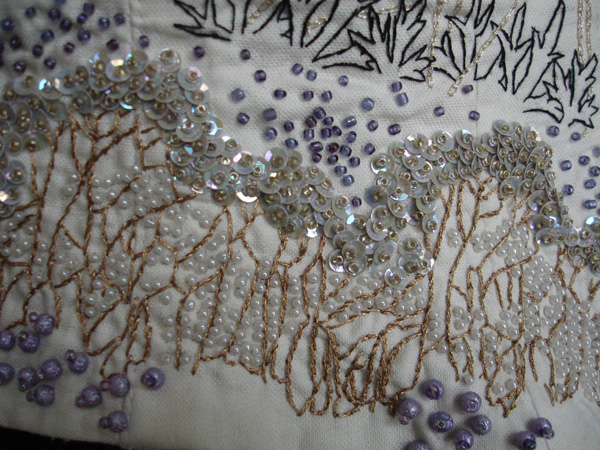
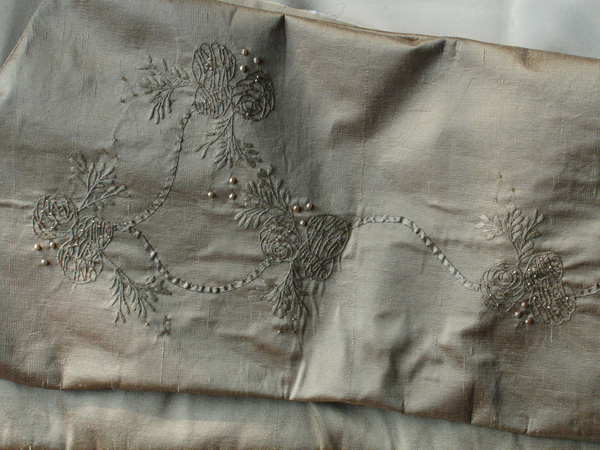
Needlework is my absolute favourite! I have tried others through the years but embroidery and beading is where I feel most calm. There is a Zen like quality to embroidery. Your body isn't physically taxed which seems to allow you to get intimate with the details. There are so many stitches and variations of them, as well as techniques such as Goldwork, Shisha Glass, Casalguidi and Stumpwork which dates back to the 17th century. I have experimented with some of these but have barely touched the surface. I look forward to becoming more proficient and finding ways to include all of these stitches in my work.
What other mediums do you work in, and how does this inform your fibre work?
I do a fair bit of drawing, as I still hand draw all of my own patterns. I enjoy taking some tracing paper to a design that I've been working on and layering new sections in. When I was in Design school, we had an instructor that used to say 'A room will tell you what it wants to be'. I still follow that motto for my work now. As I'm working on the design, I'm thinking about the type of stitches that the design will require as well as the colour palette and fabric choices.
I spent many hours designing and painting floor cloths, printmaking and silk screening, rug-hooking and knitting and sewing for work and pleasure but I don't do many of those things anymore. The fact that I know how to do these things keeps my mind actively searching for a way to incorporate them into what I do now.
I have been learning Adobe Illustrator to help with pattern drawing and manipulating of patterns. I think the computer is a great tool, as is the internet. I use that daily to source patterns, thread and books.
What specific historic artists have influenced your work?
I have always loved the embroideries of the 16th and 17th centuries so I would have to say that the embroiderers to the Kings and Queens of that time period have had a huge influence on my work. There isn't a lot written about the embroiderers of that time but their dedication to perfection is evident and I aspire to create work like that one day.
What specific contemporary artists have influenced your work?
Charles Rennie Mackintosh and Frank Lloyd Wright are two artists from the early 20th century that influenced my work because they were both multi-disciplinary architects. Wright designed every aspect of the homes and buildings that he created and Mackintosh created designs for furniture, metal work and graphic arts. William Morris is another of that era that I have always been drawn to because of his pattern, colour and compositions. He was a textile designer, writer, artist and embroiderer, all around Renaissance man!
I have always loved the work of Feminist artist Judy Chicago. Her installation artwork called 'The Dinner Party' depicts place settings for 39 mythical and historical famous women and was executed with hundreds of volunteers participating. I studied that piece when I was in college and was totally thrilled a few years ago when I found a book about the embroidery of that piece of history!
What other fibre artists are you interested in?
Years ago, I took an embroidery course taught by Jeanne Bellevance, a professional embroiderer from Quebec. She trained at Lesage in Paris, learning Haute Couture embroidery. Her sculptural approach to embroidery is truly ephemeral and I was delighted to expand my stitch knowledge.
Another favourite is Cynthia Jackson. She lives in Ontario and has studied at the Royal School of Needlework in the U.K. I discovered her work at the 2009 World of Threads Festival and have been in awe of her Goldwork embroidery. It is just sumptuous and the fact that she works in three dimensions is incredible.
Tell us about your studio and how you work:
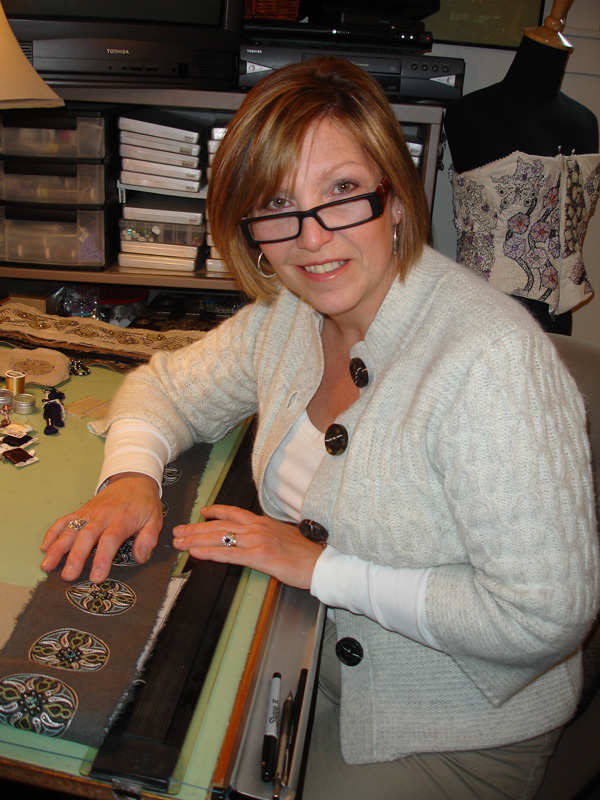
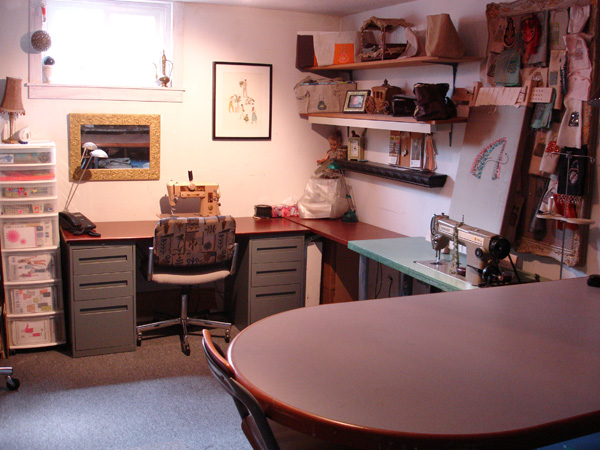
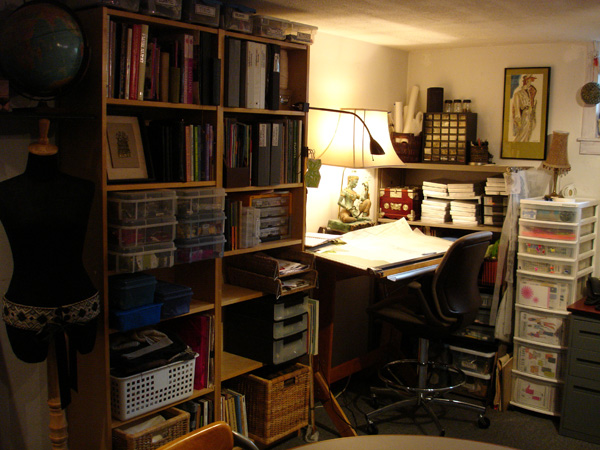
My Studio is set up with a drafting board which has great sentimental value. My Dad made the table for me when I started to study Interior Design. It is the place that I can go to be my most creative, designing new patterns, picking colours and planning new projects. Since I do all of the sewing for my projects, I have two sewing machines and a serger. One of the machines is an old Singer that my grandmother gave me. It has been good luck and a good friend for more than 25 years now. I usually work on many pieces at the same time so all the beginning and ending of a project will be done in a 'blitz' at the same time, always on that machine. My studio is a bright and well organized and a relaxed atmosphere to work in.
What role do you think fibre art plays in contemporary art?
Fibre Art has become more main stream, but still tends to be thought of as Craft as opposed to Art. This attitude is changing and will continue to change as the lines between these two disciplines becomes blurred.
What was your motivation for submitting your work to the World of Threads Festival?
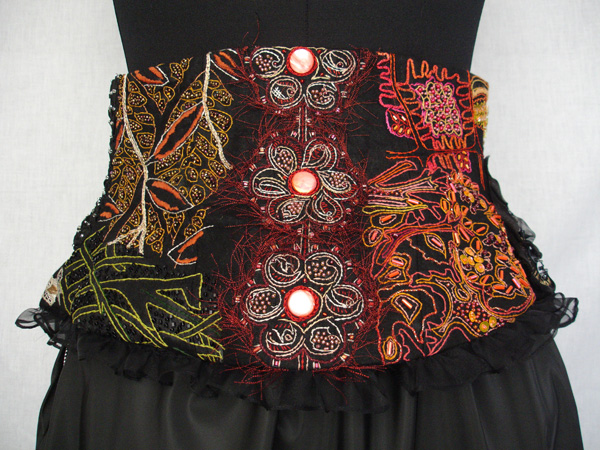
Before the World of Threads Festival, I had been creating only small-scale two-dimensional works. I created a corset with a theme of colour for the Festival and I tried a few new stitch techniques. It had been my most challenging piece to date.
Is there anything else you would like us to know about you or your art?
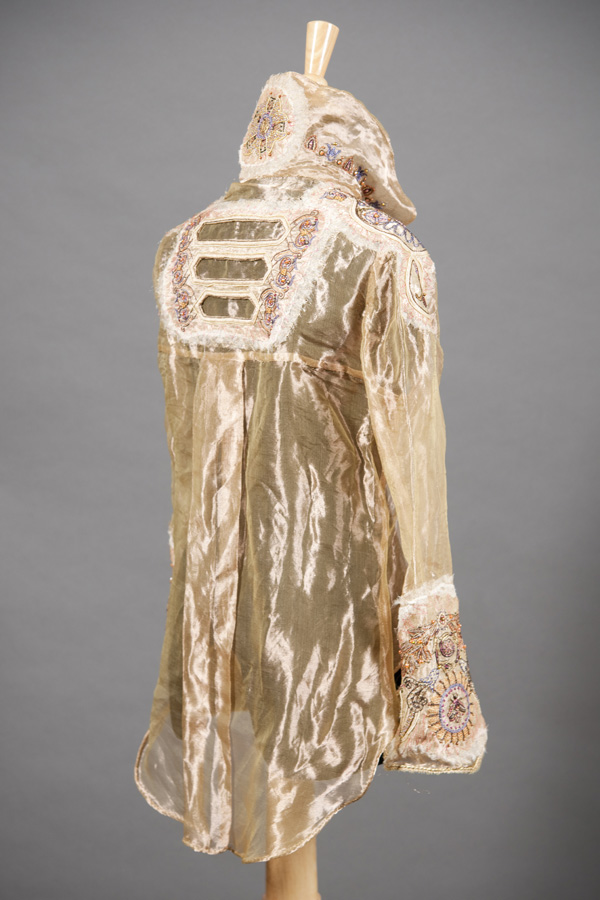
Last year I entered an embroidery competition in the UK - Hand & Lock Prize for Embroidery. I was one of twenty-five finalists out of 400 entries worldwide and although I didn't win, the challenge of creating a wearable piece of clothing based on a written brief, Militaria, was the most intriguing piece of work I've created to date.