Artist Interview 31: Milena Radeva
Toronto, Ontario, Canada
Tell us about your work?
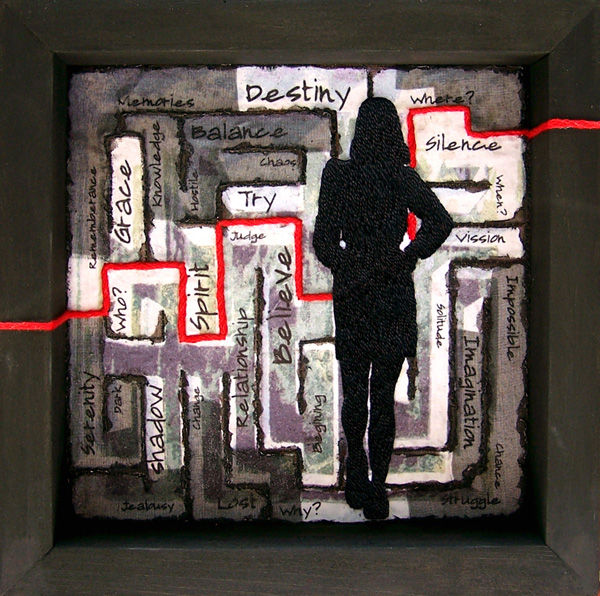
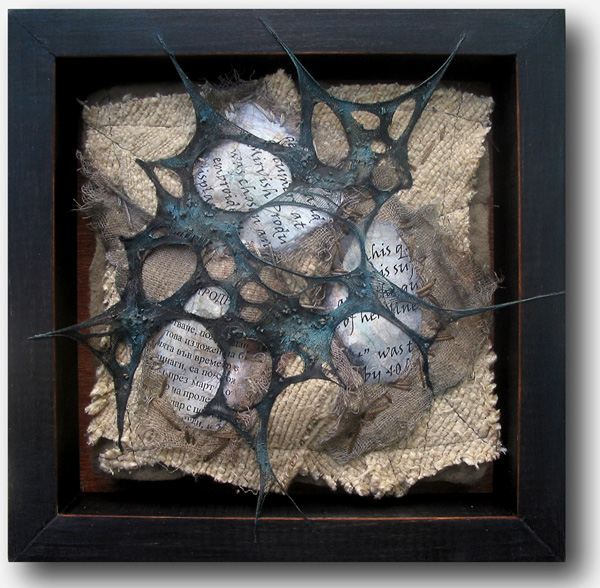
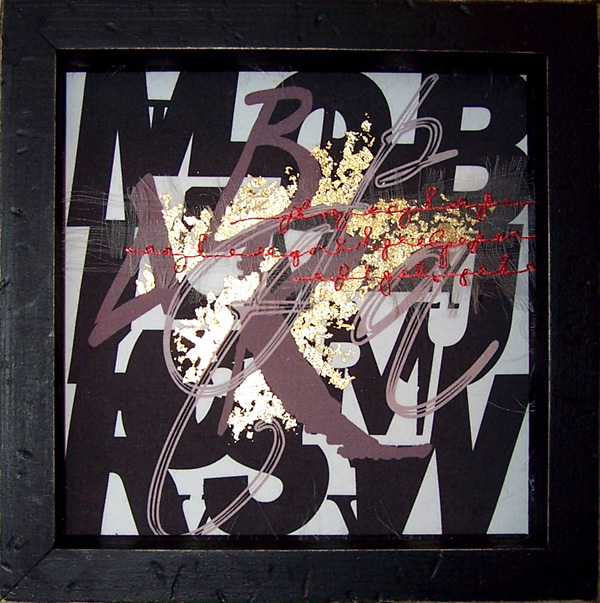
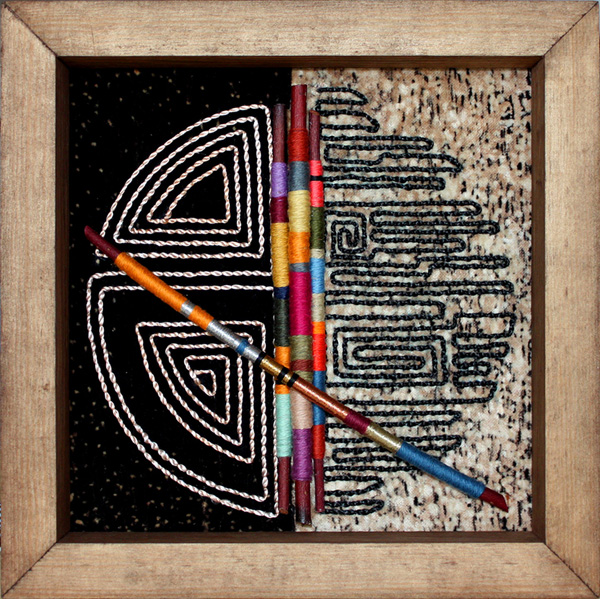
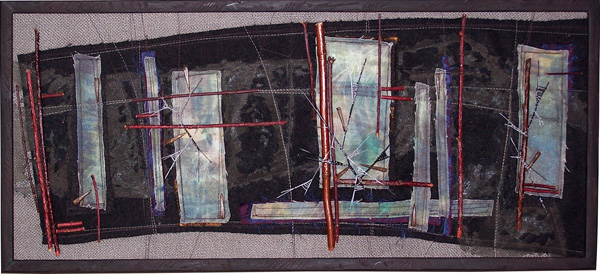
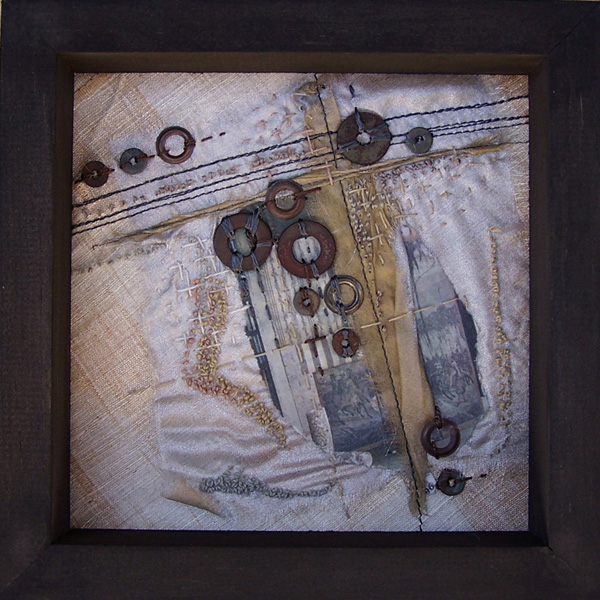
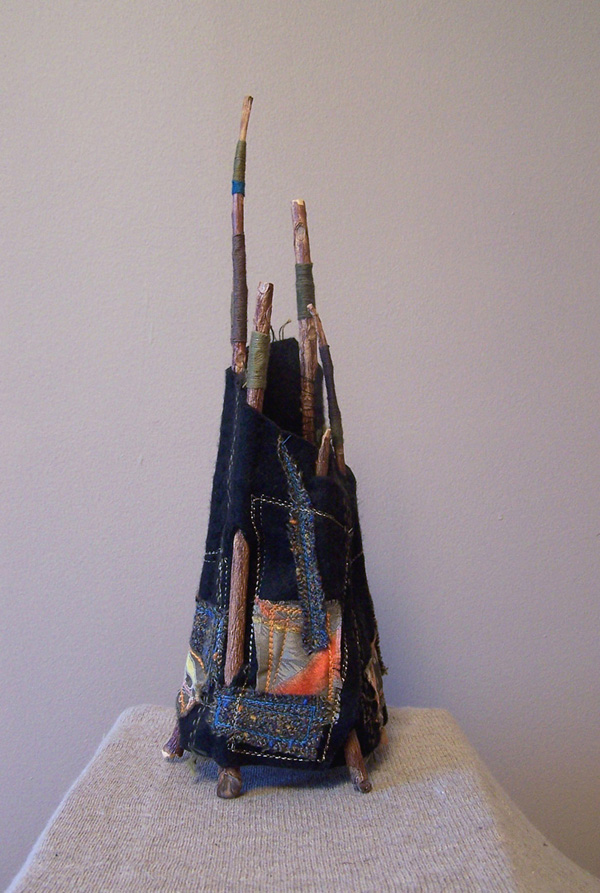
I'm working in a textile medium creating mainly wall hangings and three-dimensional textile sculptures. I use any possible fibre or other natural materials that strikes my fancy at the particular moment of creation. I heard someone say once "a painter paints, but an artist produces art with anything that passes through his hands". This comment expresses pretty close my understanding of the process of creating. As a fibre artist, I've never been very interested in the realistic representation of life. I'd rather leave that to the painters and the photographers. For me the mere medium of fibre calls for visual creations that provoke an emotion and can produce positive or negative responses. I believe that every material has its own nature, which we should follow and not go against in order to produce a harmonious quality, as unique and full of esthetic characteristics, as every fibre material is on its own.
Previous World of Threads Exhibitions
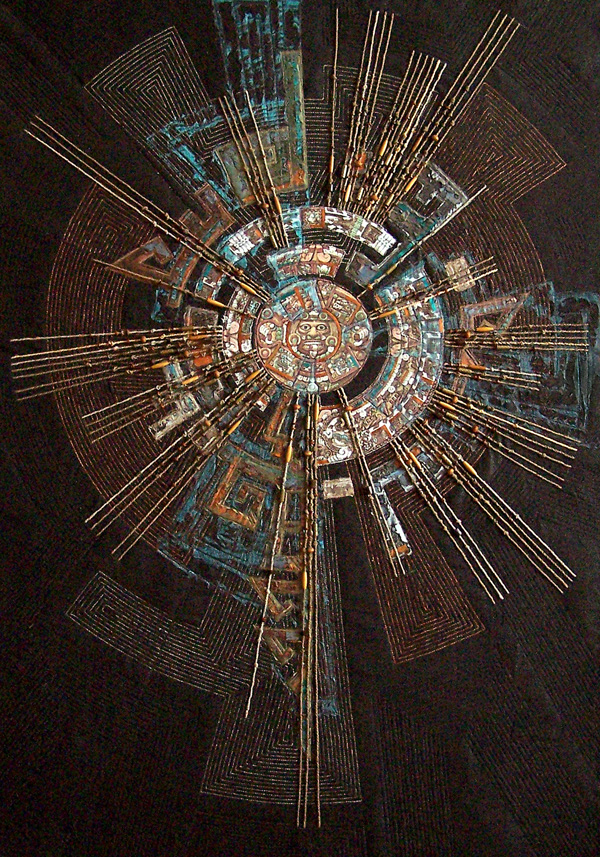
Milena Radeva has exhibited in four Festivals. In Festival 2016 she was in the major exhibition Cosmic Geometry. Festival 2009 saw her in the Common Thread International Part 2. Milena also had work displayed in Fesivals 2007 and 2005.
Where do you get your inspiration?
My work has always been a constant well of ideas and inspiration for me. I meet on a daily basis with a lot of talented craftsmen and designers, where influence cannot leave me unmarked. The works of other artists also leave quite often a memorable effect on me. But my biggest influence will always be the works of the old artisans you can see in the museums and antique shops. The skill, the dexterity, the attention to every detail – that's something that always steals my heart.
Why did you choose to go into fibre art?
It was a natural progression for me. Besides my Fine Arts education, I've always been creative and interested in making things. All the women in my family are very skillful in embroidery, knitting, crocheting and other crafts. As a little girl, I spent endless hours observing their whole creative process with fascination, so when I got a bit older they began including me in their craft. I think the early exposure to the creative process was really important to me. It seemed like a natural part of life and it became something I could not do without. Later on acquiring new skills in this field turned almost into an obsession that I still have to this day. I haven't seen a new technique or method of manipulating a textile material without rousing my curiosity and anticipation to try it myself.
Which is your favourite fibre medium?
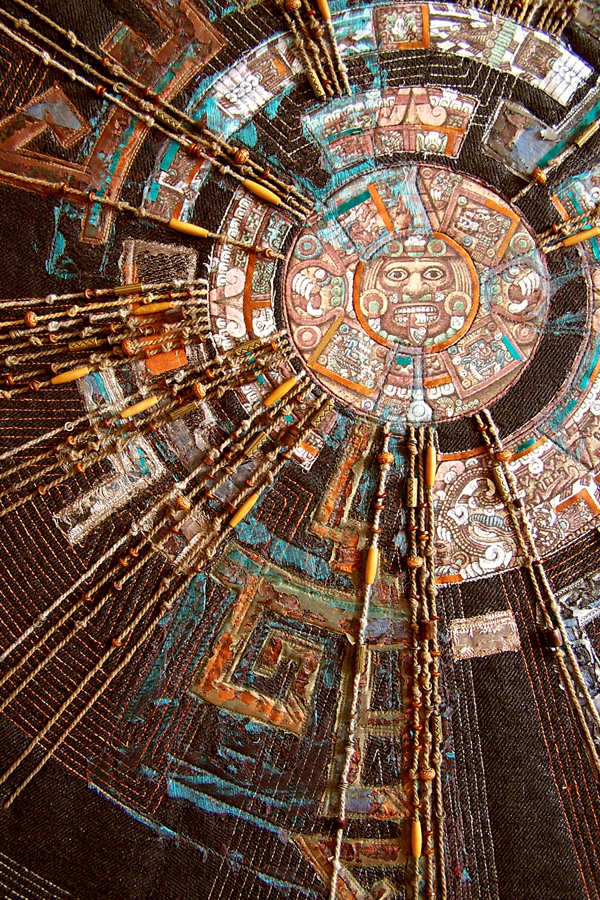
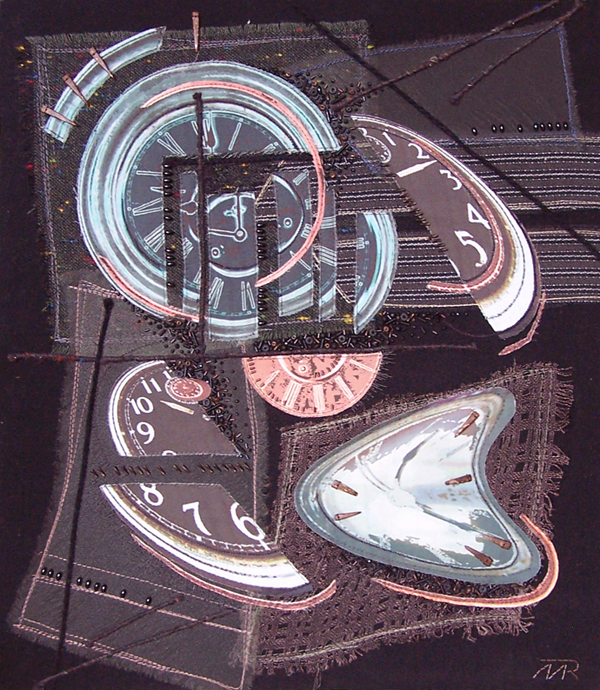
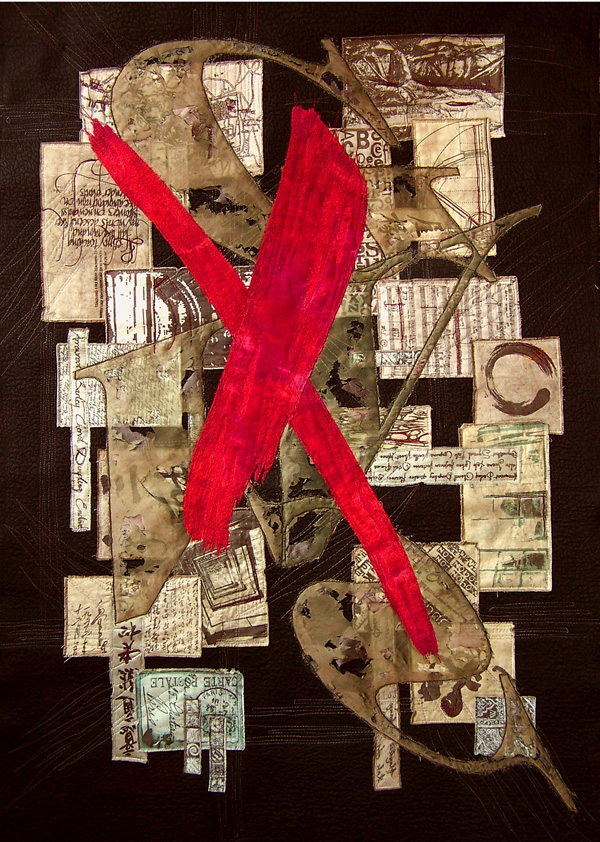
For the last few years I've been doing mostly fibre collages. They allow me to use a remarkable range of media to form and render the complexities of my initial idea, while mounting and imbedding these works with forms and images.
What other mediums do you work in, and how does this inform your fibre work?
Fibre is pretty much all I do, since it's not only in my art, but it is involved in my day job too. Back home in Bulgaria I did some fashion design for several years, but since I moved to Toronto I've been making costumes for Theater, Opera, Ballet and Movies. Working with textiles as an art medium, has flowed so easily from my life experience, it never occurred to me to use anything else.
What specific historic artists have influenced your work?
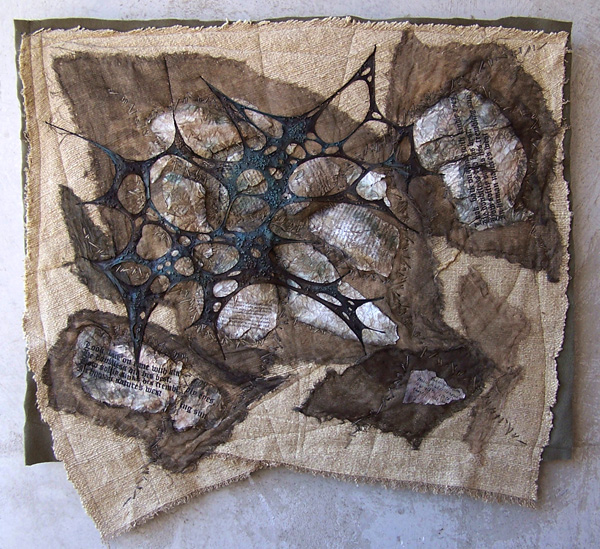
It's hard for me to say if one or two specific artists influenced my work. I've been inspired by so many artists and types of artwork. I was introduced to the Old Masters very early on with their rich palette and intricately crafted images. Later came the Russian School and Early Impressionists. But since fibre has always been the centre of my universe, I find my most natural inspiration in the world textiles, African, South American, Indian, Japanese cloth, embroidery, dye methods and embellishments. I cannot help but become enthralled by the impeccable craftsmanship, the depth of creativity they embody and the dedication exhibited by their makers.
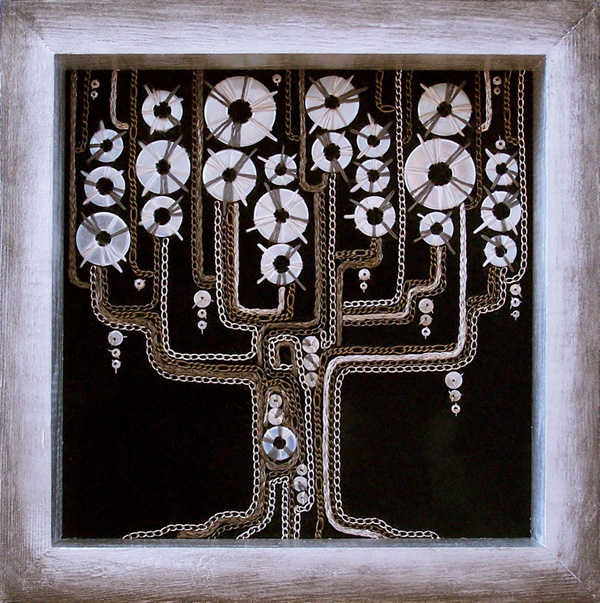
There are too many artists I admire and use for an inspiration, but I'll mention only two of my favourite contemporary Canadian Fibre Artists, Dorothy Caldwell and Lorraine Roy. I love the minimalism of the image and the richness of the texture in their works. They both have created such unique and incomparable personal styles that are so graphic and intricately detailed, at the same time that the viewer feels enveloped, surrounded, and drawn inside their work.
What other fiber artists are you interested in?
The list is very long, but I'll still mention a few, like Canadians Alice Vander Vennen, Marion Spanjerdt and Mary Karavos, as well as Sandra Meech - artist and author of great books on Fibre Art originally from Ontario, now living in the UK. I'm also interested in Allyn Cantor from the USA, and Laura and Linda Kemshall from the United Kingdom.
I love the architectural abstraction in the collages of Fran Skiles and Linda Levin's quilts; the Eastern influence in the prints of Suzanne Silk; the exuberant colours of Melody Johnson and the incredible light in Emily Richardson and Kimberly Becker's watercolor quilts all from the United States. Last but not least I have to mention my favourite tapestry artist - the master of Peruvian iconographic symbolism Maximo Laura.
Tell us about your studio and how you work:
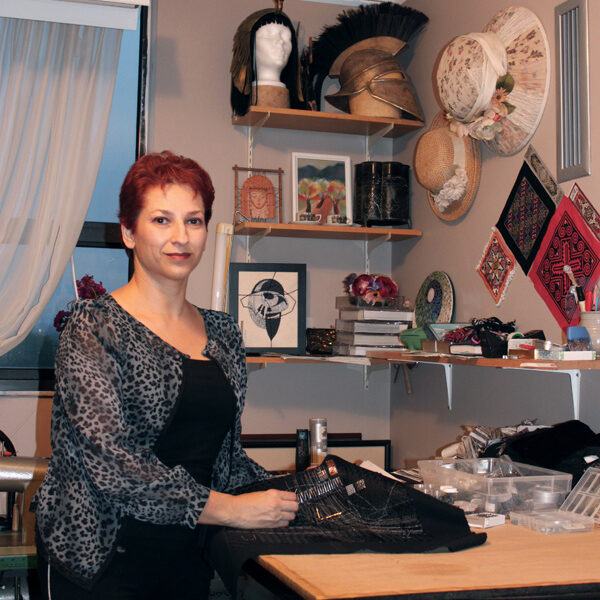
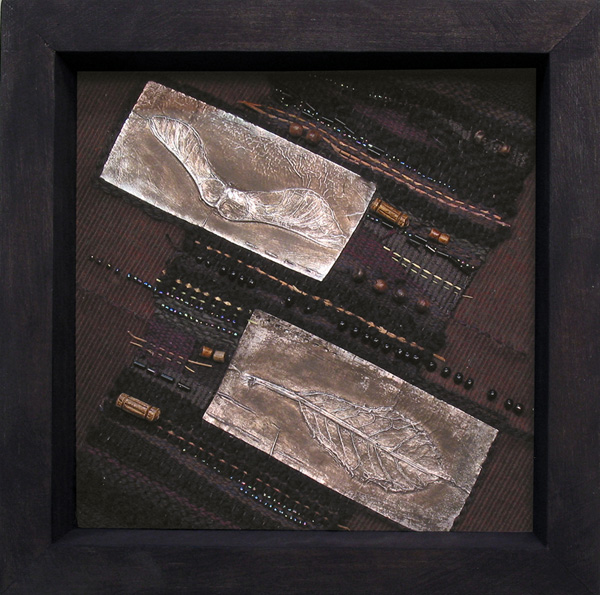
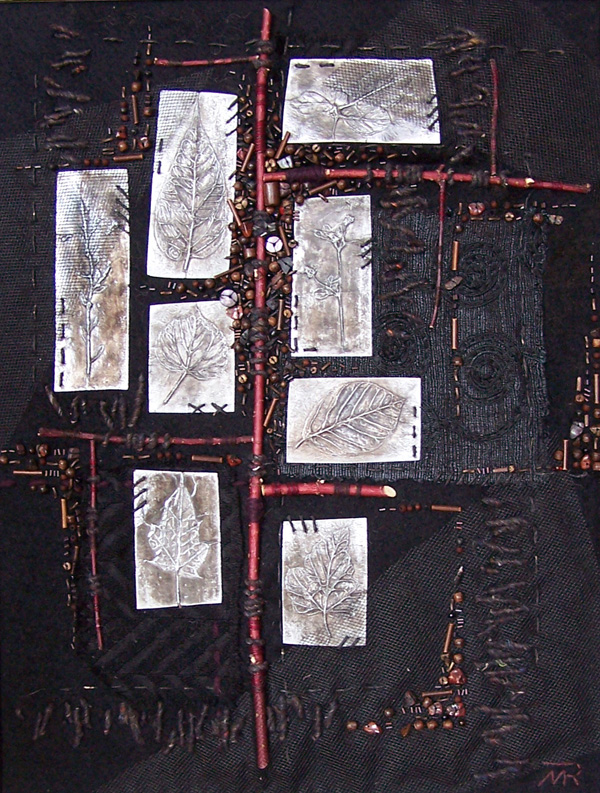
My so called studio is just a small room in my home, designated to contain out of sight the whole mess that is accumulated around the work in progress. The initial process usually begins somewhere else with an idea, which I keep turning in my mind for a while, until it takes some more concrete form and I can immerse myself in the creation. My inspiration could come from something as simple as an interesting image, material or a texture. I'm constantly driven to experiment, and find new or better ways to express my ideas. Often, when I complete a piece, something within it will suggest a new idea. It could be something that I struggled with, or something that happened by accident, but it provides a new direction for the next piece.
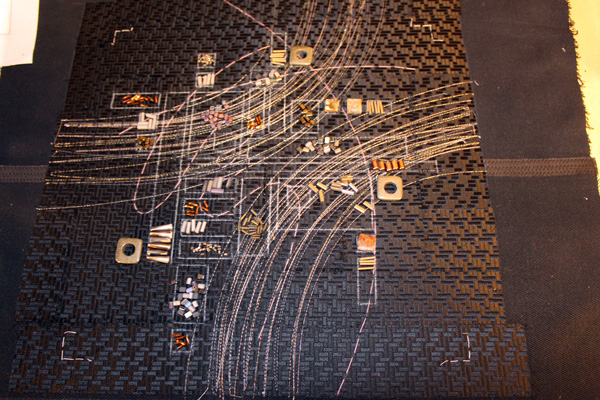
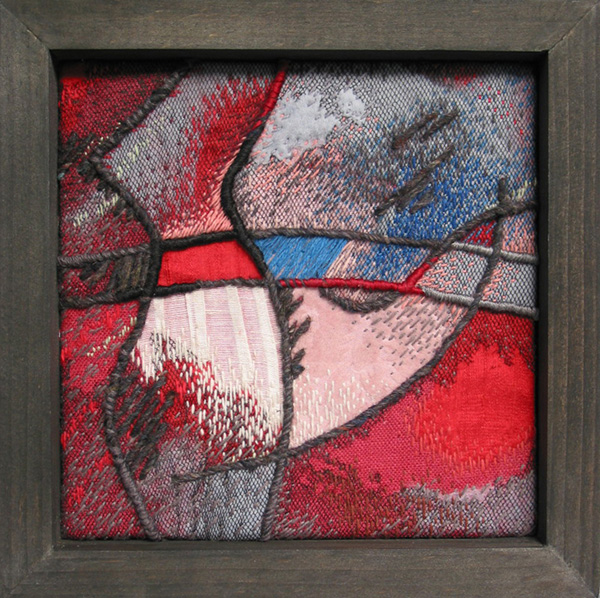
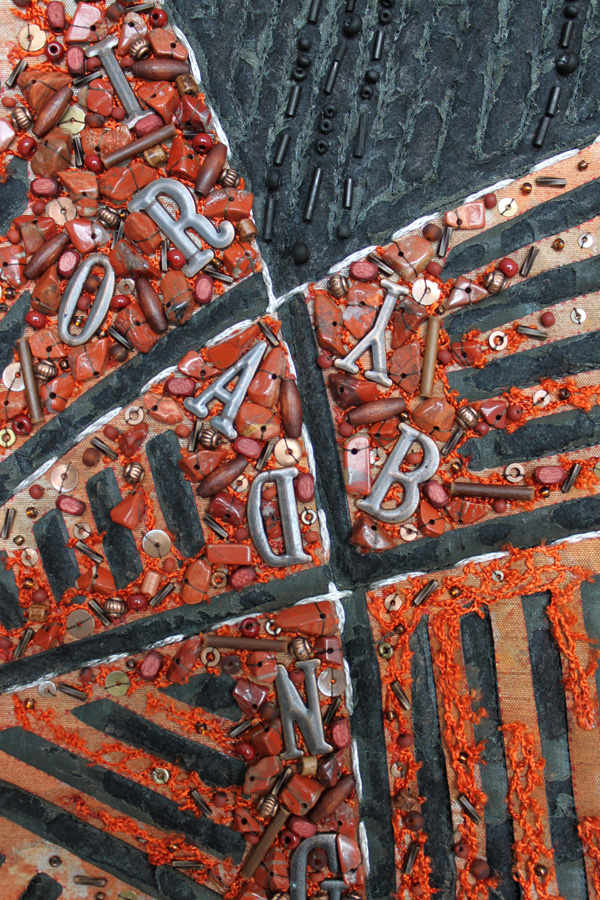
My work frequently starts with a solid piece of usually black fabric, which then is layered and over sewn with other textile fragments and surface ornamentations. Of course, the direction sometimes changes a million times before the work is done. Once in a while I end up with a piece, quite different from my initial idea. But I guess experimentation has always been part of my whole creative process and I don't mind the little surprises at the end of the road, if they contribute to the whole and evoke the emotion I hope to achieve with my work.
Textile Arts are here to stay.
What role do you think fibre art plays in contemporary art?
Contemporary Fibre Art is a dynamic and growing field, with innovations and applications that keep it vital. The traditional organic textiles are still the original "miracle" fibres, yet modern technology has provided so much more in the last years that even the old hardcore traditionalists are getting excited about new possibilities. It's wonderful to see the well-deserved recognition this art form is finally getting, but unfortunately, there are still a lot of people who consider Fibre Art a craft, not an art form. Textile Arts are here to stay and I wish there were more events and exhibits, which could introduce them to a broader audience. They need more popularizing especially here in Canada. It's sad, but we don't have even one organisation, one forum or publication devoted especially to Fibre Art. The World of Threads Festival is the only one that gets close to fulfilling this role, but is only once every couple of years. I hope this void will be filled in the nearest future.
What was your motivation for submitting your work to the World of Threads Festival?
The Worlds of Threads Festival is so far the most prestigious and well-organized event dedicated to Fibre Arts in Ontario, if not in the whole of Canada. It's a wonderful feeling to be accepted to participate and share it with lots of other talented creative people in search of a unique and current cultural language. To work toward preserving the traditions our art is based on and to introduce it to a broader audience as an art form equal to any other.
Where do you imagine your work in five years?
I now understand that all of my life experience up until this point has been preparing me for what I do now. A work of art need not tell a story, but it should say something worth remembering. It should leave lasting impressions on the viewers and evoke some response, and that response can be either emotional or inspire one to think.
I am an artist working to push Fiber Art into the forefront of fine arts consciousness and to explore imagery while still feeling connected to the piece through my hands. Wherever life takes me, I am sure it will still involve sharing from the well of creativity, which comes from the depth of my being.