Artist Interview 132: Anne Kelly
Tunbridge Wells, Kent, UK
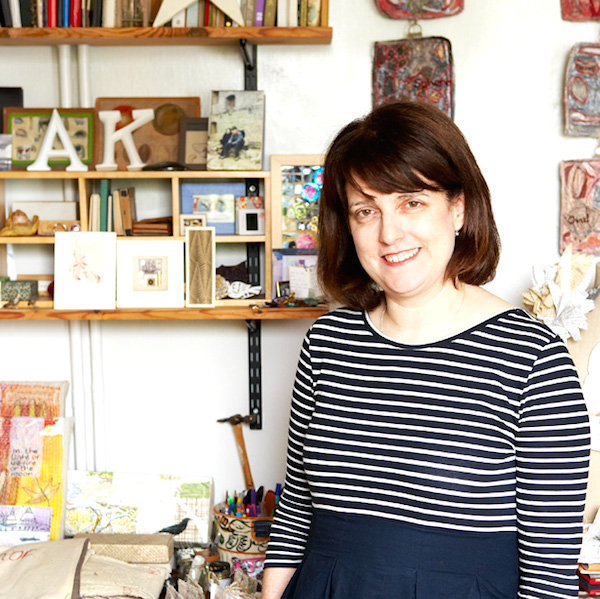
After studying Fine Arts in New Brunswick, Canadian born Anne continued her studies in the UK, where she now lives. She uses vintage recycled textiles to create her fabric collages. Her imagery is informed by folk and naive art. Interested in the link between nature and textile art, birds have become a central motif in many of her artworks.
Tell us about your work:
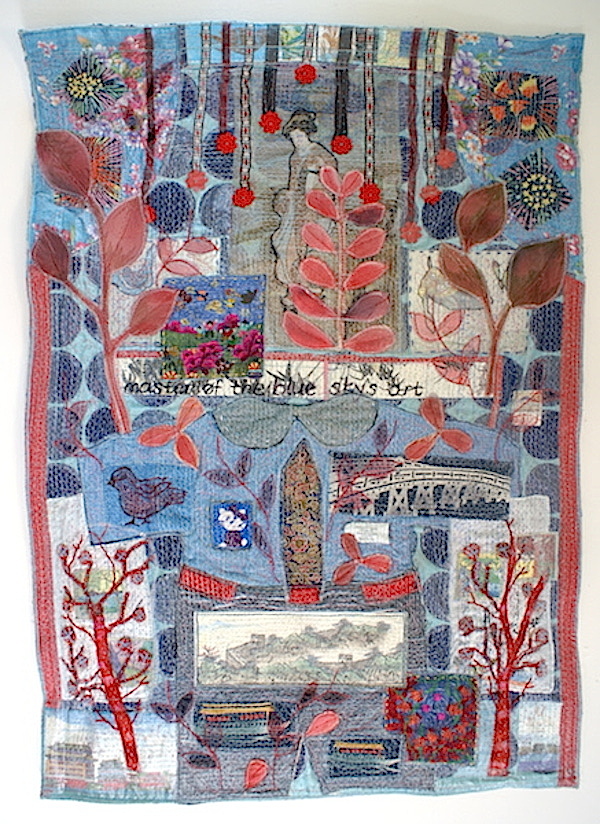
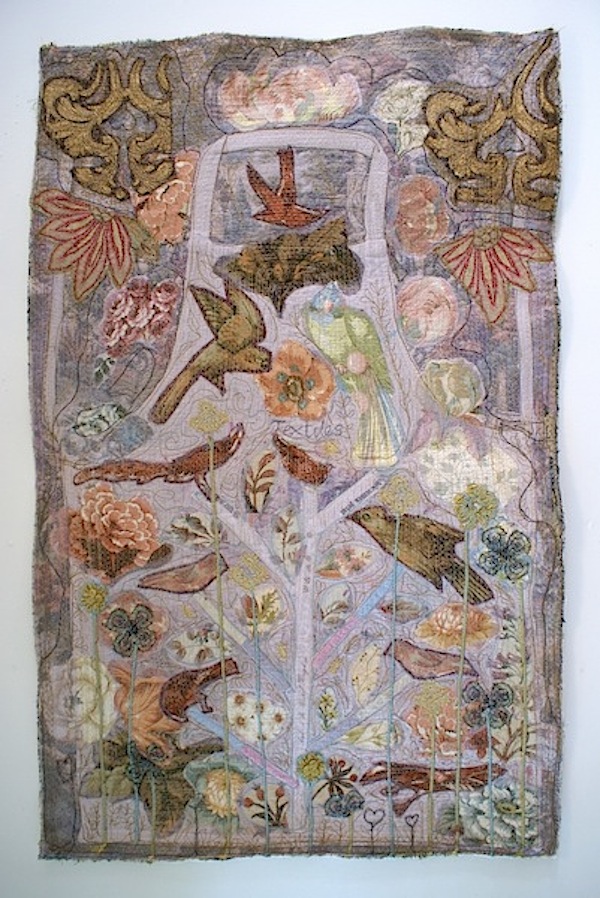
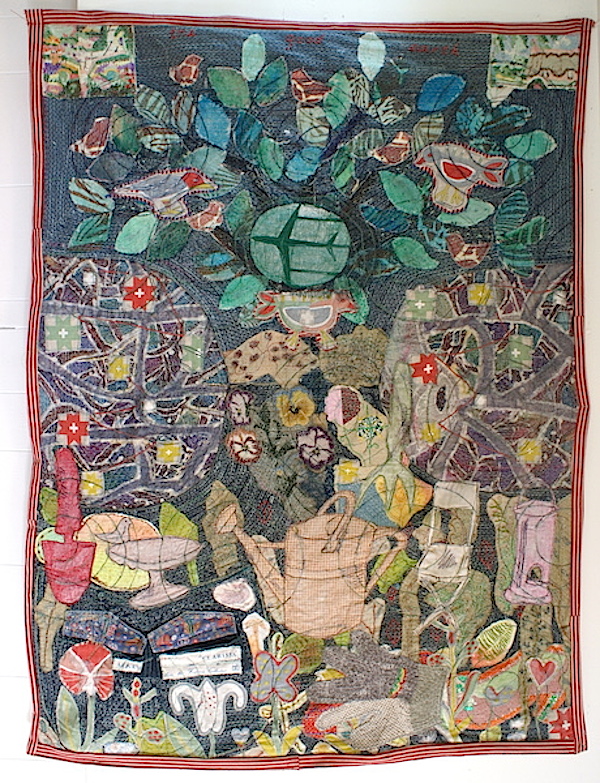
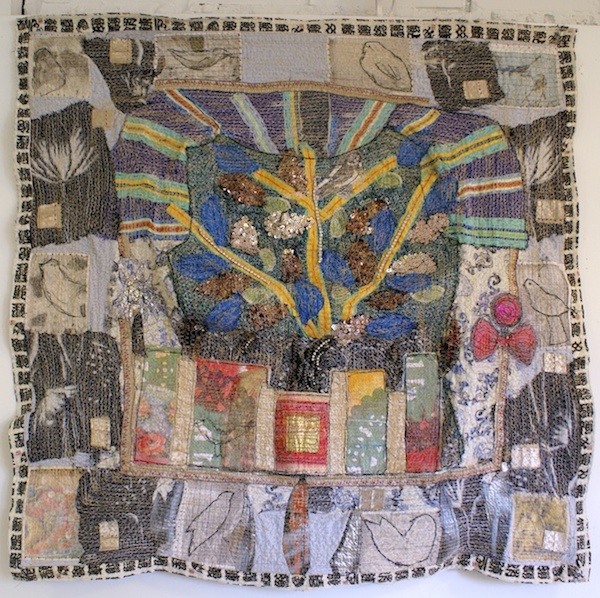
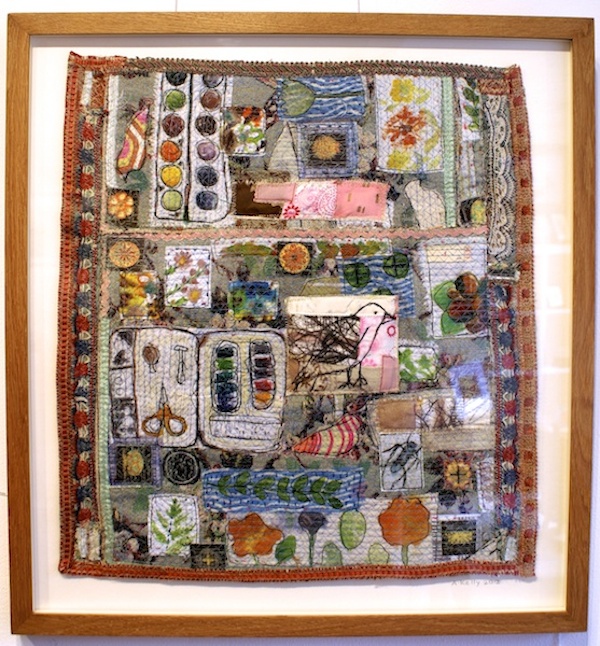
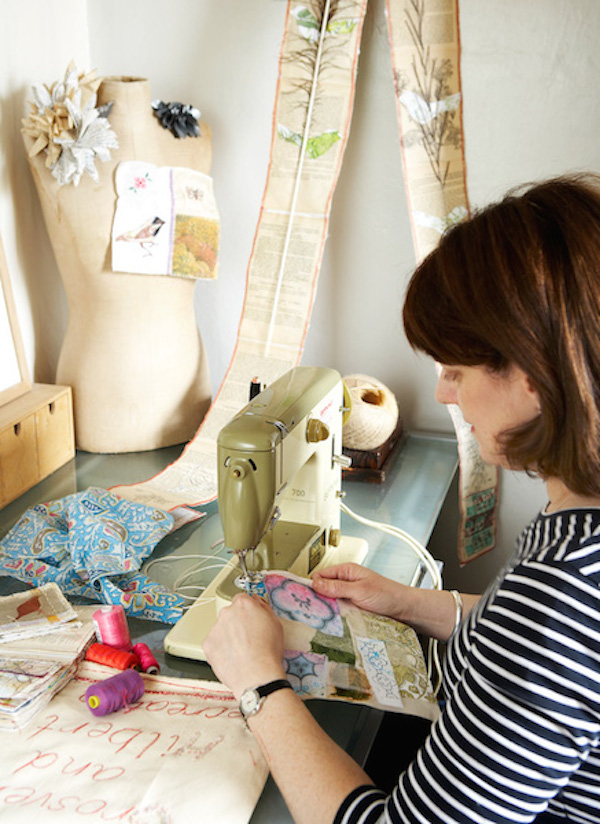
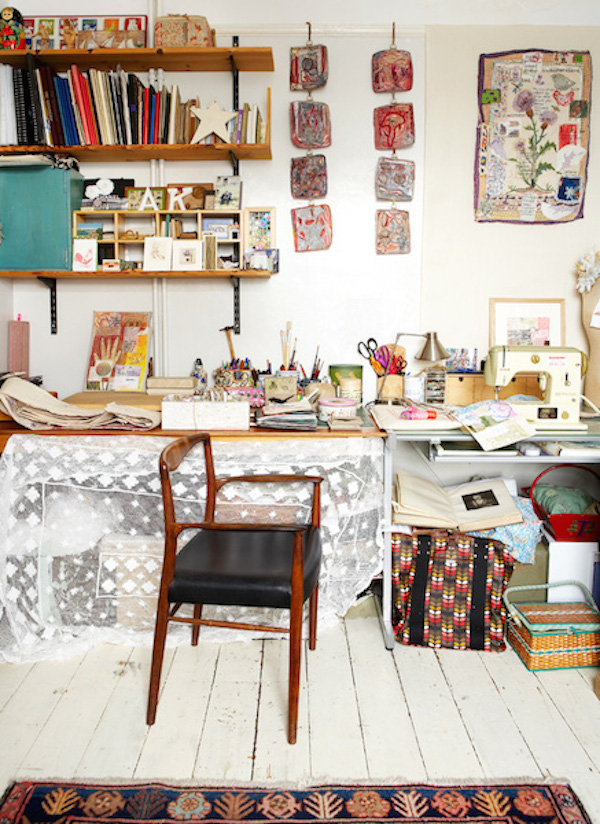
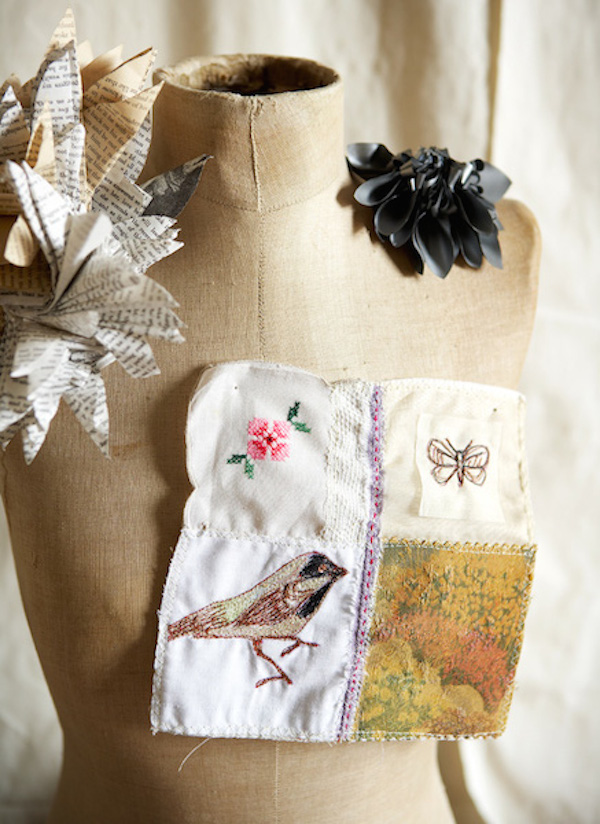
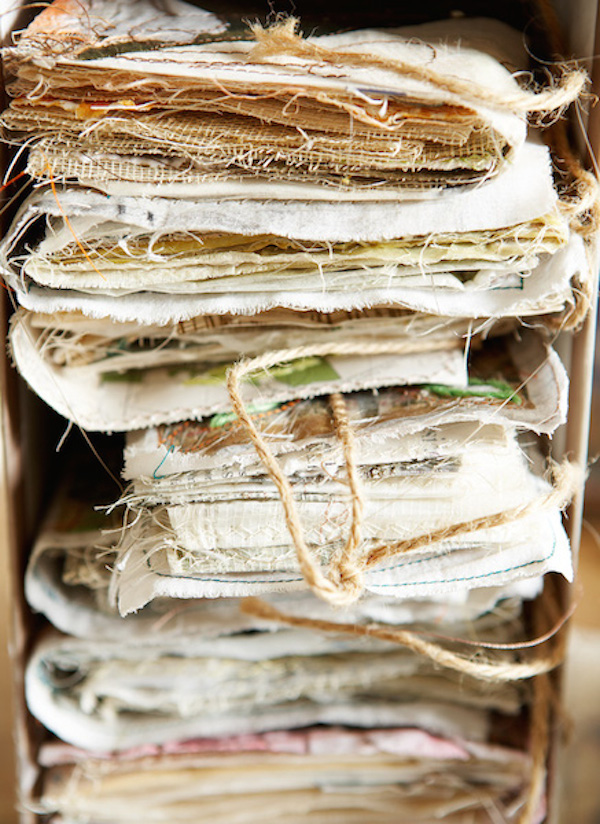
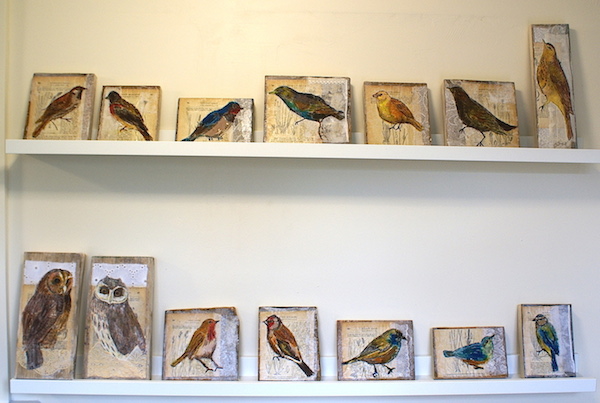
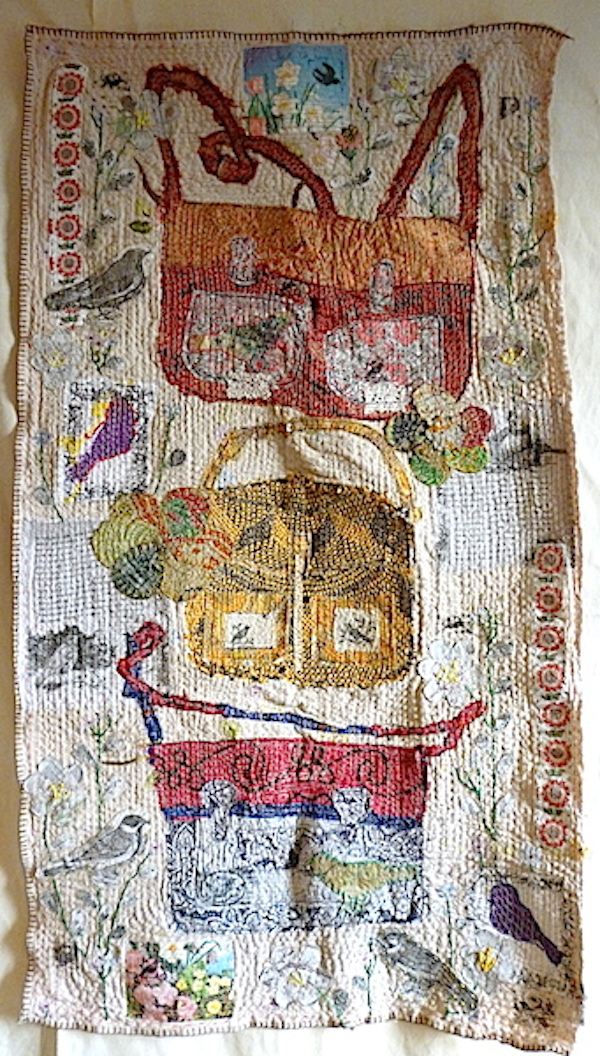
I work in fabric collage, creating dense, multilayered pieces using vintage and recycled textiles and stitch. My training as a fine artist influences the collation of my work and I use paper and metallic surfaces in addition to cloth. My imagery is informed by folk and naïve art and outsider artists are a favourite area of research. I am particularly interested in the link between nature and textile art and am writing a book on this subject due out in 2016. Birds have become a central motif and my fundraising for the British Royal Society for the Protection of Birds (RSPB) charity has developed into some large scale collaborative and installation work. Lately I have been experimenting with new surfaces, using recycled wood off cuts as a base to present my work.
Previous World of Threads Exhibitions
Anne Kelly has had three Solo Shows with World of Threads! She exhibited in the 2014, 2016 and 2018 Festivals.
You mention that inspiration comes from your travels, memory and vintage imagery. Talk to us about the inspiration you draw from vintage imagery:
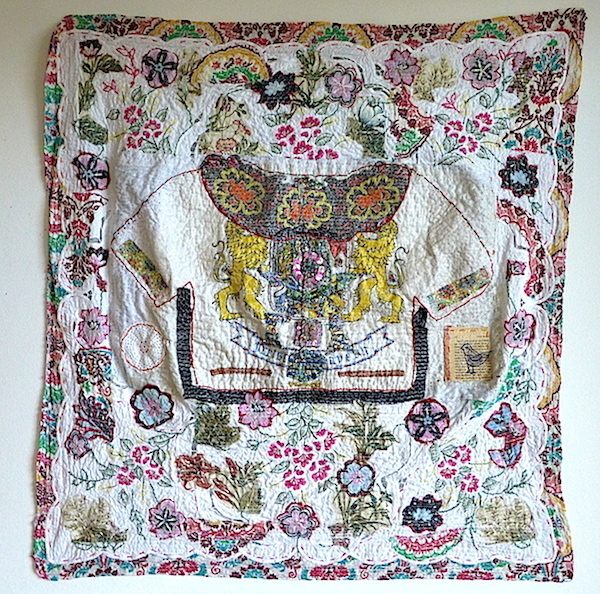
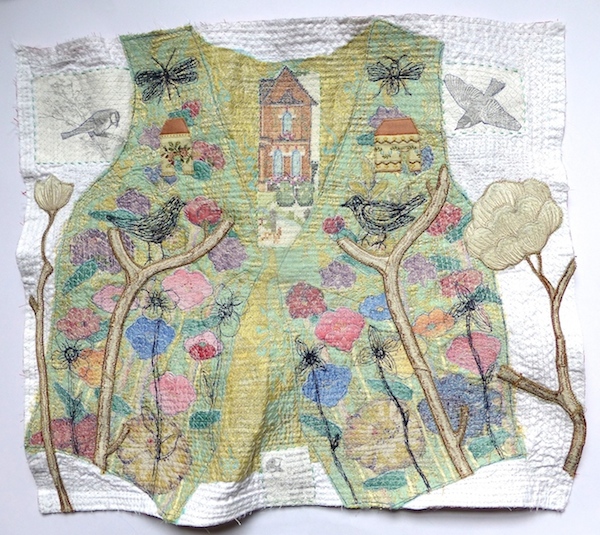
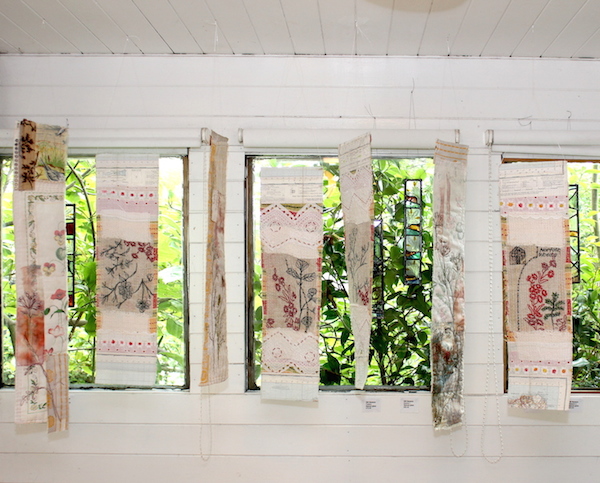
I have always collected vintage natural history books and been inspired by the simple and colourful depiction of plants and birds. I use interesting text and pages from herbals and books on these subjects as backgrounds and elements for my collage work. Recently antique seed packets have entered the mix!
From which of your travels have you found the most inspiration?
I love to travel and have been fortunate to have been to many parts of Canada and Europe, as well as further afield. It is always the everyday environments, in towns and the countryside that inspire. Berlin is an amazing city and when I visit I draw, stitch and collect vintage fabric. Public spaces there are everything from cutting edge architecture to Soviet era housing projects and are very inspirational.
I believe that the thought and intention process is what separates craft from art although this is a blurry line!
You also draw from your memory. Does this relate to any particular person/s, event/s place/s?
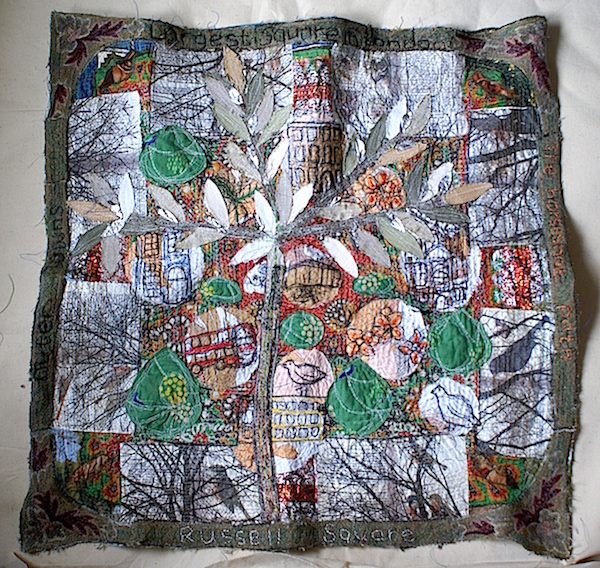
I believe that the thought and intention process is what separates craft from art although this is a blurry line! I work from nature and use memory and the feeling of a place or event to give the pieces depth. In Cock and Pye Fields, I've used an area in central London and its old street names to create an atmospheric piece that reflects current life there, with the new British Museum courtyard as a feature.
You enjoy working collaboratively. Tell us about a major collaboration that you have worked on.
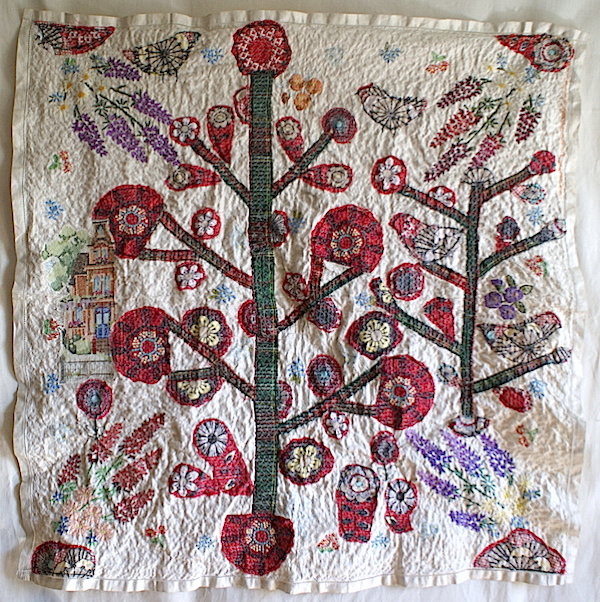
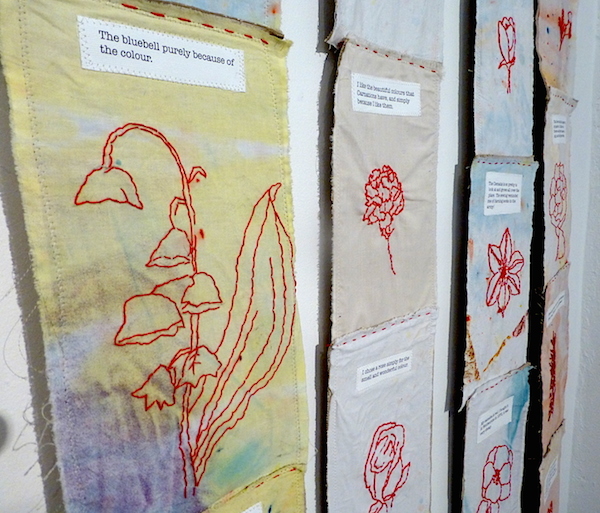
I've loved working with the artist in residence at our local cancer hospice on a piece Supporting Statements. Patients and caregivers were asked to choose their favourite plant or flower and tell us why they chose it. They then stitched the outline of the plant in red after drawing it onto recycled fabric. The group's work was stitched together and travelled to the international Palliative Care Congress in Harrogate, Yorkshire, UK in March 2014.
Why did you consider this project a success and what did you take a way from it?
It was a success because of the enjoyment and fulfillment that the patients and caregivers achieved by making the work and the way that it hung together when finished. Their comments added depth to their work for the viewers and participants.
it is amazing what dexterity and talent five year olds have!
You do quite a bit of teaching to a variety of age groups and to various skill levels. How does your approach vary between age groups?
I always start with a mark making exercise such as drawing or printing. This enables students to 'loosen up' and helps their confidence and skill base. I try not to pre-judge the ability of a certain age group – it is amazing what dexterity and talent five year olds have! The main objective with any age group is to engender a sense of achievement.
Which level of student do you find the easiest and the hardest to work with and why?
All students bring their own challenges and rewards. My aim is to make each person believe in their own abilities. Their faith in themselves is often eroded in all age groups by poor teaching or a bad experience creatively. The more open the student is to learning, the more they will achieve.
You have also taught abroad. What are the major differences between teaching locally and internationally?
I use the same approach to teaching and working locally and abroad. I've worked with and at the Mississippi Valley Textile Museum in Almonte, near Ottawa, Ontario, Canada. It is a wonderfully restored mill and has a spacious education room. We looked at nature in Canada – the only difference being some of the terminology! 'Cotton' in the UK can refer to thread as well as the fabric for example!
What have been the major challenges you have experienced and how have you overcome these challenges?
I have a super-supportive group of family and friends and I took a hiatus from exhibiting while raising a family. Now grown up, they are wonderful critics and are enjoying my successes with me. I never take it for granted and appreciate being healthy and sharing a positive outlook. I remind myself daily how fortunate I am to be doing what I love.
In the interview for the Batsford Publishers' Blog you say: The best thing about working with other people, whether it be artists, curators or students, is the exchange of ideas. We'd be interested to hear more:
I believe that artists should never stop learning, and the exchange of ideas with other artists and makers is a good way to ensure this. I recently had a meeting with my editor at Batsford Books in London. I made a suggestion about the layout for my forthcoming book Textile Nature, and she took it to a new level by building on my ideas. I've recently started working on a wood base and this was as a result of a total accident when I bought wood offcuts for our charity fundraising weekend at Sussex Prairies garden.
Are there any specific historic, contemporary and/or fibre artists who have influenced your work or inspired you?
I always baulk at this question, as there are so many! A friend recently said 'you have to love stitch to work in it' and I find just the feel and texture of a stitched cloth totally inspiring.
I love the large and folksy hand-stitched pieces of New Brunswick, Canada based artist Anna Torma; the subversive and timely work about women and domesticity of Caren Garfen – she is now stitching on biscuits! I have long admired Alice Kettle's monumental works, always painterly.
Closer to home, Nancy Nicholson's embroidered birds and folk patterns are stunning. I've been fortunate to teach with some wonderful practitioners this year; Kim Thittichai the 'queen' of mixed media and transfer. Also Val Holmes with her painterly and print –influence approach. Alice Fox is an alchemist, blending buried fabric and making dyes from everything around her and of course Cas Holmes who I worked with on 'Connected Cloth'. I am interested in English design and painting from the interwar years and artists who are influenced by that period like Alison Milner a product designer who prints on fabric and other household materials, Melvyn Evans a local printmaker who is inspired by the Kent landscape, Mark Hearld a talented illustrator who uses birds and nature and Maxine Sutton another product designer and owner of ' Blackbird' shop and studio in Margate. A small snippet!
What role do you think fibre art plays in contemporary art and what do you see as the biggest challenge facing fibre artists?
Fibre art is another tool for artists to use. I admire the work of Eva Hesse and Louise Bourgeois, who were trailblazers in using textile work in fine art. The intention of fibre artists is conveyed through the materials that we use – the 'soul' of fibre and its versatility as well as its connection with everyone makes it exciting yet approachable.
You have also co-authored a book, Connected Cloth: Creating Collaborative Textile Projects. Tell us about that:
Cas Holmes and I had been working and exhibiting together after a chance encounter at West Dean College and we had both wanted to document our collaboration in a book. We felt that a book about working with artists, community groups, museums and in education could appeal to a wide audience. We were commissioned by Batsford Books to put together a proposal that was happily accepted.
What was the biggest challenge for you in writing this book.
Naturally when two artists work together there are bound to be different approaches and visions, but I think we managed to choose complementary topics and put together a good variety of imagery and subject matter for our readers. Although our work can at times reflect similar subject matter, we both use unique techniques and methods to making our individual pieces. The work is also complementary but quite different as stand alone artists. The book has helped to raise both of our profiles.
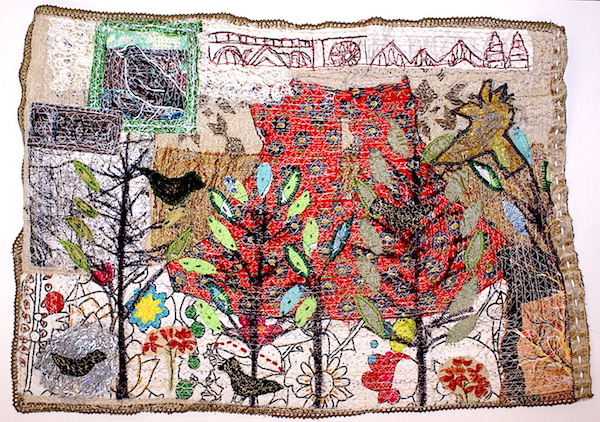
You are working on another book. Tell us a little about that:
I was very flattered to be asked to submit a proposal for a solo book and was determined to consider the subject that would reflect my current work and interests in the most interesting way. The new book Textile Nature is due out in 2016 and will focus on the recurrent theme of nature in textiles – a huge area that could fill many books. I am focusing on aspects that relate to textile artists and how they adapt it in their work. It is a huge challenge and responsibility but I am enjoying working with some wonderful artists and makers in the process.
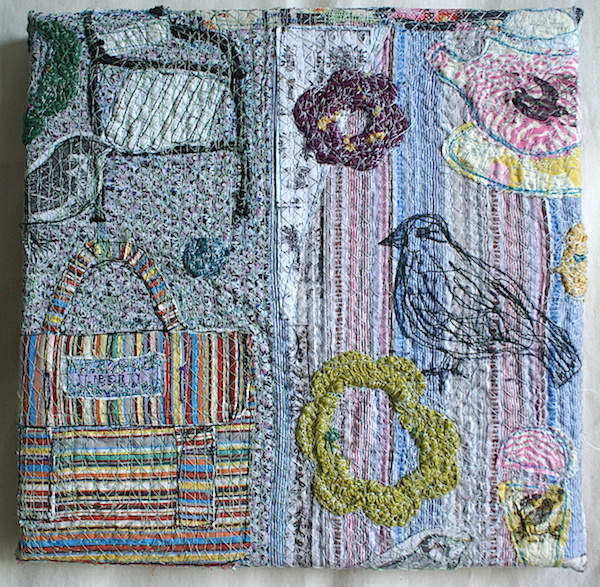
Your work is in the Vatican Collection in Rome. How did that come about?
I was commissioned by the archdiocese of Southwark, London, England to create a piece for the visit of Pope Benedict XVI. It was daunting but I managed to include my favourite themes – a bird, nature and pattern in it. My work had been seen in previous exhibitions and we tried to create a piece that would reflect the multicultural identity of the diocese.
What interests you about the World of Threads Festival?
I love the way in which artists from all over the world come together to create themed galleries and explore new ideas in the exhibitions.
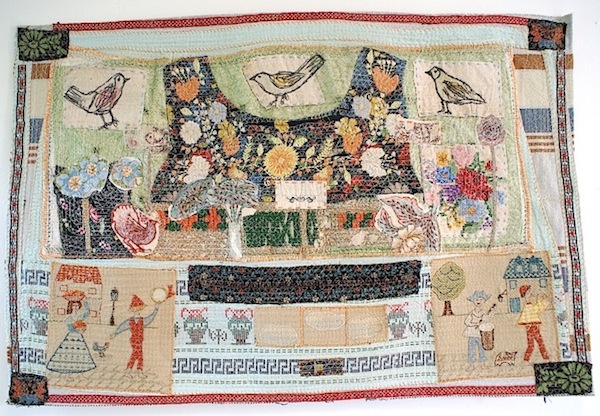
You have been accepted into the World of Threads Festival 2014. What was your motivation for submitting your work for consideration?
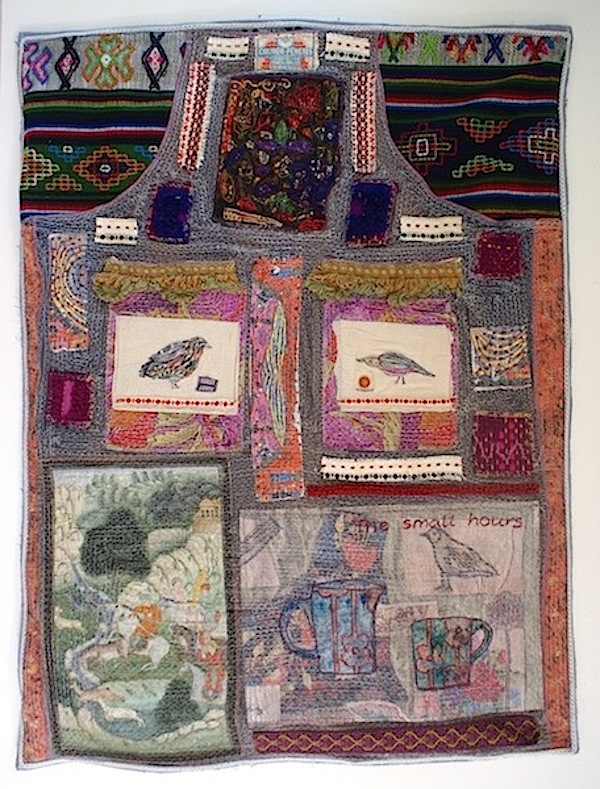
I had created a series of work 'Aprons', which are autobiographical and wanted them to be seen in my home country! I was delighted to be offered a solo gallery space.
Tell us a little about the commission Red Gables Cottage:
My largest commission to date has been Red Gables Cottage for a family in Australia, who had seen my work on my website and admired the textural qualities of it. The large three-paneled piece incorporates pictures of their house, their pets and family memorabilia as well as maps and favourite plants and flowers. I used a combination of stenciling, collage, applique and hand and machine stitching. The family were delighted 'it is the most fabulous piece of art, and in my opinion, so much better that a painting. It has such depth and detail and the textural component just draws you in and has you exploring the many and varied elements. We love it and hang it proudly. It is an heirloom in the making.
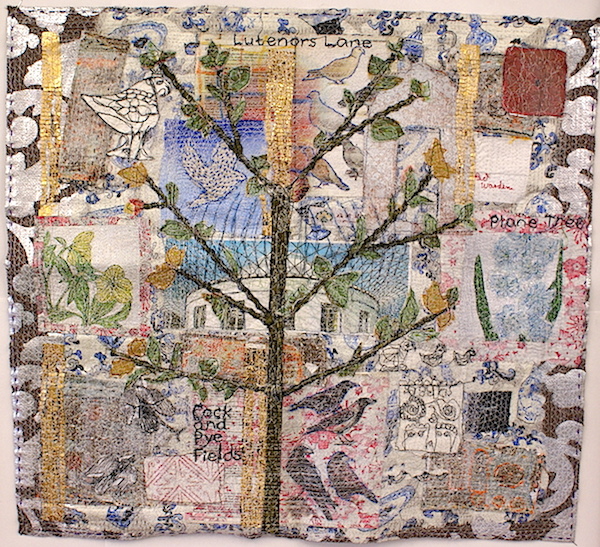
You are in the middle of an Artist in Residence program at Sussex Prairies. How is that going?
I am loving the residency and enjoying watching the progress of our collaborative piece A Natural History of the Garden. I'm particularly relishing the teaching aspect of the project and meeting visitors to the garden. It is fascinating watching the life of the garden and how much work is involved. I am making new work based on the plants and atmosphere of the garden.
Is there a particular art related book/s that you refer to on a regular basis or from which you draw inspiration?
I love reading and am inspired by all books – one that I keep returning to is a French book 'The Art of Embroidery' by Francoise Tellier Loumagne.
I use Constance Howard's Book of Stitches: The Practical and Inspirational Guide for All Embroiderers for teaching.
A small book from the Ashmolean Museum in Oxford 'English Embroideries' is inspirational.
My friend Sarah Salway, a writer and poet has recently given me 'Nests and Eggs' another vintage book which will come in very handy!
