Artist Interview 120: Barbara Klunder
Toronto, Ontario, Canada
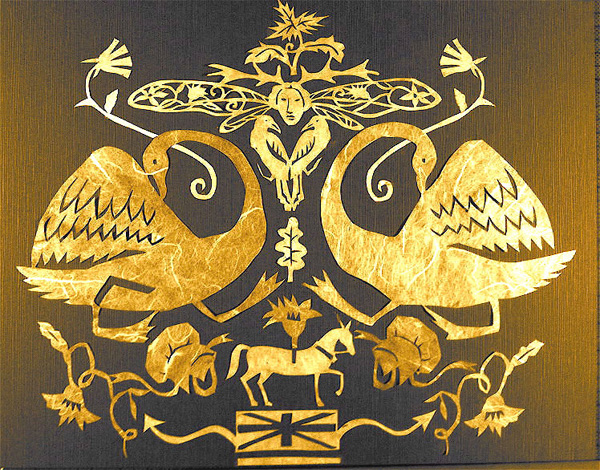
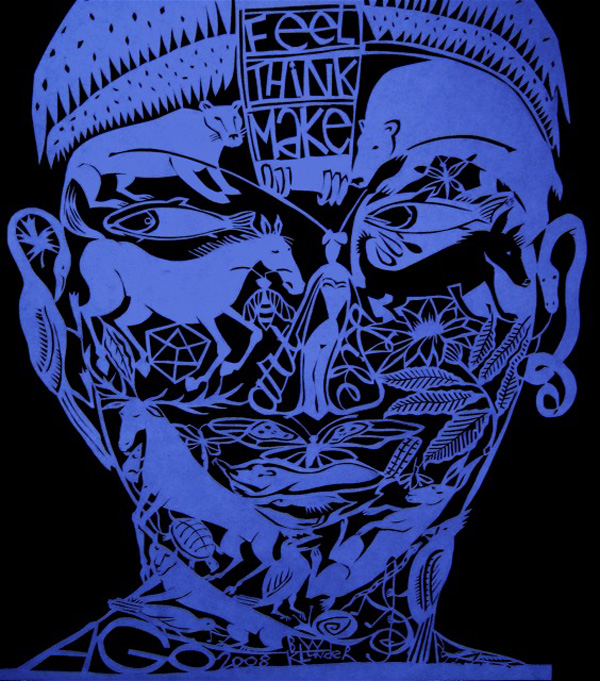
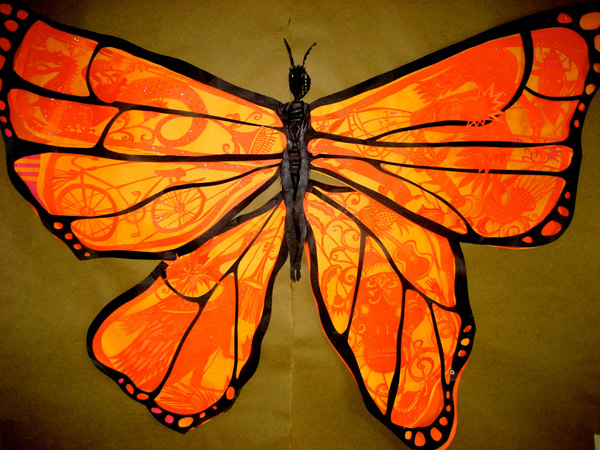
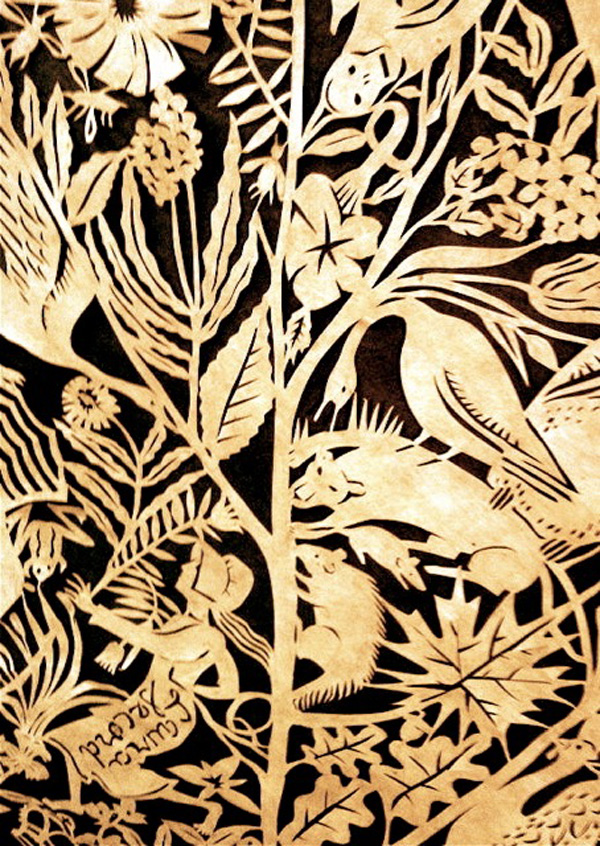
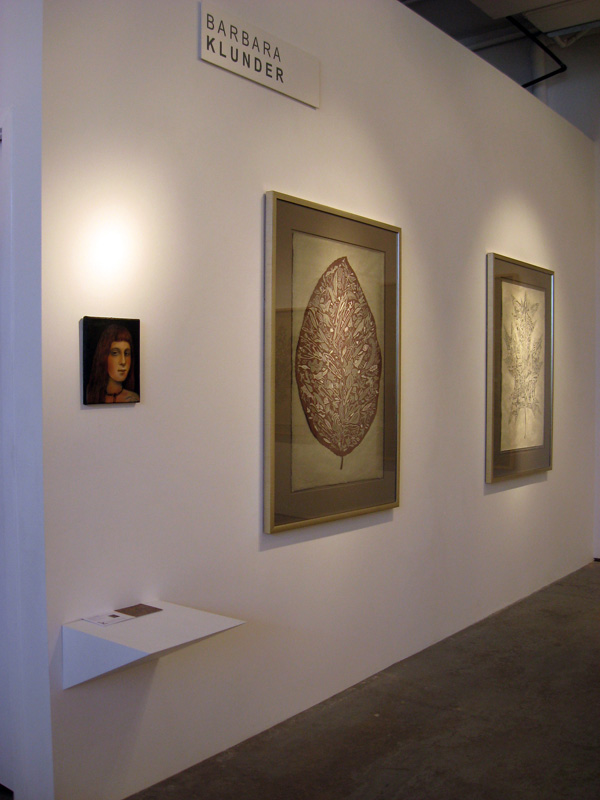
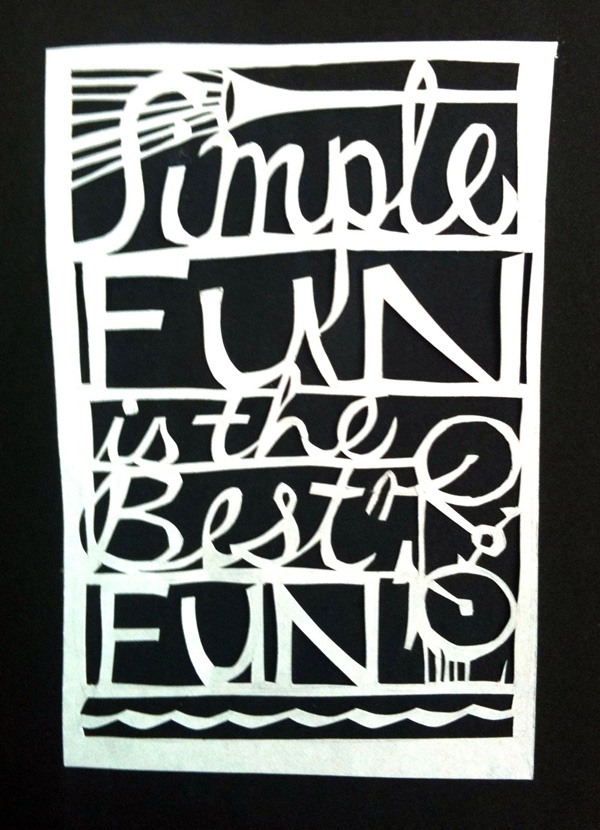
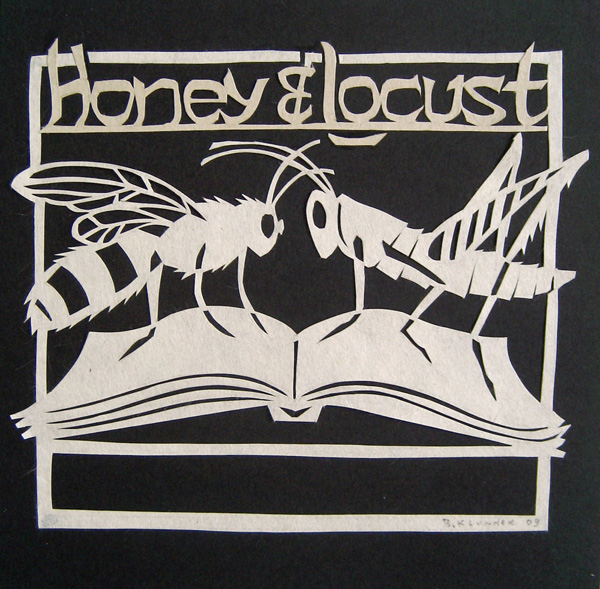
In between knitting and rug hooking, Barbara creates intricate paper-cuts using fine Japanese Washi paper. She has also created the B.Klunder and Ottofont fonts. She makes something every day and her advice to artists is: Trust your instincts.
In your art practice you have been involved in many fibre mediums over the years. Tell us where you started, and how you moved into the other media.
I started knitting and sewing when I was a kid … 10 or so. I started doing more complex knitting in the Mary Maxim style, when I was about 15. That evolved into putting my own illustrations in the designs. I was busy in my twenties getting an illustration and design career going, and raising a son, who I had at 23. I was also supporting my painter husband, Harold, at the time. Full plate!
Then an art director discovered my sweaters and was so impressed, insisted that we take them to Vogue magazine in New York! From there Saks Fifth Avenue wanted anything and everything I knitted, so I started hiring people, paying $400.00 to knit one complex sweater. It was a wild and wonderful time. At the end of that adventure, I was invited to bring them to Berdgorf's.
Previous World of Threads Exhibitions
Barbara Klunder exhibited in the 2007 Festival in a Solo Show.
What bridges the works that you have created in differing media?
I think it would be my design sense. Starting from illustrations, to sweaters, and then to the rugs. I did the sweaters to New York for a couple of years but the pace was relentless. I had a show of them with Tim Jocelyn at Ontario Craft Council in 1979. In the first Textile Museum in Mirvish village, I had a sweater show with another artist who collaged quilts. Harbourfront also had an ArtWear runway show. And then there was KromaLiving, so my knitting was slowly going over to the art side of things.
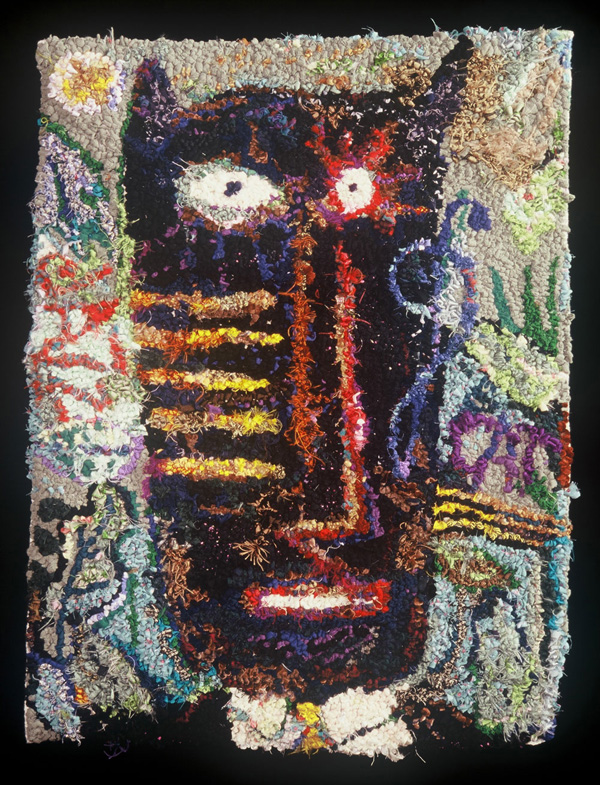
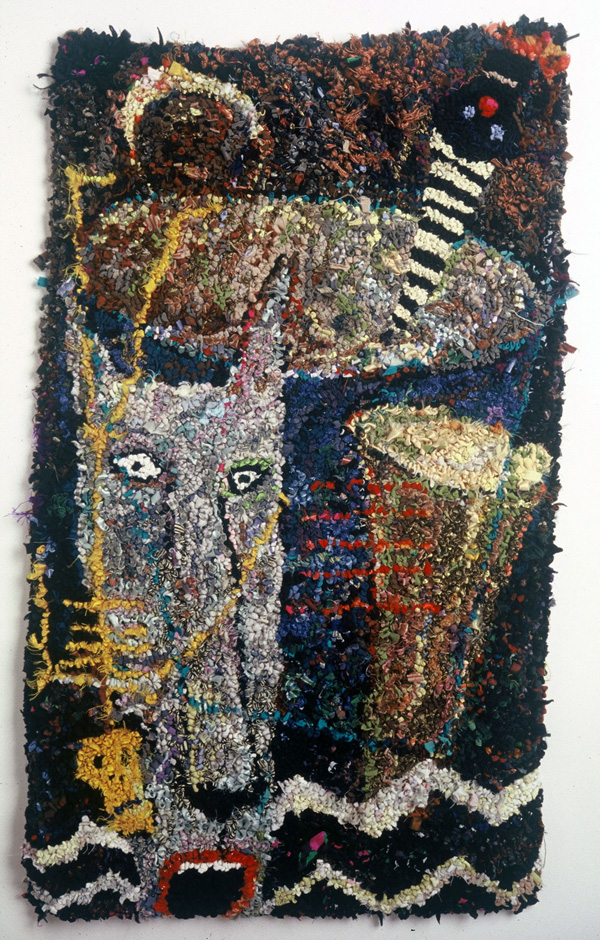
The rug idea happened when I realized I could not produce the fashion-based sweaters four times a year. If I did not have another design career, and a young boy to raise, I might have! I started doing people's life stories in rugs. I would hear their incredible tales, put images or symbols to the words, and have them made around the world. So I was still working with wool, which I loved, and adding these other layers … a story, a visual.
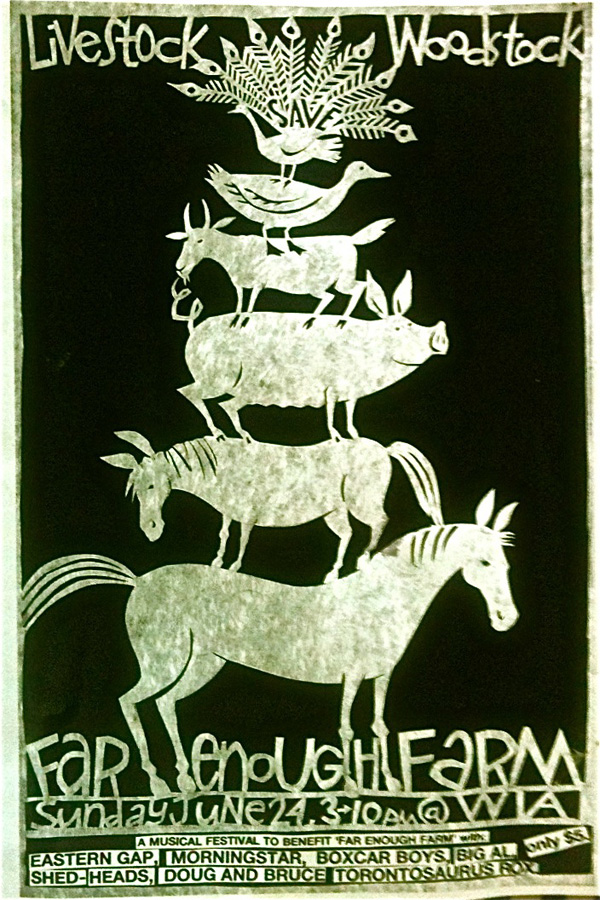
Those led to a Textile Museum show of 14 rugs about the Environment in 1990. In another part of my life I was starting to be an outspoken environmentalist and help out there with poster designs.
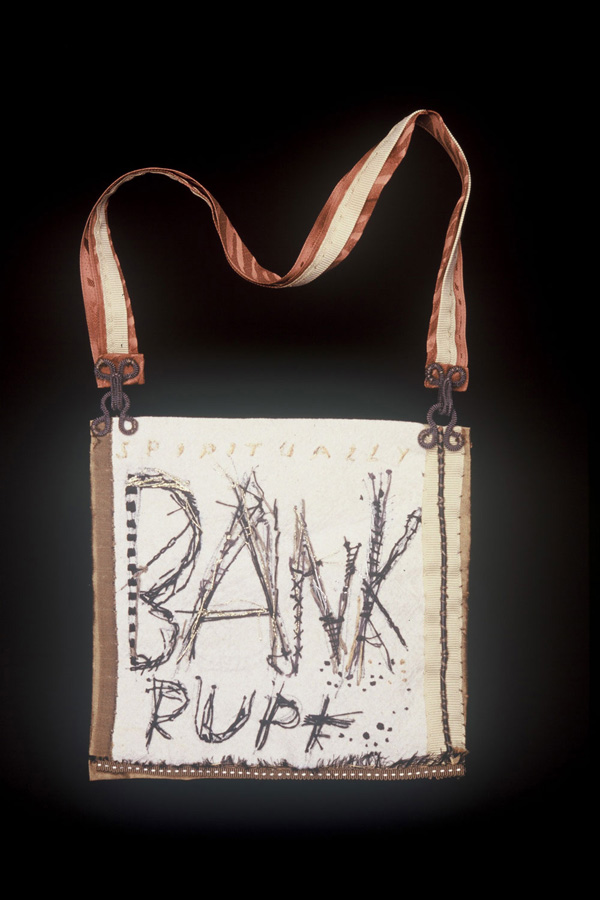
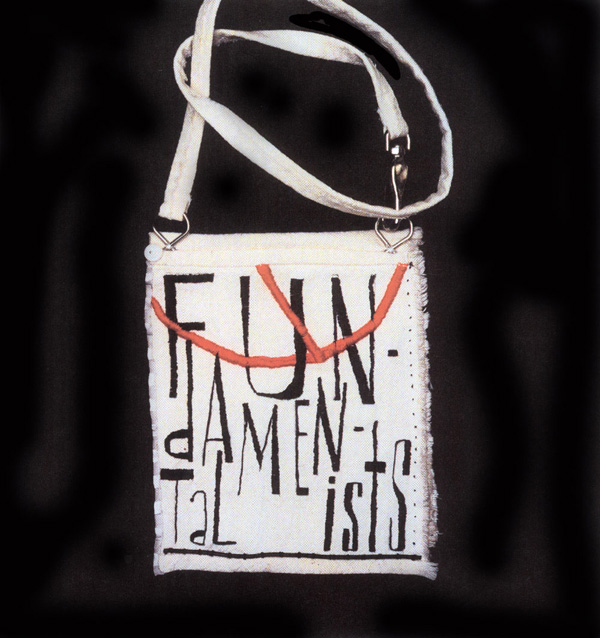
Meanwhile, I would do paper-cuts for special gifts for people. I would be invited to be part of group shows and I would end up using all kinds of materials. For York Gallery at Harbourfront, I made Love is Blind out of painted twigs. I made a large heart out of burrs for another show, Brrroken Heart. Then there was the Craft Canadian Museum show in 1990 in Vancouver, which showed my 27 Downsized Purses, responding to that new recession. For that exhibit I used all kinds of materials to make small purses the size of CD's.
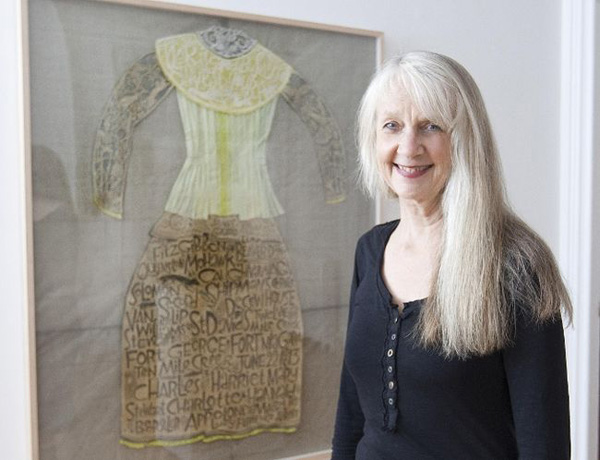
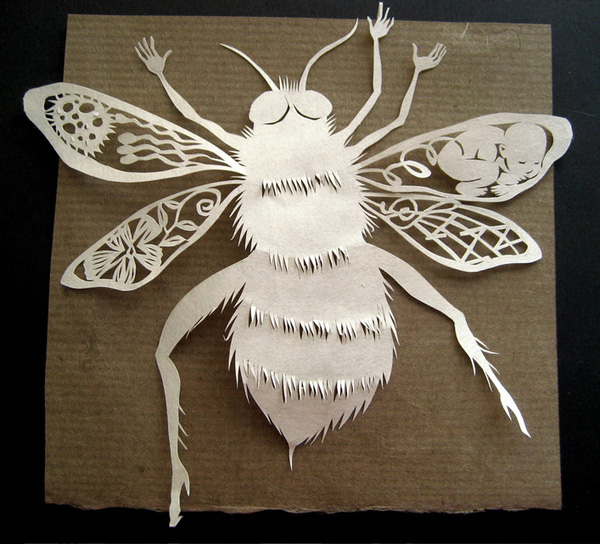
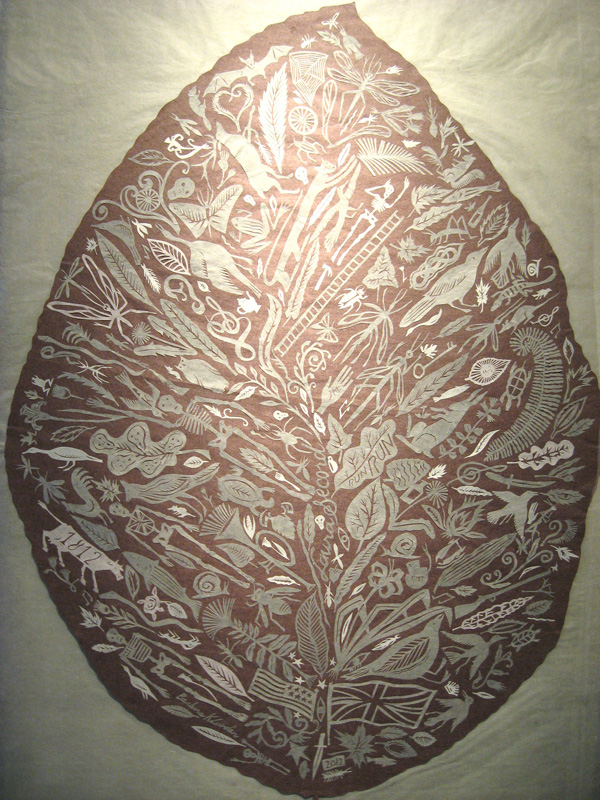
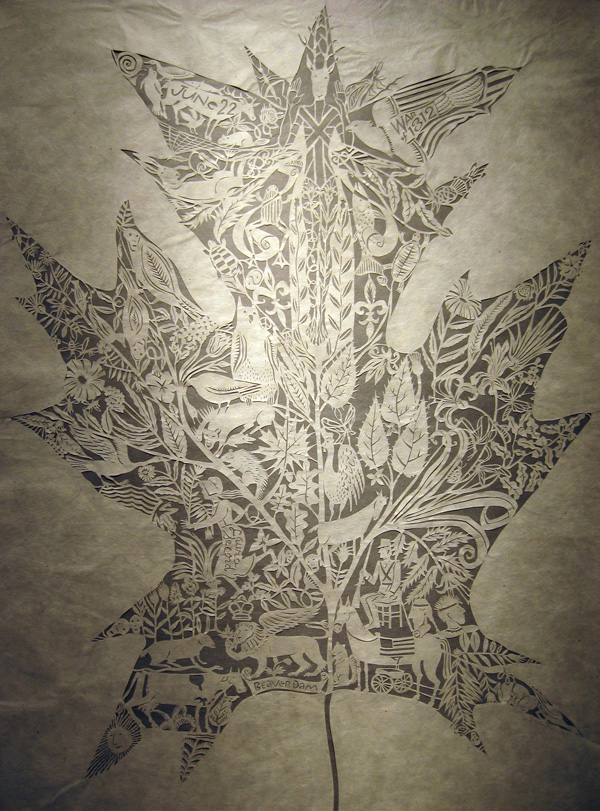
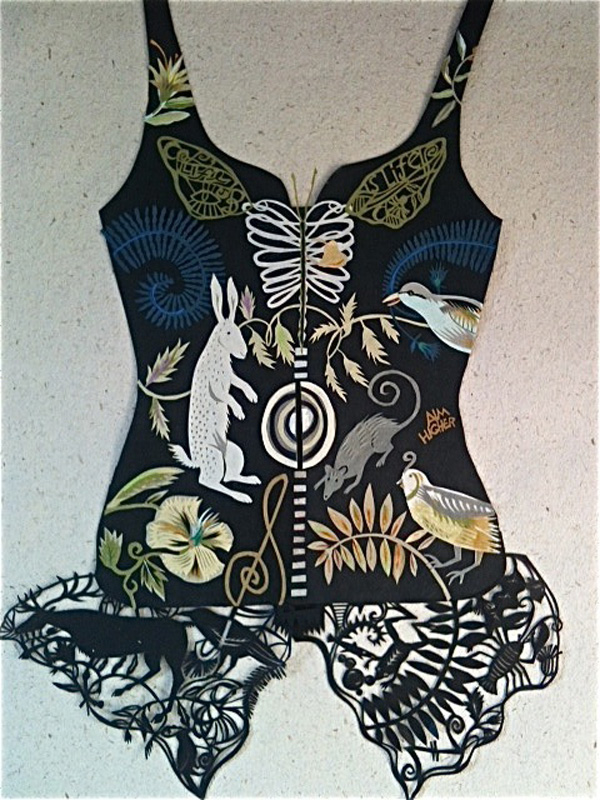
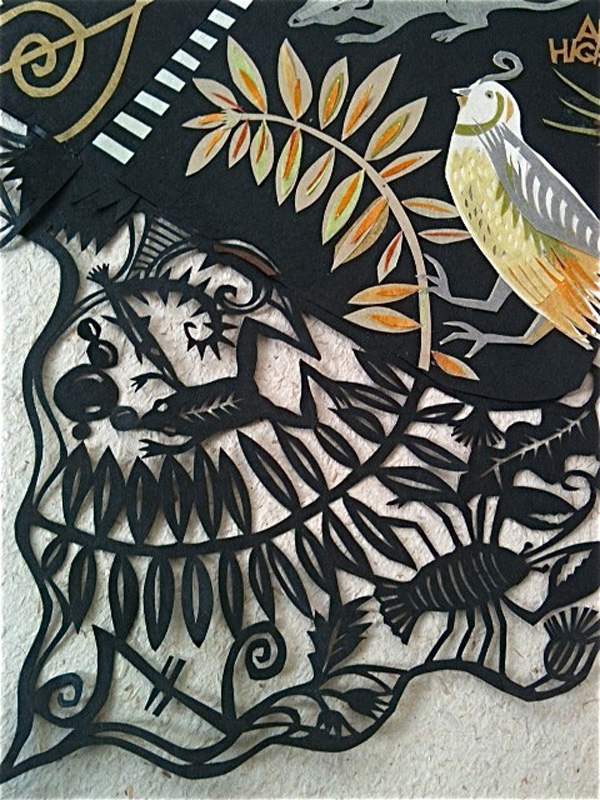
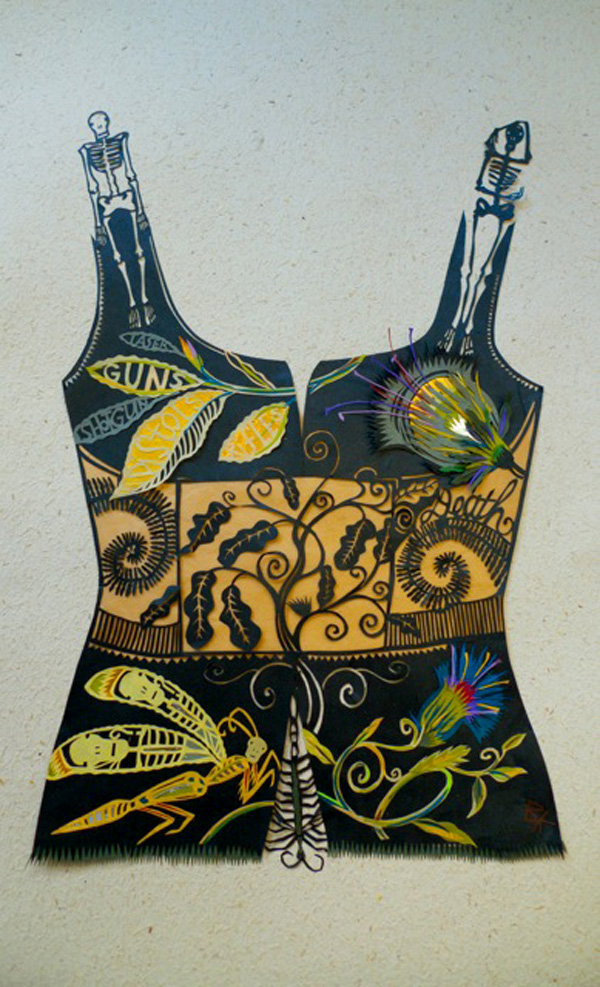
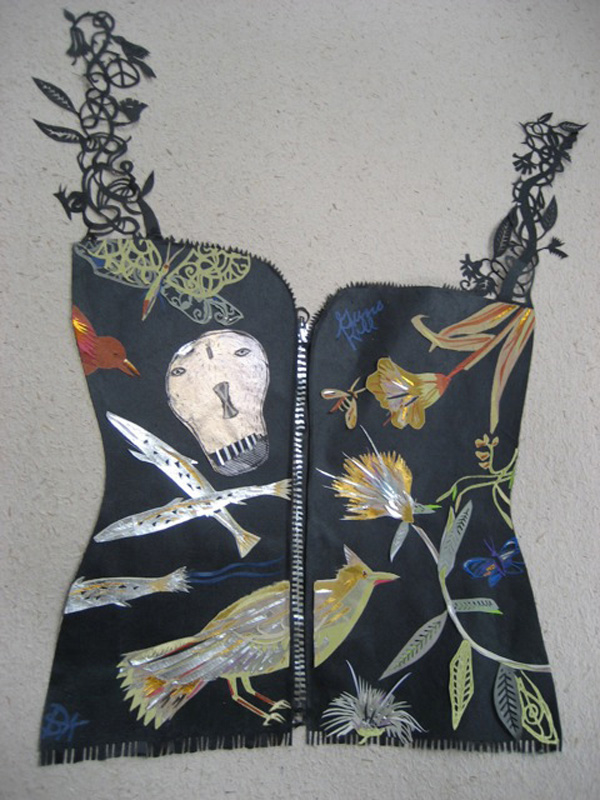
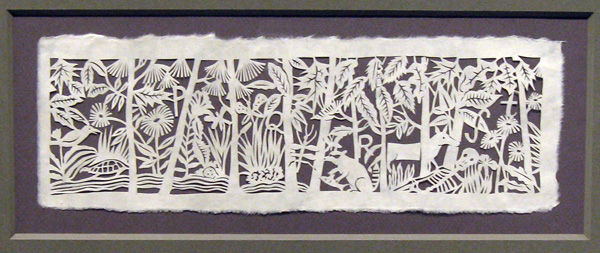
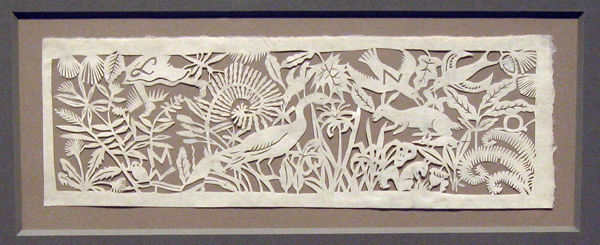
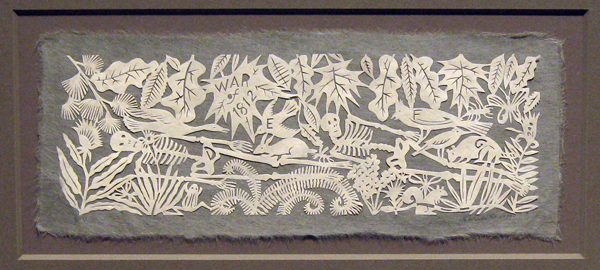
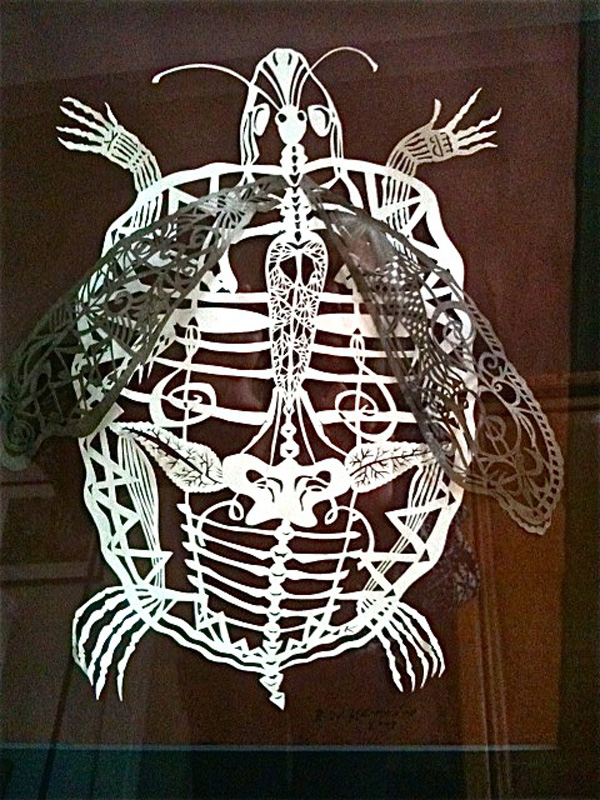
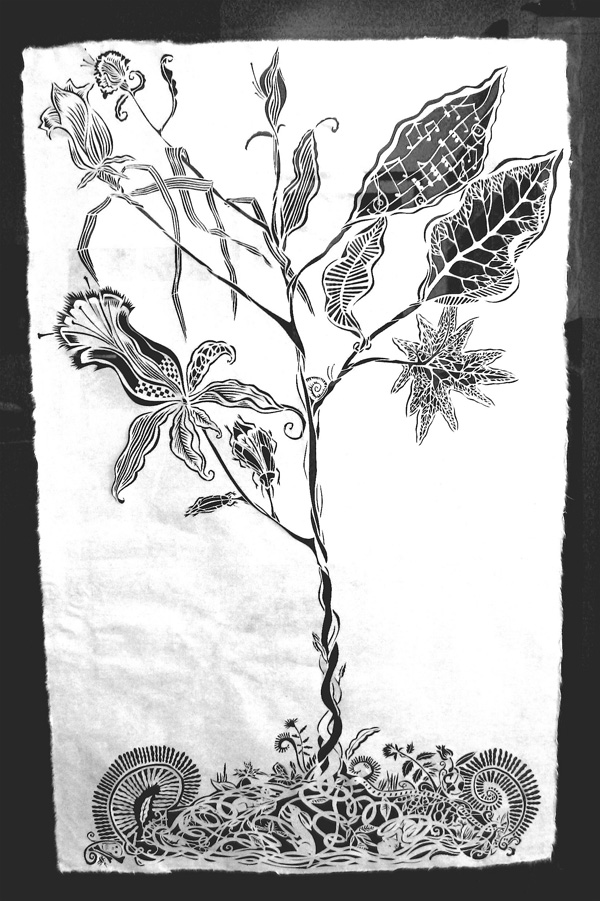
Recently I have been doing large paper-cuts and they too have hit the museum level, Rodman Hall, Brock University ... Laura Secord paper dress and many more paper-cuts telling the story of her run in 1812. That was 2012. BulletProof Vests was a show at David Kaye Gallery in Toronto (till September, 2013); my emotional answer to the insane gun culture we live in, done as a fashion statement, using fine Japanese coloured papers.
Where do you get your inspiration?
I think from everything. Really. Art shows, reading about artists, a magazine illustration, poster designs, museum shows about anything, a walk in the woods, a music event, a fashion runway show, a Xerox flyer on the street, a poem. You name it, I get an idea from anything. I also get fired up over history or recent events.
What specific historic artists have influenced your work?
Oh, this list would go on for pages.
But in the textile world … Rosemary Trockel, Eva Hess, Louise Bourgeois, Helen Frankenthaler, Vivienne Westwood, Paul Gautier, El Anatsui, the Nigerian artist who used bottle caps to make tapestries, Picasso's sculptures (not his drawings), Hieronymus Bosch, African art, Russian political fabric designs, quilts from anywhere, Lapland knitting, Newfoundland hooked rugs, uber-tech fabrics from Japan, Christo and Jeanne-Claude's wrapped buildings, Rauschenberg's collages, Belgian architects, British potters, Mexican paper-cuts, James Turrell's light projects, etc., etc.
What role do you think fibre art plays in contemporary art and what do you see as the biggest challenge facing fibre artists?
Fibre is equal to any other medium now. It took a while, but there is no reason to discount a fibre concept. Look at Eva Hesse and her rope pieces. Or Ai Weiwei and his Birds Nest building at the Beijing Olympics – that's a fibre concept. Or Louise Bourgeois' giant spider at the Tate Gallery, London. And now, there are so many amazing paper-cut artists around the world. When an artist uses fibre materials, and it is really good work, suddenly it has enormous value. Not just as fibre art, but as a good sculpture, or a great conceptual piece.
Perhaps time is the enemy … if the fibres are natural – fragility – conservation.
Take something very personal, and using a traditional domestic female skill, and transform it into a statement.
What specific contemporary artists have influenced your work?
As above. I think what fine art does to my head is introduce the idea of scale. Janet Morton comes to mind. She takes domestic knitting and scales it up to architectural size. That is the trick. Take something very personal, and using a traditional domestic female skill, and transform it into a statement.
You grew up in an artistic household. Was there someone in particular who made a difference to/impact on your work?
Both my mother and father were artists. Dad made a living illustrating new cars for Detroit. Very Mad Men. Mom was a sculptor and a knitter. My father also introduced me to all kinds of art. I saw Jackson Pollock's paintings in New York when I was 9, and Picasso's Guernica, which I preferred. We were encouraged to think about science, art, good writing, and design, in all forms. Jazz was in our house. God was not.
How did you initially start showing your work in galleries?
The sweaters seemed to intrigue people at the craft gallery level and I was invited to join many group shows. Then I connected with Prime Gallery over the rugs. I also had gallery shows with my illustrations and graphic art, like my fonts. Then there were the political posters in some gallery shows. I did all the artwork for the Bamboo Club on Queen West and also had shows on the walls there with other artists. Hand dyed batik fabrics were made in Bali from my BamBoo-like designs. It was a wild time on Queen Street in the 1980's. So, there were many different kinds of shows at different types of galleries.
I did a comic strip for a graphic comic Casual Casual distributed out of the Cameron House tavern in the 1980's. That strip turned into a musical produced by Shadowland theatre.
Guess who had to do all the sets and costumes … which might have led me into making giant puppets for Clay and Paper Theatre … a protest street theatre group that I still do posters for. As I look back, so much of this was the community of artists and what was going on, not so much me organizing a career. It was mostly luck.
What advice would you give to someone starting out as a fibre artist?
Trust your instincts.
If you reflect on your career as a fibre artist, what achievement are you most proud of?
Some of the sweaters were pretty incredible, as I think back. But the paper-cuts have been good too.
I designed the B.Klunder and Ottofont...both out of FontShop Berlin. They have sold pretty well over the years.
I also was awarded the LifeTime Achievement award in 2009 from the Art Director's Club of Canada, the jury being my peers in the commercial/design industry. That was nice.
You have been involved with the World of Threads Festival in various ways over many years. Talk to us about that:
I've been part of a show at Sheridan College, a show at Abbozzo Gallery of hand-hooked rugs, and I was a juror. Being quite opinionated, I haven't been invited back. My taste in fibre art tends to the conceptual, way beyond what I personally do … and when excellent work is there, I will champion it. I have little patience with the usual embroidery and quilt stuff, although if those mediums were used in a conceptual way, a new way, I would respect that.
Is there something else that you would like us to know about you or your work that we have not asked?
I think if I had specialized in one kind of art making, whichever it would have been, it would be stronger for that concentration. I have been interested in so many kinds of mediums and designs, and genuinely excited about everything I have done, it has watered down my impact. But I don't regret the avenues I've taken. It's been a totally interesting life. And I still make something every day.