Artist Interview 111: Jeanne Williamson
Natick, Massachusetts, USA
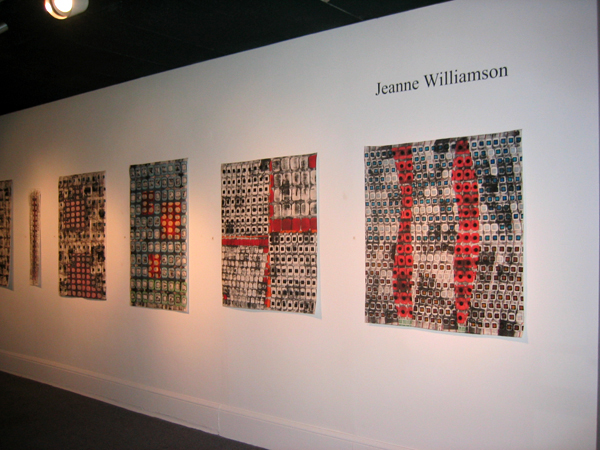
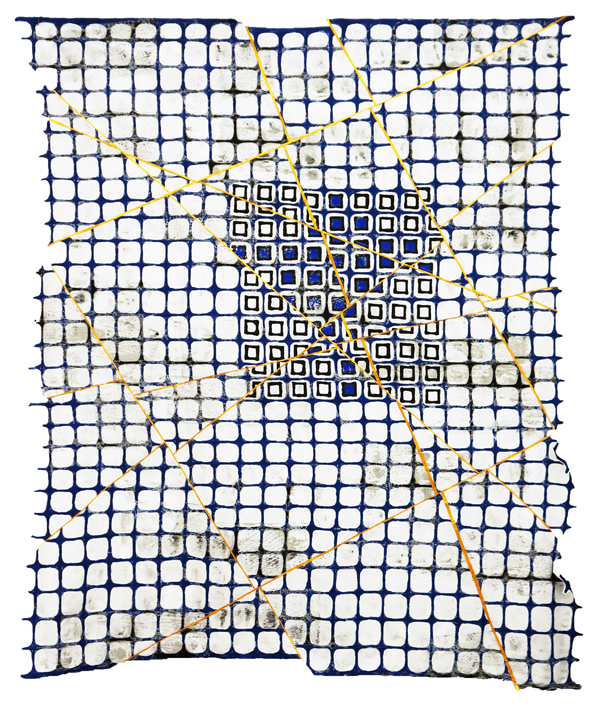
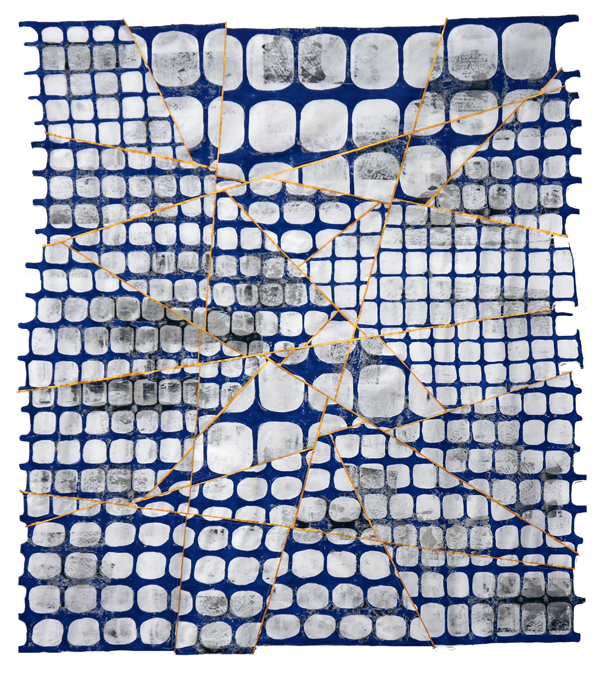
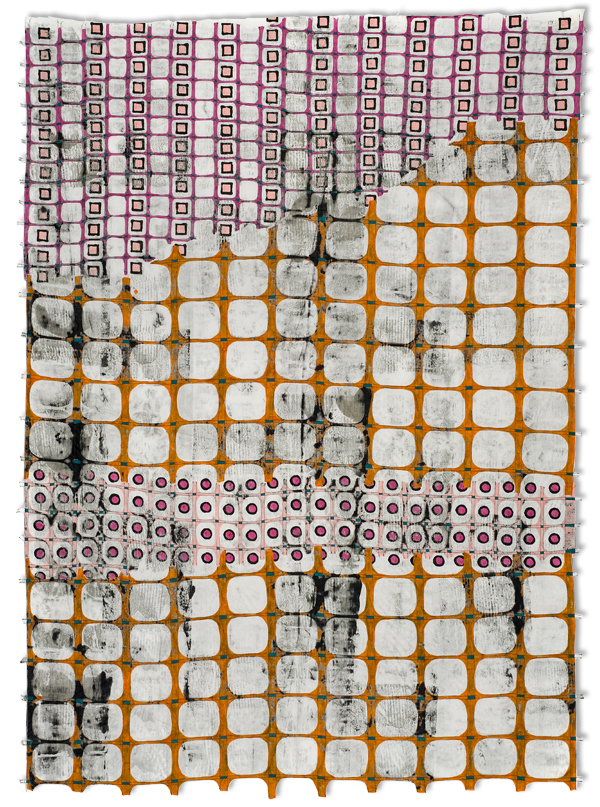
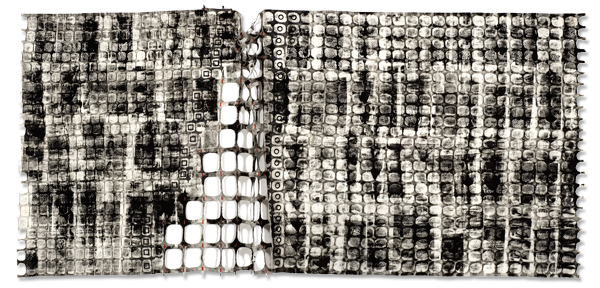
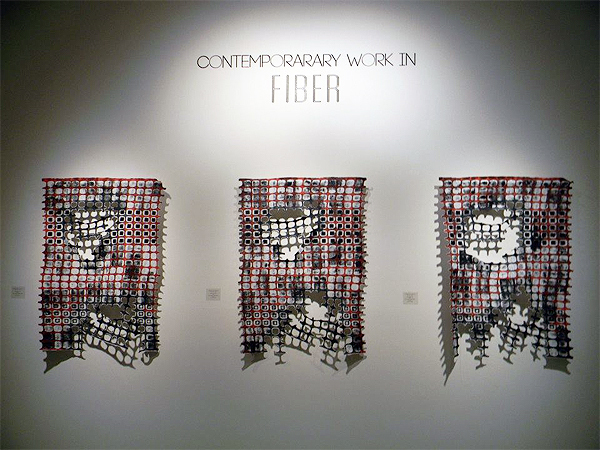
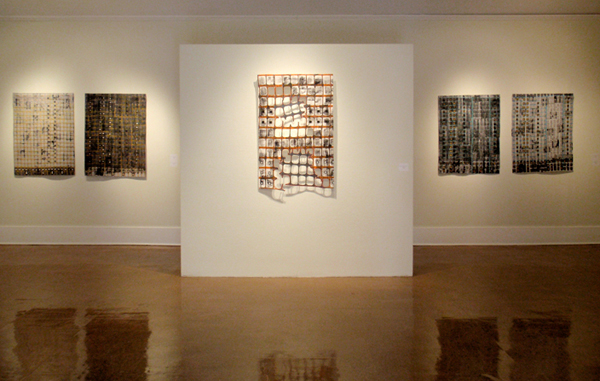
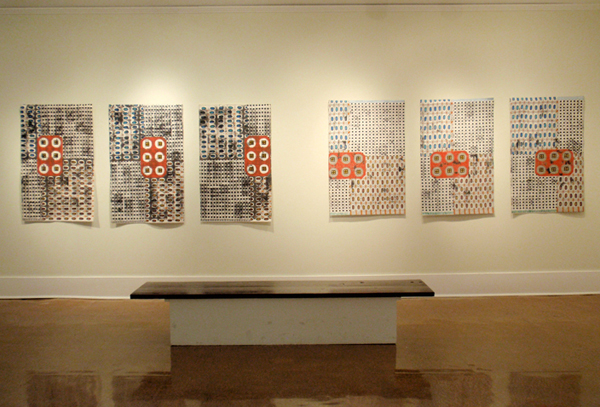
Jeanne is interested in working with the different grid patterns of construction fences and began to mono-print their textures and patterns. Her work is a combination of collage, stitching, printmaking and painting. She creates wall pieces and installations with single pieces of mono-printed, stitched and painted fabric. As both sides of the fabric look different, they can be seen from either side.
Tell us about your work?
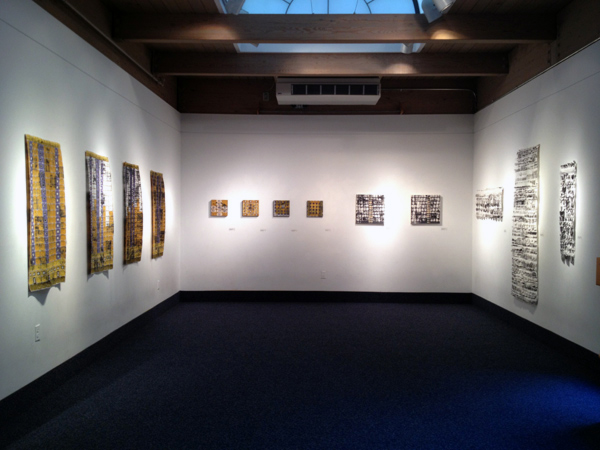
My artwork is a combination of printmaking, painting, collage, and sometimes stitching, on fabric. Most of the time, I mount the mixed media fabric on the boards. When I do this, they look like paintings and not at all like fabric. I also create wall pieces and installations with single pieces of mono-printed, painted and stitched fabric. I stiffen the fabric so it appears more like paper. Because both sides of the fabric look quite different from each other, they can be exhibited as installations or on the wall, and can be seen from either side. The size of my work varies from as small as 6-inch paintings to all the way up to 35-foot outdoor installations. I really enjoy creating work that is small to extremely large, and the challenges that come with working in different formats.
What do you doto weatherproof your work?
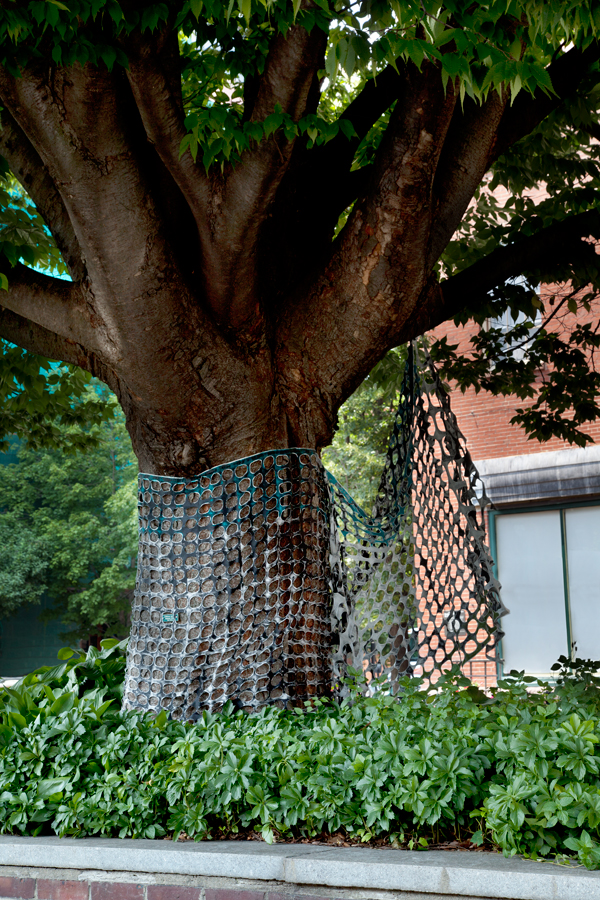
The coating on the fabric that stiffens it also weatherproofs it, so I can exhibit work out of doors. Some of my work has been exhibited outside for a few years and they are doing quite well after having full sun exposure, and also after being rained and snowed on.
Security is almost always an issue.
When working on site with your installations how much do you improvise?
It's hard to improvise the art installations I work on because I've always had to submit a proposal that needs to be approved before installing. I've learned to work out the design and installation details ahead of time, including how to make my work hard to steal when out of doors. Security is almost always an issue.
Are there any historic artists who have influenced your work?
I look at a lot of art in museums, galleries, and online, and the artist that has influenced my work the most, more than any other artists, is Chuck Close. He's not exactly a historic artist, seeing that he's very much alive and working in New York, but his name is the first that comes to mind. I am drawn to his commitment to working within the same subject matter, portraits, throughout his career, how he's adapted his work and style to his physical limitations over time, how he works with grids, and also because he also many times works in a series.
I don't remember exactly when I saw his show at the Metropolitan Museum of Art in New York City, maybe it was ten years ago? At the time, I was questioning my decision to create work in series, and wondering if it was worth doing. When I saw many series of prints he created of the same subjects, I knew immediately that I wanted to continuing working in series. I love that his series of prints use the same person's image repeatedly, but change the pattern or line, or colour.
How does your early work differ from what you're doing now?
My work, while looking similar to earlier work, is very different. I was quilting my mono-printed fabric until I stopped doing that about four years ago. Now I'm mounting the fabric on boards or stiffening it to make it look more paper-like. I am having much more fun, and I've had many more interesting opportunities now that I'm not quilting.
A lot of your work seems to have a 'grid' system to it, talk to us about that.
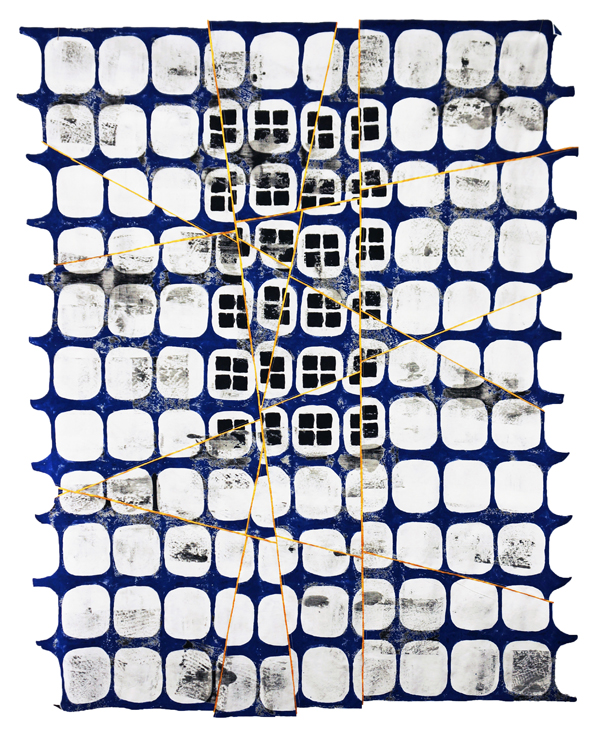
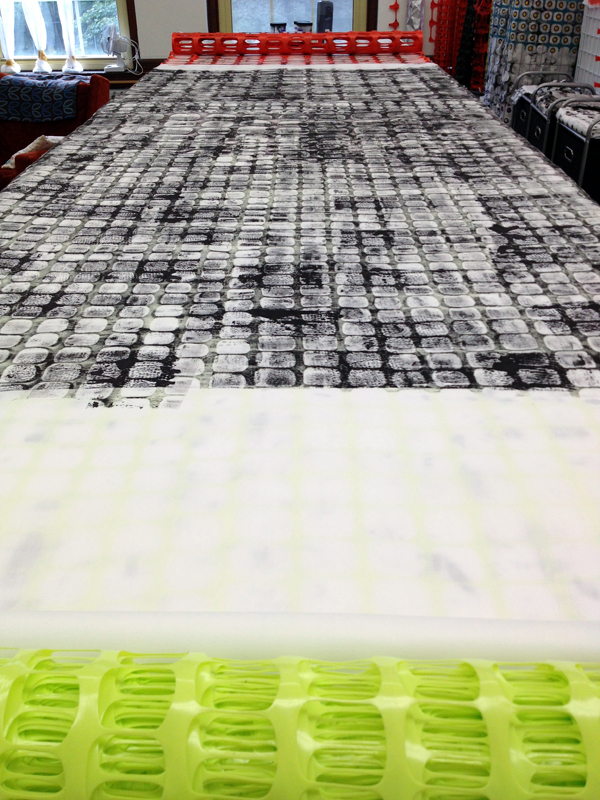
I've been printing on fabric since I graduated from art school in the late 1970s. I've almost always used the grid as the basis of my work. Over the years my work has grown from rigid hand stamped grids of over 1000 stamped rubber eraser shapes on fabric which I'd quilt, to mono-printing recycled objects (including construction fences) and stamping on fabric that I also quilted. Now I'm mono-printing the grids and textures of construction fences on fabric, I sew and I collage, and sometimes I work outside of the grid, and I do not quilt any more.
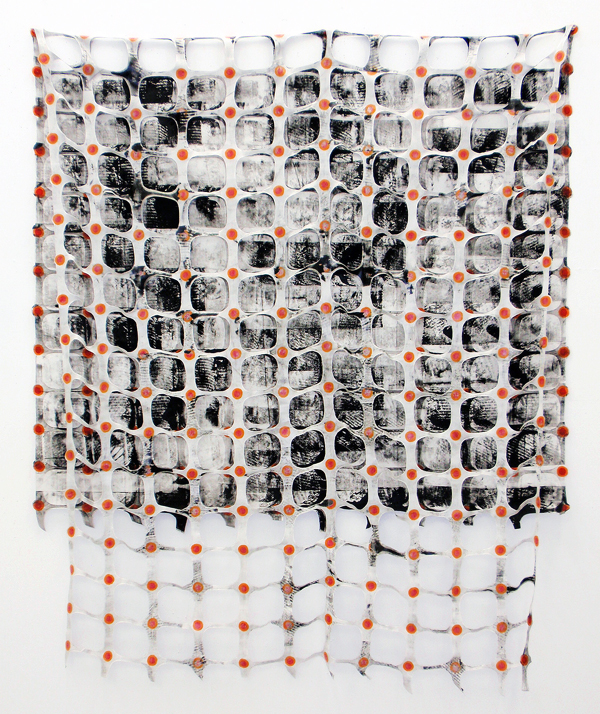
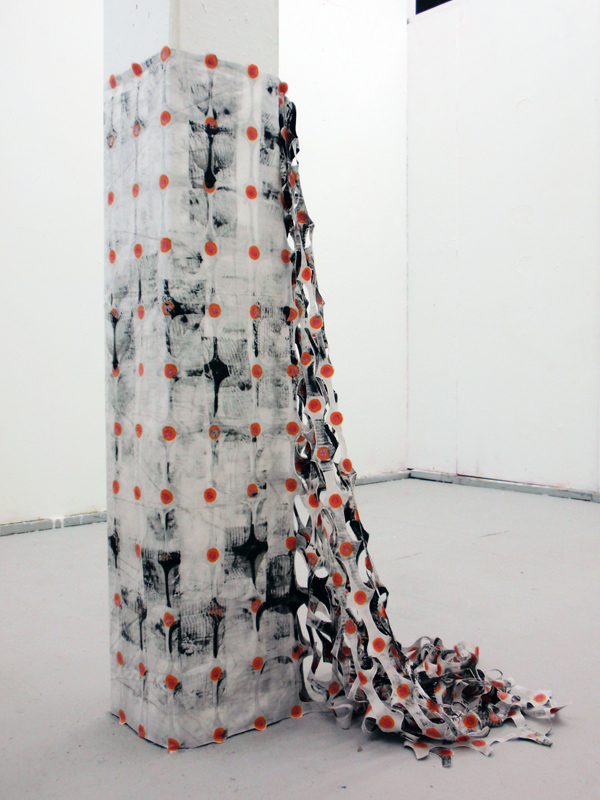
I think in grids, and because of that, I fell in love with the fences immediately.
How did you come to using fencing for your artwork?
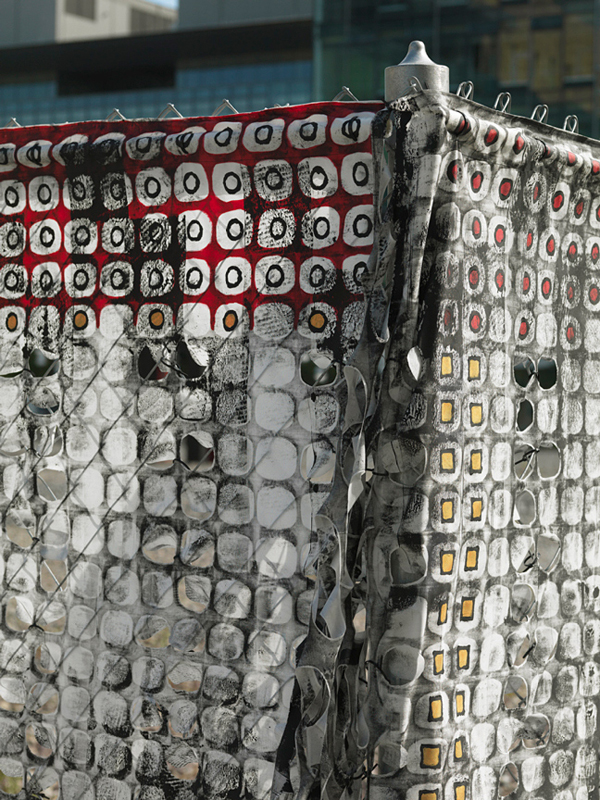
I am very interested in working with the different grid patterns of construction fences. In 2002, I started seeing different patterns, shapes and sizes of orange construction fences as they were being used at many construction sites as a barrier to keep people out of danger, by blocking off the site. I think in grids, and because of that, I fell in love with the fences immediately. I began mono-printing their textures and patterns.
Since you first started using fencing, how has your art progressed?
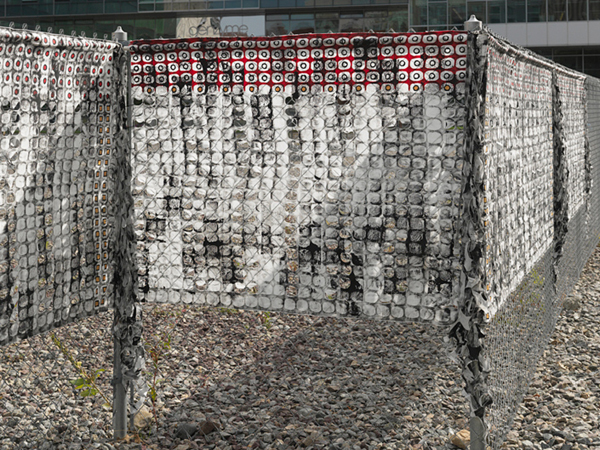
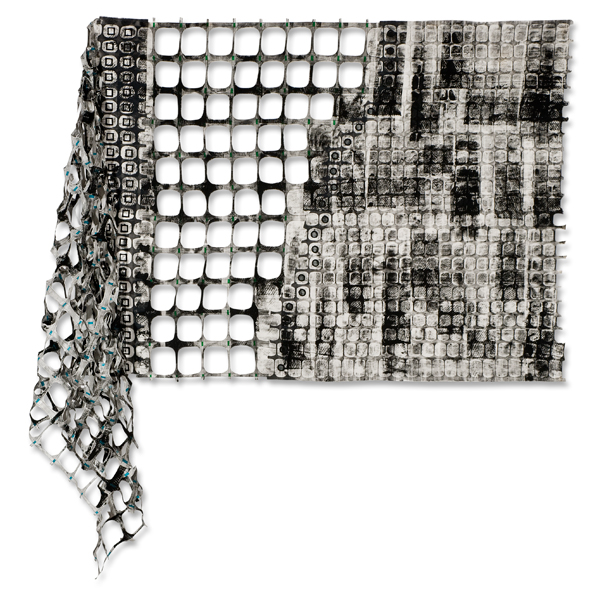
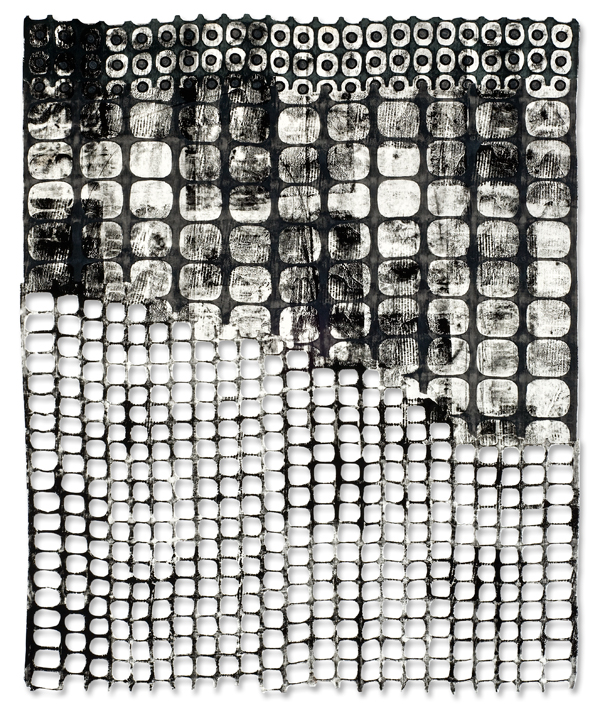
After watching the fences out in their element over time, I noticed that on hot days they can get limp and sag, and on cold days they sometimes crack and break. At times my use of the printed fence follows the grid, and at other times I like to break it apart, the same as can happen in the life of an actual construction fence. I have been collecting different kinds of fences for many years, and have at least eighteen or more patterns in my collection, ranging in length from one yard to 50 yards long. Many people know about my love of construction fences, and it's not unusual for a friend to bring me a fence piece back from their vacation, or email pictures of them. Even though I have been working with construction fences for almost ten years, I have many ideas and inspiration as my work grows. I plan on continuing to use them, and seeing where it leads me in the future.
What project has given you the most satisfaction and why?
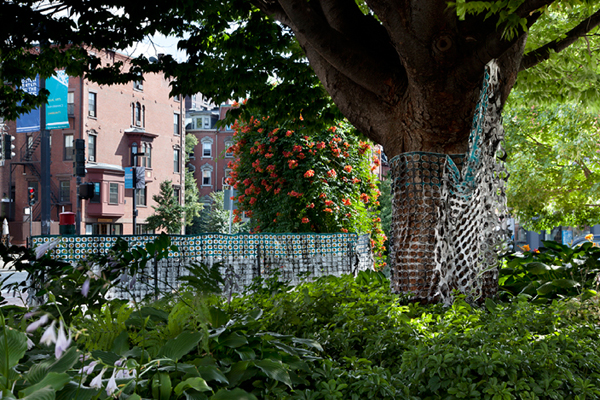
The outdoor installation I created and installed in a garden in the plaza in front of the Boston Center for the Arts in Boston, Massachusetts was the most satisfying project I've worked on to date. It was like working with a blank slate, in terms of the art I could create. I worked with and around the garden plantings and trees, and made what I think was a very humanized art installation that people could walk around and through, and also touch, 24/7. I loved the whole experience and hope I can do something like that again.
Are there any contemporary artists who have influenced your work?
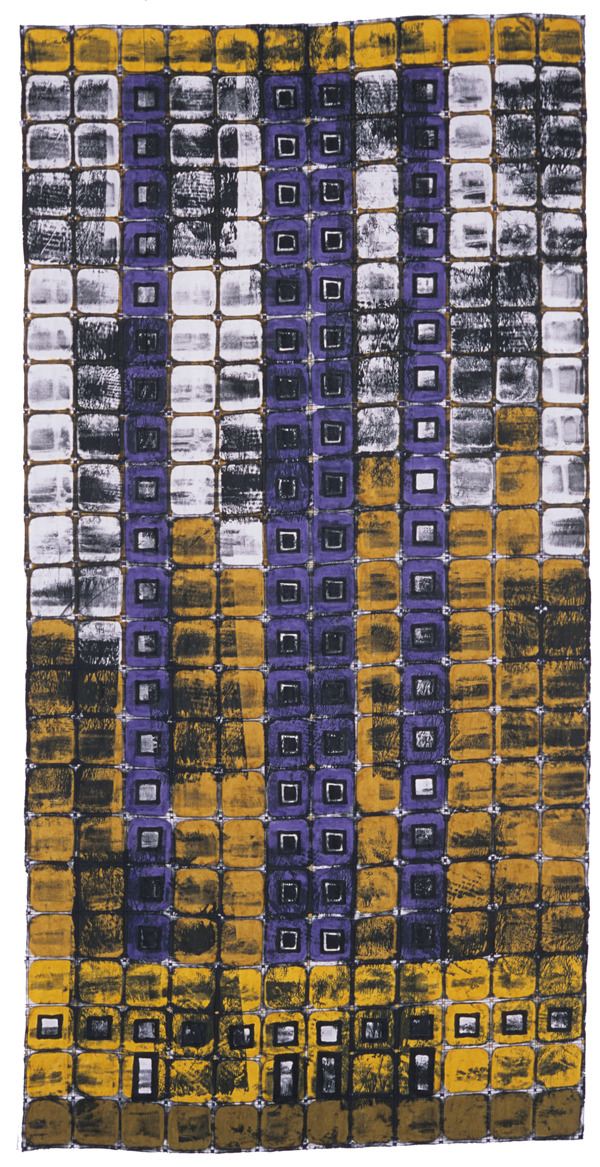
Of all the artists whose work I see in galleries, museum and online, the one contemporary artist who has influenced my work the most is Dorothy Caldwell from Hastings, Ontario.
In what way has Dorothy Caldwell's work had an impact on you?
I love her use of black and white, and colour, on fabric. I'm envious of how she uses line, pattern, design and texture that is perfectly balanced and placed in small pieces and extremely large work. When I see her work, especially in person, I just want to look at it, for as long as I can, so I can absorb it's wonderfulness. And, on top of everything, she's such a nice person!
How do you describe your art to people?
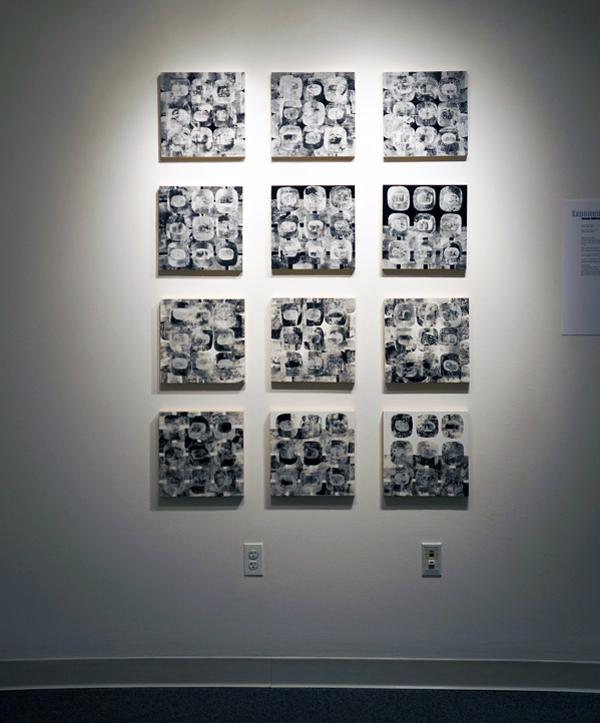
When I describe my work to others, I tell people that I print the textures of the construction fences they see around construction sites, on fabric and that I also paint and stitch, and I mount the fabric on boards, which are like canvases but made of wood, to create paintings that hang on the wall. I also tell them that I sometimes coat the fabric to make it weatherproof so I can use it in outdoor art installations.
What bridges the works that you have created in differing media?
My work is a combination of printmaking, painting, stitching, and collage, which makes me a mixed media artist as well as a fibre artist.
How did you initially start showing your work in galleries?
I began by entering gallery shows that were looking for the medium and style I work in. It was mostly art quilt and fibre shows in the beginning of my career. Now I rarely enter shows, except for a few with a catalogue, prize money or high foot traffic. Most of the shows I'm in now are invitational or are curated.
What other fibre artists are you interested in?
I am a member of a group of women artists in the Boston area, in Massachusetts in the USA, who meet monthly to discuss our art careers. We call ourselves an art coaching group, and I've been meeting with them for at least four years or so. In our group of ten artists, these five have influenced my work and/or inspiration the most.
Merill Comeau, my friend and art studio-mate, uses discarded fabrics, collage, and different printmaking and painting techniques to create small and large scale wall art and installations. I tend to work with grids and straight lines most of the time, and I'm in awe about how organic her work is, and her use of colour and pattern.
Jodi Colella works with many different fibres and techniques, creating wall art, sculpture and installations using knitting, crochet, wrapping, encaustic, felting and more. She has more energy than almost anyone I know, and it's exciting to watch her work grow and change over time.
Catherine Evans came to art later in life, and it's exciting to see how she takes materials such as gimp and cable ties, as an example, and uses them to create art on the wall, as well as outdoor art.
Adria Arch is a painter, not a fibre artist, but she uses many of the same painting techniques I use (plus more), on paper and canvas, so I include her in this list. We've known each other for 25+ years, and I'm inspired by how she uses her son's doodles from his high school note books in her work, and how her work has grown over the years while she explores the same theme. It's influenced me a lot, and she's taught me a lot too.
Kathleen Volp is a painter and sculptor who uses fabric in a lot of her work, as well as zippers and found objects. A few years ago we both bought over a hundred zippers from a friend of mine, and while I try to think of what I might want to do with mine, she's made a number of wall pieces with them that are so natural and inspirational, that I wish I had thought of it first.
My way of working is sort of Attention Deficit Disorder (ADD), though I don't have ADD.
Apart from you artwork, you are the author of two books, talk to us about that:
My first book, The Uncommon Quilter was a how-to craft book based on my project of making a small quilt-a-week for seven years. During that time, I created 365 small quilts. I took 52 of the best quilts and wrote a book that I wanted to be inspirational for anyone interested in journaling, quilting and/or using recycled and unusual objects. I also wanted to write The Uncommon Quilter because the process of making all of those quilts over all of those years was an incredible growth experience for me, and I wanted to inspire others.
My new how-to book, Uncommon Cards is about making greeting cards with unusual materials and techniques. It's similar to The Uncommon Quilter. I enjoy making my own cards and I hope a larger audience, including people who like collage, printmaking, sewing, or making things in general, will find it inspirational.
I enjoyed writing both books. I learned a lot! My writing improved, I learned some things about publishing, though it's changed since the US economy has changed over the years.
Tell us about your studio and how you work:
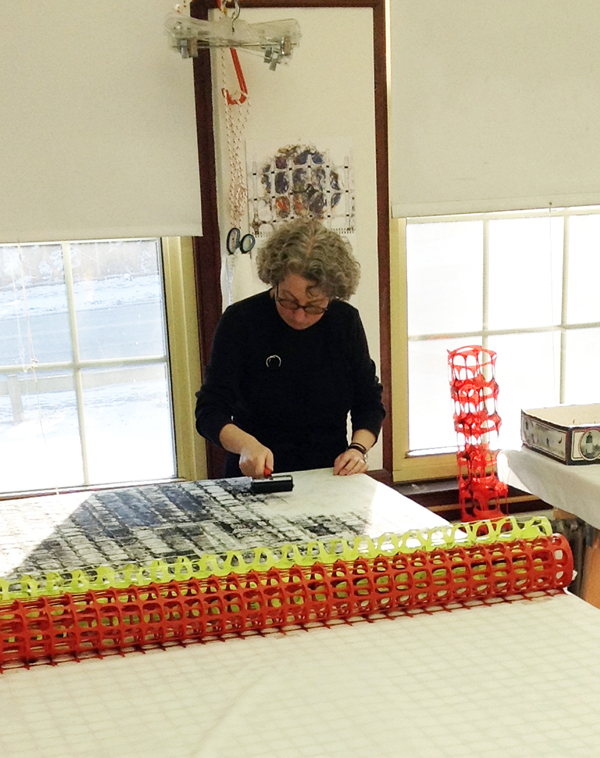
I have two studios. One space I share with artist Merill Comeau. It's a 15-mile drive from my home, and it takes a minimum of 30 minutes to drive to. Our studio is in an older building that used to be a junior high school. Our space has really tall ceilings and windows, and beautiful woodwork. We divided the room in half and we both have a little more than 300 square feet each. In the studio, I have two 8' x 48" tables I can print on. They're waist high so I can stand reasonably straight, and not have to bend and put stress on my back. These two tables allow me to work on fabric that's as long as 16' if I'd like to, but never any wider than 48".
My other studio is a small space in my home that's less than 100 square feet. I can work there any time, day or night, dressed or in my pajamas, and I make small work if I can't get to my big studio for any reason. My worktable is small, so I can only make small work at home.
While I'd like to work in the big studio every day, I usually get there one or two days a week. I spend a lot of time marketing my work, and spend at least half of my time doing that, at home, in front of my computer.
My way of working is sort of Attention Deficit Disorder (ADD), though I don't have ADD. I bounce around from art making, to working on my computer or iPad, to reading, to doing volunteer work in my community. Doing all of that gives me time to work out ideas in my mind, and it also gives the paint time to dry.
What interests you about the World of Threads festival?
I love having the opportunity to learn about fibre artists who use different techniques and have a different focus, and who live in different parts of the world. Thank you so much for all that you do to put it together!