Artist Interview 106: Cas Holmes
Maidstone, Kent, England
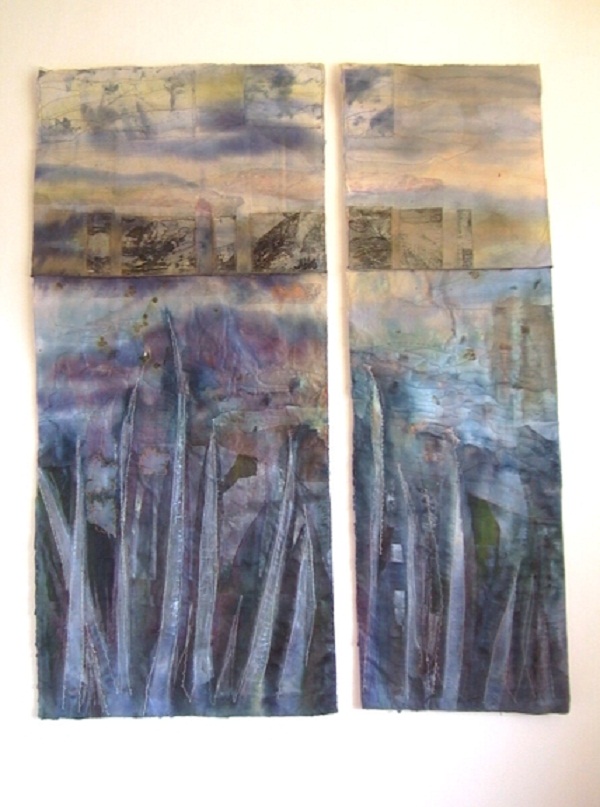
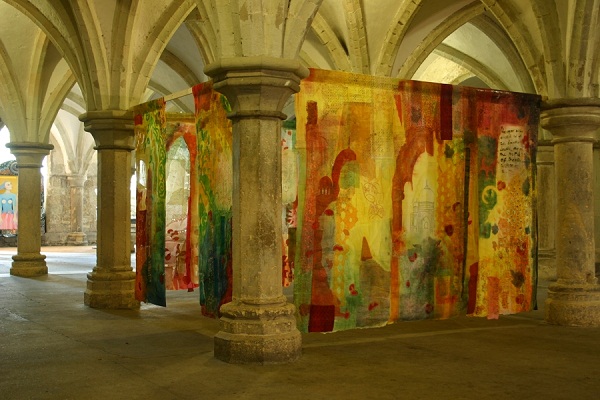
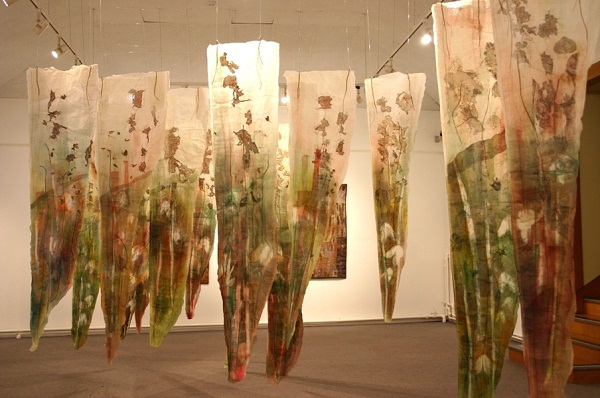
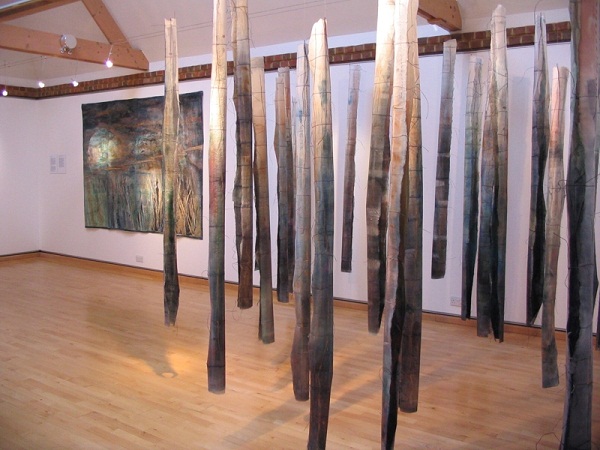
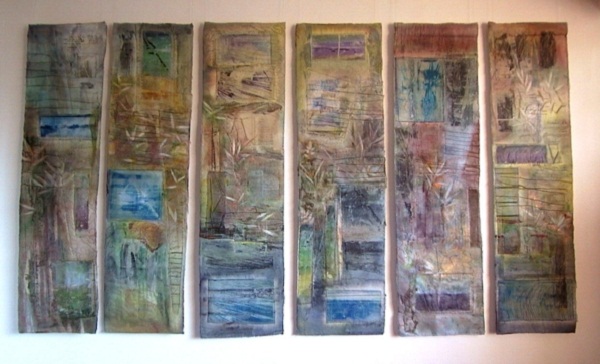
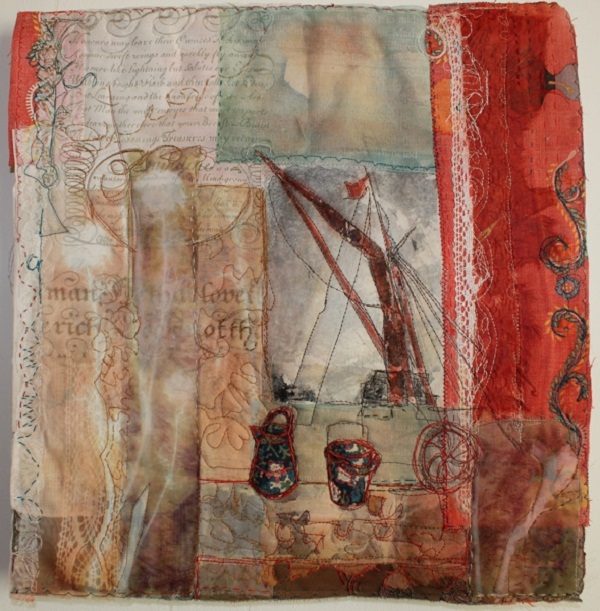
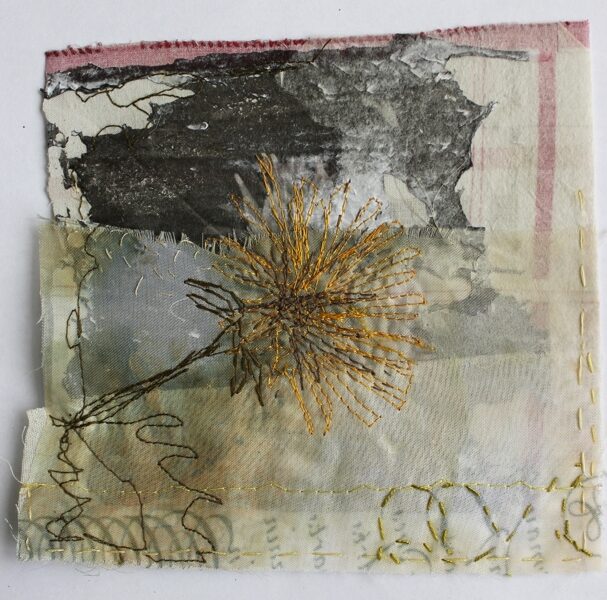
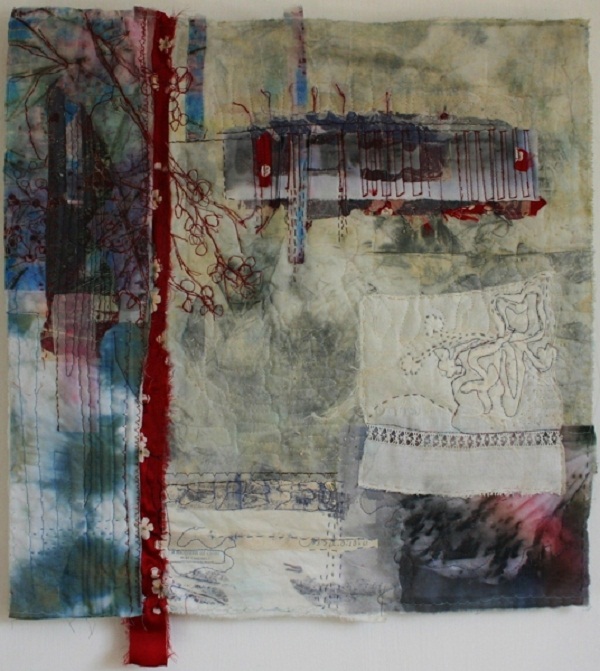
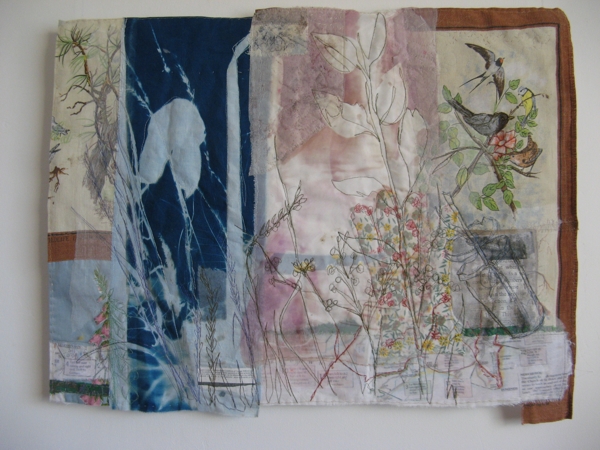
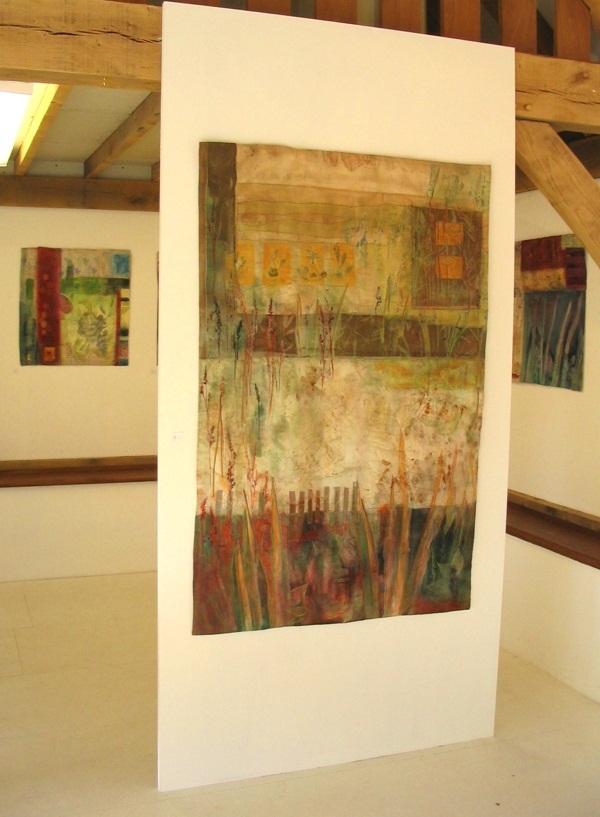
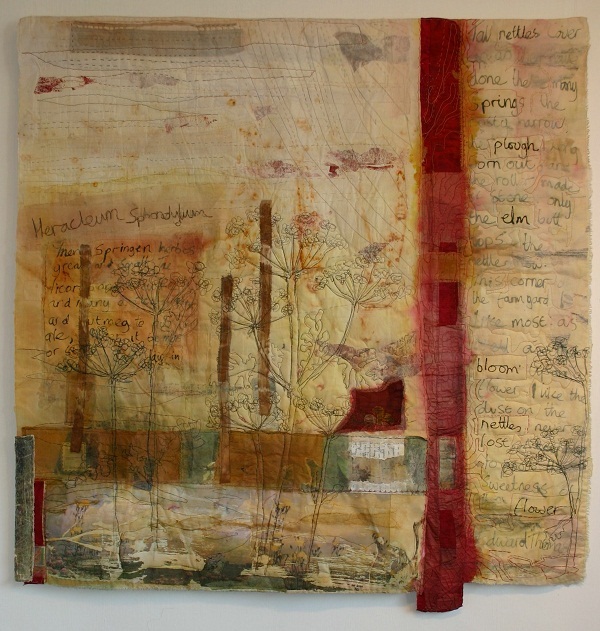
Cas enjoys the challenge of working on site-specific projects, either for temporary or permanent installations for indoor and outdoor spaces. Her desire to re-use is part of an ethical choice. Clothing, plant materials, or printed paper, she uses whatever she finds or is given. Old fabrics having been washed many times, the fibres become very receptive to dyes and marks. Teaching herself to stitch using an old machine, her lines become stitch, her colour is dye and paint.
Tell us about your work?
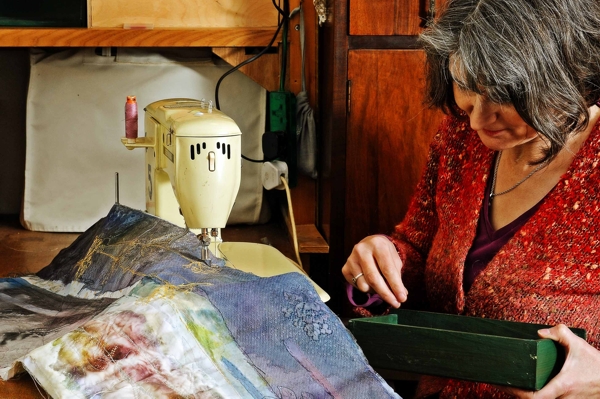
I work with found materials and have a sustainable approach to textiles, which is fast becoming a trend. This desire to re-use is part of an ethical choice. Clothing, plant materials, printed paper, I use whatever I find or am given. This started from need … I had little money to spare when I was studying art and worked evenings in a pub just to ensure I could eat. Old fabrics have been washed so many times the fibres become very receptive to dyes and marks. Paper ages as its is handled. I like to 'destroy' and remake things. My favourite found tool has to be a basic Bernina sewing machine I recovered from a skip. I taught myself to stitch using this old machine and loved the way I could get it to respond to my movements linking drawing with stitch. If I ever lost it, it would be very hard to replace.
Previous World of Threads Exhibitions
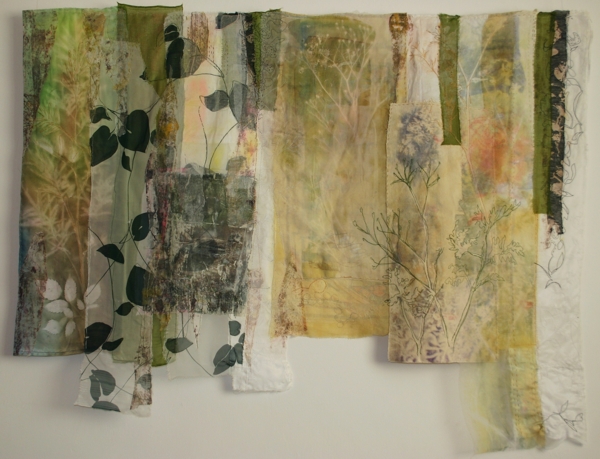
Cass Holmes exhibited in the 2012 festival exhibition Installations.
Where do you get your inspiration?
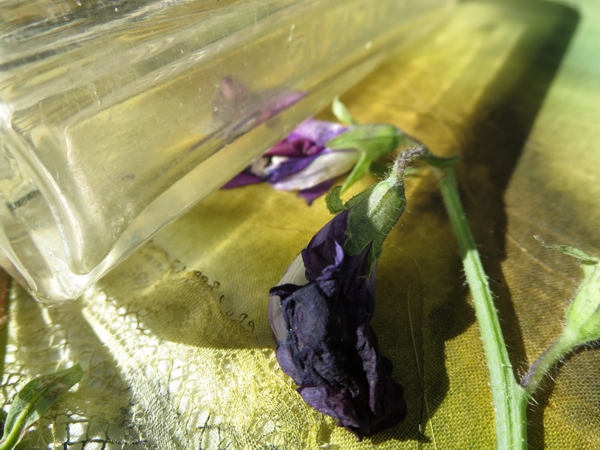
I look for the hidden or often overlooked parts of our world and the process of change, (the verges of our roadsides, field edges, the places where our gardens meet the outside spaces). I like the ideals of Wabi-Sabi and the idea that beauty can be found in overlooked details and the things of everyday life and outside spaces (I studied in Japan in the early eighties where a whole world of paper and textile art opened up before me.) I refer to this connection as an interest in 'Urban-Nature'.
Why did you choose to go into fibre art?
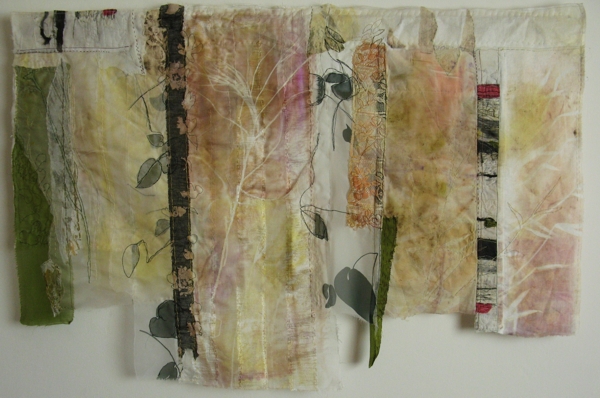
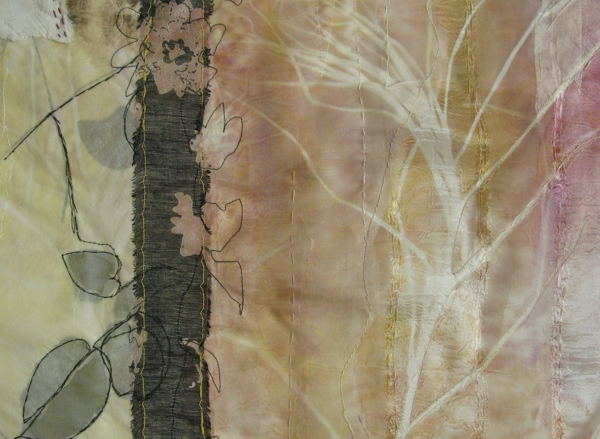
I think it choose me. I trained in painting and have no formal training in textiles and do not remember seeing my immediate family stitch at home. Again, lack of money whilst at college meant I had to work on top of old canvases. I tore into one as part of an experiment and then started to stitch it together. I have never looked back.
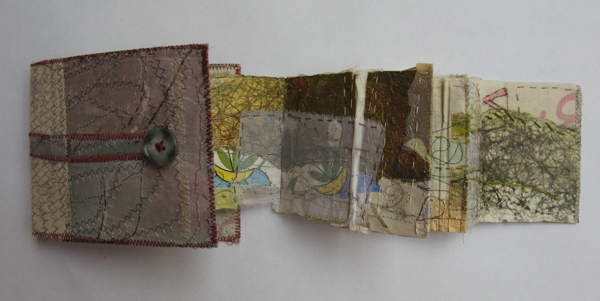
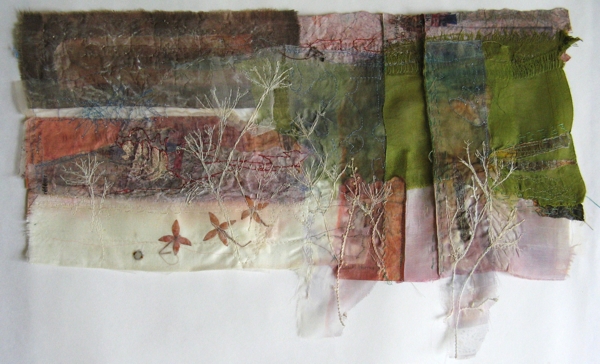
My lines becomes stitch, my colour is dye and paint.
What other mediums do you work in, and how does this inform your fibre work?
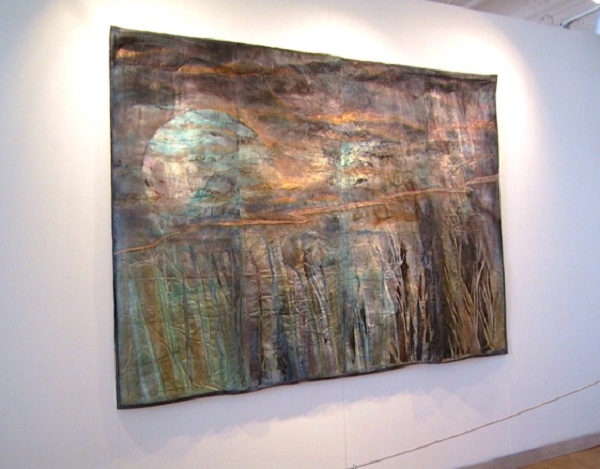
I trained in photography and in printmaking and I draw all the time. I see the boundaries between textiles and painting as blurred ... I like to show my work 'without frames' as such, seeing how the pieces develop. They are as much linked to the process of painting and drawing as they are to textiles. My lines becomes stitch, my colour is dye and paint.
What specific historic artists have influenced your work?
I am influenced by writers, music as well as artists and prefer to answer this question as what creative sources have influenced my work?
I grew up in Norfolk and I am greatly influenced by this landscape which is wonderfully described in the writing of: Waterlands by Graham Swift, and Crow Country by Mark Cocker (I have just lost my copy). I am sure it will find its way back. They both relate to Norfolk, the Fens and Broads in East Anglia and the descriptions of this flat water land are stunning.
Corvus: A Life with Birds by Esther Woolfson – a captivating story, a biography of a woman and her crows.
Equally the watercolours of John Sell Cotman in the late 19th century. He was far ahead of his times.
Japanese Folk Art or Mingei and the wonderful printed textiles and paper specifically.
Lark Ascending music by Ralph Vaughan Williams.
Historical textile art specifically the printed and wallpapers from the Silver Studio UK. Everything I can find in the Victoria and Albert Museum in London. English artists John Piper, Graham Sutherland. Canadian painter Emily Carr.
There is so much lovely stuff its impossible to list it all. To name a few such as the botanical illustrations of Marianne North at Kew Gardens in London, England. Amish Quilts, and many areas of folk art such as traditional barge and vardo (gypsy caravan) painting in the UK and indigo dyed fabric in Japan.
What other fibre artists are you interested in?
Joan Schulz: I was fortunate enough to meet her a few years ago while working in New Zealand. She has amazing vigour and directness in her work.
Polish weaver Magdalena Abakanowicz and the humanity in her pieces. Too many to list further.
What role do you think fibre art plays in contemporary art?
It is a contemporary art form. The materials should not define it as being other. It is the specifics of the materials we use and the links, historic, social and domestic which can be used to present additional frameworks for meaning and interpretation.
Please explain how you developed your own style.
When you walk, cycle and use public transportation, you aren't isolated. You make direct contact with the physical world and dress appropriately for the weather! I have always lived in towns which also are next to parks or open spaces. It gives me a broad range of materials and references to work with. I only have to walk outside my front door. These simple things of my daily life are inspiration. I think this is where I have developed 'my style'.
You run a number of workshops, both locally and internationally. Please talk to us about this:
I remember this quote in a catalogue Reflections about my work sometime ago. I think it is still relevant today:
Being a practicing artist and a community artist is a kind of double life but she suggests, 'they are closely interwoven'. The low-tech systems she employs in her personal art practice are flexible enough to be used by people of all levels of skill and ability. It is one of the reasons why her work is accessible to a wide audience. Moira Vincentelli (From Reflections catalogue 1999)
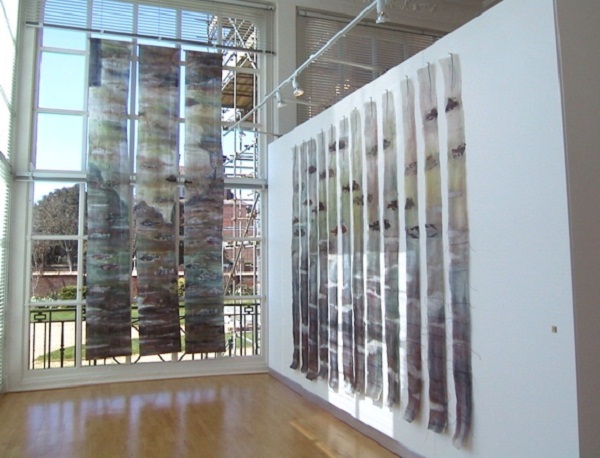
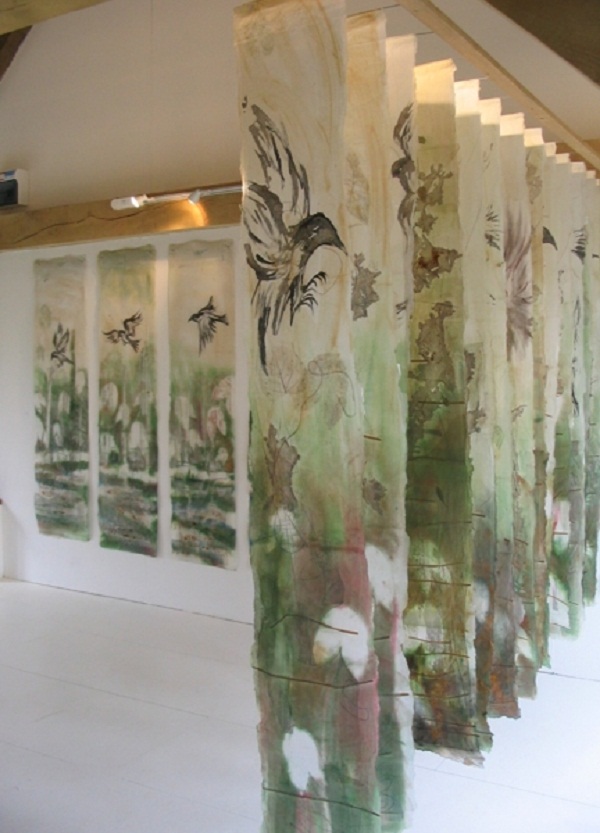
I enjoy the challenge of working on site-specific projects and installations in collaboration with the community and other artists, performers and musicians, as it can lead to different interpretations and opportunities for your work. You reach different audiences and learn from this exchange with others. Tea-Flora-Tales as part of of my recent exhibition, Urban Nature is an example of an ongoing collaboration.
I was able to adapt processes to suit my own work.
Tell us about your experiences during your periods of long-term study in Japan:
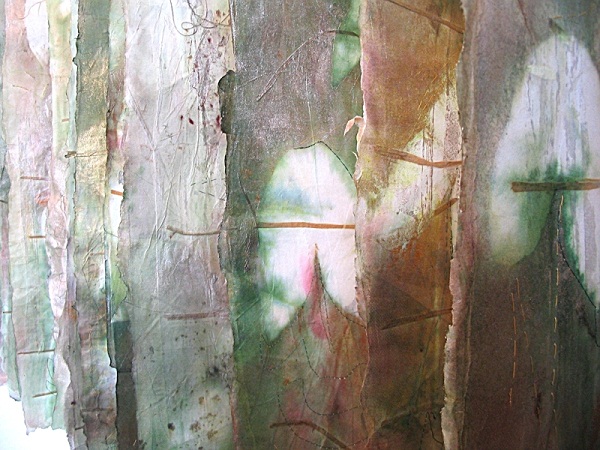
My understanding of paper and related media was greatly enhanced during two periods of long-term study in Japan in the mid to late eighties (supported by the Japan Foundation and the Winston Churchill Memorial Trust). During this period of study I gave talks and workshops demonstrating my own techniques. This proved a most fulfilling exchange, which had long term influence on my future explorations. I was able to adapt processes to suit my own work. By no means was I making 'Japanese-style pieces', my research and training was not long enough and it was not this which interested me. Rather, it was the whole concept of paper and textiles being an essential part of the Japanese culture and the amazing variety of application from paper cloth to walls of buildings which taught me to challenge and push material usage.
How did you branch out to being an author and getting published?
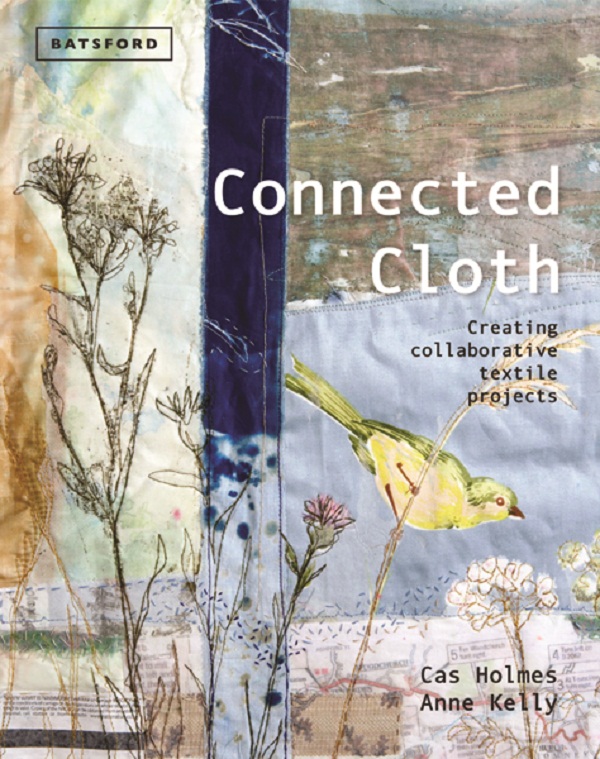
I had long been asked when I was going to write a book by students on courses. I always responded: When the right publishers came along ... Batsford/Anova were the right publishers. I have always had a 'What if?' attitude and decided to 'give it a go'. I am not an academic and thought I may not have the right set of skills. But I just kept plodding on. At times, I wanted to just do my 'visual stuff; but I managed. Working on my second book with Anne Kelly brought an new dimension to the writing and demonstrated the strength of collaboration.
Tell us about your studio and how you work:
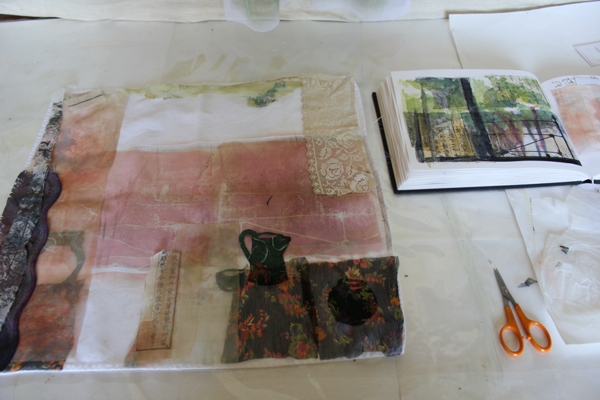
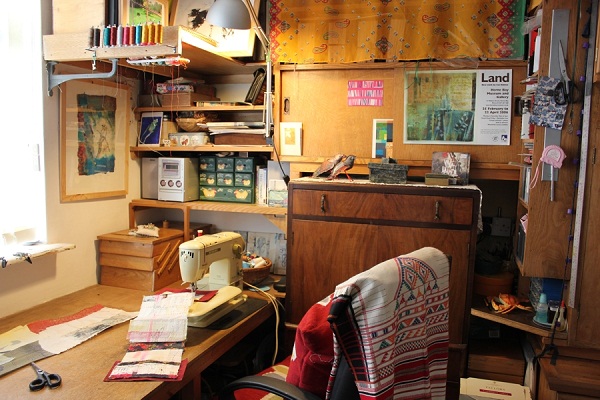
My studio is a small room in my house which ends up with me working in the garden, the kitchen, sitting in front of the TV and even on trains and buses when I stitch. I make good use of small spaces and like my Romany grandmother, a space organizer. Currently putting stairs to the loft space, means everything is even more compacted as I work with stuff from in the loft, under tables, chairs and the bed!
Is there something else you would like us to know about you or your work that we have not covered?
Following a very successful exhibition of Urban Nature during my period as guest artist at the the Knitting and Stitching Show and Festival of Quilts in the UK (London, Harrogate and Birmingham, 2012) I am continuing to develop ideas and will be exhibiting some of the work in the future.
I was awarded a Pride of Britain Award from the NRI institute (Non Resident Indian Institute) for my overseas community work in developing Anglo-Indian relations.
My works are included in many prominent collections including Arts Council England collection held at Hove Museum, Hove, Sussex, UK; Museum of Art and Design, New York; Oji Paper Museum, Tokyo; Embroiderer's Guild UK, at the national Organization Headquarters at Walton-on-Thames, UK); Schroder Finance, Edward James Foundation, West Dean, Chichester.
I am the author of The Found Object in Textile Art, Batsford publication 2010 (reprinted three times) and Connected Cloth 2013 (this book was co-authored with Anne Kelly)