Artist Interview 104: Suzanne Morlock
Morlock of Wilson, Wyoming, USA
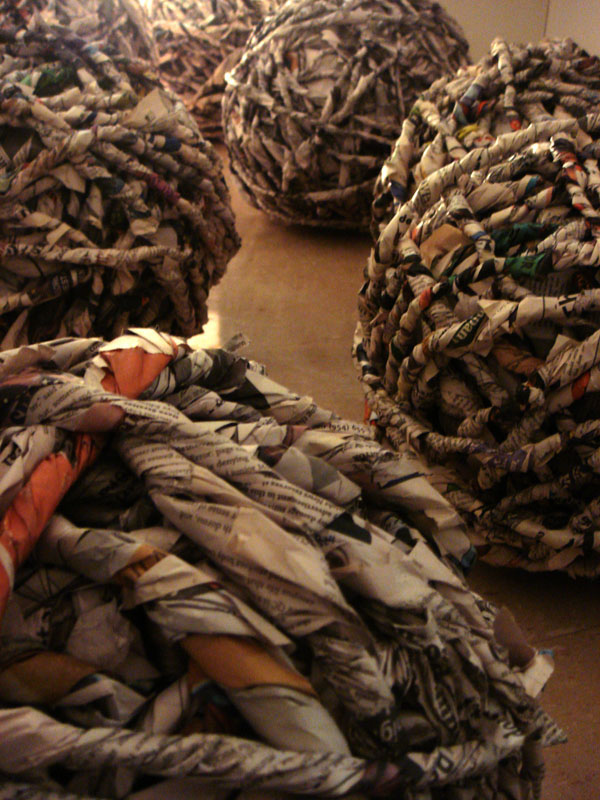
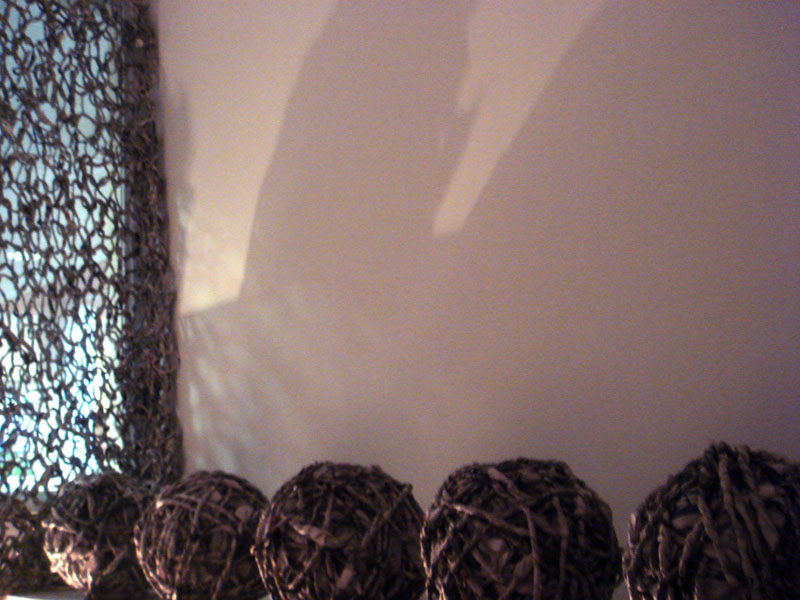
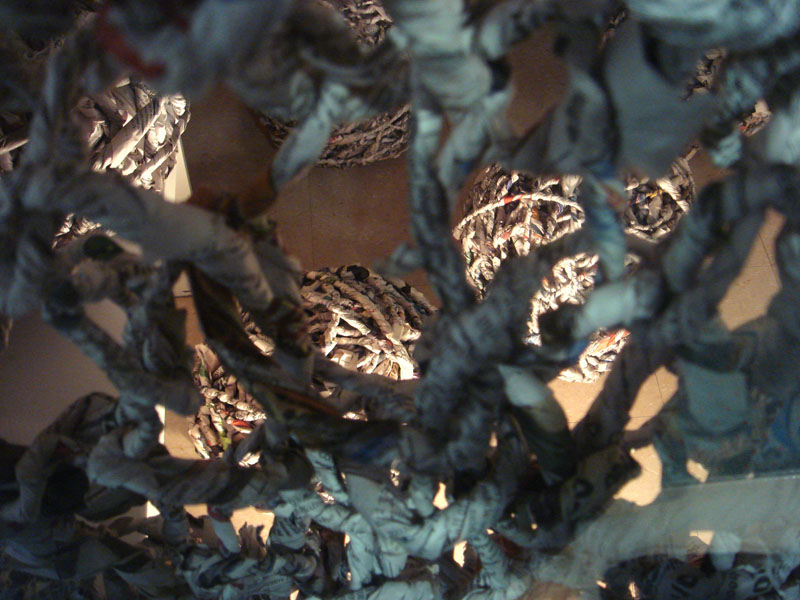
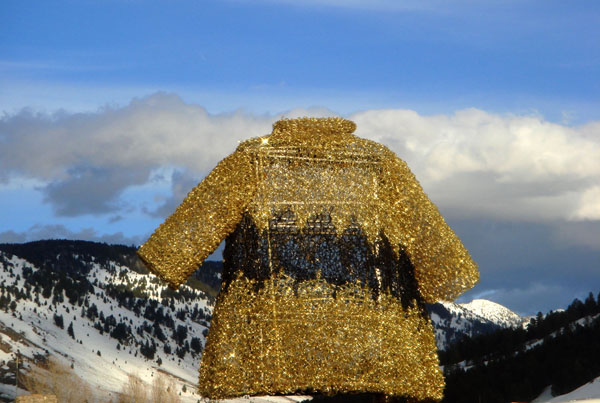
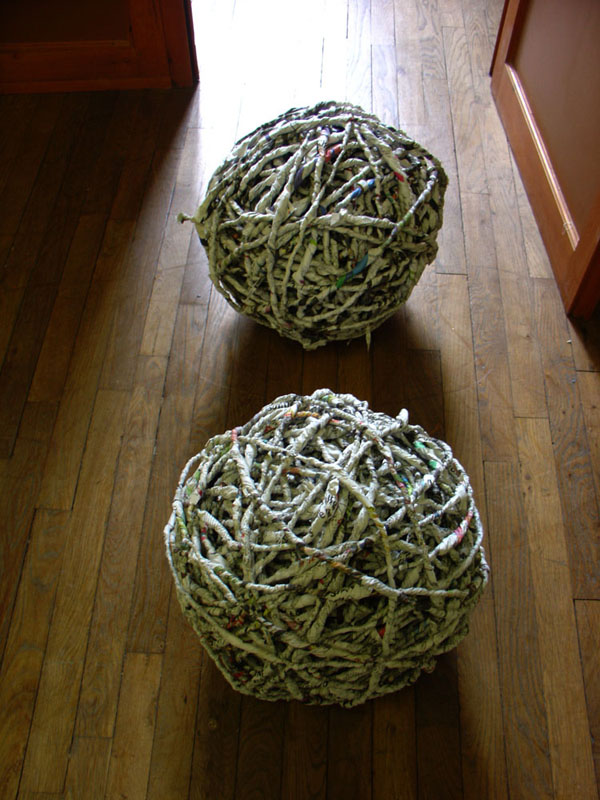
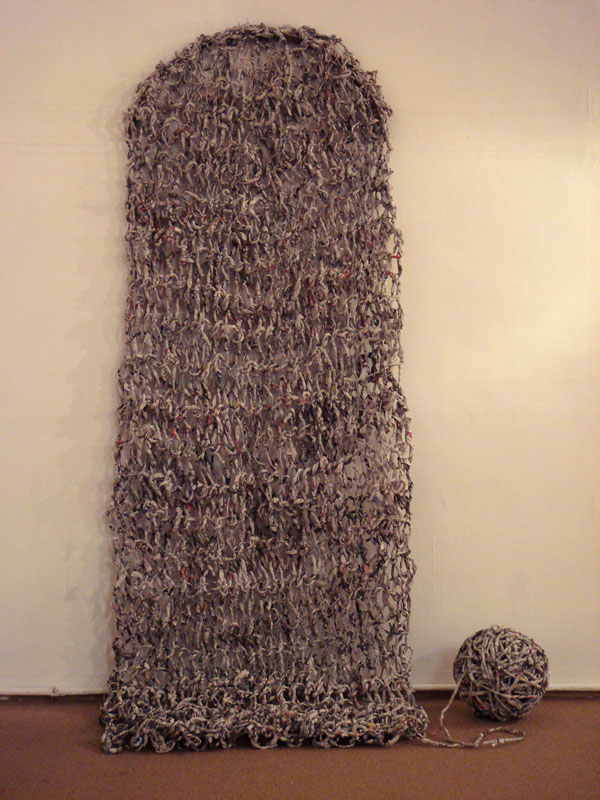
Using techniques like weaving, sewing and knitting, Suzanne repurposes the unwanted debris of society into sculptural pieces and installations. Her work often seeks connections between the narrative of a site with the cultural properties and local materials of a place in her large-scale installations. She transforms the familiar, like newspaper and cloth in order to demonstrate the disposability and endless potential of recycling items into works of art.
Tell us about your work?
I am inclined to disregard the boundaries of earlier periods and instead conceive of my work as artistic hybridization. I grapple with issues related to personal and sociological themes rather than focusing primarily on materials or stylistic movements. My work explores tactility, interactivity and the underlying tenets of craft arts, with all of their aesthetic divergences, which inform the mainstream of fine art.
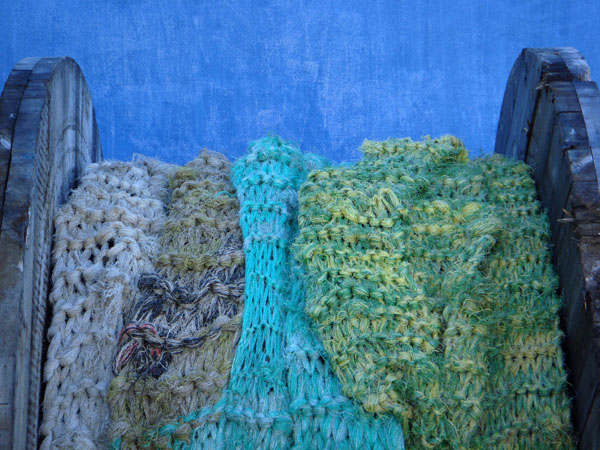
Thematically, my work explores the ephemeral realms of memory, composition and decomposition and communicates the unstable tension ever-present in our ephemeral world. I transform the familiar, such as newspaper, cloth, recording tape, in order to demonstrate the paradoxical elements of disposability and endless potential. Through techniques historically used by women, like weaving, sewing, and knitting, I repurpose the unwanted debris of our society, revealing aspects of beauty and whimsy, while embracing the impermanence of even the work itself.
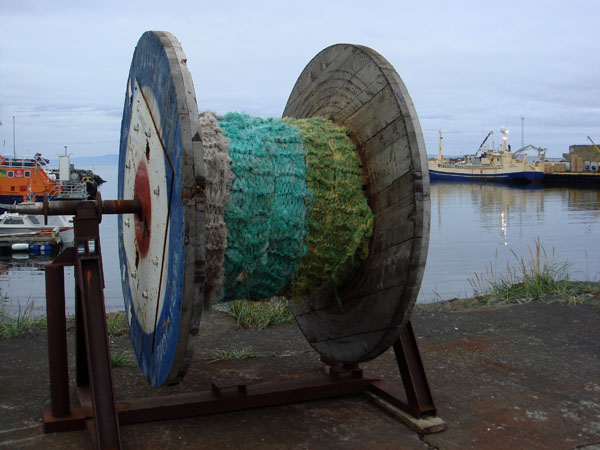
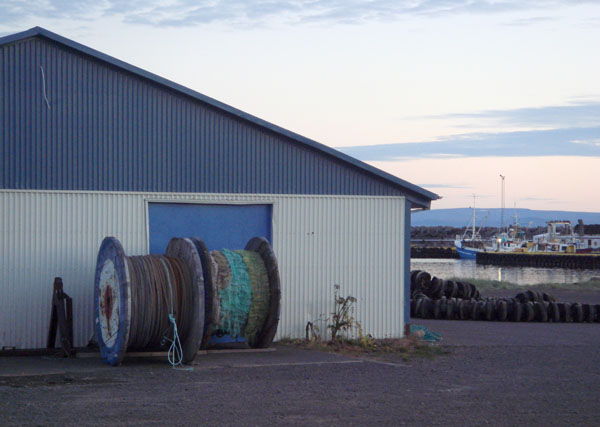
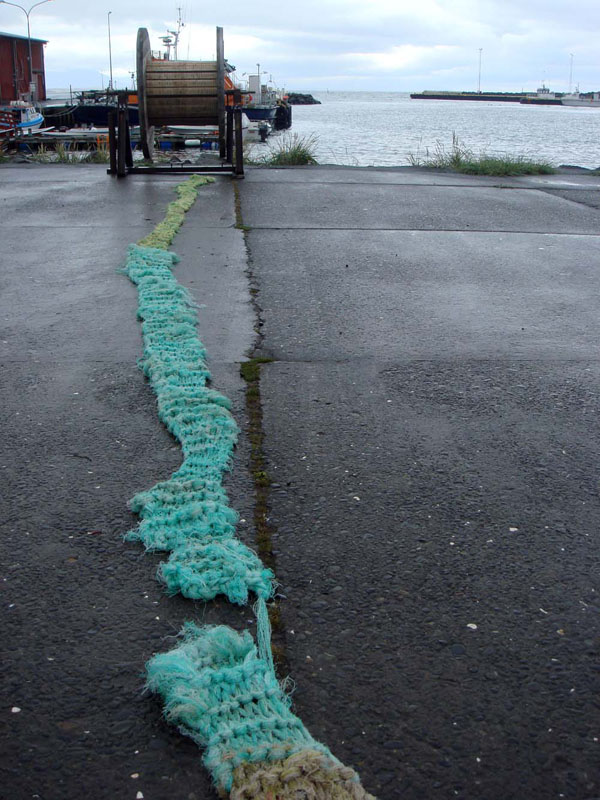
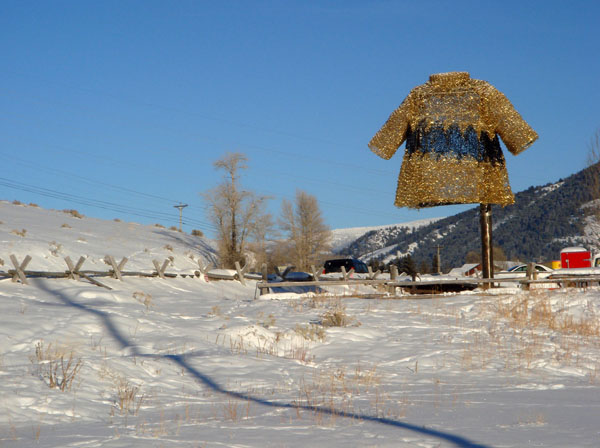
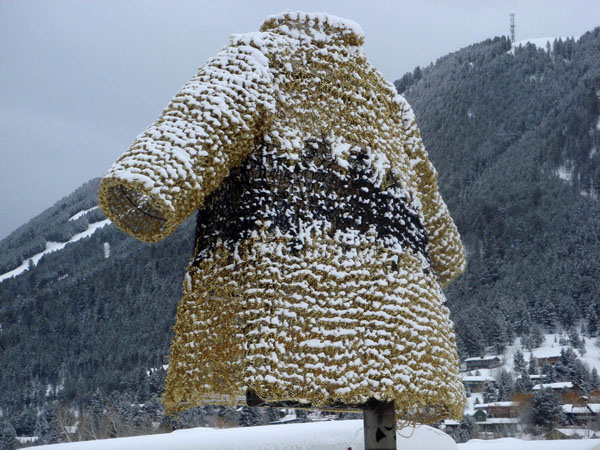
Most recently, my site-specific pieces connect a particular physical place with its "personal" narrative using cultural references and materials local to the place. Through techniques common to my work, I narrate a story that extends an understood meaning or that invents new meanings, imaginings or possible futures. Beyond my narrative, a viewer reads the work with his own interpretive vision, adding yet another narrative to the mix.
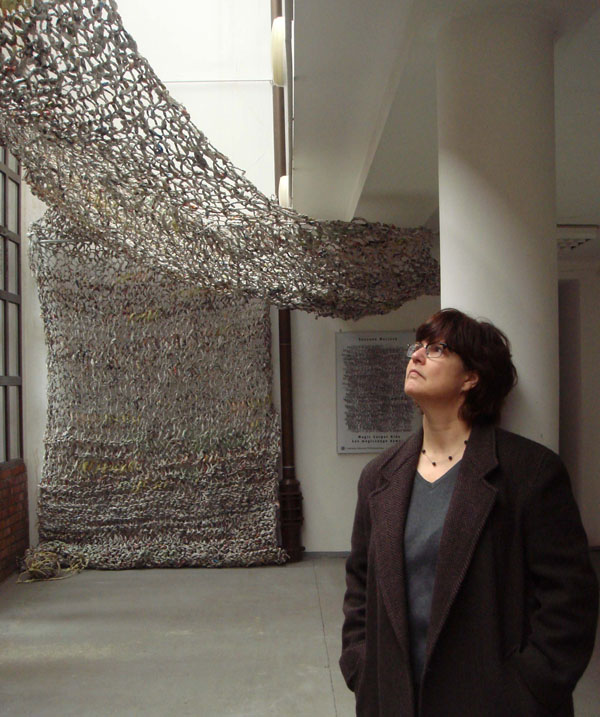
I have been increasingly interested in making "textile-like pieces" out of cast off materials, creating works with new narratives.
Where do you get your inspiration?
I have been increasingly interested in making "textile-like pieces" out of cast off materials, creating works with new narratives. During the last 5 years I have created site-specific work in Iceland, France and Poland as well as in the United States. With each project, I am inspired as I extend my exploration of handmade technique, story creation and integration with place.
Another impetus for my work revolves around how communication methods have changed our relationship to people, places and objects. Technology has become an intermediary force among humans, discouraging direct experience. As humans become increasingly isolated from direct experience through a chronic visual overload, I am compelled to defy the proliferation of mediated and virtual experience by creating tangible objects and physical experiences. While the visual and cognitive properties of art still remain in my purview, the digital and technological explosion now drives me to incorporate physical interaction between the work, the artist and the viewer.
Making things by hand has unavoidable personal, political and social ramifications; it puts humans in a direct, rather than hidden, relation to labour. As an artist, I believe process – the physical act of doing or making something – carries as much value as the end result. Perhaps process and interaction function as our most important teachers.
While visual-cognitive properties of art are dominant in my work, I am also inspired to explore the need for sensory experience, potentially derived through other media such as video and sound and most recently, dance. This inclination has been brought into clearer focus by increases in a kind of shared isolation from in-person experiences.
Likewise, this isolation has prompted my more emphatic investigation of interactions between the work and the viewer. Materials that are largely being rendered obsolete by the changing technological landscape, function as a medium for exploring phenomenological and resultant pedagogical dialogues. The focus enables a tactical collaboration of ideas, discussions and physical form as outcomes of this playful intervention-like methodology.
What other mediums do you work in, and how does this inform your fibre work?
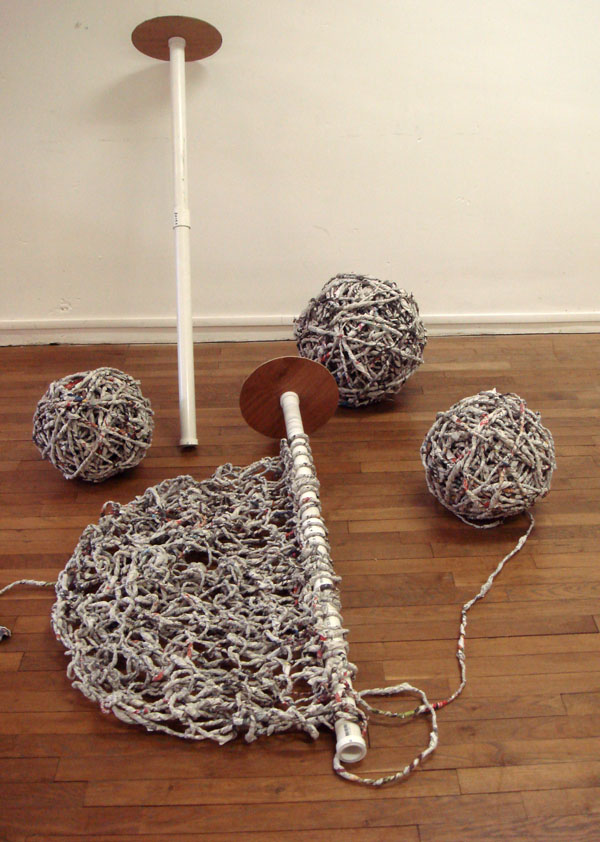
My primary medium is idea-driven installation work. Often times this impetus includes large fibre-like pieces made from recycled materials. Usually these works are ephemeral in nature. Due to this, I photograph the work intensely.
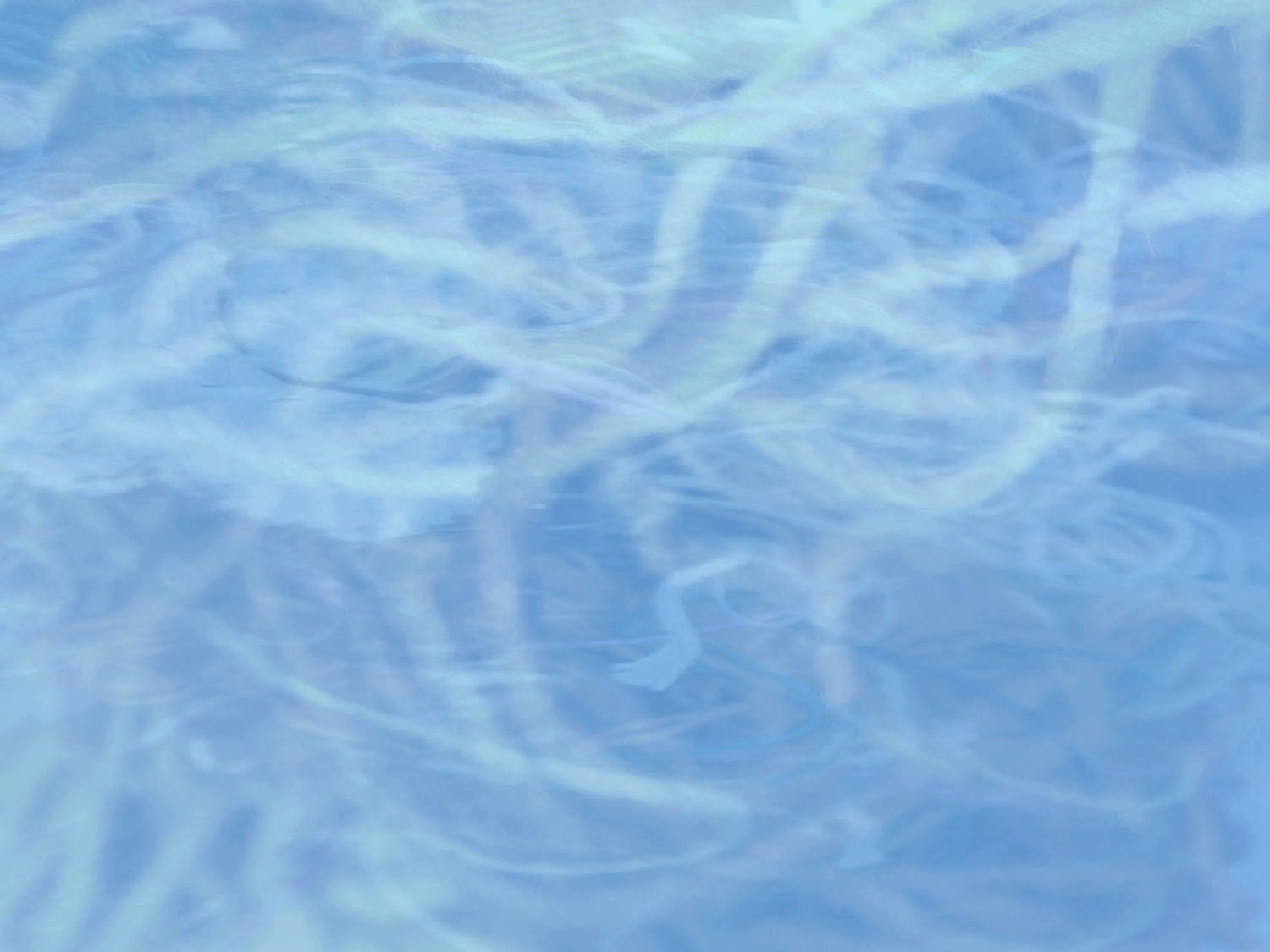
As an off-shoot of my documentation process, I invented a digital extraction process called Bordessian (edge drawing), where I remove some of the digital information to make a drawing-like 2-D image, a cross between photography and printmaking, by extracting some of the digital photographic information to create unique imagery.
Last year I explored a performing arts medium via an opportunity to collaborate with a modern dance troupe. The experience was creatively stimulating and the collaboration refreshing, imaginative and satisfying. For that collaboration I created a sound and video piece and some distinctive set elements that facilitated and encouraged the dancers' semi-improvisational response. I am currently working on another dance collaboration.
What bridges the works that you have created in differing media?
Inventive ideas and a penchant for place-based themes, social context and memory informed by previous works, hold a thin mesh of continuity irrespective of the materials, format or scale. Often a knitting technique seems to be a binder.
What specific historic artists have influenced your work?
Historically, I find I am still influenced by artists such as Joseph Beuys, Louise Bourgeois, Alexander Calder, Marcel Duchamp and Eva Hesse for their adventuresome spirits and conflation of concepts and materiality during eras where this kind of boundary crossing was far from the standard practice.
What specific contemporary artists have influenced your work?
.There are many contemporary artists who influence me for very different reasons. Some that stand out currently are:
Nick Cave - melding of dance, sculpture and fibre into a unique body of work
Petah Coyne - large scale sculptures using organic and unconventional materials
Orly Genger - obsessive use of a similar technique and recycled materials
Robert Gober - use of familiar, domestic objects in curious ways
Ann Hamilton – large-scale multi-media installations
Tony Ousler - expressionistic and theatrical delivery of installation work.
Learning is an on-going process. Most importantly, each work I create provides new learning, surprises and interests in further explorations that often spill over into the next project.
Tell us about your training, how it has influenced you and how you have applied what you have learnt.
While I am definitely creating work that can be categorized at fibre work, I am not formally trained as a fibre artist. I often refer to myself as an intermedia artist; the implication being that crossing mediums is dictated by the nature of the project I am working on. The term was originally used in the Fluxus Movement of the 1960s and is gaining some traction in the present.
As an undergraduate I began my art studies as a painter, yet was insistent on taking courses that enhanced my creative exploration and passion in other adjacent disciplines. I amassed enough units in this process to have potentially received two undergraduate degrees as I explored the edges of fine art, design and craft. Gratefully these academic barriers of 30 years ago have been relaxed to some extent in the present educational system and gained more acceptance in the wider art landscape. I hold two masters degrees, one in fine arts and another in landscape architecture, both have enriched my process and evolution as an artist.
I read a fair amount of current art theory and criticism, which certainly influences my thinking about art making. I travel when I can and attempt to visit a major art centre annually to experience work by other artists in person. Learning is an on-going process. Most importantly, each work I create provides new learning, surprises and interests in further explorations that often spill over into the next project.
How did you initially start showing your work in galleries and do you find it more difficult to show and sell your work than non-fibre artists?
My priority has been creative exploration rather than monetary gain, which has resulted in work and exhibitions that are more experimental in nature. Therefore, I can't really speak to the commercial aspect of the appeal of fibre-based work. I have not taken a typical path with what I have accomplished but it has all influenced the work I do today.
Tell us about your studio and how you work:
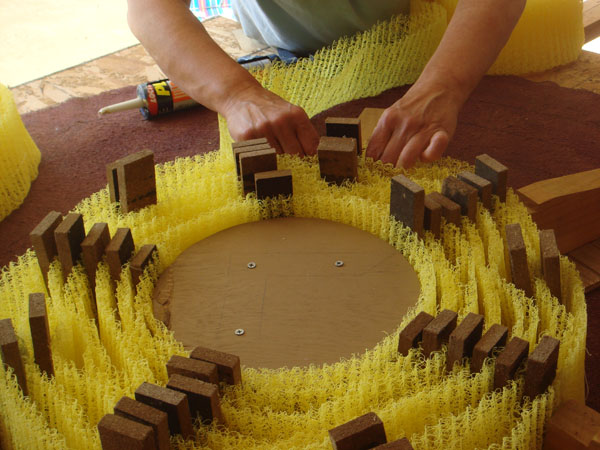
My studio is in the basement of my house; the space is about 650 square feet. I live in a very rural area so having the studio on site makes sense. How I work tends to depend on the nature of the project I'm working on at the time. As my practice is process oriented, there are periods of time when I'm very focused in the studio on making, whereas other times it's conceptually driven and site specific.
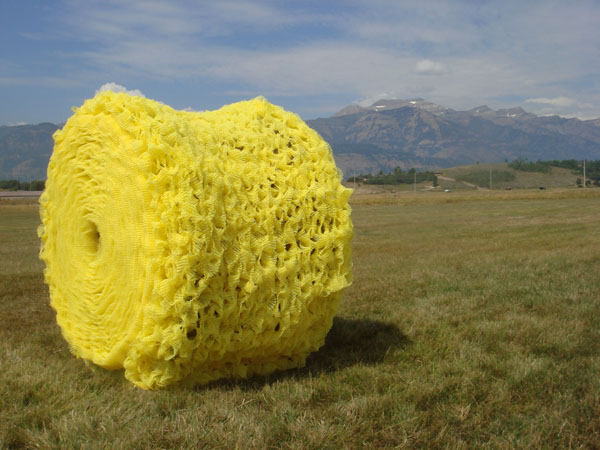
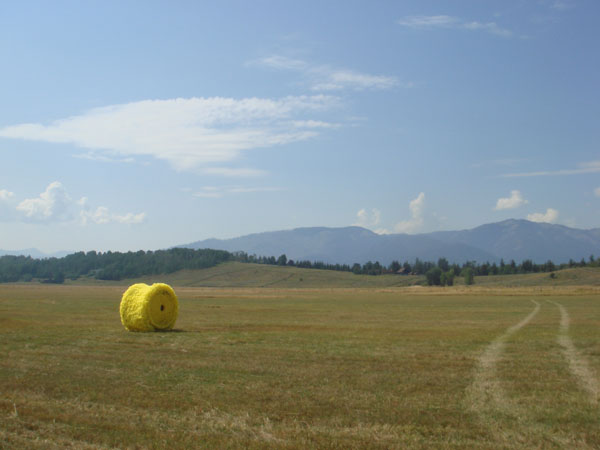
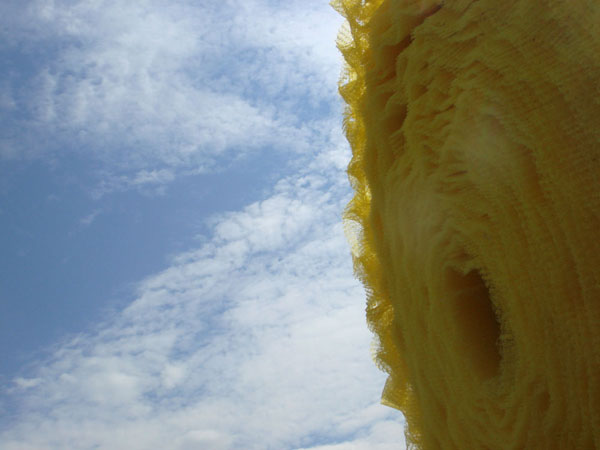
Site-specific work can be exhilarating and terrifying all at the same time.
When working on location, how much do you improvise when you are on site?
Site-specific work can be exhilarating and terrifying all at the same time. While there is always background research and goals set before going to a place, I remain open to new information which could enhance the outcome, tweak the original intent, or some dynamic which shifts the form once on location.
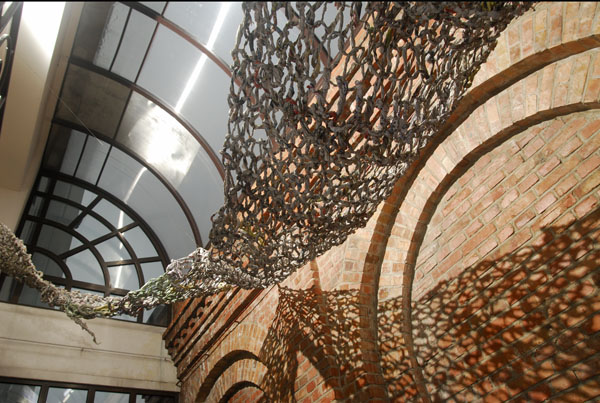
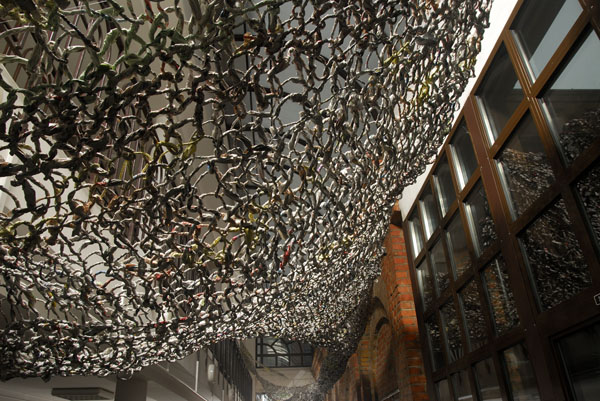
You have been an Artist in Residency on a number of occasions, including international residencies. Tell us about the experience.
Each residency is truly unique for many reasons including the place, size, and amount of interaction with other artists. I always have some general goals for the time away and pick residencies in places that will help inform the project I am working on at the time. As these experiences have stretched out over a decade, the issues central to my art practice at that time drove the intent of each residency.
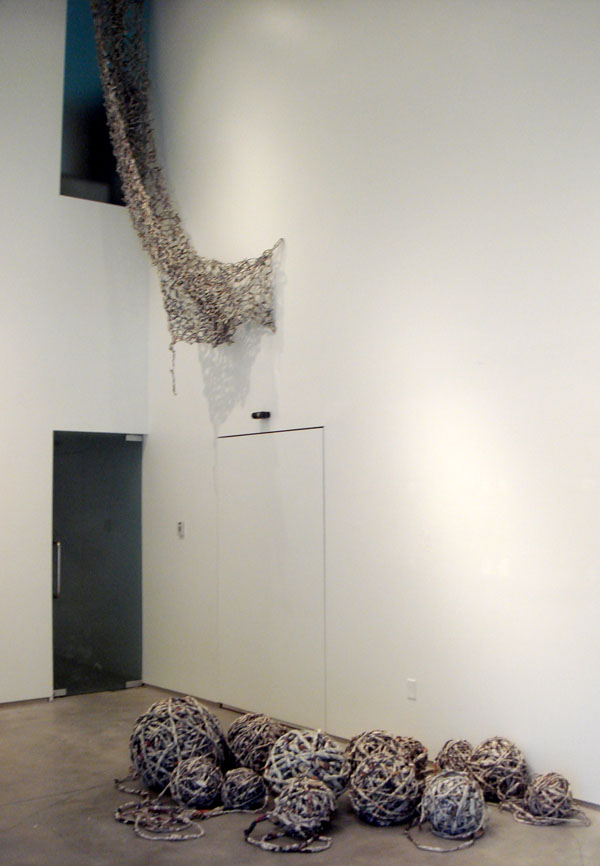
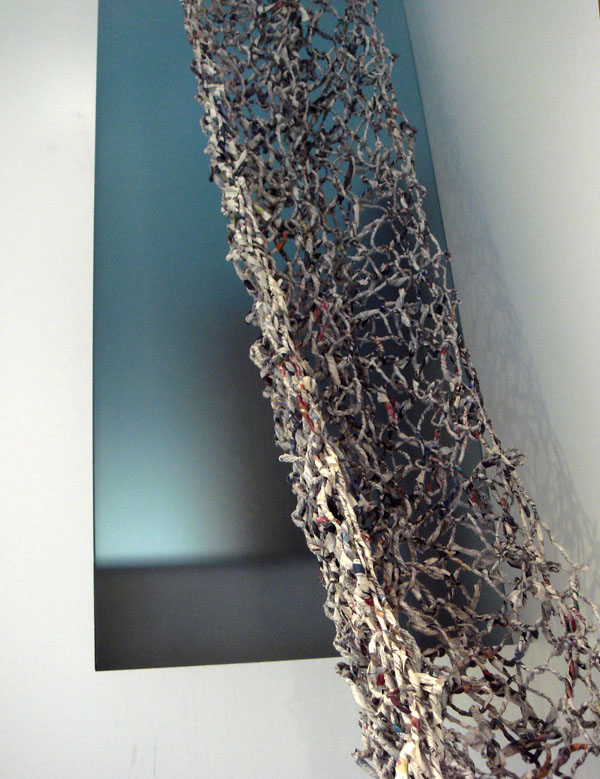
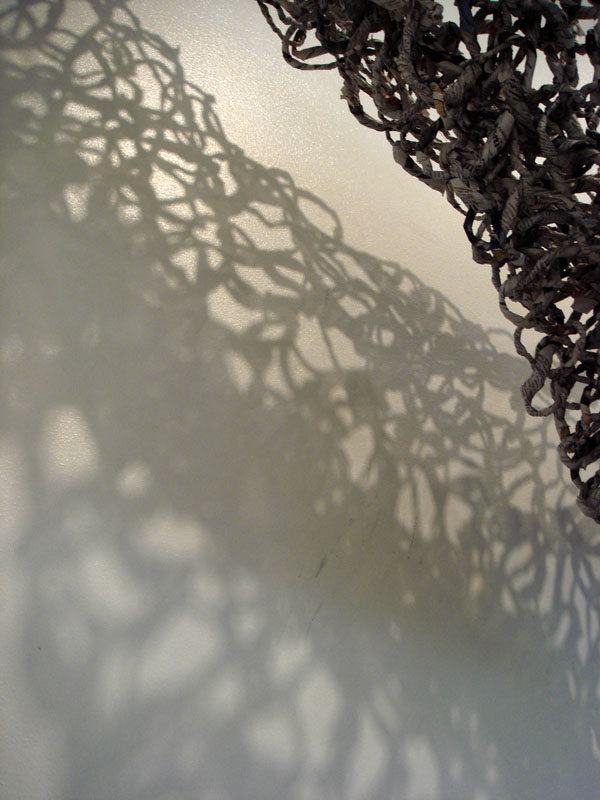
What interests you about the World of Threads festival?
As "fibre art" has long held a sort of stepchild role in the art world, straddling craft and fine art for some time, I am always curious about new initiatives that provide a forum of more discussion about the role of fibre beyond some of the traditional stereotypes. It appears that the World of Threads Festival is an engaged platform for this kind of discourse and that interests me.